Russia
Respublika Tyva, Russia — Towns & Travel Guide
Tuva is the Turkic republic of southern Siberia where the Yenisei is born and throat singers still herd on horseback.
Find your area →


Towns & cities in Respublika Tyva
One town here has its own guide — it links to where to stay.
 Russia
Kyzyl
Kyzyl is the capital of Tuva in southern Siberia, set where two rivers meet to form the Yenisei at the claimed centre of Asia.Where to stay →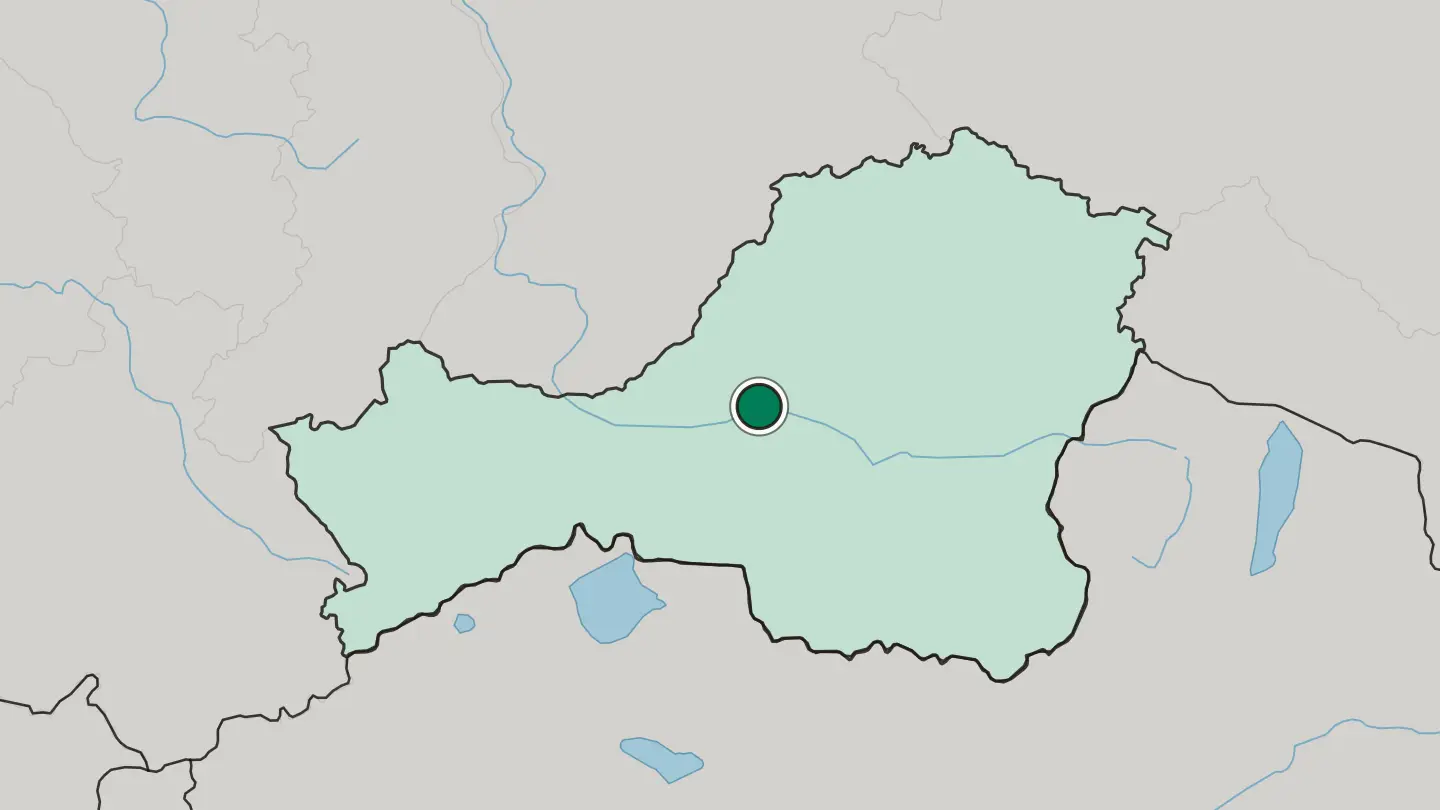
About Respublika Tyva
Tuva is throat-singing country.
What is Respublika Tyva known for?
Its herders shaped khöömei, the art of sounding two pitches from one voice at once, now listed by UNESCO. The republic also markets itself as the geographic centre of Asia, marked by a monument in the capital Kyzyl where the Bii-Khem and Kaa-Khem join to make the Yenisei. Mountains wall in roughly four-fifths of the land, and most people beyond Kyzyl still keep sheep, horses and yaks the nomadic way.
Tibetan Buddhism and older shamanism run side by side here.
Where is Respublika Tyva?
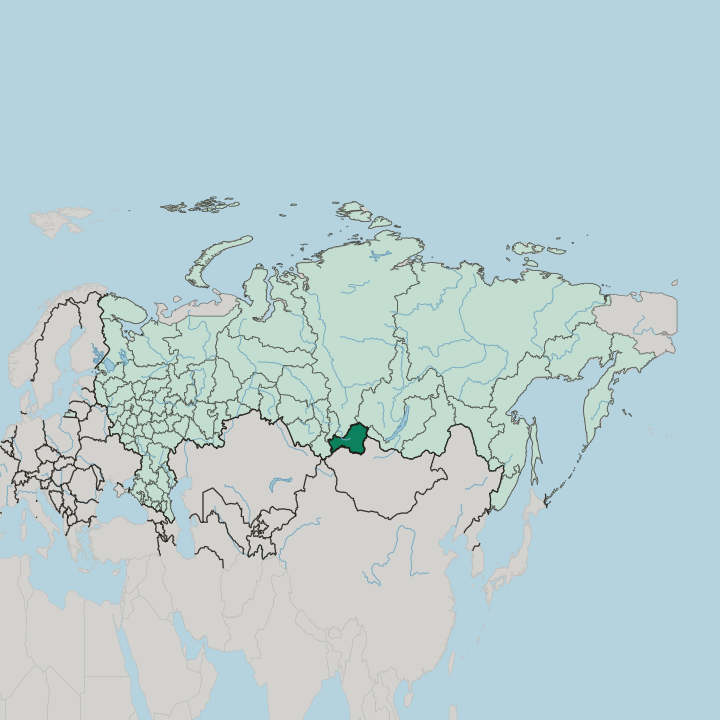
Tuva sits in the mountainous south of Siberia, pressed against the border of Mongolia. It is a republic of Russia, roughly at the geographic centre of the Asian landmass. Ranges hem it on almost every side.
The Eastern and Western Sayan rise along the north, the Tannu-Ola wall runs across the south toward Mongolia, and the Altai and Sangilen close off the west and southeast. Together these mountains cover about four-fifths of the territory, sealing off a run of basins from the world outside. Water defines the middle of it.
The Yenisei, fifth-longest river on earth, is born inside Tuva where the Bii-Khem, the Greater Yenisei, meets the Kaa-Khem, the Little Yenisei, at Kyzyl. From that junction it runs north out of the republic and on across Siberia to the Arctic. The eastern half of Tuva is high forested taiga; the western half drops into drier steppe and lowland.
Mongun-Taiga, near 3,976 metres, crowns the far southwest corner. That ring of ranges is the reason the republic feels, and has always been, a place apart.
What is Respublika Tyva like?
Culture in Tuva is sung as much as spoken. Khöömei, the throat singing that draws a whistling overtone melody over a low droning fundamental, grew straight out of herding life on the open steppe, an imitation of wind, water and animals. It carries the country's name abroad further than anything else.
The everyday language is Tuvan, a Sayan-Turkic tongue kept alive across the republic even as Russian serves as the second language of officialdom. Yurts still stand on summer pasture. Many families keep one foot in Kyzyl and one on the land, moving stock between seasons the way their grandparents did.
Belief here layers two traditions without much friction. Tibetan Buddhism arrived from Mongolia and set down monasteries and prayer wheels; beneath and beside it, an older shamanism speaks to the spirits of rivers, mountains and sky. Ribbons tied at mountain passes and cairns of piled stones mark that older faith, offered to the spirits of the pass by travellers who still stop to leave them.
Music binds it. The igil, a two-string horsehead fiddle, sets the pulse for the singers, and a small population holds hard to an inheritance most of Russia never shared.
What is the history of Respublika Tyva?
Tuva spent much of its past inside larger empires. It fell under the Qing dynasty of China as part of Outer Mongolia, then passed into the Russian orbit as the Uriankhai protectorate in 1914. Independence came briefly.
From 1921 the Tuvan People's Republic ran its own affairs, recognised only by the Soviet Union and Mongolia, taking its early name from the Tannu-Ola range. In 1944 its parliament voted the country into the Soviet Union, and 23 years of nominal statehood ended. That short-lived republic is why Tuva still feels less absorbed than annexed.
What is the climate of Respublika Tyva?
Tuva runs to extremes. The ring of Sayan and Tannu-Ola mountains locks its basins away from moist air, giving a sharply continental climate of bitter winters and hot, dry summers. Kyzyl freezes deep in January, when the Yenisei ices over and temperatures sink far below zero, then swings to genuine summer heat by July.
Rain is scarce and skies stay clear, with something close to 300 sunny days a year across the enclosed steppe. Pack for cold that shocks and for glare that does not let up.
How do you get to Respublika Tyva?
Reaching Tuva takes effort. No railway crosses the mountains into the republic, so the usual approach is the Usinsky Tract, the highway that climbs south from Abakan in neighbouring Khakassia over the Sayan ranges to Kyzyl. That drive covers around 400 kilometres of taiga and passes and takes the better part of a day by bus or car.
Kyzyl also has a small airport with occasional flights from Moscow and Siberian hubs. Either way you arrive over the wall of mountains, never through a gap in it.
Common questions
What is the best area to stay in Respublika Tyva?
Kyzyl: the Yenisei source and the throat-singing scene.
Good for
More regions in Russia
Updated September 2026