Russia
Tver Oblast, Russia — Towns & Travel Guide
Tver Oblast spreads across the upper Volga between Moscow and Saint Petersburg, where Russia's greatest river is still a narrow stream.
Find your area →


Towns & cities in Tver Oblast
Pick a town or city — each links to where to stay.
 Russia
Tver
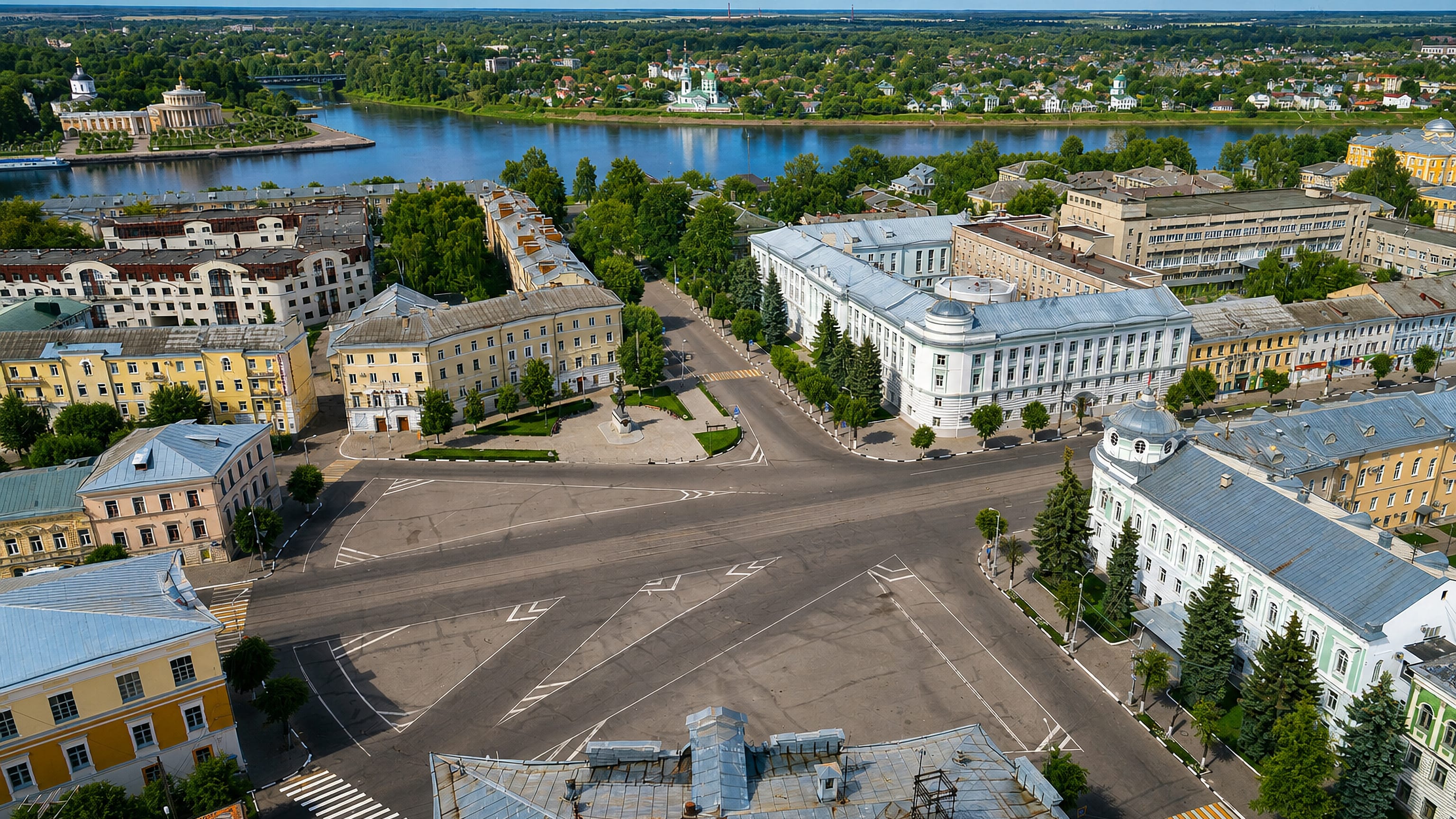
Where the Tvertsa joins the Volga, Tver spreads neoclassical quays northwest of Moscow, once the seat of a principality that rivalled the capital.Where to stay →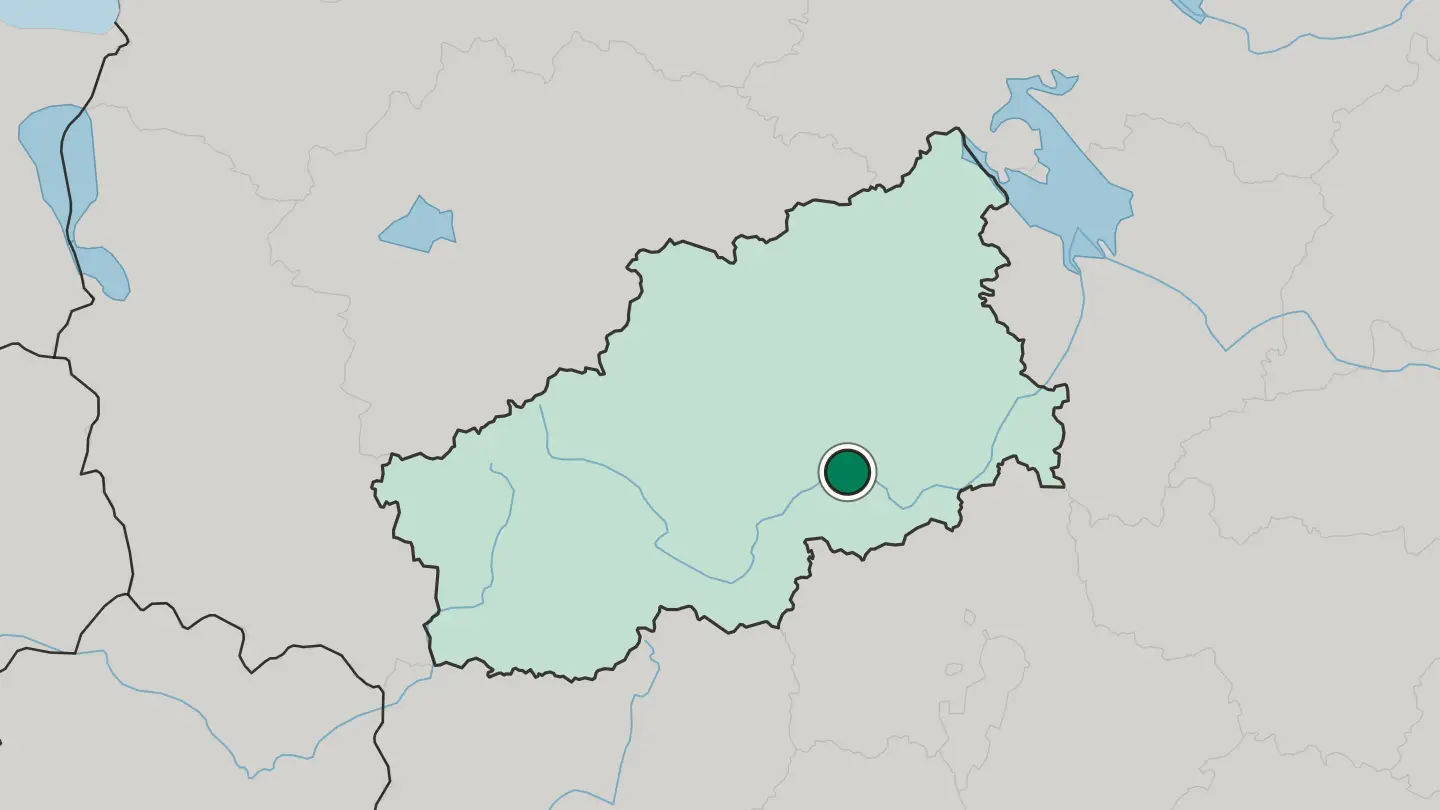
 Russia
Rzhev
Rzhev is the uppermost town on the Volga, founded in 1216 and set on the road and railway between Moscow and Riga in Tver Oblast.Where to stay →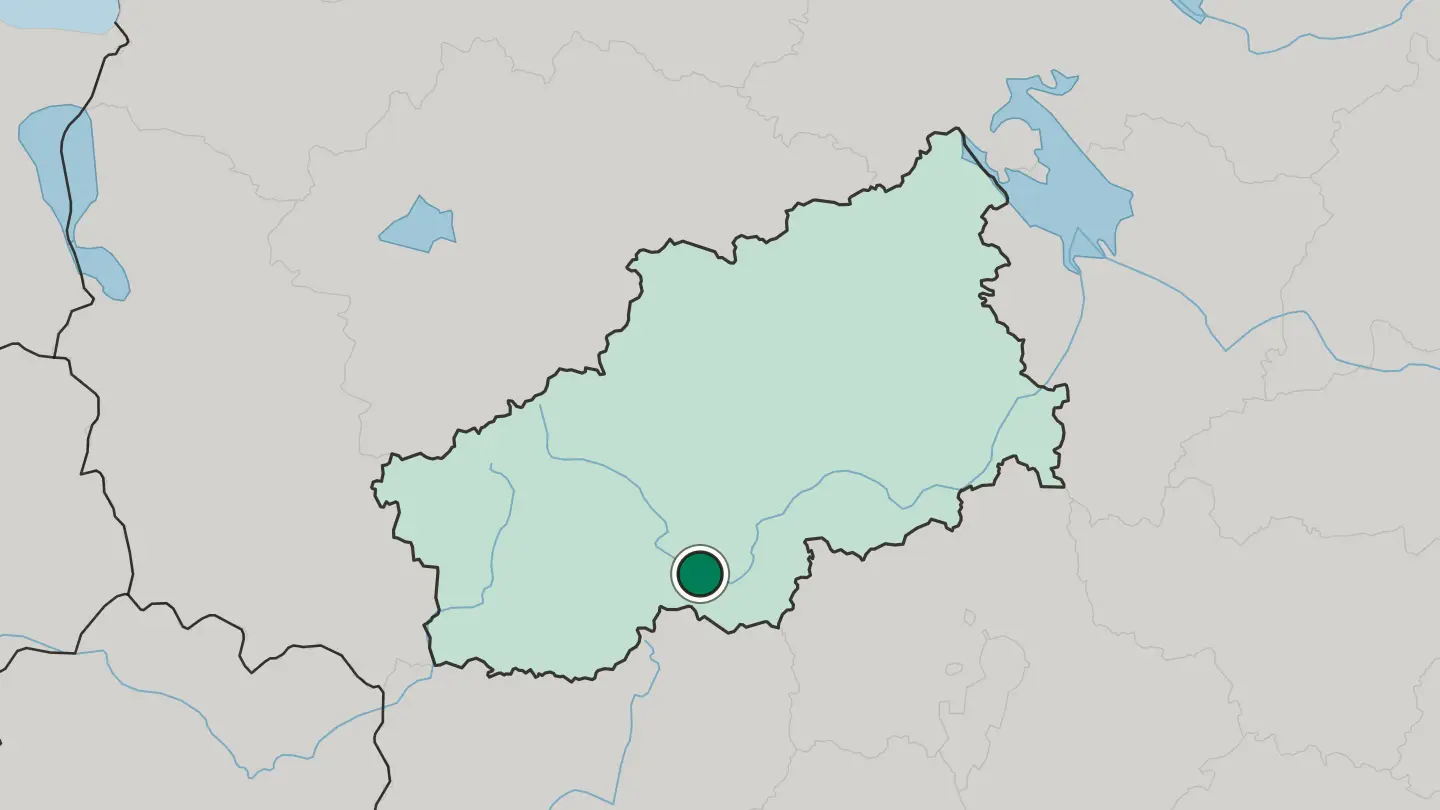
 Russia
Vyshniy Volochëk
Vyshniy Volochëk is a canal town of 1437 in Tver Oblast, built around the Vyshny Volochyok Waterway and the walls of the Kazansky Monastery.Where to stay →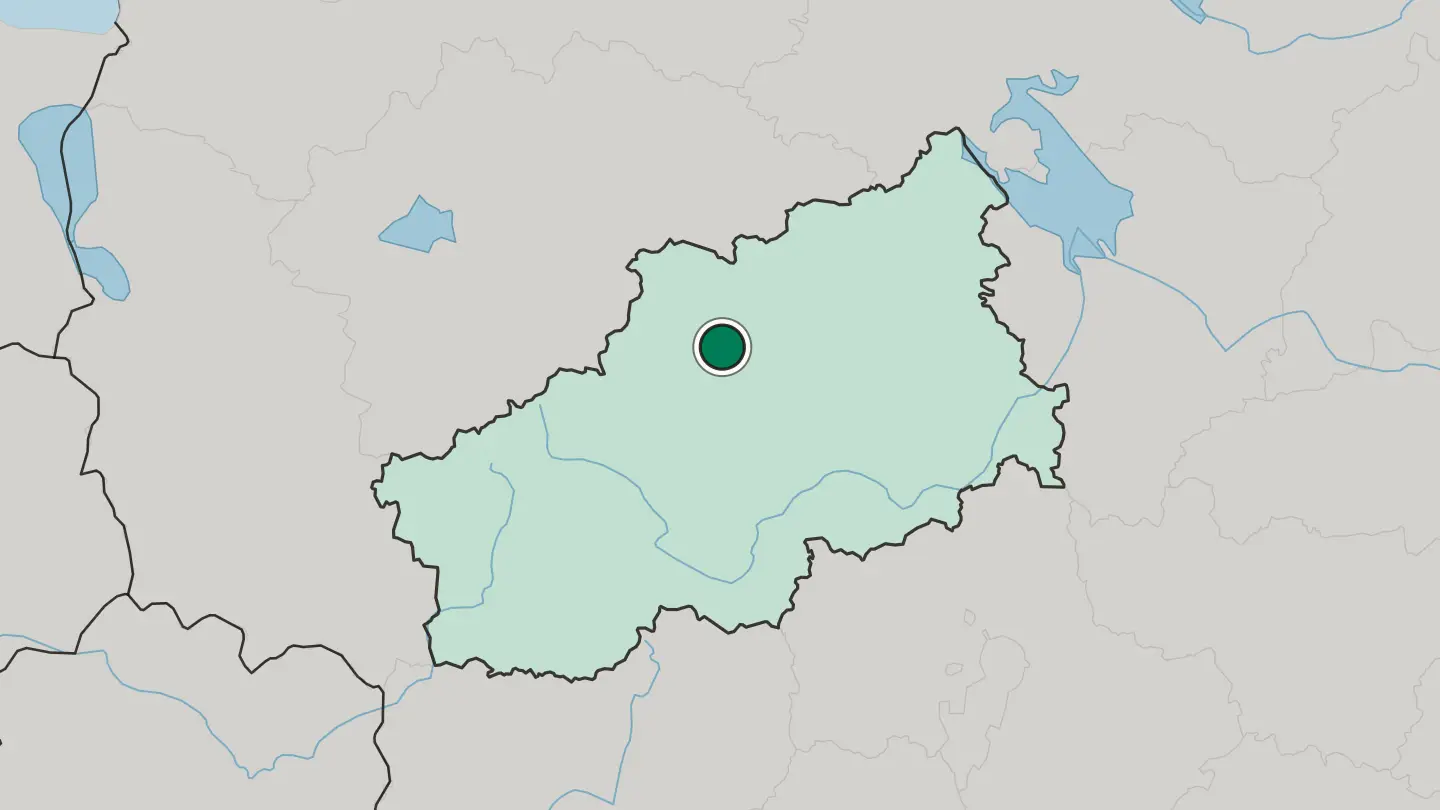
 Russia
Kimry
Kimry sits where the Kimrka joins the Volga in the south of Tver Oblast, a town of merchant houses 133 kilometres east of Tver.Where to stay →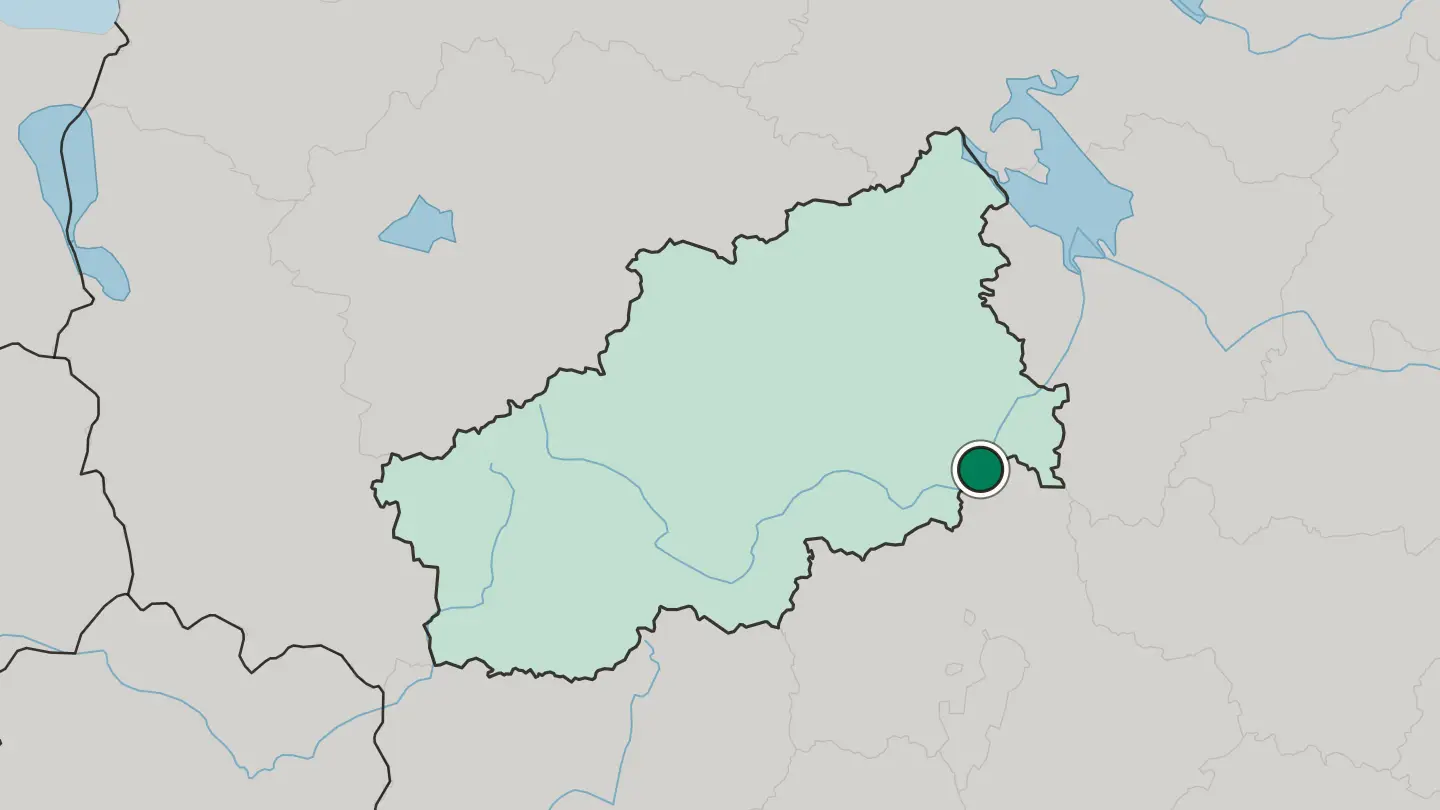
About Tver Oblast
This is where the Volga begins.
What is Tver Oblast known for?
The river rises as a spring at Volgoverkhovye in the western hills, then threads east through Tver, the regional capital at its confluence with the Tvertsa. Between the two Russian capitals, the oblast is best known for water and old towns: Lake Seliger with the Nilov Monastery on its Stolobny Island, and the goldwork embroidery of Torzhok. Rzhev, the uppermost town on the Volga, carries the memory of some of the fiercest fighting of the Second World War.
Where is Tver Oblast?
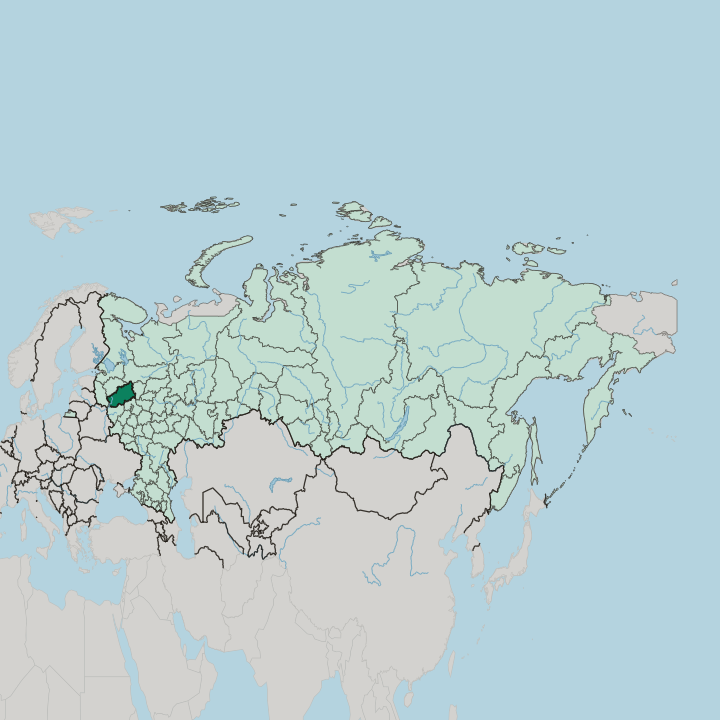
Tver Oblast lies on the East European Plain in western Russia, straddling the road and rail between Moscow to the south-east and Saint Petersburg to the north-west. The Valdai Hills rise across its western third, a low upland of forest, lake and bog reaching a few hundred metres above the surrounding plain. That modest height matters out of all proportion to its size.
From these hills three of the great rivers of European Russia take their source. The Volga is the eldest of them, rising at a spring near the hamlet of Volgoverkhovye and running east through the region as a stream you can step across before it swells into the river that drains half of European Russia. The Western Dvina rises in the same hills and turns the other way, heading west toward the Baltic.
Water is everywhere in between. More than 800 rivers longer than ten kilometres cross the oblast, and lakes fill the hollows the ice age left behind. Largest of them is Lake Seliger in the west, a maze of channels, bays and wooded islands.
Tver, the capital, stands downstream where the Tvertsa flows into the Volga, and the river ties the region's towns together as it has for eight centuries.
What is Tver Oblast like?
Craft runs through the region's identity. For centuries the towns of the upper Volga were centres of decorative needlework, and Torzhok's goldwork embroidery, thread of gold and silver worked into velvet and leather, is the best known of the surviving trades. The table has its own fame.
Pozharsky cutlets, breaded patties of minced chicken, were made famous at a Torzhok coaching inn and praised by Pushkin, who broke his journeys along the Moscow road here. Faith left the deepest marks on the landscape. The Nilov Monastery, its white walls and domes rising straight from Stolobny Island in Lake Seliger, drew pilgrims by the tens of thousands and remains the region's defining image.
Ostashkov, Torzhok and Staritsa keep whole ensembles of churches and monastery walls above their rivers. The language is Russian, as across the country. What sets the oblast apart is scale: this is a land of small river towns and long forest roads, not big cities, and the quiet is the point.
What is the history of Tver Oblast?
Tver was once a rival capital. From the 13th to the 15th centuries the Principality of Tver contended with Moscow for the leadership of the Russian lands, and lost, its grand princes eventually absorbed into the Muscovite state. The upper Volga then became a corridor rather than a capital, and Vyshny Volochyok grew into a key portage where, under Peter the Great, the first artificial canal in Russia linked the Volga basin to the route north to Saint Petersburg.
The modern region was drawn up in 1935 as Kalinin Oblast, taking back the name Tver only in 1990.
What is the climate of Tver Oblast?
The oblast has a humid continental climate, cold in the long winter and mild across the short summer. Deep frosts settle from the west to the colder north-east, and the lakes and rivers freeze hard enough to walk on. Summers are brief and green, warm rather than hot, the kind of July that suits a lakeside more than a beach.
The western slopes of the Valdai Hills catch the most rain, feeding the bogs and the lakes. Months pass under snow cover.
How do you get to Tver Oblast?
The main line between the two capitals runs the length of the region. Trains and road on the Moscow-Saint Petersburg corridor pass through Tver and the junction town of Bologoye, and the Sapsan high-speed service stops in the capital, putting the oblast within a couple of hours of either city. Most visitors come this way, from Moscow to the south-east or Saint Petersburg to the north-west.
Off that spine you need a car or a slow branch train, and the smaller towns can take half a day to reach from the capital. Lake Seliger and Ostashkov sit at the end of one such quieter line. The express feels far away there.
Common questions
What is the best area to stay in Tver Oblast?
Tver: arriving on the Volga by the Moscow–Saint Petersburg line.
Good for
More regions in Russia
Updated September 2026