Thailand
Changwat Samut Prakan, Thailand — Towns & Travel Guide
Samut Prakan holds the mouth of the Chao Phraya on the Gulf of Thailand, the old sea gate of Siam just southeast of Bangkok.
Hotel links are affiliate links: booking through them may earn us a commission, at no extra cost to you. It never affects how places are ranked. How this works


Towns & cities in Changwat Samut Prakan
One town here has its own guide — it links to where to stay.

 Thailand
Samut Prakan
Samut Prakan is the provincial capital just south of Bangkok, an Ayutthaya-era town whose best-known ground is the heritage park at Ancient Siam.Where to stay →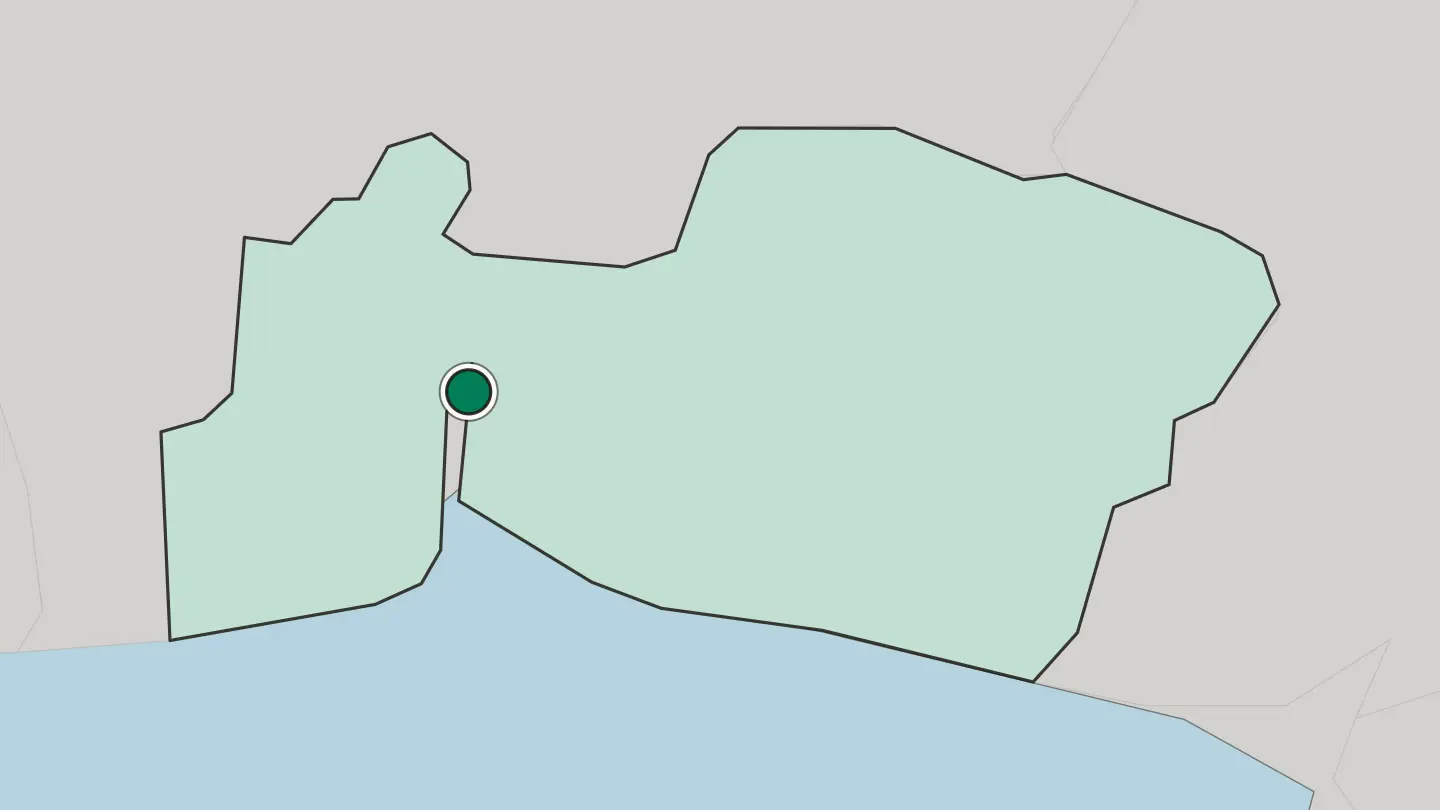
Hotel links are affiliate links: booking through them may earn us a commission, at no extra cost to you. It never affects how places are ranked. How this works
About Changwat Samut Prakan
What is Changwat Samut Prakan known for?
Samut Prakan is the river-mouth province the Thai call Pak Nam. It packs a lot into a small delta. The three-headed elephant of the Erawan Museum rises beside the road south, and the open-air Ancient Siam gathers scaled-down copies of the country's great monuments across paddy-flat grounds.
Downriver stand the old coastal guns of Chulachomklao Fort, which once traded fire with French warships. Suvarnabhumi Airport, the main way into Bangkok, sits inside the province at Bang Phli.
Where is Changwat Samut Prakan?
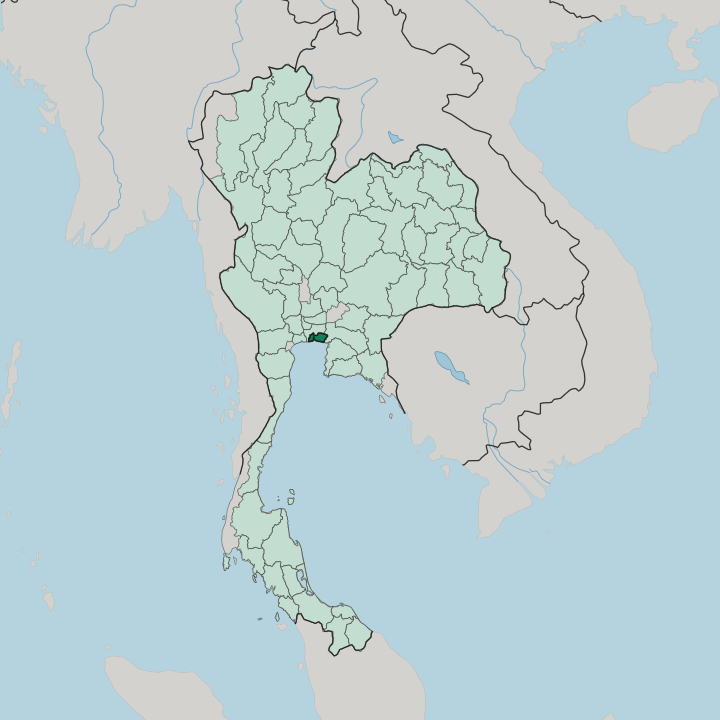
Samut Prakan sits where the Chao Phraya empties into the Gulf of Thailand. Bangkok wraps around it. The capital presses in from the north and the west, so the two run together with barely a seam, and only to the east does open country return, toward the province of Chachoengsao.
It is one of the smallest provinces in Thailand. The land lies low. Little of it rises more than a few metres above the tide, and the southern edge dissolves into marsh and mudflat along some 47 kilometres of Gulf coast.
The river is the great divider. On the west bank spread rice paddies, shrimp ponds, and the last mangroves of the delta, a green and watery counterweight to the city. The east bank is the opposite: factories, port wharves, and housing crowd the ground that runs on into Bangkok.
Two spans of the Bhumibol Bridge loop across the Chao Phraya to knit the halves together. Midstream, off the town of Pak Nam, the white pagoda of Phra Samut Chedi stands on its own islet in the current. Roads and the Skytrain thread the eastern shore; ferries and small boats do the rest.
What is Changwat Samut Prakan like?
Life here bends around the river and the tide. In Phra Pradaeng, an old Mon town on the west bank, families keep a Songkran of their own, held days after the national water festival, with flag processions, caged birds set free, and the throwing game called saba. Downriver the province throws its biggest party for Phra Samut Chedi, when the white pagoda is wrapped in a long red cloth and honoured by boat and by foot.
Faith and water run together. Temples like Wat Asokaram sit among the shrimp ponds, and monks still take alms from boats along the canals. The other face of the province is invented on purpose.
Ancient Siam lays out copies of the kingdom's great temples and palaces across grounds shaped like a map of Thailand, and the Erawan Museum raises a bronze three-headed elephant tall enough to climb inside. Out at Bang Pu, older couples still take to a wooden ballroom over the water while gulls wheel for scraps of bread. It is an odd, likeable mix.
Factory chimneys, golden chedis, and migrating birds all share the same flat, low horizon.
What is the history of Changwat Samut Prakan?
For centuries this river mouth was the sea gate of the Ayutthaya Kingdom, the last guard before the capital upstream. King Rama II laid out a new provincial town here in 1819 and ringed the channel with six forts, raising the pagoda of Phra Samut Chedi midstream. Later kings modernised the defences, and Chulachomklao Fort received British disappearing guns.
Those guns were fired in anger. On 13 July 1893 French warships forced the river past the batteries, a clash that cost Siam land beyond the Mekong yet kept the kingdom uncolonised.
What is the climate of Changwat Samut Prakan?
Samut Prakan is hot and humid the year round, tropical like the rest of the lower Chao Phraya delta. Three seasons take turns. A dry, cooler spell rides the northeast monsoon from about November to February, the easiest months to be out on the water.
The southwest monsoon then soaks the flat delta through the middle of the year, and low ground near the Gulf floods easily when heavy rain coincides with high tide. Breeze off the Gulf of Thailand takes some heat from the coast.
How do you get to Changwat Samut Prakan?
Most travellers land inside the province itself. Suvarnabhumi Airport, the main international field for the capital region, stands on Samut Prakan soil at Bang Phli. From central Bangkok the Skytrain runs south along Sukhumvit Road to Kheha, near the riverside seat of Pak Nam, and expressways and the Bhumibol Bridge carry the traffic that does not.
Cross-river ferries stitch the two banks. Little of the province lies more than an hour from Bangkok.
Common questions
What is the best area to stay in Changwat Samut Prakan?
Bang Phli: a night beside Suvarnabhumi Airport. Pak Nam: riverside forts and the Chao Phraya ferry. Bang Pu: sunset seafood on the Gulf coast.
More regions in Thailand
Updated September 2026