United States
Vermont, United States — Towns & Travel Guide
Vermont is New England's Green Mountain State, forested ridges, dairy farms and ski towns between Lake Champlain and the Connecticut River.
Hotel links are affiliate links: booking through them may earn us a commission, at no extra cost to you. It never affects how places are ranked. How this works


Towns & cities in Vermont
One town here has its own guide — it links to where to stay.
 United States
Burlington
Burlington is the seat of Chittenden County and Vermont's largest city, founded in 1783 on the shore of Lake Champlain.Where to stay →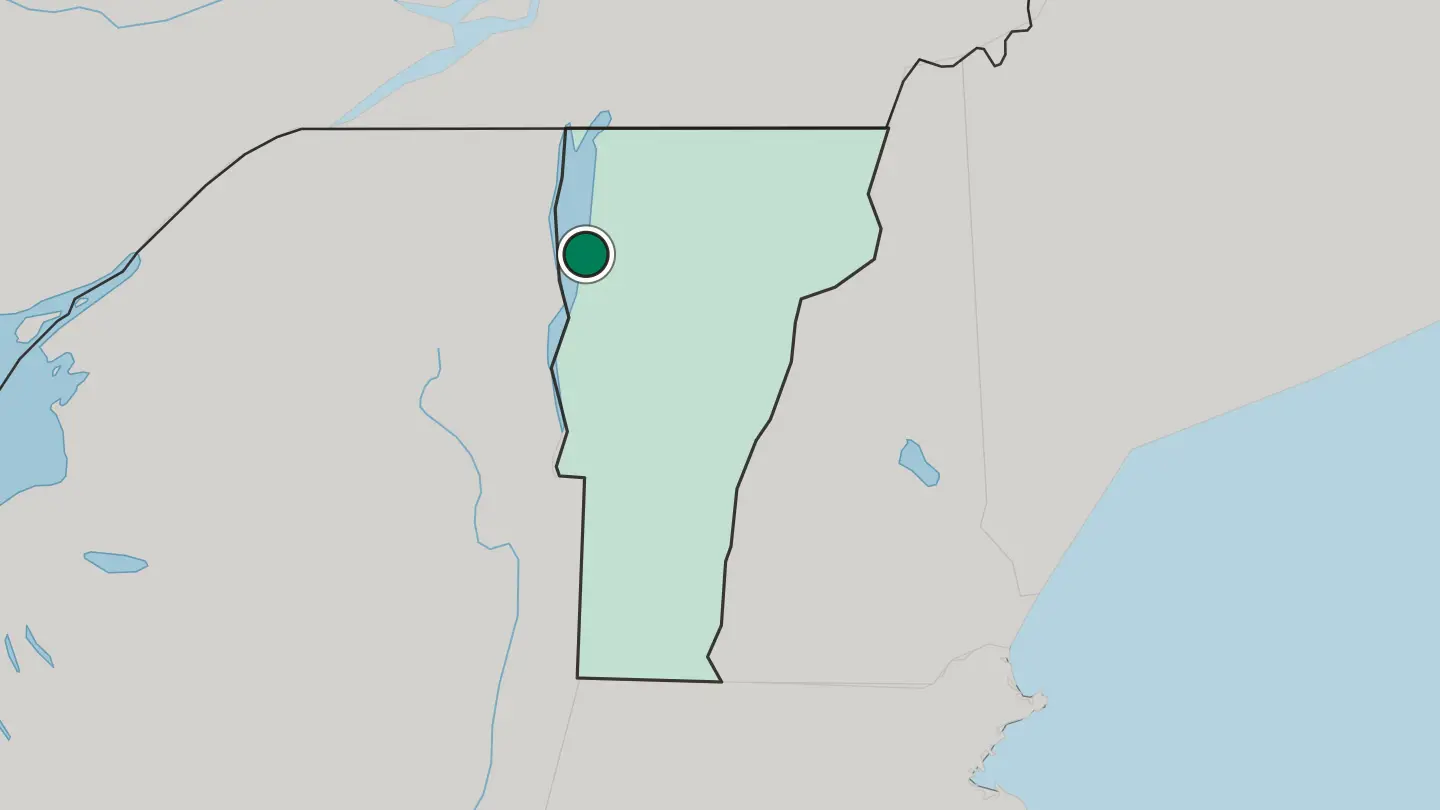
Hotel links are affiliate links: booking through them may earn us a commission, at no extra cost to you. It never affects how places are ranked. How this works
About Vermont
The Green Mountain State earns its name.
What is Vermont known for?
Its forested Green Mountains run the length of the state, drawing skiers to Stowe and Killington in winter and hikers onto the ridgelines in summer. Autumn is the headline act, when the sugar maples turn and leaf-peepers fill the back roads. The state leads the country in maple syrup, holds more covered bridges per square mile than any other, and gave the world Ben & Jerry's, founded in Burlington.
Dairy farms and white-steepled villages fill the valleys between.
Where is Vermont?
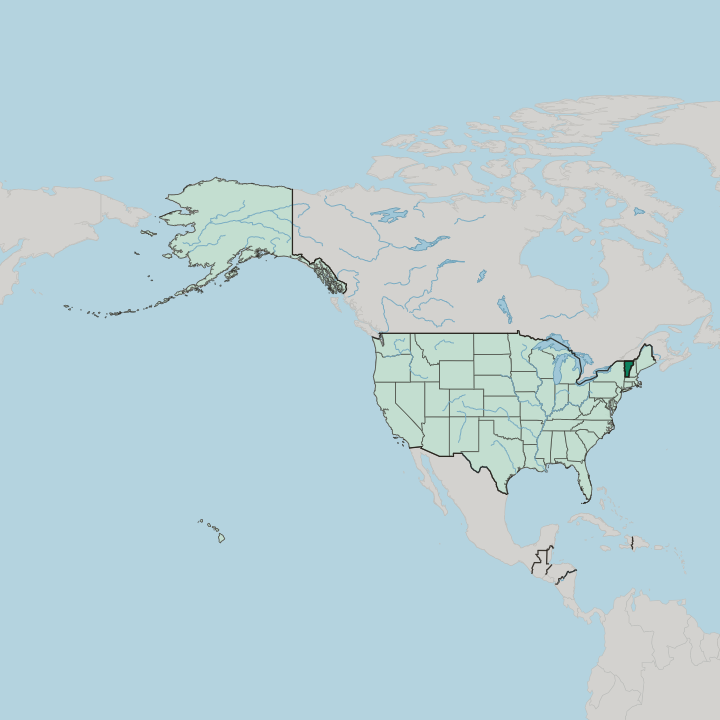
Vermont is a landlocked state in the north of New England. No ocean touches Vermont. New York lies to the west across Lake Champlain, New Hampshire to the east across the Connecticut River, Massachusetts along the southern line, and the Canadian province of Quebec across the northern border. That makes it the only New England state without an ocean shore.
The Green Mountains run the length of it from the Massachusetts line to Quebec, a forested subrange of the Appalachian Mountains that gives the state both its spine and its name. Mount Mansfield, above Stowe, is the highest summit. West of the ridges, the land falls to the Champlain Valley, the broad lowland along Lake Champlain where Burlington and most Vermonters live.
The Connecticut River draws the eastern boundary in a long valley of farm towns shared with New Hampshire. Far to the north-east lies the Northeast Kingdom, a thinly settled upland of forest, bog and hill farms. Forest covers most of the state.
Vermont ranks among the smallest states by area and the least populous but one, so its cities stay small and its countryside runs on unbroken between them.
What is Vermont like?
Vermont keeps a rural, independent temper that shows up in how it runs itself. Town meeting day is the clearest sign, when Vermonters gather each spring to vote the local budget by a show of hands. Montpelier, the smallest of the state capitals, feels more like a large village than a seat of government.
The land shapes the culture. Generations of dairy farming and maple sugaring set the rhythm of the year, and the late-winter sugaring season, when sap runs and the sugarhouses steam, is close to a state holiday. That farm base feeds a strong local-food streak.
Ben & Jerry's began in a Burlington gas station, Cabot turns Vermont milk into cheddar, and roadside stands sell syrup by the jug. The same self-reliant spirit runs through the craft breweries, the farmers' markets and the artists and writers drawn to the hill towns. Covered bridges still carry back roads over the rivers.
In autumn the whole culture turns outward, as the sugar maples colour and visitors pour in for the foliage, before the snow arrives and the ski towns take over.
What is the history of Vermont?
Vermont began as disputed ground. The land between the Connecticut River and Lake Champlain, then called the New Hampshire Grants, was claimed by both New Hampshire and New York, and settlers holding New Hampshire titles refused New York's authority. Ethan Allen and his Green Mountain Boys formed to drive the New York claimants off.
In 1777 the settlers declared an independent republic, wrote a constitution that barred adult slavery, and ran their own currency and postal service for fourteen years. Vermont joined the Union in 1791 as the fourteenth state, the first added after the original thirteen.
What is the climate of Vermont?
Vermont runs on four sharp seasons. Winters are long and cold, and heavy snow over the Green Mountains feeds the ski season from Killington to Stowe. Summers are warm and green in the valleys, cooler on the high ridges.
Autumn is the famous season, when the sugar maples turn early, usually from mid-September into October, and the hillsides go red and gold before the first snow. Spring brings mud season to the dirt roads. The Northeast Kingdom stays coldest and snowiest, the Champlain Valley the mildest.
How do you get to Vermont?
Most visitors reach Vermont by road. Interstate 89 climbs up from Boston and New Hampshire toward Burlington and the Quebec border, while Interstate 91 follows the Connecticut River the length of the eastern edge. Burlington International Airport handles most of the flights.
Two Amtrak lines run up from the south, the Vermonter to Essex Junction and Saint Albans, and the Ethan Allen Express from New York to Burlington. Boston sits about three hours away, Montreal about two.
Common questions
What is the best area to stay in Vermont?
Burlington: a first Vermont base with lakefront city life. Stowe: skiing and summer hiking under Mount Mansfield. Killington: the largest ski terrain in the East. Woodstock: a classic New England village stay. Manchester: southern Vermont inns and outlet shopping.
Good for
More regions in United States
Updated September 2026