United States
New Hampshire, United States — Towns & Travel Guide
New Hampshire is a small New England state in the northeastern United States, the Granite State of mountains, lakes and a short Atlantic coast.
Hotel links are affiliate links: booking through them may earn us a commission, at no extra cost to you. It never affects how places are ranked. How this works


Towns & cities in New Hampshire
Pick a town or city — each links to where to stay.
 United States
Manchester
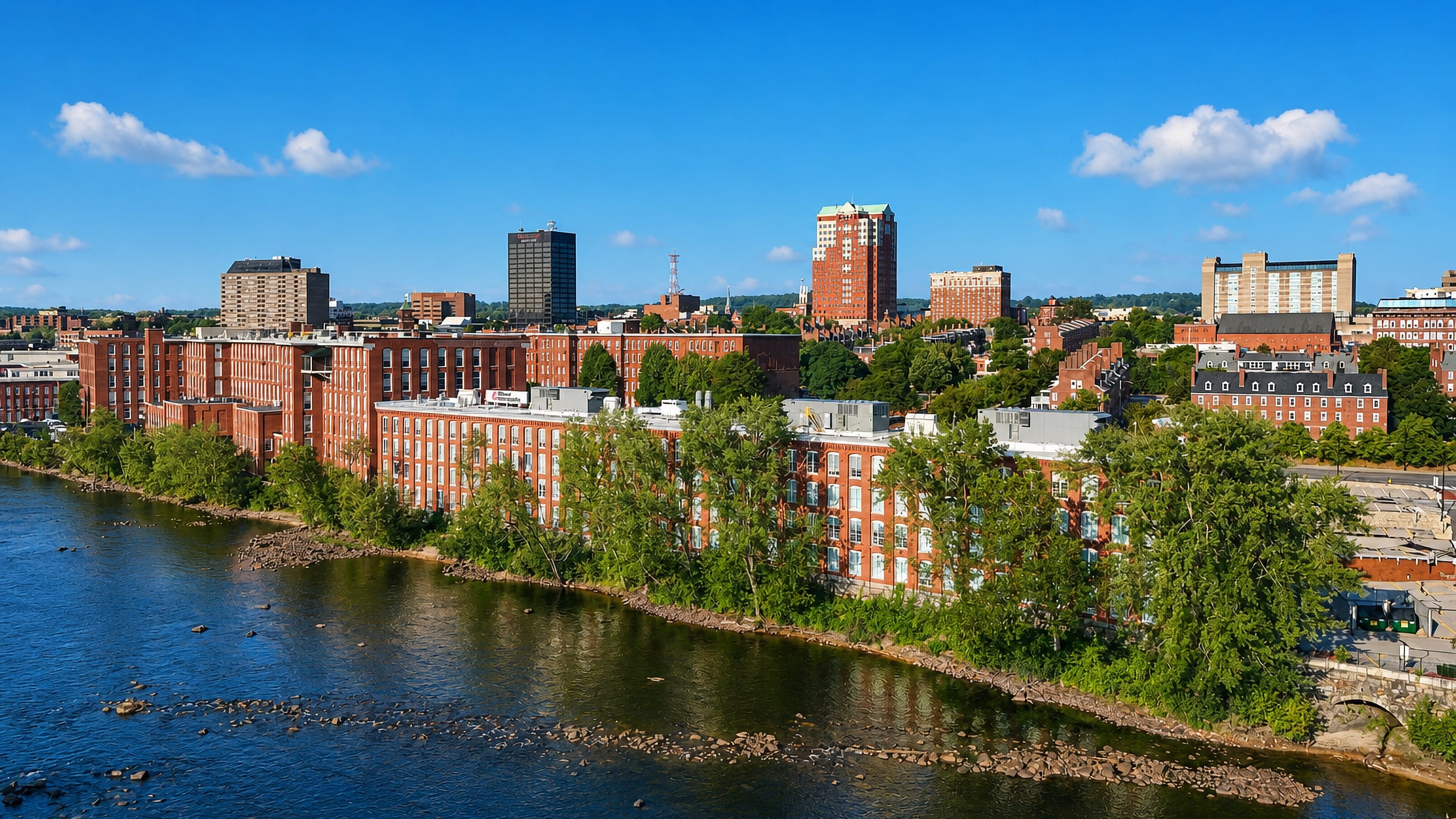
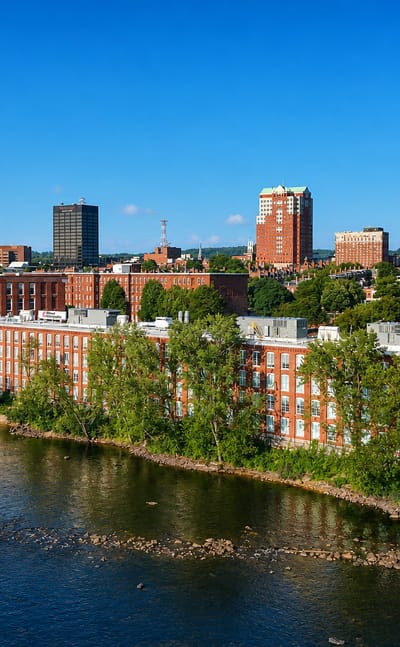
Brick mill blocks line the old canals at Manchester, a city in New Hampshire known for the Currier Museum of Art.Where to stay →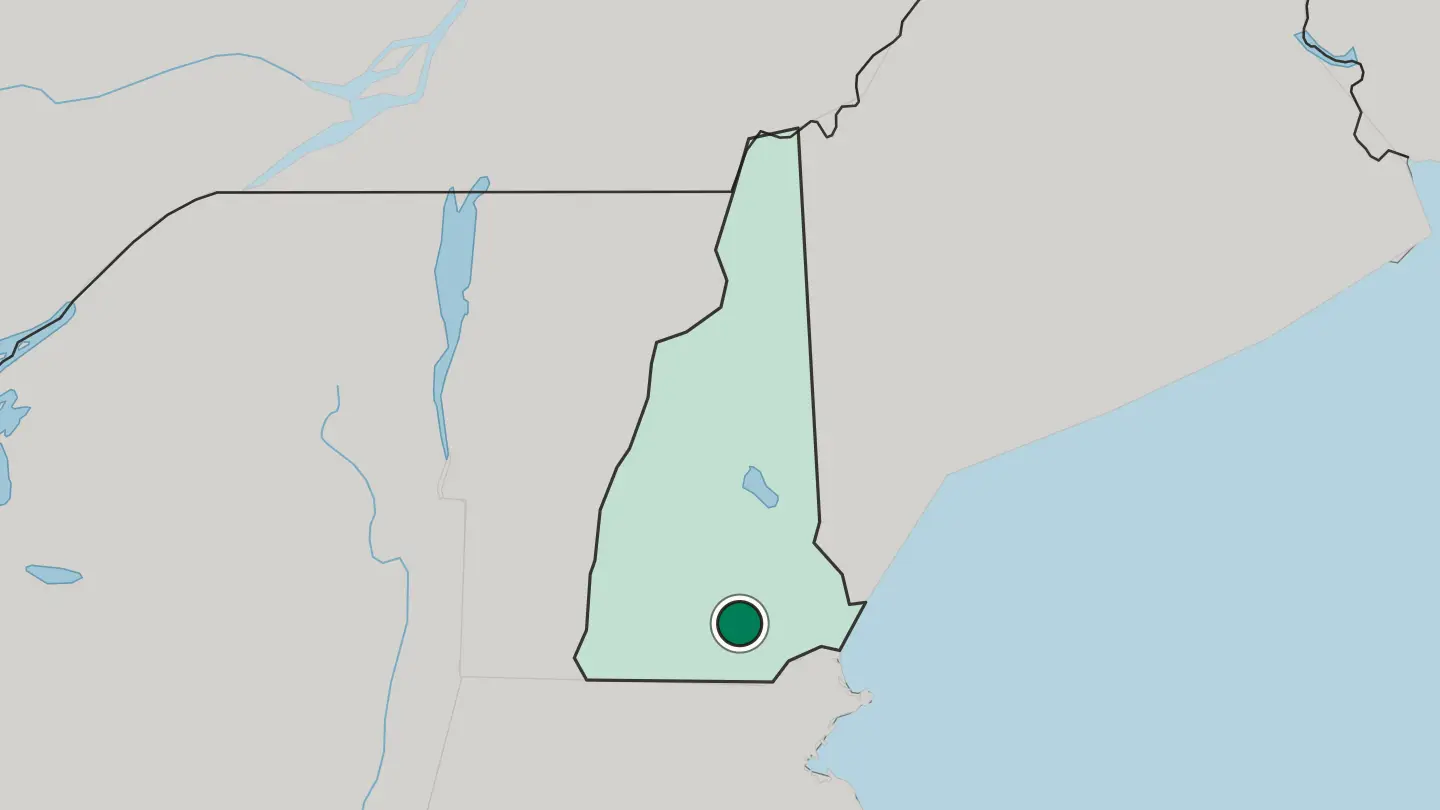
 United States
Nashua
Nashua is the second-largest city in New Hampshire and one of two county seats of Hillsborough County, sharing that role with Manchester.Where to stay →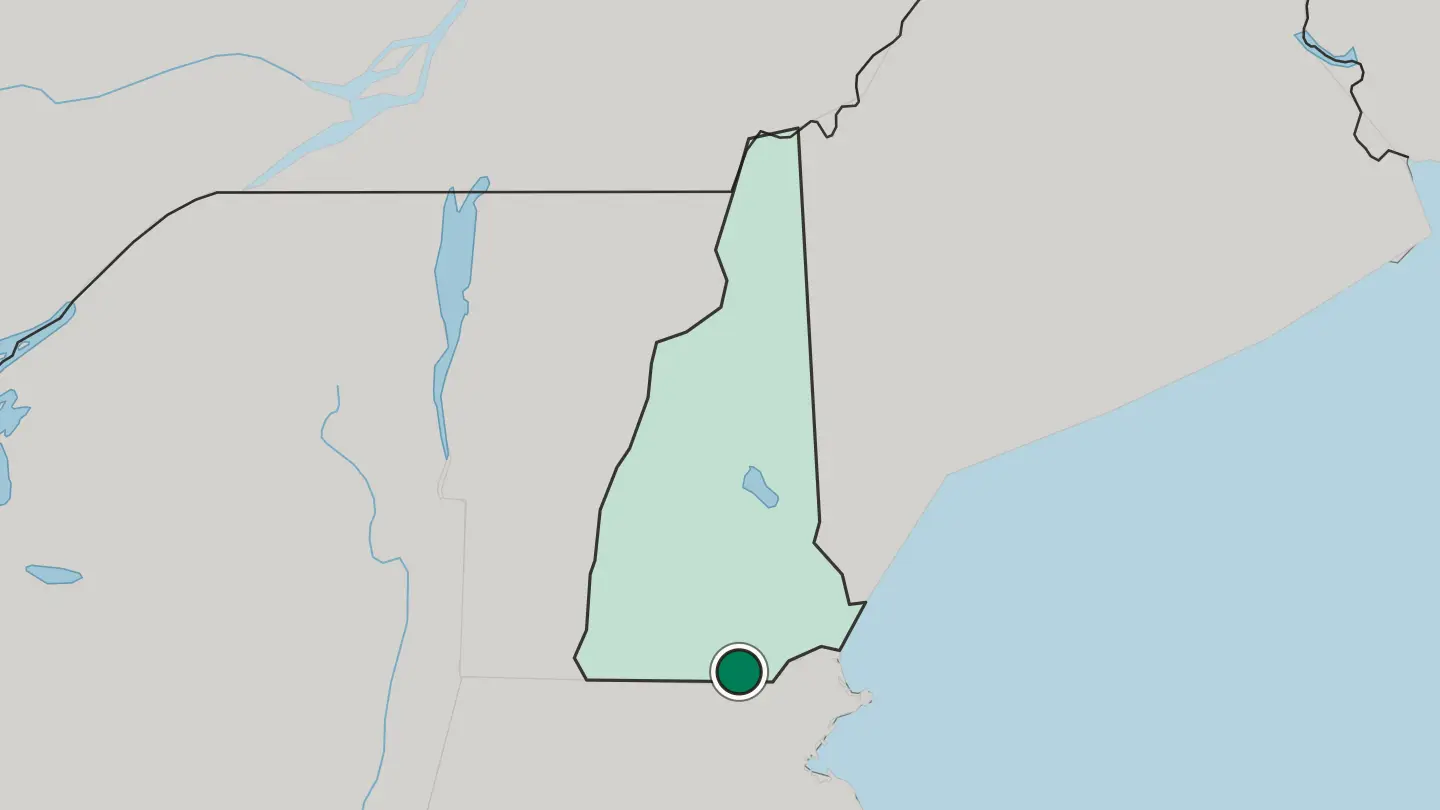
Hotel links are affiliate links: booking through them may earn us a commission, at no extra cost to you. It never affects how places are ranked. How this works
About New Hampshire
Granite gives the state its name.
What is New Hampshire known for?
The White Mountains rise across the north, crowned by Mount Washington, the highest peak in the northeastern United States, whose exposed summit has clocked some of the fiercest winds ever recorded at ground level. South of the peaks the Lakes Region gathers around Lake Winnipesaukee, the largest body of water in the state. Autumn draws leaf-watchers to the Kancamagus Highway through the White Mountain forests.
New Hampshire is known too for its politics, holding the first primary of the American presidential cycle, and for the flinty motto on its plates: Live Free or Die.
Where is New Hampshire?
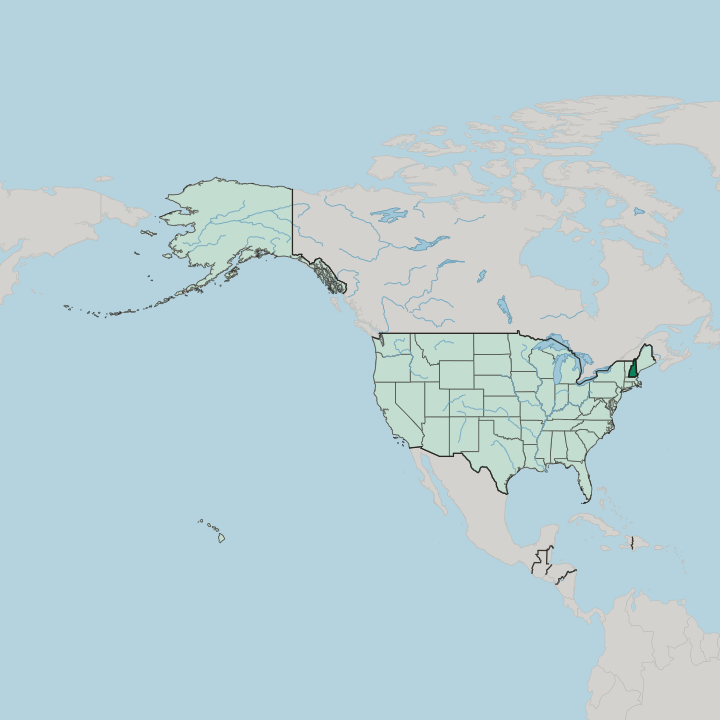
New Hampshire sits in the New England corner of the northeastern United States, a compact wedge wider at its southern base than at its northern tip. Massachusetts runs along the whole southern edge. Vermont lies to the west, the two states divided for their entire length by the Connecticut River, which New Hampshire owns bank to bank to the low-water mark on the Vermont side. Maine and the Gulf of Maine close off the east, and the Canadian province of Quebec caps the north. The state touches the Atlantic Ocean only along a short seacoast in the southeast, the shortest ocean frontage of any coastal state in the country. Inland the land climbs.
The White Mountains crowd the north, their granite ridges rising to Mount Washington, the tallest summit in the northeast and a place of famously violent weather. South of the range the Lakes Region pools around Lake Winnipesaukee and dozens of smaller lakes left by the glaciers. The Merrimack River drains the southern half of the state, gathering the old mill cities of Manchester and Concord along its course before crossing into Massachusetts.
Beyond the mountains the Great North Woods run up toward the border, thinning to forest and bog. Little of New Hampshire lies far from either a mountain or a lake.
What is New Hampshire like?
New Hampshire wears its independence openly. The state motto, Live Free or Die, is stamped on every licence plate, and the flinty self-reliance behind it runs through local life. There is no general sales tax and no tax on earned wages, a fiscal streak New Englanders here guard with real stubbornness.
Government stays close to the ground here, run town by town at open meetings where any voter may speak. Granite built the culture as much as the economy. Quarries have cut the pale stone from these hills for more than two centuries, and the same rock gave the state both its nickname and the Old Man of the Mountain, the craggy granite profile on Cannon Mountain that served as the state emblem until it collapsed.
Late winter turns to maple sugaring as the sap starts to run, and sugar houses across the farm country boil it down. Autumn is its own institution, when the hardwood forests turn and the covered bridges, more than fifty of them, frame the colour. Robert Frost farmed in Derry and later titled a Pulitzer-winning book simply New Hampshire.
English is the common tongue. The rhythm of the year, from sugaring to foliage to snow, still shapes how the place lives.
What is the history of New Hampshire?
English fishermen and traders settled the seacoast in 1623, among the earliest footholds in New England. Captain John Mason named the grant for Hampshire, the English county he knew at home. It became one of the thirteen colonies.
The province moved early toward revolution: townsmen seized the powder and guns of Fort William and Mary in 1774, months before Lexington, and in January 1776 New Hampshire adopted its own constitution, the first colony to break with the crown that way. The state's lasting mark on the union came in 1788, when New Hampshire cast the ninth and deciding vote to ratify the Constitution and so brought it into force.
What is the climate of New Hampshire?
New Hampshire runs on a humid continental climate, which means real seasons. Winters are long and snowy, hard in the north and only a little softer along the seacoast, where the Atlantic Ocean takes the sharpest edge off the cold. Summers turn warm and humid, mild enough in the mountains that the nights stay cool.
The mountains keep harsher weather. Mount Washington is famous for it, raked by some of the strongest surface winds ever measured and buried in snow long after the valleys thaw. Autumn is short and brilliant, the cue for the maple and birch forests to turn before the snow returns.
How do you get to New Hampshire?
Most visitors arrive through Boston. Logan Airport in Massachusetts, an hour or so south of the state line, is the busiest point of entry, and Manchester keeps its own airport for lighter traffic closer in. From Boston the drive north is straightforward: Interstate 93 climbs through Manchester and Concord toward the White Mountains, while Interstate 95 hugs the seacoast.
Amtrak's Downeaster train stops at Exeter, Durham, and Dover on its run up from Boston. Beyond those few stops a car does the real work, since the mountains and the lakes lie well off any rail line.
Common questions
What is the best area to stay in New Hampshire?
Portsmouth: New Hampshire's short seacoast. The White Mountains: mountain hiking and skiing. The Lakes Region: lake resorts and boating. Manchester: a practical first base by the airport.
Good for
More regions in United States
Updated September 2026