Vietnam
Thai Nguyen, Vietnam — Towns & Travel Guide
Thái Nguyên is Vietnam's tea country, a hill province of green terraces and reservoir lakes in the highlands north of Hanoi.
Hotel links are affiliate links: booking through them may earn us a commission, at no extra cost to you. It never affects how places are ranked. How this works


Towns & cities in Thai Nguyen
One town here has its own guide — it links to where to stay.

 Vietnam
Thái Nguyên
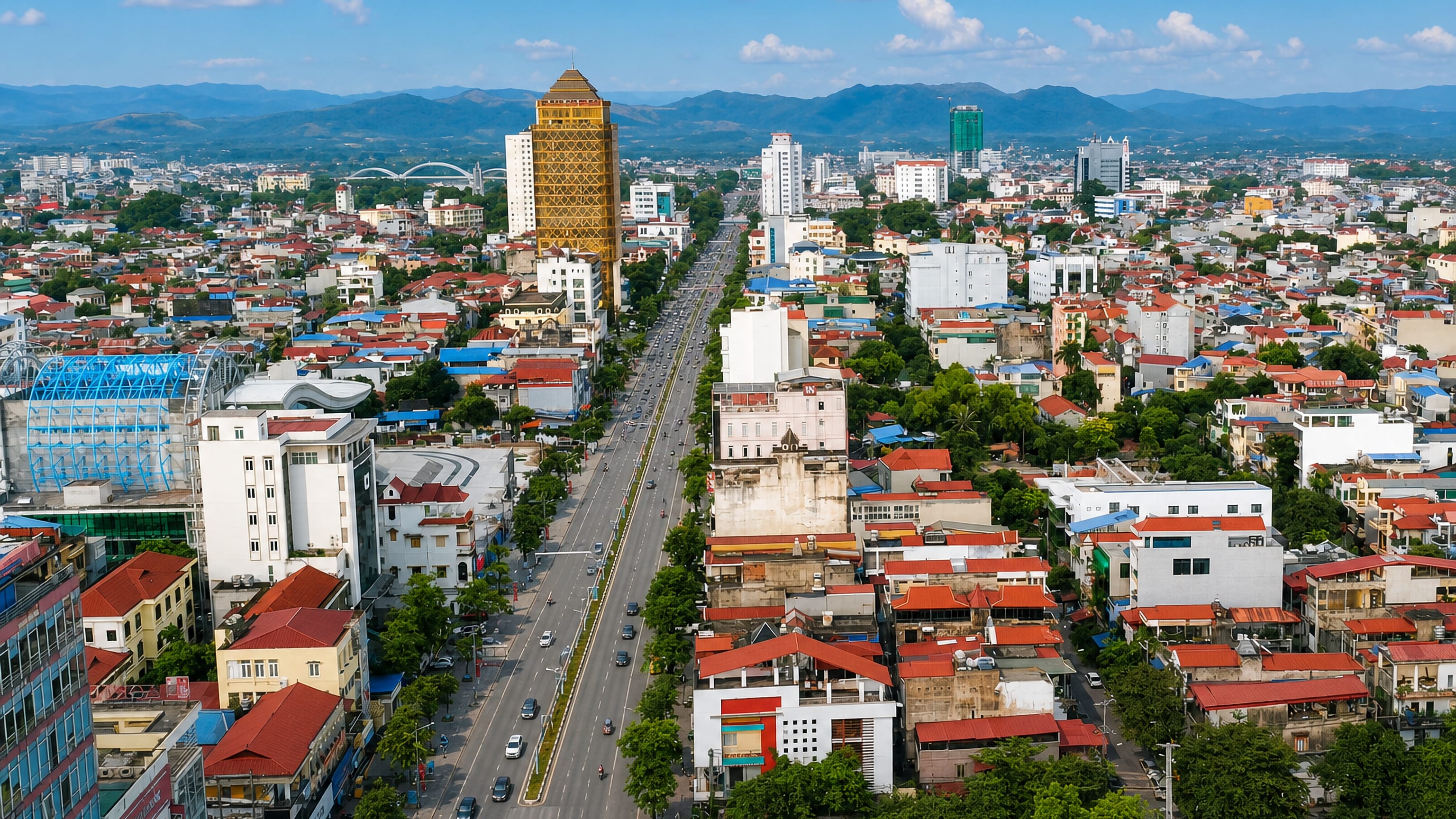
Thái Nguyên, capital of Thái Nguyên Province in northern Vietnam, is known for Tân Cương tea and for the country's first steel mill, built in 1959.Where to stay →
Hotel links are affiliate links: booking through them may earn us a commission, at no extra cost to you. It never affects how places are ranked. How this works
About Thai Nguyen
Tea made this province famous.
What is Thai Nguyen known for?
The hills around Tân Cương, on the western edge of Thái Nguyên city, grow the green tea that many Vietnamese rank as the finest in the country. Beyond the tea gardens, Núi Cốc Lake spreads behind its dam with 89 wooded islands. Heavy industry marks the main city too.
Its mills earned the old city the nickname City of Steel. Students crowd its many campuses.
Where is Thai Nguyen?
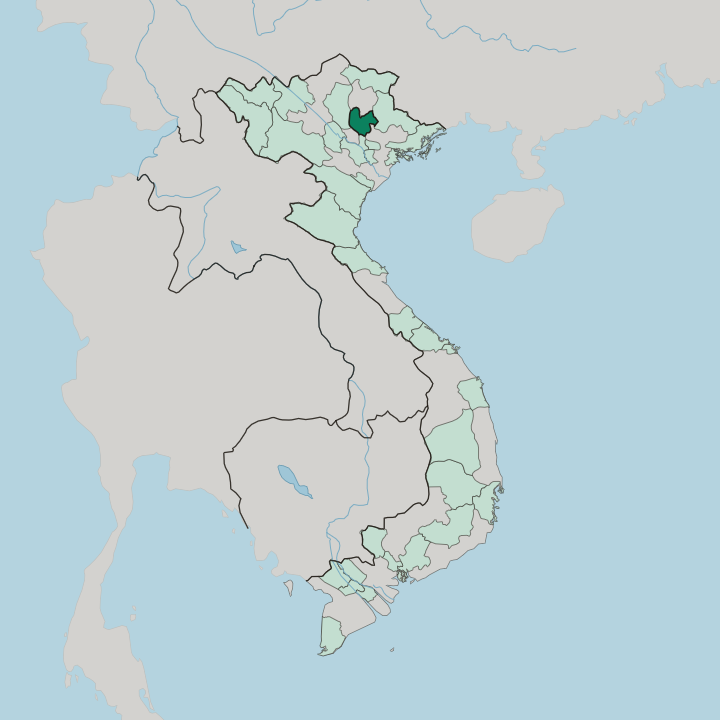
Thái Nguyên lies north of Hanoi. It fills a band of hill country in northern Vietnam, where the flat rice plains of the Red River delta give way to the wooded ridges of the interior. The Cầu River runs the length of the province from north to south.
It passes through Thái Nguyên city, gathering the streams that drain the surrounding hills. A second river matters here. The Công River rises in the western uplands and is held back behind a dam to form Núi Cốc Lake, a broad reservoir scattered with 89 islands.
Mountains frame the province on almost every side. Along the western edge the Tam Đảo range climbs past 1,500 metres, a long forested wall that shelters the tea hills from the monsoon winds off the plains. Deeper north, the hills fold into the forests of the Việt Bắc, the old upland heart of the region.
The main city sits low among them. From Thái Nguyên city the road south runs about 75 kilometres down to Hanoi, crossing the last of the hills onto the delta. Tea covers the slopes between.
What is Thai Nguyen like?
Tea sets the rhythm here. Families work the terraces around Tân Cương by hand, plucking and pan-firing green tea in the way that made Thái Nguyên the tea heart of Vietnam. Roadside stalls and tea houses sell the leaf under its own protected name.
Spring brings the first flush, when the new shoots colour the terraces a paler green and the picking runs hardest. Several peoples share these hills, with Kinh villages on the valley floors and Tày, Nùng and Sán Dìu hamlets higher up. Their markets trade in tea.
Festivals mark the harvest too. The main city wears a very different face. Before the Đổi Mới reforms, Thái Nguyên was the most important iron and steel centre in Vietnam.
Students give the same city its other character, filling a cluster of universities and colleges. Young faces crowd the streets. The mix gives the province two clear sides, the tea-growing hills of the ethnic uplands on one hand and the industrial, studious city on the other.
Both belong to the same name on the map. Vietnamese is the common tongue, though the languages of the Tày and Nùng carry on in the market towns and the hill villages.
What is the history of Thai Nguyen?
War shaped this province. In 1917 the prison guards and political prisoners of Thái Nguyên rose against French colonial rule, seizing the town for several days in one of the largest revolts of the era. Decades later the forests of Định Hóa hid the command of the war against France.
That safe zone in the Việt Bắc uplands ran the resistance from 1945 to 1954. Peace turned the town to iron.
What is the climate of Thai Nguyen?
Thái Nguyên's year falls into two distinct seasons. Warm, wet monsoon rains sweep the hills from May through October, when the terraces turn their deepest green and the rivers run high off the surrounding ridges. From November to April the weather dries and cools into a mild upland winter.
The hill country keeps Thái Nguyên a shade cooler than the Red River delta down toward Hanoi. Height changes everything here. The higher northern hills stay cold and misty, while the Tam Đảo slopes wring extra rain from the passing monsoon.
How do you get to Thai Nguyen?
Nearly everyone comes through Hanoi. Nội Bài International Airport outside Hanoi lies roughly 50 kilometres south of the province, so most visitors land there and drive north into the hills. An expressway runs the short way up from Hanoi to Thái Nguyên city.
A rail line follows much the same route, laid to carry ore and steel to and from the mills. The province has no airport. Beyond the main city, buses and back roads climb into the tea hills and out to Núi Cốc Lake and the northern forests.
Common questions
What is the best area to stay in Thai Nguyen?
Thái Nguyên city: a tea-country base with city comforts. Núi Cốc Lake: a lakeside stay among the islands. Định Hóa: the revolutionary safe-zone hills. Sông Công: the industrial south near the airport.
Good for
More regions in Vietnam
Updated October 2026