Vietnam
Tỉnh Nghệ An, Vietnam — Towns & Travel Guide
Nghệ An is one of Vietnam's largest provinces, reaching from the Gulf of Tonkin west to the mountains of Laos and centred on the city of Vinh.
Hotel links are affiliate links: booking through them may earn us a commission, at no extra cost to you. It never affects how places are ranked. How this works


Towns & cities in Tỉnh Nghệ An
One town here has its own guide — it links to where to stay.
 Vietnam
Vinh
Vinh is a city of north-central Vietnam on the Lam River, the capital of Nghe An, a rebuilt town of wide boulevards near an old citadel hill and the sea.Where to stay →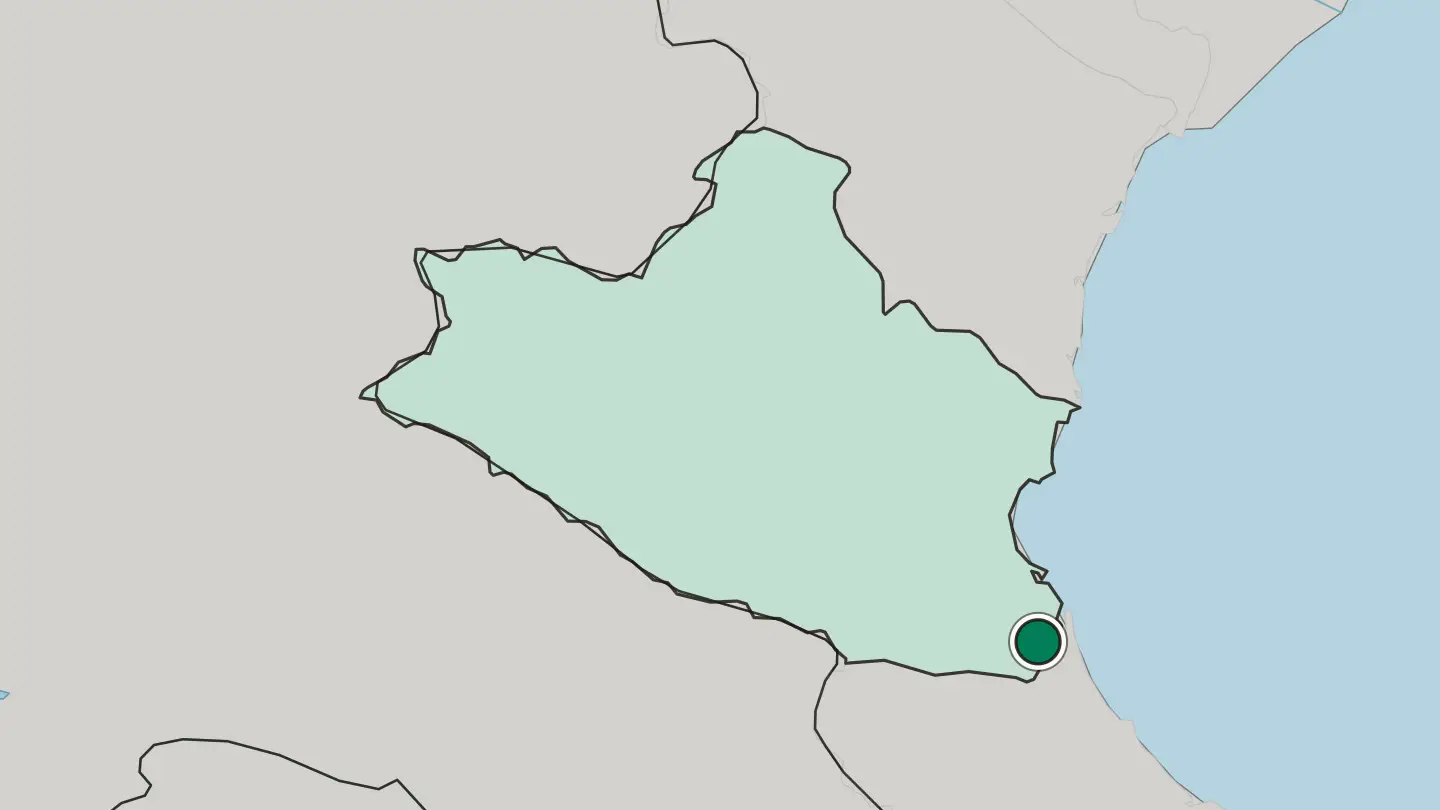
Hotel links are affiliate links: booking through them may earn us a commission, at no extra cost to you. It never affects how places are ranked. How this works
About Tỉnh Nghệ An
What is Tỉnh Nghệ An known for?
Nghệ An is best known as the birthplace of Hồ Chí Minh, born in the village of Kim Liên in Nam Đàn, where his family's thatched house still draws visitors. The province is vast. It runs from the beaches at Cửa Lò, near the city of Vinh, all the way west to the forests of Pù Mát National Park on the border with Laos.
The Lam River threads through the middle of it. Two things carry the region's name beyond its borders: the Ví and Giặm folk songs, sung here for generations, and a long tradition of scholars and revolutionaries.
Where is Tỉnh Nghệ An?
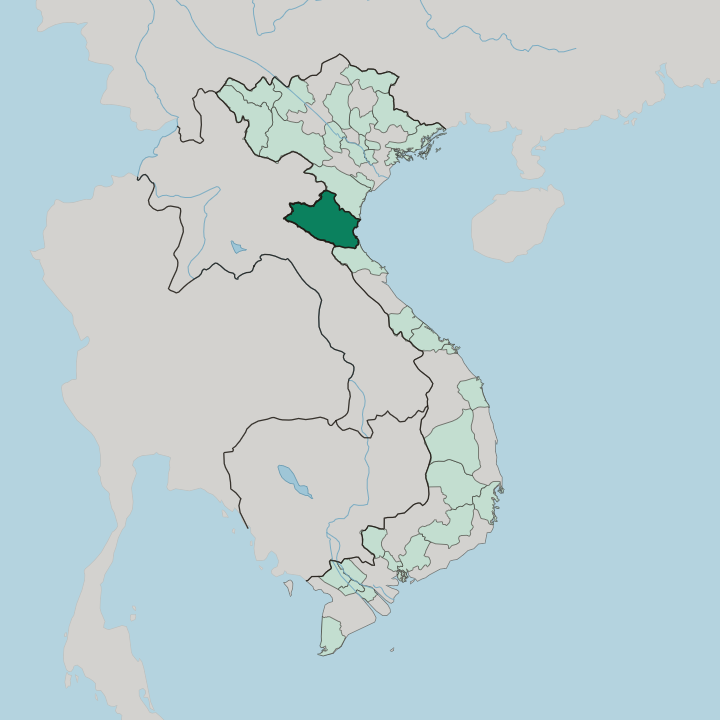
Nghệ An sits in north-central Vietnam, one of the largest of the country's provinces, part of the coastal strip known as the North Central Coast. It shares four borders. Thanh Hóa lies to the north and Hà Tĩnh to the south, the long mountain frontier with Laos runs down the west, and the Gulf of Tonkin washes the eastern shore. Most of the province is upland.
The Trường Sơn range, the Annamite chain that separates Vietnam from Laos, fills the western interior with steep forested ridges, and only a narrow plain near the sea stays flat and low. The Lam River orders that landscape. Also called the Cả, it rises across the border in Laos, gathers its tributaries in the western hills, and runs south-east to empty into the Gulf of Tonkin below Vinh.
The city stands on its north bank, on the coastal plain where most people live. Push inland and the roads climb. Pù Mát National Park protects a broad block of the western forest along the Laos frontier, in the heart of the Annamite Range.
Between the peaks and the beach lies everything else.
What is Tỉnh Nghệ An like?
Nghệ An carries a reputation for producing scholars, and Vietnamese often call it a land that breeds talent. That claim has names behind it. Hồ Chí Minh grew up at Kim Liên, the nationalist Phan Bội Châu came from the same corner of Nam Đàn, and generations of mandarins and revolutionaries trace their roots to these villages along the Lam River.
People here are known for thrift and stubbornness. The local Nghệ accent, heavy and hard for other Vietnamese to follow, is a point of pride rather than embarrassment. Music binds the region to its neighbour Hà Tĩnh.
Together the two provinces gave rise to the Ví and Giặm folk songs, unaccompanied work songs about loyalty, love and hardship that UNESCO added to its heritage list. They still surface at festivals along the Lam River. The food is plain and distinctive.
Vinh is known across Vietnam for its eel, simmered into a peppery soup or porridge that locals eat for breakfast. Vietnamese is the everyday language throughout.
What is the history of Tỉnh Nghệ An?
The name Nghệ An first appears in the records in 1030, when the Lý dynasty fixed it on the southern edge of the Vietnamese realm. For centuries this was a frontier. Its hard ground and poor harvests bred a stubborn and studious people who supplied the imperial court with scholars and later gave the independence movement its leaders.
Hồ Chí Minh was born at Kim Liên in 1890. When the depression of the 1930s hit, the peasants of Nghệ An and neighbouring Hà Tĩnh rose in the Soviet movement of 1930, one of the first communist revolts against French rule.
What is the climate of Tỉnh Nghệ An?
Nghệ An has a tropical monsoon climate, split hard between the seasons. Summers are fierce. A dry foehn wind the locals call the gió Lào pours over the Trường Sơn from Laos, and for weeks the plain around Vinh bakes under some of the hottest, driest air in Vietnam.
Autumn brings the rains, when storms spinning off the Gulf of Tonkin can flood the Lam River. Winters turn cool and grey, damp with drizzle off the northeast monsoon.
How do you get to Tỉnh Nghệ An?
Most travellers reach Nghệ An through Vinh. The city's airport links it by air to Hanoi and Ho Chi Minh City, while its station on the North-South railway puts it roughly five hours from Hanoi by train. Highway QL1A threads the coastal corridor for cars and buses.
Cửa Lò and its beach lie a short hop north of the terminal, and from there the sand runs on toward the mouth of the Lam River. The Nậm Cắn gate crosses west into Laos.
Common questions
What is the best area to stay in Tỉnh Nghệ An?
Vinh: arriving by train or plane. Cửa Lò: a beach stay near the city. Nam Đàn: the Hồ Chí Minh birthplace sites. Con Cuông and the western uplands: the Pù Mát forests and hill country.
Good for
More regions in Vietnam
Updated September 2026