Argentina
Corrientes Province, Argentina — Towns & Travel Guide
Corrientes is a subtropical province of northeast Argentina, hemmed by the Paraná and Uruguay rivers and centred on the vast Iberá marshes.
Hotel links are affiliate links: booking through them may earn us a commission, at no extra cost to you. It never affects how places are ranked. How this works


Towns & cities in Corrientes Province
One town here has its own guide — it links to where to stay.
 Argentina
Corrientes
Corrientes is a subtropical river city on the Paraná in northeastern Argentina, the capital of Corrientes province and a heartland of folk music.Where to stay →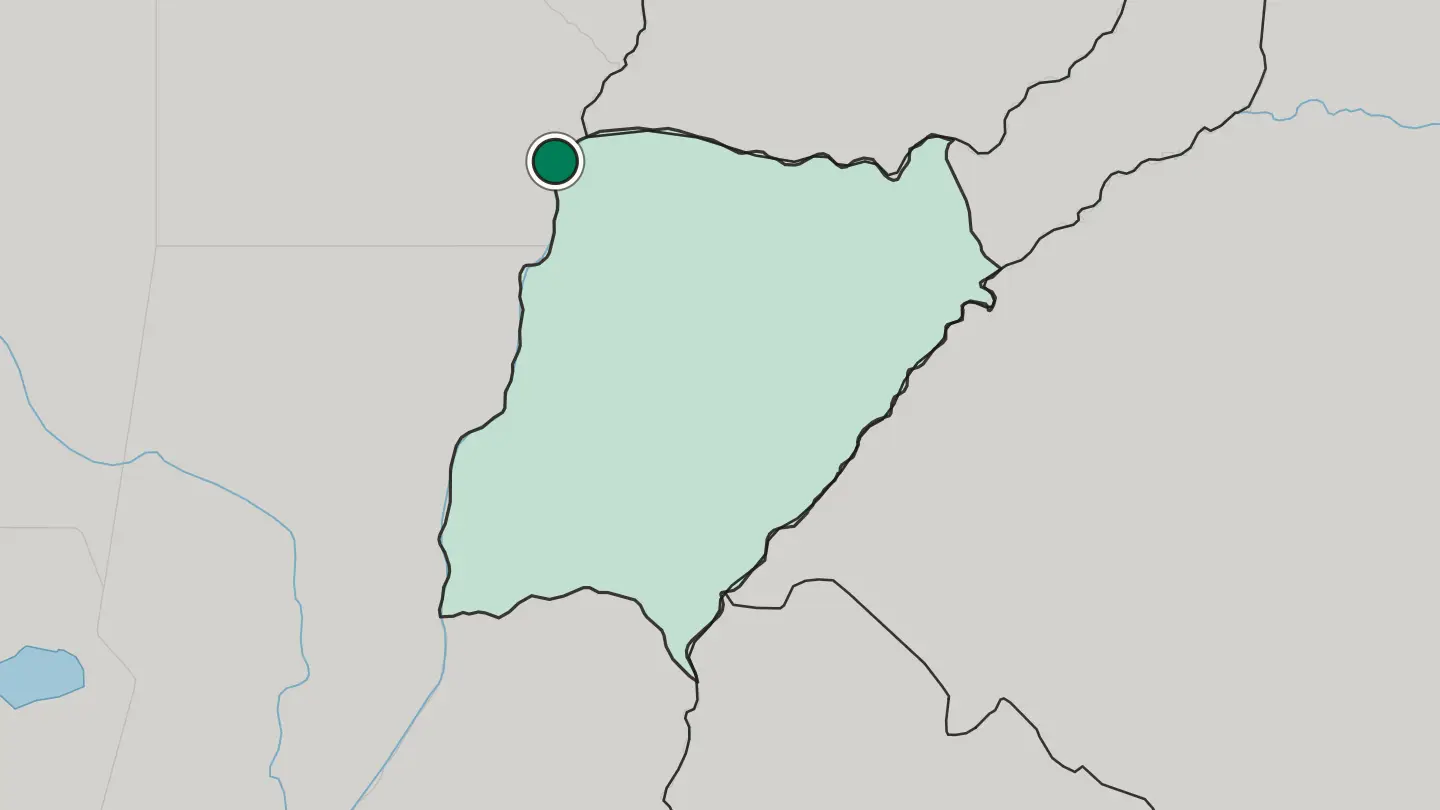
Hotel links are affiliate links: booking through them may earn us a commission, at no extra cost to you. It never affects how places are ranked. How this works
About Corrientes Province
Water defines Corrientes.
What is Corrientes Province known for?
The Iberá Wetlands spread across the province's centre, one of South America's largest freshwater systems, and the reserve at Colonia Carlos Pellegrini is where most travellers go to see capybaras, caimans and marsh deer up close. Corrientes is also the home of chamamé, the accordion-driven folk music of the Argentine Mesopotamia, and one of the few places where Guaraní is an official language beside Spanish. The provincial capital, also called Corrientes, sits on the Paraná in the northwest.
Where is Corrientes Province?
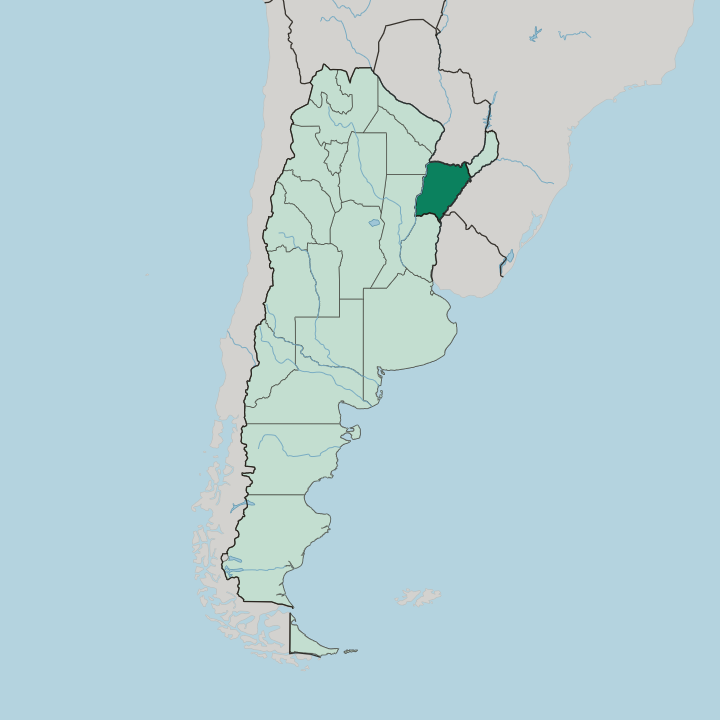
Corrientes sits in the north-eastern corner of Argentina, in the low plains region the country calls the Mesopotamia because two great rivers close it in on either side. The Paraná River runs along the north and west, carrying the border with Paraguay and separating the province from Chaco and Santa Fe across the water. The Uruguay River runs down the east, forming the frontier with Brazil and Uruguay.
Between those two rivers lies a flat, watery country of subtropical plains. Barely a rise breaks it. At its heart spread the Iberá Wetlands, a shallow world of lagoons, floating islands and slow channels covering a large share of the province, fed by rain rather than by any single river and draining slowly south toward the Corriente.
Ranch country and rice fields fill the drier ground around the marsh. Misiones Province adjoins Corrientes to the north-east, the only land neighbour not reached across water. To the south lies Entre Ríos, sharing the strip of land between the two rivers.
The provincial capital stands in the north-west, on the high bank of the Paraná where the river bends past the bridge to Chaco. Almost every edge of Corrientes is a river or a wetland. That standing water shapes the province far more than any hill or ridge ever could.
What is Corrientes Province like?
Culture here is bilingual to the bone. Guaraní is spoken alongside Spanish across the countryside, and in 2004 the province made it an official language, the first in Argentina to raise an Indigenous tongue to that standing. The sound of the place is chamamé.
The accordion-and-guitar folk music grew out of the Guaraní world blended with the melodies the Jesuit missions taught and the dances European settlers brought, and it carries the identity of the Argentine Mesopotamia so strongly that it now sits on the UNESCO list of intangible heritage. Devotion runs through everyday life too. The shrine of the Gauchito Gil near Mercedes draws pilgrims from across the country to a roadside cult born on Corrientes soil, marked by red flags along the highways.
Cattle and the gaucho tradition anchor the rural culture, with estancias working the plains around the marsh. Corrientes also gave Argentina one of its founding figures. José de San Martín, the general who led the wars of independence, was born at Yapeyú on the Uruguay River in 1778.
Rivers, faith and chamamé braid together into the province's grain.
What is the history of Corrientes Province?
The city of Corrientes was founded in 1588 as San Juan de Vera de las Siete Corrientes, a way-station on the Paraná River halfway between Asunción upriver and Buenos Aires downstream. Jesuit missionaries followed. Building reductions among the Guaraní, they raised Yapeyú on the Uruguay River into one of the largest missions before the order was expelled from the whole region.
Corrientes declared itself an autonomous province in 1814, in the turbulent decades after Argentina broke from Spain. The Paraná made the town. Trade on the Paraná kept it tied to that current ever after.
What is the climate of Corrientes Province?
Corrientes is warm and wet the year round. It has a humid subtropical climate with no dry season, so rain falls in every month rather than in one stretch, and the standing water of the Iberá marshes keeps the air heavy. Summers are hot, pushing well past body temperature on the worst days along the Paraná, while winters stay mild with only the odd light frost inland.
The wetlands never really drain. That constant moisture is what keeps the marsh alive.
How do you get to Corrientes Province?
Most travellers fly into the provincial capital. Doctor Fernando Piragine Niveyro International Airport, on the eastern edge of Corrientes city, takes the domestic flights down from Buenos Aires and is the usual starting point for the Iberá Wetlands. Reaching the marshes themselves means a long road transfer, most often from Mercedes to the reserve gate at Colonia Carlos Pellegrini.
Buses run the river highways linking the capital with Goya and the border town of Paso de los Libres, where road crosses the Uruguay River into Brazil.
Common questions
What is the best area to stay in Corrientes Province?
Corrientes city: arriving by air and settling on the Paraná. Colonia Carlos Pellegrini: you want to wake up inside the Iberá marshes. Mercedes: reaching the wetlands from the south. Paso de los Libres: an overland crossing to Brazil.
Good for
More regions in Argentina
Updated September 2026