Argentina
San Juan Province, Argentina — Towns & Travel Guide
San Juan is Argentina's high desert of vineyards and Triassic badlands, a sun-baked province of oasis towns pressed against the Andes.
Hotel links are affiliate links: booking through them may earn us a commission, at no extra cost to you. It never affects how places are ranked. How this works


Towns & cities in San Juan Province
One town here has its own guide — it links to where to stay.

 Argentina
San Juan
San Juan is a city of western Argentina at the foot of the Andes, a sunny wine town of the Cuyo, near the strange rock valleys of the Ischigualasto desert.Where to stay →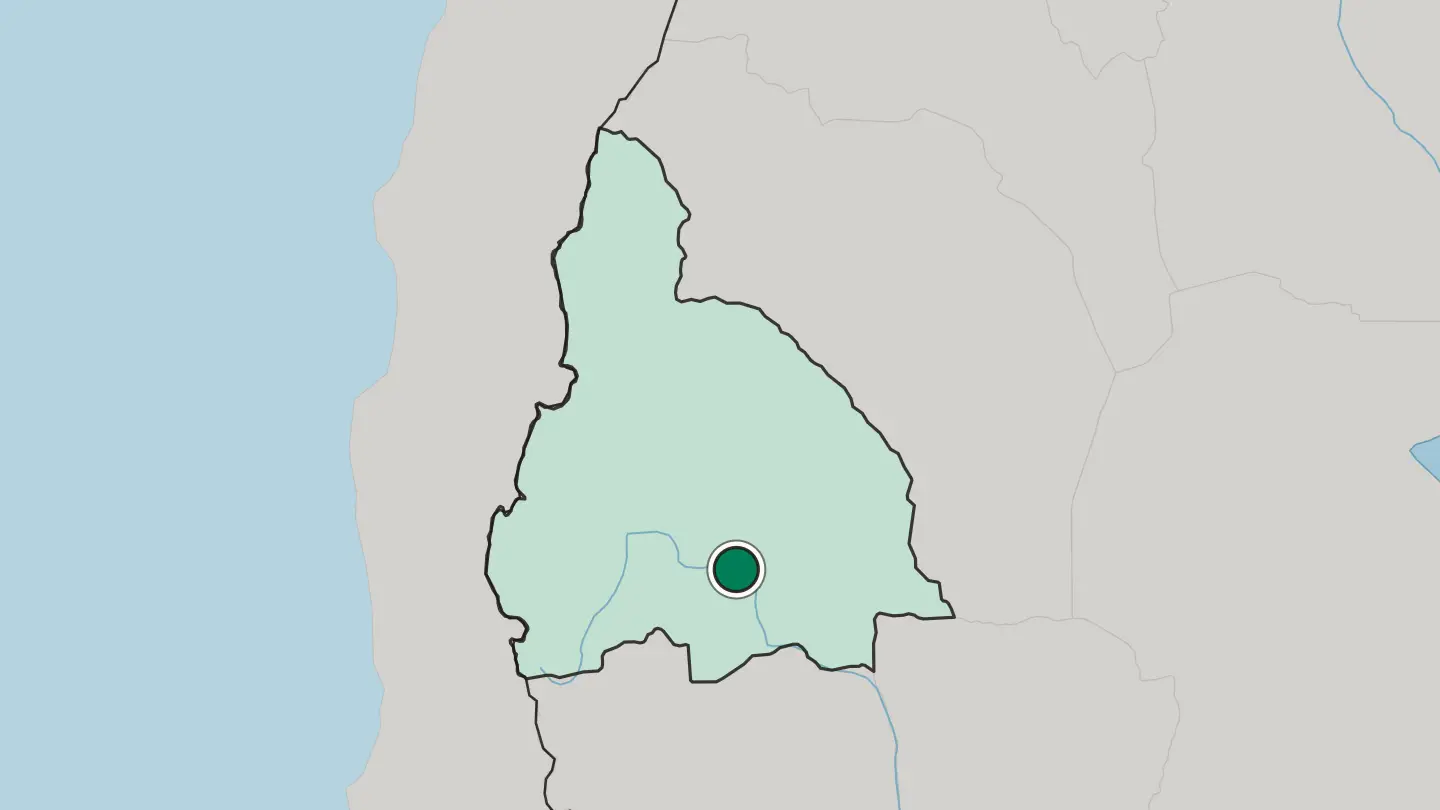
Hotel links are affiliate links: booking through them may earn us a commission, at no extra cost to you. It never affects how places are ranked. How this works
About San Juan Province
What is San Juan Province known for?
Two things carry San Juan's name beyond Argentina: wine and dinosaurs. It pours the country's second-largest volume of wine, and its warehouses lean hard into Syrah, though Malbec, Bonarda, and the white Torrontés fill out the racks. Far to the north-east, the eroded badlands of Ischigualasto Provincial Park hold some of the oldest dinosaur fossils on Earth.
Everything else grows from water. The San Juan River feeds the irrigated oases where the vines, the olives, and nearly every town sit, ringed by bare Andean rock.
Where is San Juan Province?
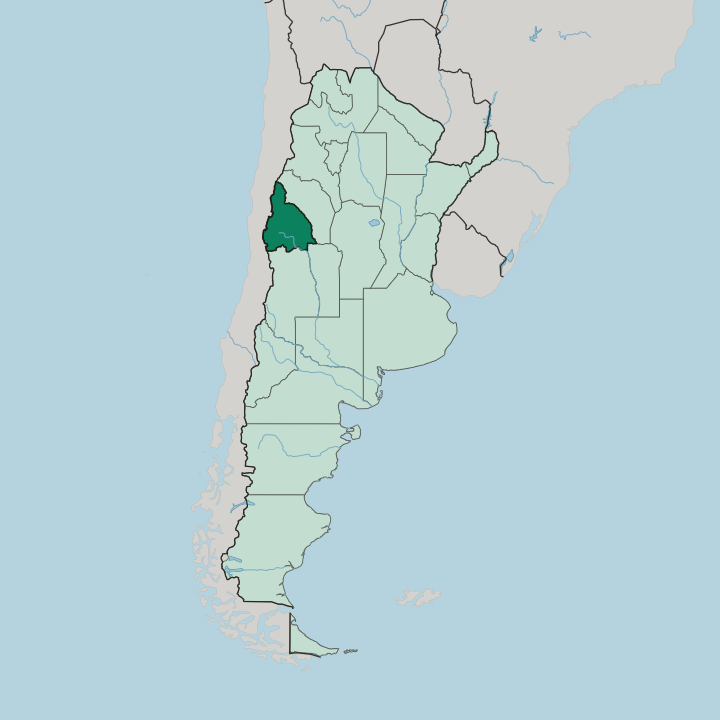
San Juan lies in western Argentina, in the arid Cuyo region against the spine of the Andes. Chile sits over the mountains to the west, along a border where peaks climb past 6,000 metres. Three Argentine provinces ring the rest: La Rioja to the north and east, San Luis to the south-east, and Mendoza to the south. This is dry, folded country.
Bare cordillera fills the west, long north-south ranges and wide desert basins run through the middle, and only threads of green break the brown. Those green threads are the story. The San Juan River gathers Andean snowmelt and pushes east into the Tulúm Valley, where the capital and most of the population sit.
Farther north, the Jáchal River waters a second belt of oasis towns. Away from the rivers the land is stone and scrub, rising in the far north-east to the striped clay hills of Ischigualasto Provincial Park, the moon-like badlands the province is known for. Water decides where people live here, and everything else is desert.
What is San Juan Province like?
Life here runs on wine, sun, and irrigation. The province built its identity in the vineyards along the San Juan River, and the harvest and its festivals still mark the calendar as much as any holiday. Spanish is the language.
The rhythm is provincial and unhurried, shaped by long hot afternoons and the siesta that empties the streets at midday. San Juan claims one of Argentina's towering figures. Domingo Faustino Sarmiento, the writer and reforming president who built the country's public schools, was born in the capital, and the province keeps him close as its favourite son.
The Zonda gives the place a darker signature too. When that hot, dry wind pours down off the Andes it can lift the temperature by ten degrees in an hour, and locals blame it for foul tempers and sleepless nights. Sarmiento even named his first newspaper after it.
Beyond the capital, the culture turns rural and Andean, tied to small oasis towns, mountain passes, and the old routes toward Chile.
What is the history of San Juan Province?
The Spanish captain Juan Jufré founded the city of San Juan in 1562, along a river the local Huarpe people already farmed by irrigation. The province declared its own autonomy in 1820 during the wars that made Argentina. Its defining modern event was violent and sudden.
In 1944 an earthquake levelled much of the capital and killed thousands, and the low, wide-streeted city that stands in its place is the deliberate rebuild that followed.
What is the climate of San Juan Province?
San Juan is dry to the bone. Sitting in the rain shadow of the Andes, it is a continental semi-desert of blazing sun, thin rainfall, and a wide gap between hot days and cold nights. Summers run fierce, with afternoons that can push well past 40 degrees, while winters stay cool and clear.
The wild card is the Zonda, the hot dry wind that spills off the mountains and can spike the temperature by ten degrees in an hour. Clear skies are the norm, which is exactly why astronomers built observatories out near Barreal.
How do you get to San Juan Province?
Most arrive by air or road from Buenos Aires. The capital, San Juan, has the province's airport and its bus terminal, and it makes the natural landing point before any trip into the hills. Fly here first.
Neighbouring Mendoza, a short hop south, is the other common gateway, with more flights and a larger airport. From the capital, paved routes fan out west into the Calingasta valley, north through Jáchal toward Rodeo, and north-east to the badlands of Ischigualasto Provincial Park. The high passes over the Andes into Chile close in winter snow.
Common questions
What is the best area to stay in San Juan Province?
San Juan: wine and the parks from a capital base. Barreal: land-sailing and dark-sky astronomy under the high Andes. Rodeo: windsurfing and kitesurfing on the Cuesta del Viento.
Good for
More regions in Argentina
Updated September 2026