Argentina
Misiones Province, Argentina — Towns & Travel Guide
Misiones is the red-earth province in Argentina's far northeast, wedged between Brazil and Paraguay and home to the Iguazú Falls.
Hotel links are affiliate links: booking through them may earn us a commission, at no extra cost to you. It never affects how places are ranked. How this works


Towns & cities in Misiones Province
Pick a town or city — each links to where to stay.

 Argentina
Posadas
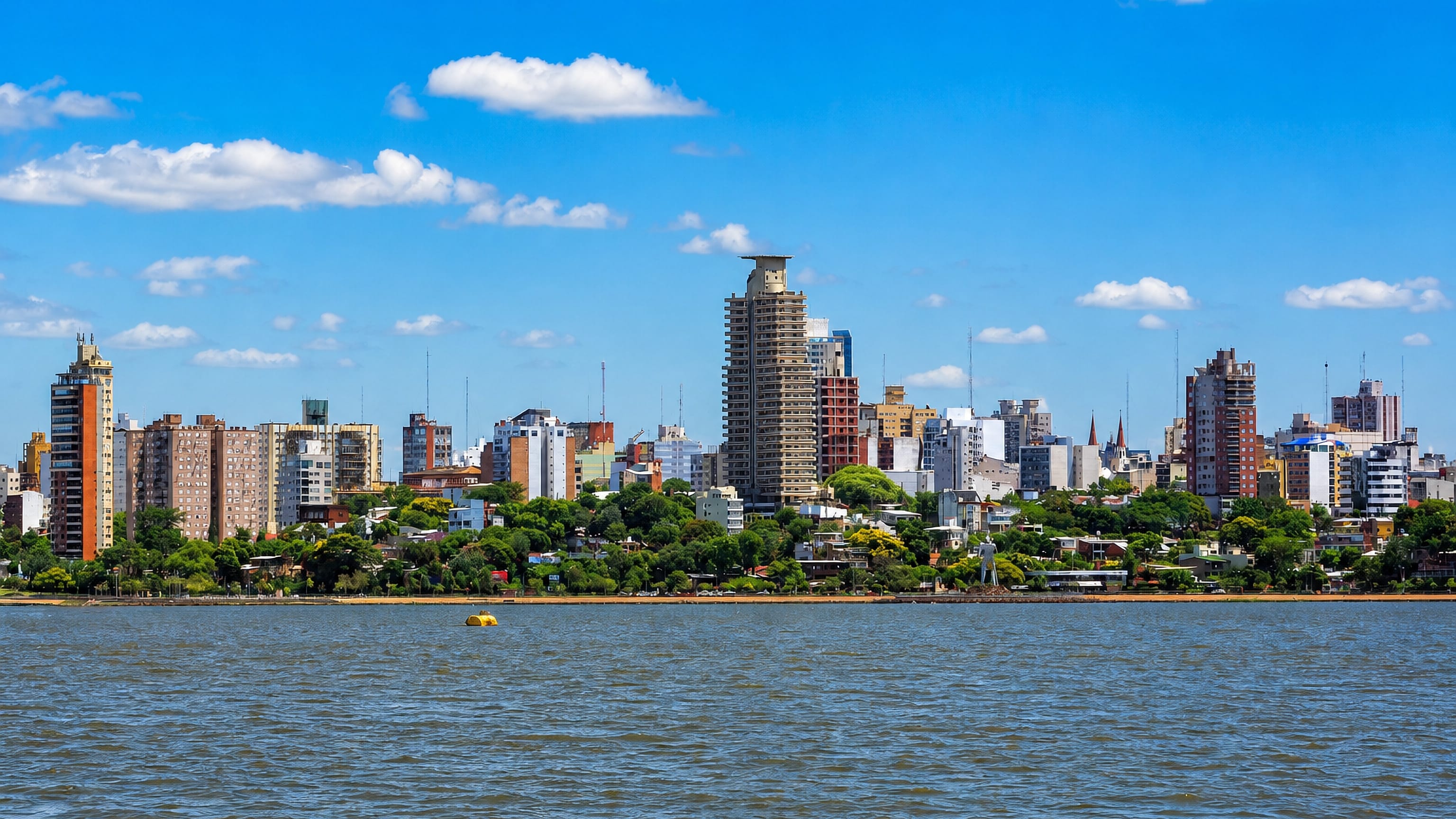
Posadas is the capital of Misiones in northeastern Argentina, a river city on the Paraná in the red-earth land of yerba mate and the old Jesuit missions.Where to stay →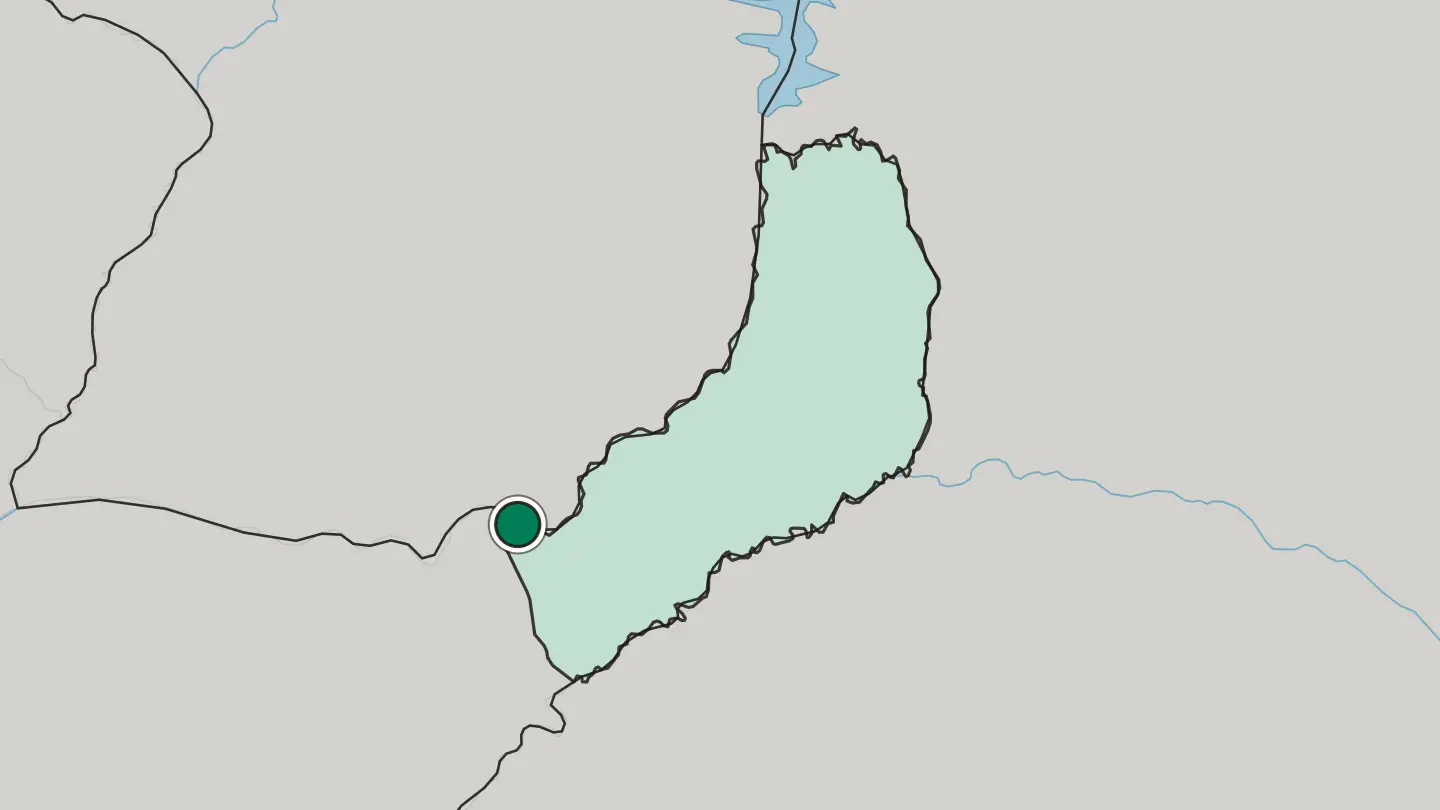
 Argentina
Oberá
Oberá, founded in 1927 as Villa Svea, is the head town of Argentina's Oberá Department, on National Route 14 east of Posadas in Misiones.Where to stay →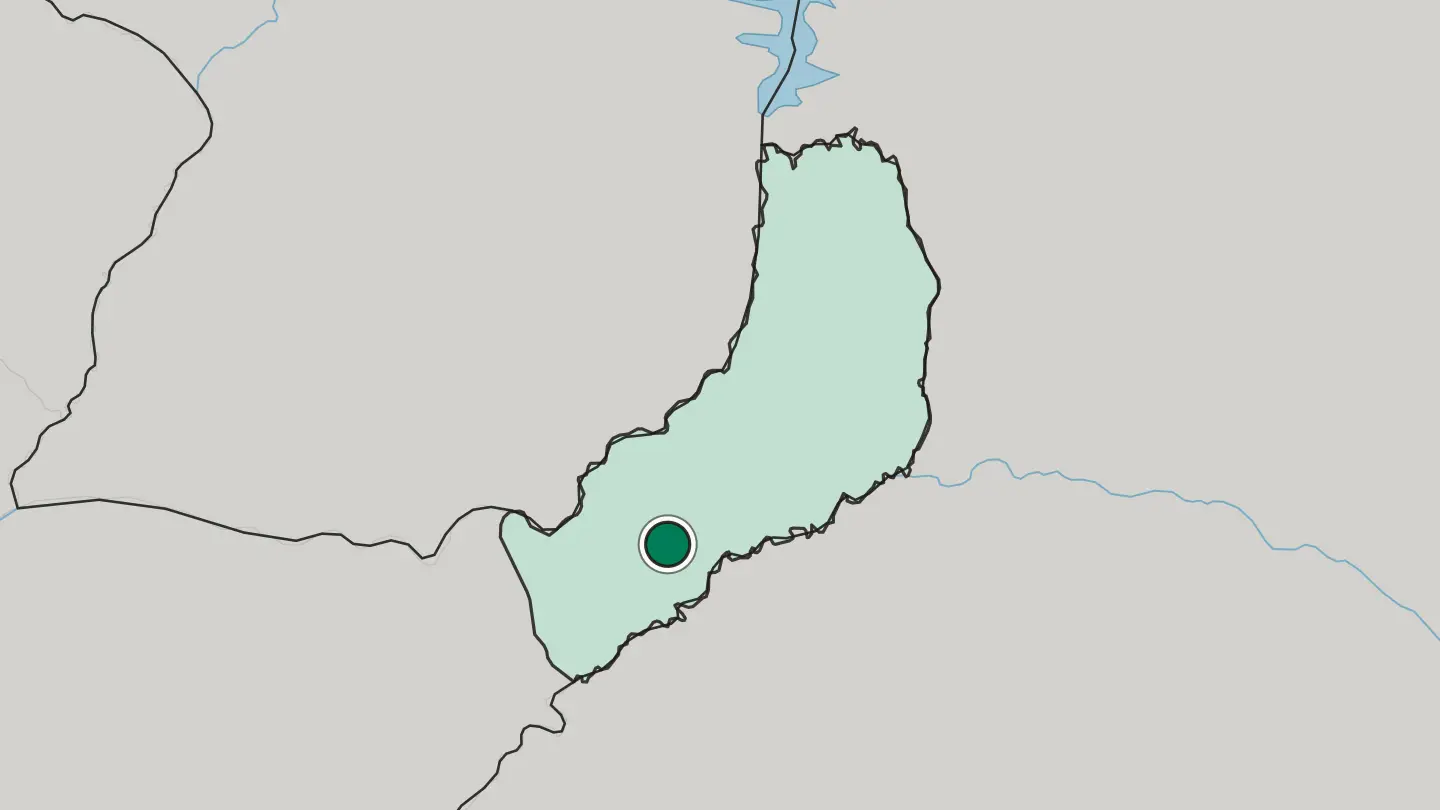
Hotel links are affiliate links: booking through them may earn us a commission, at no extra cost to you. It never affects how places are ranked. How this works
About Misiones Province
The Iguazú Falls are the reason most people come.
What is Misiones Province known for?
Hundreds of cascades pour over a basalt escarpment where the Iguazú River drops into a gorge on the border with Brazil, and the roaring central chasm called the Devil's Throat is the single most-photographed sight in the whole country. Ruins pull in the rest. At San Ignacio Miní, red sandstone walls mark a Jesuit mission the Guaraní built four centuries ago.
The province is also Argentina's yerba mate heartland, and rows of the clipped tea bush cover its hills.
Where is Misiones Province?
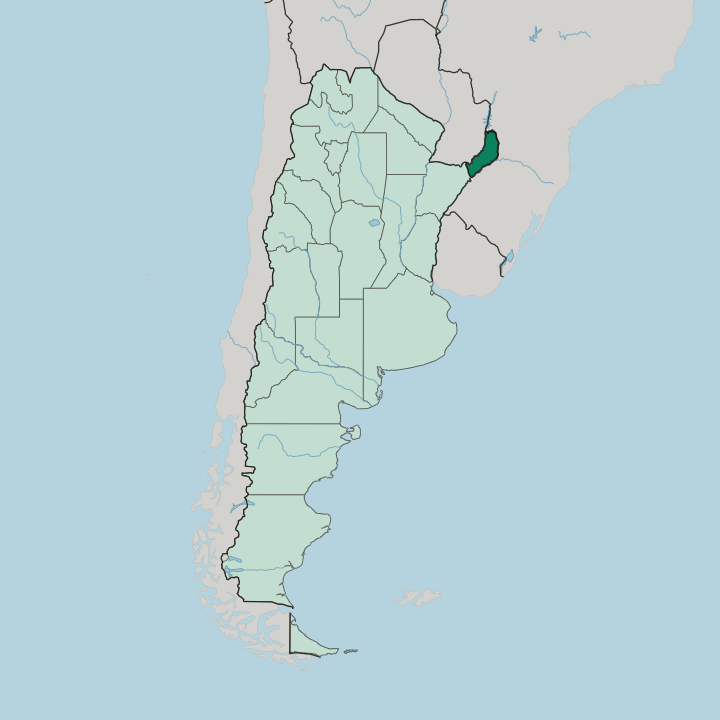
Misiones is a long finger of land in the northeastern corner of Argentina, pointing up between Brazil and Paraguay. Three rivers draw almost its entire outline. The Paraná River runs down the western side, dividing the province from Paraguay and then Brazil; the Uruguay River traces the eastern and southern edge against Brazil; and the short Iguazú River seals the northern tip.
Only in the southwest does Misiones touch another Argentine province, sharing a land border there with Corrientes Province. Everywhere else the boundary is water. The ground itself is unmistakable.
Misiones sits on a spur of the Paraná Plateau, a slab of old basalt whose iron-rich soil weathers to a deep brick red, and locals call the province the tierra colorada for it. That red land rises and folds into low ranges and steep-sided stream valleys rather than the flat pampa most visitors picture of Argentina. Subtropical rainforest, the Paranaense jungle, once covered nearly all of it and still cloaks the protected north around the Iguazú National Park.
Rivers cut the plateau everywhere, and countless smaller falls tumble off its edges. The land climbs gently from the Paraná in the west toward the higher interior. No corner of Argentina is greener or wetter.
What is Misiones Province like?
Mate is the thread that ties the province together. Misiones grows most of the yerba mate that Argentina drinks, and the clipped green bush covers hillside after hillside; the gourd and metal straw pass from hand to hand on every porch and in every plaza. Its people are a mixture.
The Guaraní were here first, and their language still colours the place names and the everyday Spanish, but the twentieth century brought waves of settlers from Poland, Ukraine, Germany, Scandinavia and Brazil onto the cheap red land. Oberá celebrates exactly that. Its Fiesta Nacional del Inmigrante each September stages a fortnight of parades, food and dance from a dozen homelands under one roof.
The Jesuit past sits underneath all of it. From 1609 the Society of Jesus and the Guaraní together raised some thirty mission towns across this frontier, and the roofless red-stone shell of San Ignacio Miní is the finest that survives. Music and craft run through the province too, from chamamé accordion to the carved wooden saints left by the missions.
The forest shapes daily life as much as any border does. This is a working landscape of tea rows, timber and river towns, not a museum. It feels closer to the tropics than to Buenos Aires.
What is the history of Misiones Province?
The name says it. The province is called for the Jesuit missions, and from 1609 the Society of Jesus gathered the Guaraní into self-governing mission towns across this stretch of forest, teaching farming and stone-building until Spain expelled the order in 1767 and the reductions fell to ruin. Rising jungle then sealed San Ignacio Miní and its neighbours away by the Iguazú River for a century and more.
Argentina held the land as a national territory for decades before it finally became a full province in 1953. Guaraní, Jesuit and immigrant each marked the map.
What is the climate of Misiones Province?
Misiones is the wettest province in Argentina, humid and subtropical with rain in every month and no dry season at all. Summers are hot and heavy, the air thick over the Paraná, while winters stay mild and green with only rare cold snaps pushing up from the south. That steady warmth and downpour is what feeds the Paranaense rainforest and keeps the Iguazú River high enough to thunder over the falls year-round.
Expect humidity. The red soil turns to sticky mud after the storms.
How do you get to Misiones Province?
Most visitors fly straight to the falls, landing at Puerto Iguazú's airport on flights from Buenos Aires that cross the whole length of Argentina in under two hours. Posadas keeps an airport of its own. The overland route follows the Paraná River up from Corrientes Province in the southwest, the one land approach that does not cross an international border anywhere along the way.
Bridges reach across to Paraguay at Posadas and to Brazil near Puerto Iguazú. The two great draws sit apart. The falls in the north and the Jesuit ruins near the capital are a few hours' drive from each other.
Common questions
What is the best area to stay in Misiones Province?
Puerto Iguazú: reaching the Iguazú Falls. Posadas: the Jesuit missions route. Oberá: immigrant-heritage festivals and tea farms.
More regions in Argentina
Updated September 2026