Brazil
Paraíba, Brazil — Towns & Travel Guide
Paraíba is Brazil's easternmost state, João Pessoa on the Atlantic, Campina Grande's forró inland, and the semi-arid sertão beyond.
Hotel links are affiliate links: booking through them may earn us a commission, at no extra cost to you. It never affects how places are ranked. How this works


Towns & cities in Paraíba
Pick a town or city — each links to where to stay.

 Brazil
João Pessoa
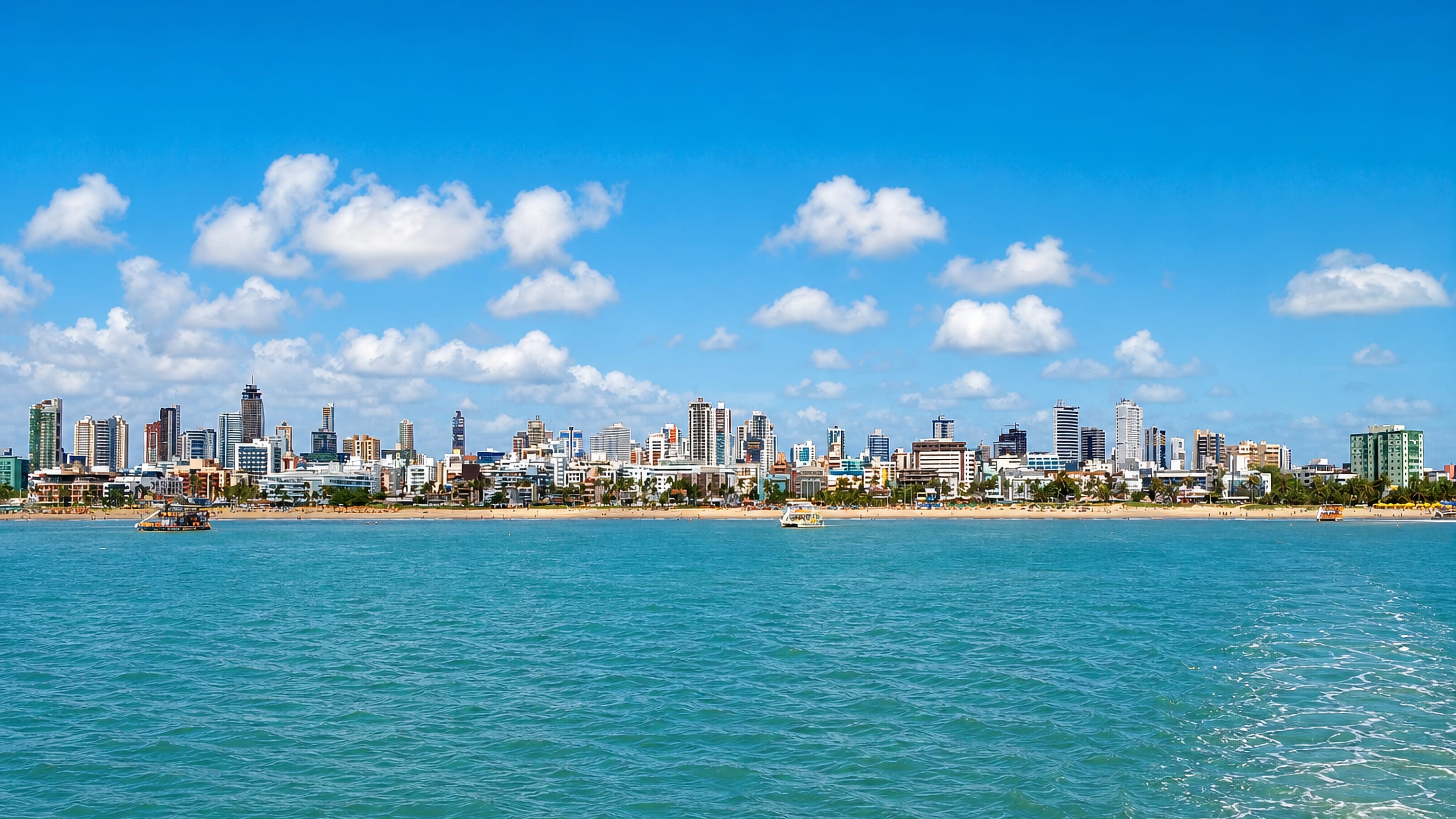
João Pessoa is the capital of Paraíba in northeastern Brazil, a port on the right bank of the Paraíba do Norte, settled in 1585.Where to stay →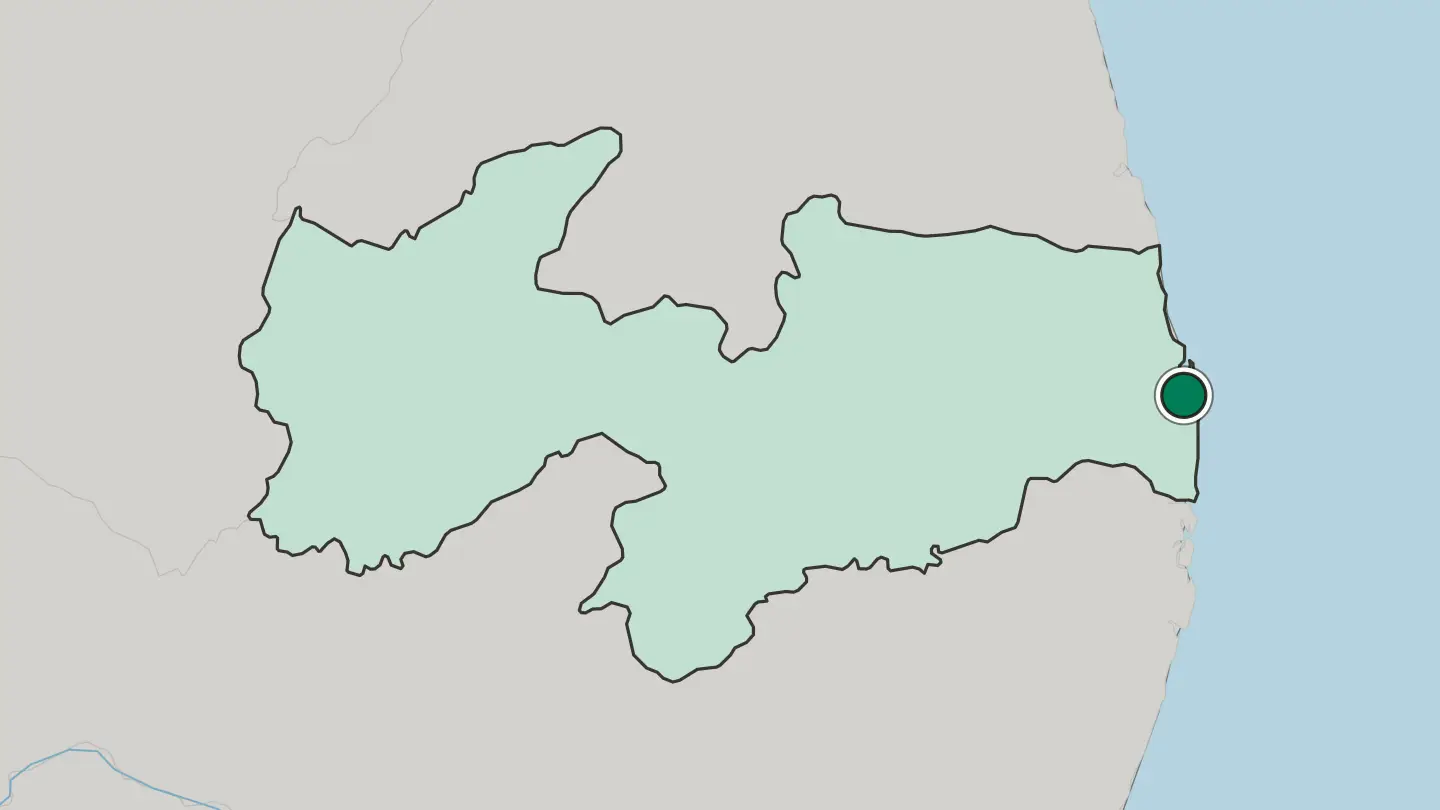
 Brazil
Campina Grande
Campina Grande stands on the agreste of Paraíba, second city of the state after João Pessoa. São João fills June.Where to stay →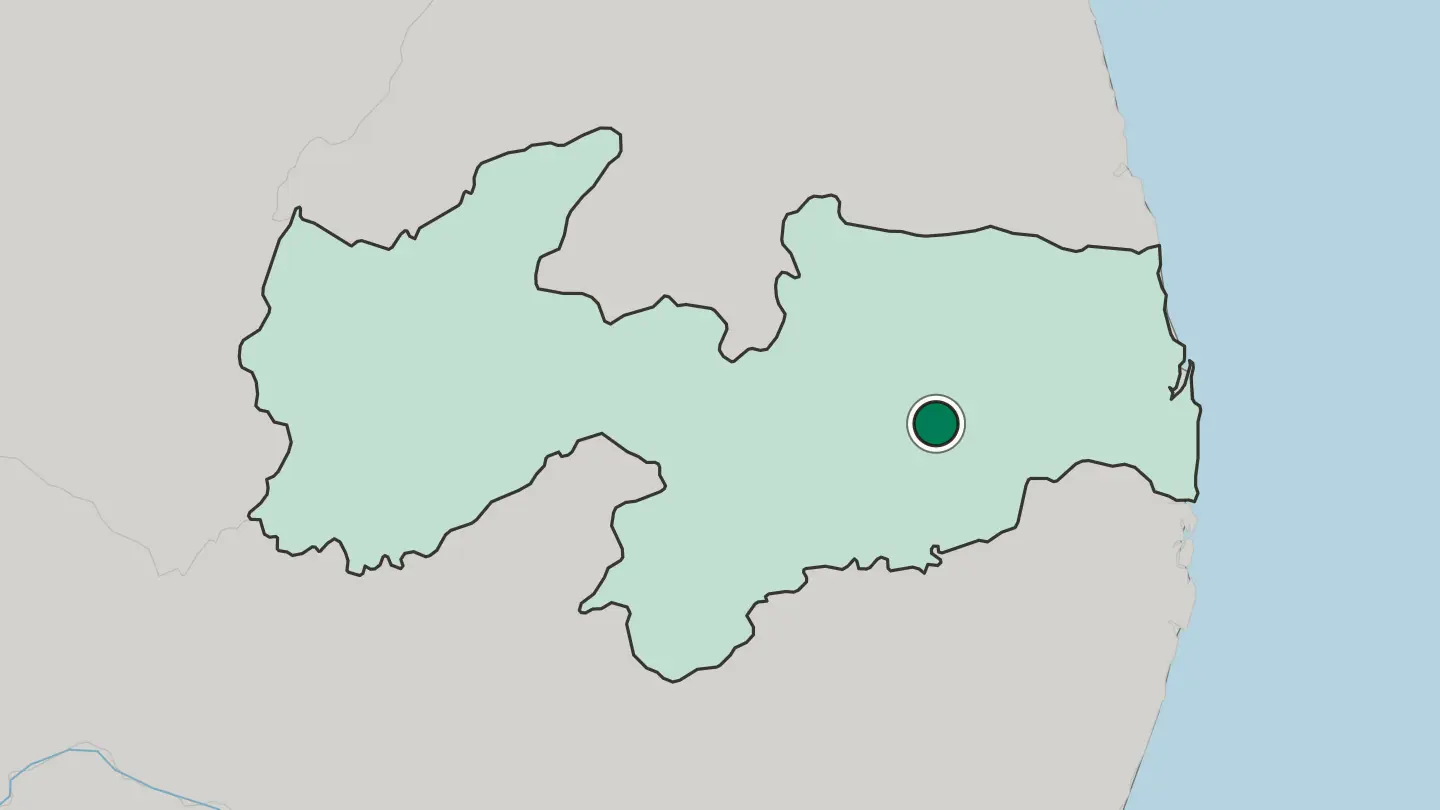
Hotel links are affiliate links: booking through them may earn us a commission, at no extra cost to you. It never affects how places are ranked. How this works
About Paraíba
What is Paraíba known for?
Paraíba's reputation rests on a headland and a festival. Its coast holds Ponta do Seixas, the easternmost point of the Americas, where the continent first catches the morning sun just below the Cabo Branco lighthouse outside João Pessoa. Inland, Campina Grande throws the largest São João festival in Brazil, thirty-one nights of forró, quadrilha dancing and bonfires every June.
The capital's warm-water beaches and reef pools draw the coastal crowd. The dry sertão draws everyone else.
Where is Paraíba?
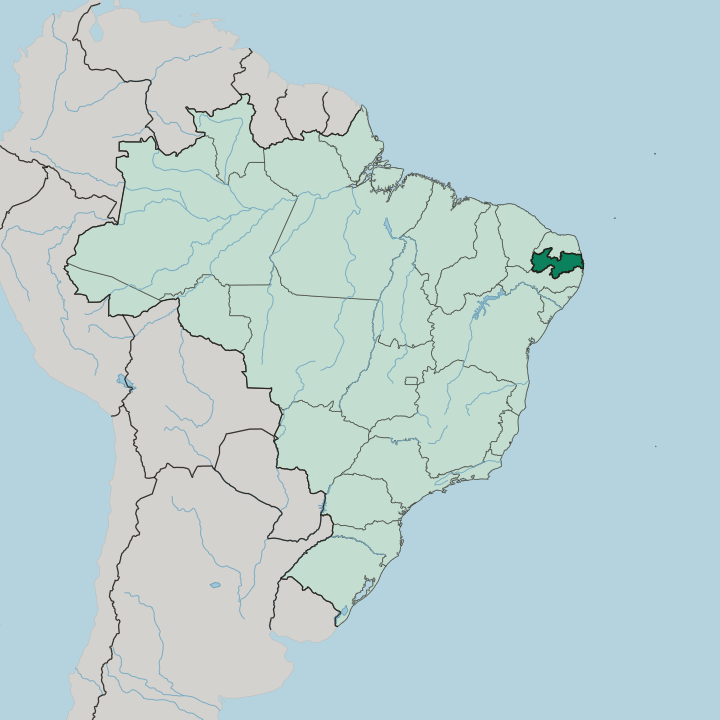
Paraíba occupies the eastern shoulder of the Northeast, one of Brazil's smaller states. Its shore reaches Ponta do Seixas, where the Americas run out into the Atlantic, just south of the capital. Rio Grande do Norte lies along the northern border and Ceará to the west, while Pernambuco wraps the entire southern edge and the Atlantic fills the east. From that ocean coast the land climbs inland in three distinct belts.
The humid coastal strip of the zona da mata gives way to the hillier agreste, and beyond that spreads the dry sertão. Wet to dry, in one drive. The Borborema plateau is the hinge of all this.
Its crystalline uplands rise across the middle of the state and wring the rain out of the Atlantic winds, leaving the western sertão parched; Pico do Jabre, the highest ground in Paraíba, stands well above the plateau around it. The Paraíba do Norte river, which gives the state its name, gathers in the Serra de Jabitacá near Monteiro out in the sertão and runs east for some 360 kilometres to meet the Atlantic at Cabedelo, just north of João Pessoa. Thorny caatinga scrub covers the dry backlands it crosses.
The distances are small; the contrasts are not.
What is Paraíba like?
Music sets the pulse here, and it is forró. The accordion, zabumba drum and triangle of a forró trio carry the sound of the sertão, songs of drought, migration and saudade for the backland farms people left behind. Campina Grande is its stronghold.
Every June the city hands its Parque do Povo over to the largest São João festival in Brazil, and the streets fill with quadrilha dancers, bonfires and stalls of corn cake and canjica. Alagoa Grande, up in the state, gave forró one of its founding voices in Jackson do Pandeiro. The beat is unmistakable.
Away from the festival, older traditions hold. Bobbin-lace rendeiras still work thread by hand in the coastal towns, and cordel chapbooks, cheap woodcut-printed ballads sold in market stalls, keep the region's storytelling alive. Catholic devotion runs through it, and the capital itself carries the name of Nossa Senhora das Neves, the patron saint on whose feast day it was founded.
Portuguese is the language, coloured by a strong Northeastern accent and its own backland vocabulary. Life in the sertão has always been shaped by the rhythm of drought and rain. That rhythm shows up in the songs.
What is the history of Paraíba?
Portuguese colonists founded the capital in 1585 as Filipeia de Nossa Senhora das Neves, a base for pushing sugar planting north against the Potiguara and their French allies. The Dutch seized it in 1634 and held the captaincy as Frederikstad for two decades before Portugal drove them out. It became a state of the Brazilian republic in 1889.
The old capital was renamed in 1930 for João Pessoa, the state president whose assassination that year helped ignite the revolution that carried Getúlio Vargas to power. Coast and sertão grew apart early.
What is the climate of Paraíba?
Paraíba runs two climates at once. The coast around João Pessoa is hot and humid all year, its heaviest rain falling from autumn into the middle of the year off the Atlantic. Cross the Borborema plateau and the pattern flips.
The sertão is semi-arid and often parched, its sparse rain squeezed into a few weeks and its caatinga scrub built to wait out long droughts. Temperatures stay warm everywhere. Only the rain really changes.
How do you get to Paraíba?
Most travellers fly into Presidente Castro Pinto International Airport on the edge of João Pessoa, which connects mainly to São Paulo, Rio de Janeiro and Brasília rather than abroad. Many arrive instead through Recife, the larger hub a couple of hours down the coast in Pernambuco. From there, the highways carry you onward through Paraíba.
The BR-101 runs the coast north and south, while the BR-230 cuts west across the agreste and into the sertão toward Campina Grande and beyond. Buses link the beach towns.
Common questions
What is the best area to stay in Paraíba?
João Pessoa: a first base on the Paraíba coast. Campina Grande: forró and the June São João season. Litoral Sul (Conde): the sandstone cliffs at Coqueirinho and Tambaba. The sertão (Sousa): the caatinga backlands and Sousa's dinosaur trackways.
Good for
More regions in Brazil
Updated September 2026