Brazil
Pará, Brazil — Towns & Travel Guide
Pará is Brazil's second-largest state, where the lower Amazon breaks around Marajó and reaches the Atlantic past the port of Belém.
Hotel links are affiliate links: booking through them may earn us a commission, at no extra cost to you. It never affects how places are ranked. How this works


Towns & cities in Pará
One town here has its own guide — it links to where to stay.

 Brazil
Belém
Belém is the capital of Pará, a port on the Pará River near the mouth of the Amazon in northern Brazil, founded in 1616.Where to stay →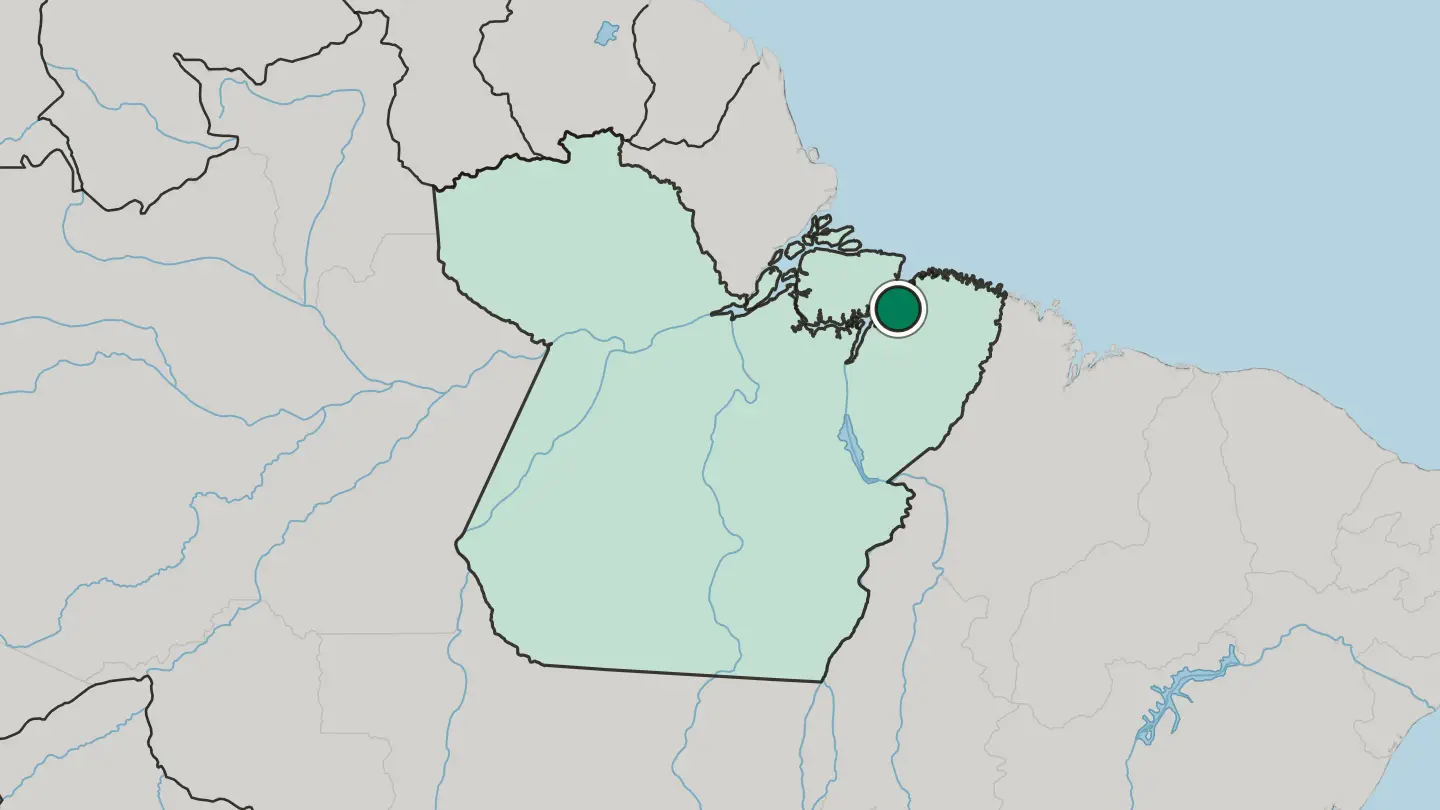
Hotel links are affiliate links: booking through them may earn us a commission, at no extra cost to you. It never affects how places are ranked. How this works
About Pará
Pará is Amazon country.
What is Pará known for?
The lower Amazon River finishes its run here, splitting around Marajó, one of the largest river islands on Earth, before spilling into the Atlantic through the wide Pará River. Belém anchors the state at that river mouth, a port city known for the Círio de Nazaré procession and the riverside stalls of the Ver-o-Peso Market. Upriver lie the white-sand beaches of Alter do Chão on the clear Tapajós, and far to the south the Carajás Mine cuts the world's largest iron deposit from the forest.
Where is Pará?
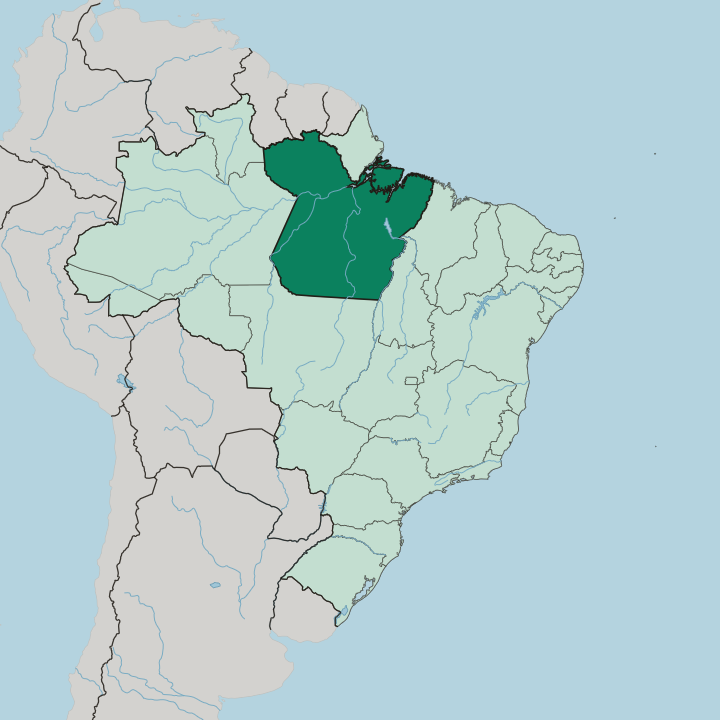
Pará spreads across northern Brazil, the second-largest of the country's states after neighbouring Amazonas. The lower Amazon River crosses it from west to east and breaks apart near the coast into a maze of channels and islands. The largest of them is Marajó, a river island bigger than Belgium that splits the flow: the Amazon proper runs to the north, while the broad Pará River and the estuary of the Tocantins carry the southern channel past Belém. Amapá lies across the great river to the north, Maranhão to the east, and the states of the central plateau to the south.
Rainforest covers most of the interior. Two great clearwater rivers drain the southern forest and run north into the Amazon, the Xingu and the Tapajós, each wider than most European rivers. The land is low and flat along the water.
It only rises in the far south-east, where the Serra dos Carajás lifts out of the forest above Parauapebas and holds the iron that made the region famous. Santarém stands at the halfway point, where the blue Tapajós pours into the brown Amazon. The Atlantic closes the whole system off to the north-east, at the drowned mouth where the river finally gives out into salt water.
What is Pará like?
Pará eats differently from the rest of Brazil. The kitchen here is built on the forest and the river: açaí served thick and savoury with fish, the numbing jambu leaf in a bowl of tacacá, duck stewed in the wild manioc broth called tucupi. Ver-o-Peso, the riverfront market in Belém, sells all of it beside baskets of Amazon fruit and bundles of medicinal bark.
Much of the flavour is Indigenous. The Portuguese and the descendants of enslaved Africans added the rest, and the three have cooked together for four centuries. Faith runs on its own calendar.
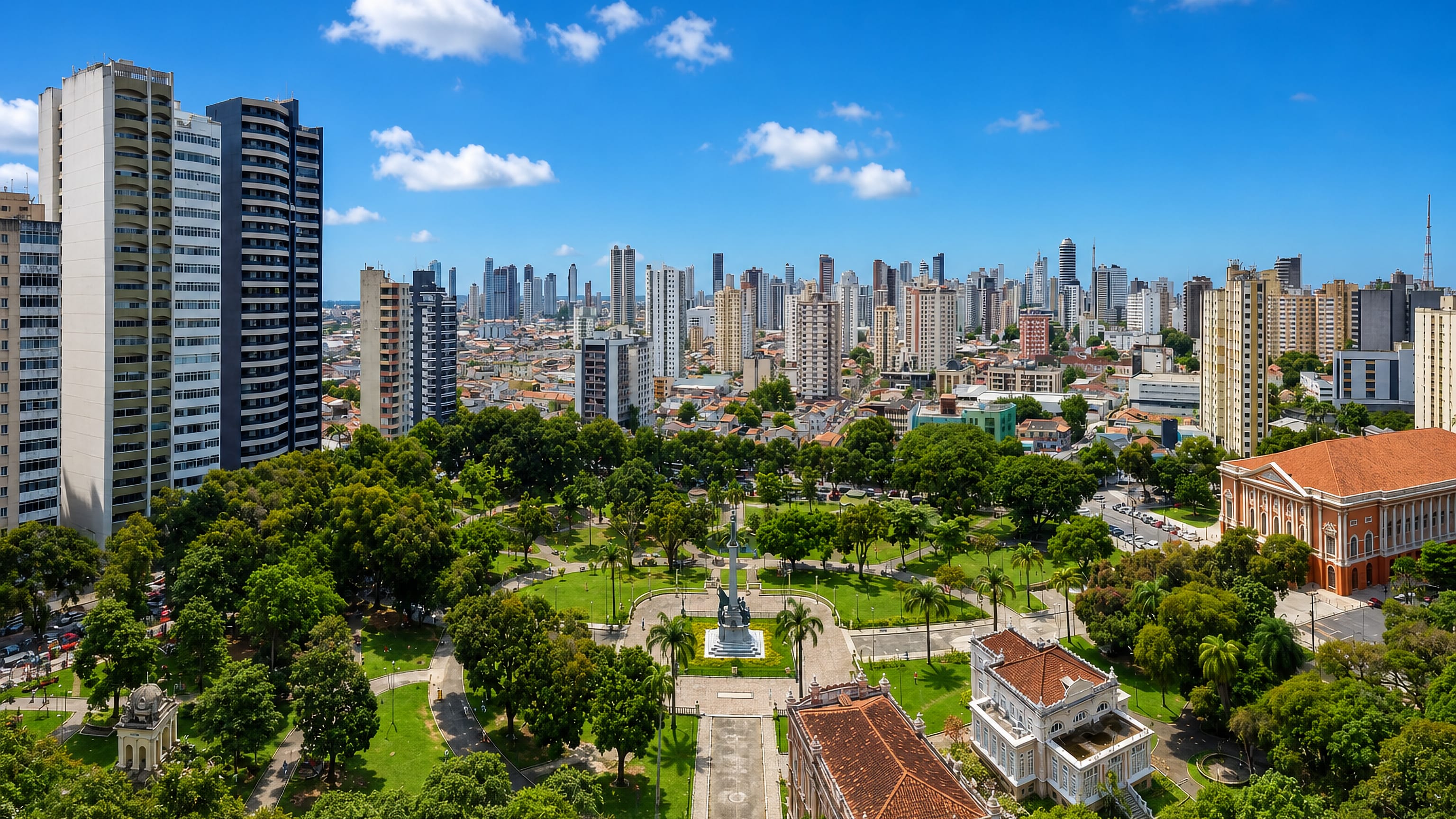
Every October the Círio de Nazaré pulls a crowd of millions through Belém behind an image of the Virgin, one of the largest Catholic processions anywhere. The city itself still wears the rubber boom: mango-lined avenues, an iron market hall, a theatre built when Amazon latex paid for marble. Out on Marajó, potters copy the geometric designs their ancestors pressed into clay long before the Europeans came.
Carimbó drums and the electric guitarrada carry the sound of the coast. Brega ballads fill the bars near the Belém docks after dark. It is Amazonian first, Brazilian second.
What is the history of Pará?
The Portuguese planted Belém at the mouth of the Amazon in 1616, the first European foothold on the river and a fort meant to keep the French and Dutch out. The whole Amazon basin was governed from here as the captaincy of Grão-Pará. Independence came hard.
Pará only joined the new Brazilian empire in 1823, and a decade later the Cabanagem revolt, one of the bloodiest popular uprisings in Brazil's history, tore the province apart. A rubber fortune later poured through Belém before the trade collapsed, and the state took its modern form in 1889.
What is the climate of Pará?
Pará sits on the equator, and the heat barely moves all year. Belém is hot and sticky from dawn to dusk, the air heavy under afternoon thunderheads that break almost daily near the coast. The calendar splits into wet and less-wet rather than hot and cold.
The heaviest rains fall from December through May, when the rivers rise and the Amazon spreads over its floodplain; the drier half of the year, from June onward, is when the Tapajós beaches at Alter do Chão emerge. Cool weather never really arrives.
How do you get to Pará?
Almost everyone arrives through Belém. Its Val de Cans airport is the main door into the eastern Amazon, with flights down from São Paulo and across from Manaus. Santarém has the other airport, handy for the Tapajós and Alter do Chão halfway up the river.
The old way still works too: riverboats thread the Amazon between Belém, Santarém and Manaus, hanging with hammocks and running for days. Roads reach the mining south around Marabá, but the river stays the region's real highway.
Common questions
What is the best area to stay in Pará?
Belém: a first taste of the Pará Amazon. Santarém: reaching the Tapajós beaches. Marajó: buffalo ranches and tidal beaches. Parauapebas: the Carajás mining frontier.
Good for
More regions in Brazil
Updated September 2026