Brazil
Pernambuco, Brazil — Towns & Travel Guide
Pernambuco runs from Recife's Atlantic beaches through the Agreste to the semi-arid Sertão, three landscapes in one Brazilian state.
Hotel links are affiliate links: booking through them may earn us a commission, at no extra cost to you. It never affects how places are ranked. How this works


Towns & cities in Pernambuco
Pick a town or city — each links to where to stay.

 Brazil
Recife
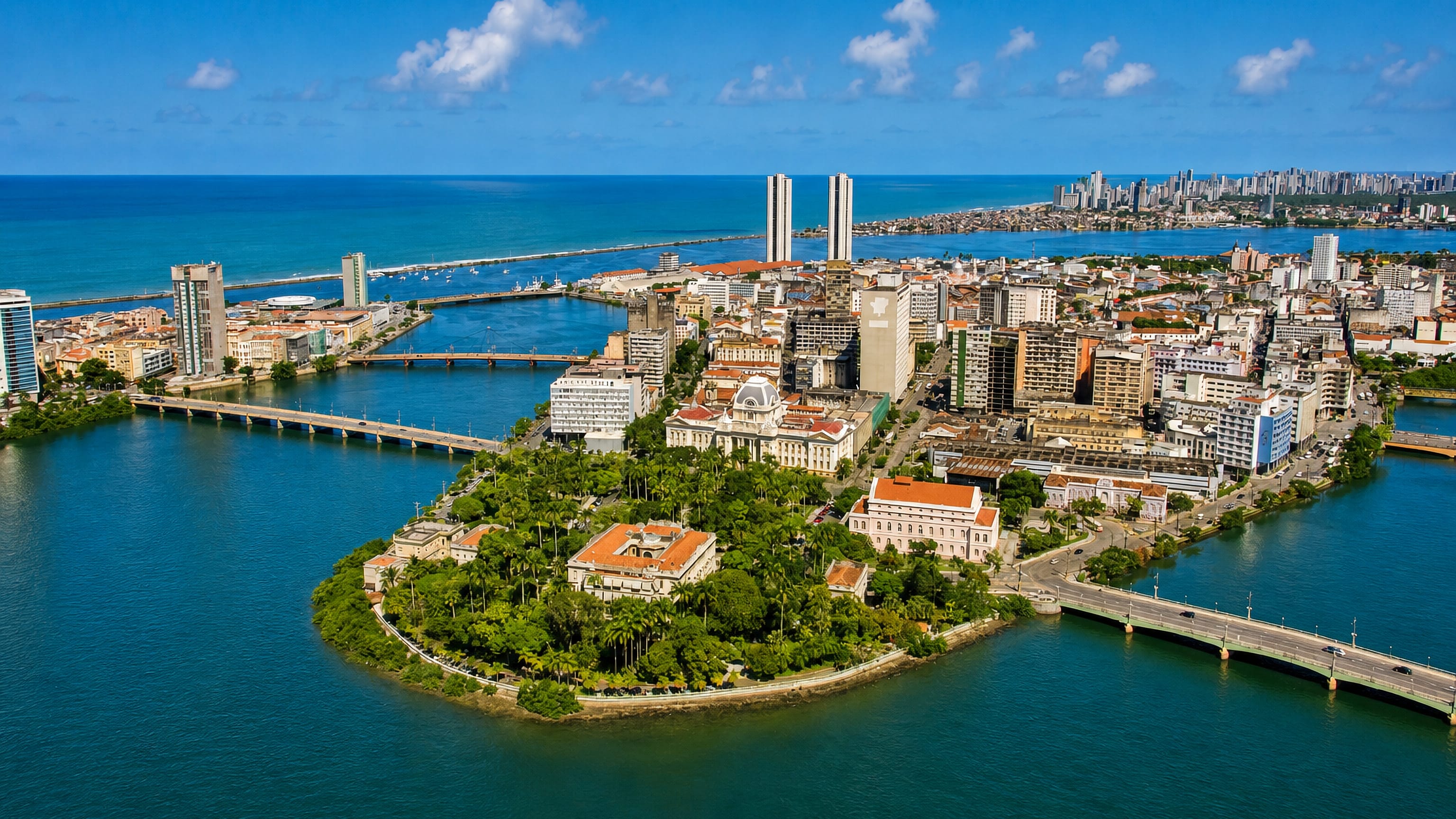
Recife is the capital and port of Pernambuco, built on islands at the mouths of the Capibaribe and Beberibe. Bridges hold it together.Where to stay →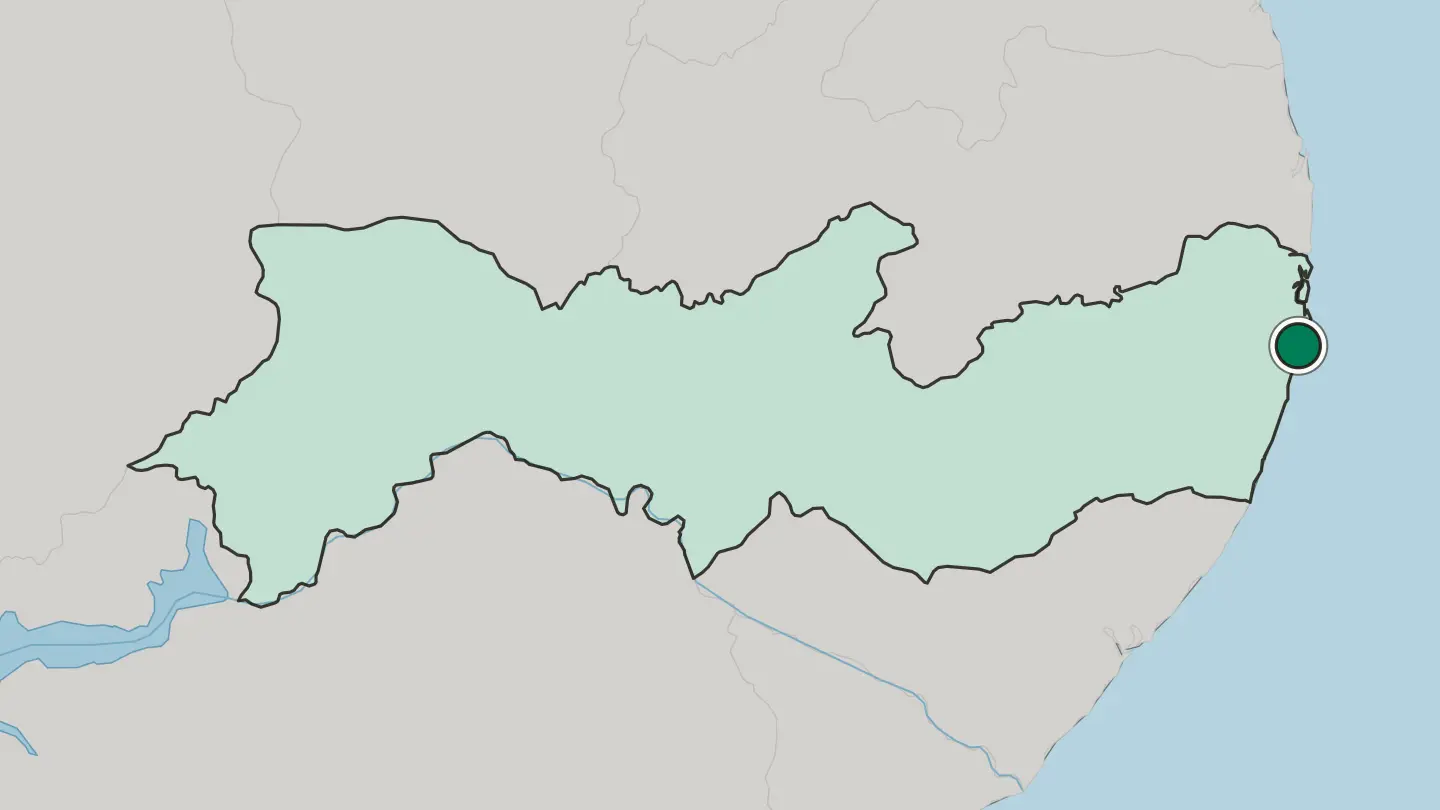
 Brazil
Jaboatão dos Guararapes
Jaboatão dos Guararapes lies south of Recife in the same metro area, an industrial municipality of Pernambuco. Its railway yard survives whole.Where to stay →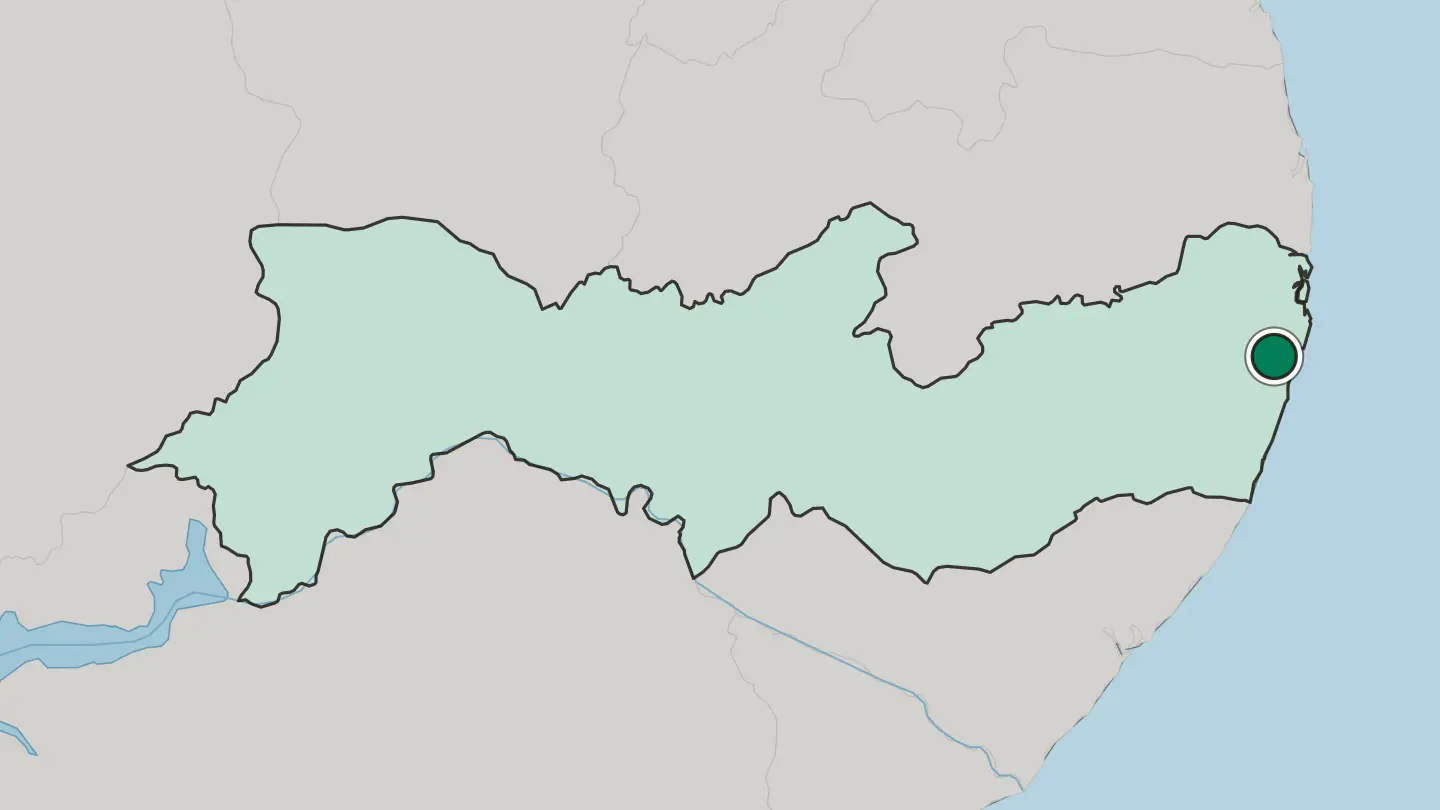
 Brazil
Caruaru
Caruaru is a city of the Pernambuco interior, west of Recife, known for the Feira de Caruaru and the clay figures of Mestre Vitalino.Where to stay →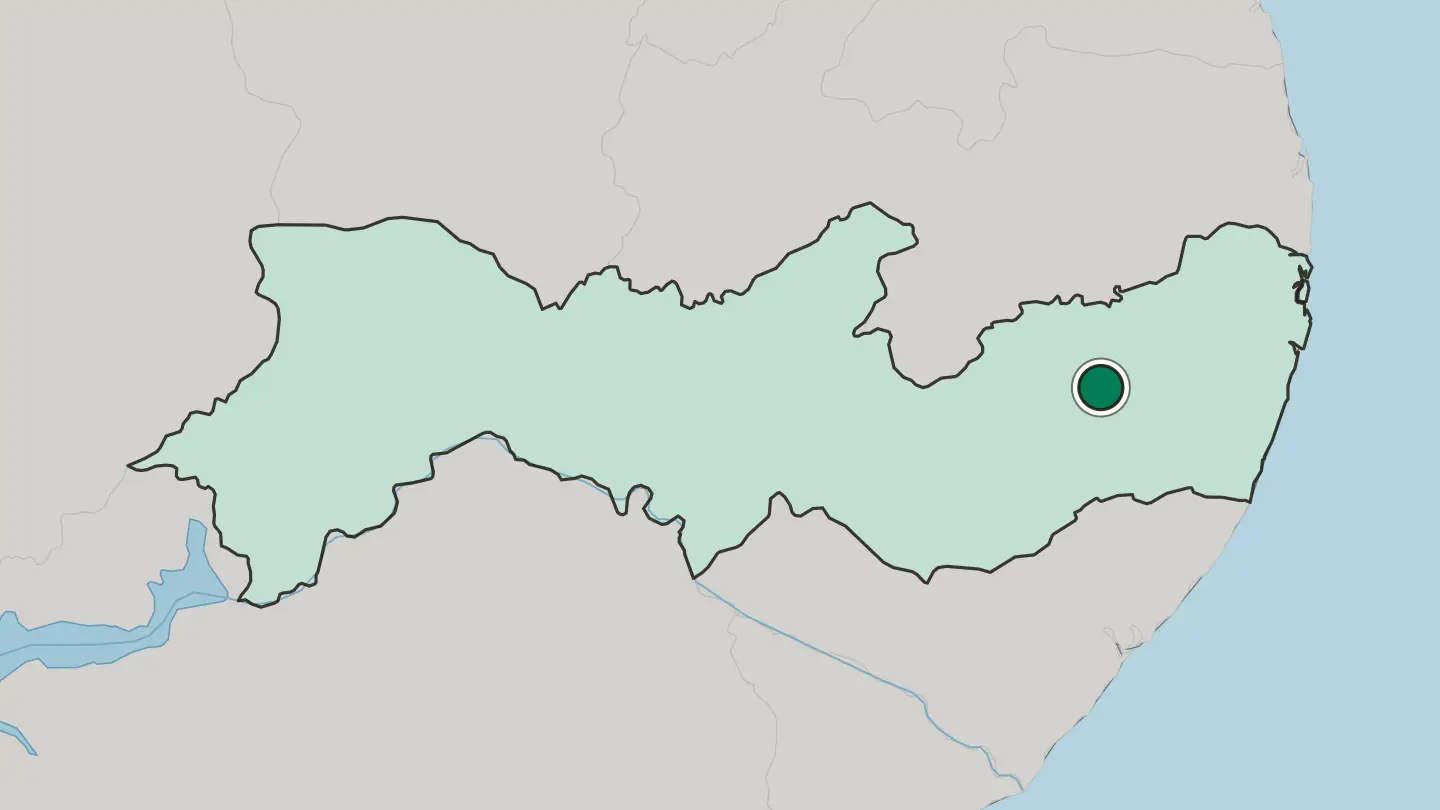
 Brazil
Olinda
Olinda holds a UNESCO-listed colonial core above the Atlantic, next to Recife in Pernambuco. Its carnival is famous.Where to stay →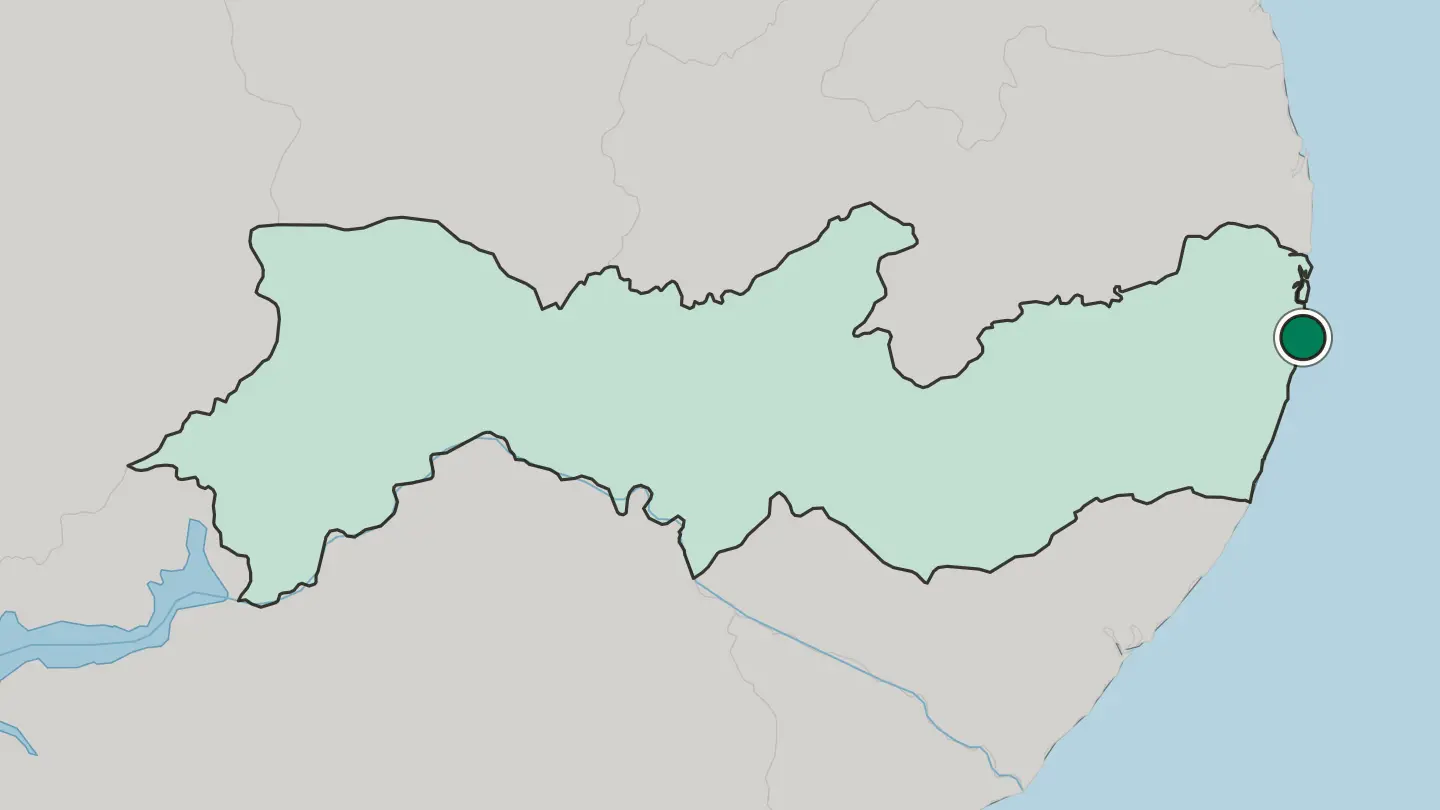
 Brazil
Garanhuns
Garanhuns sits in the Agreste of Pernambuco, some 230 kilometres inland from Recife. Five quilombos lie inside it.Where to stay →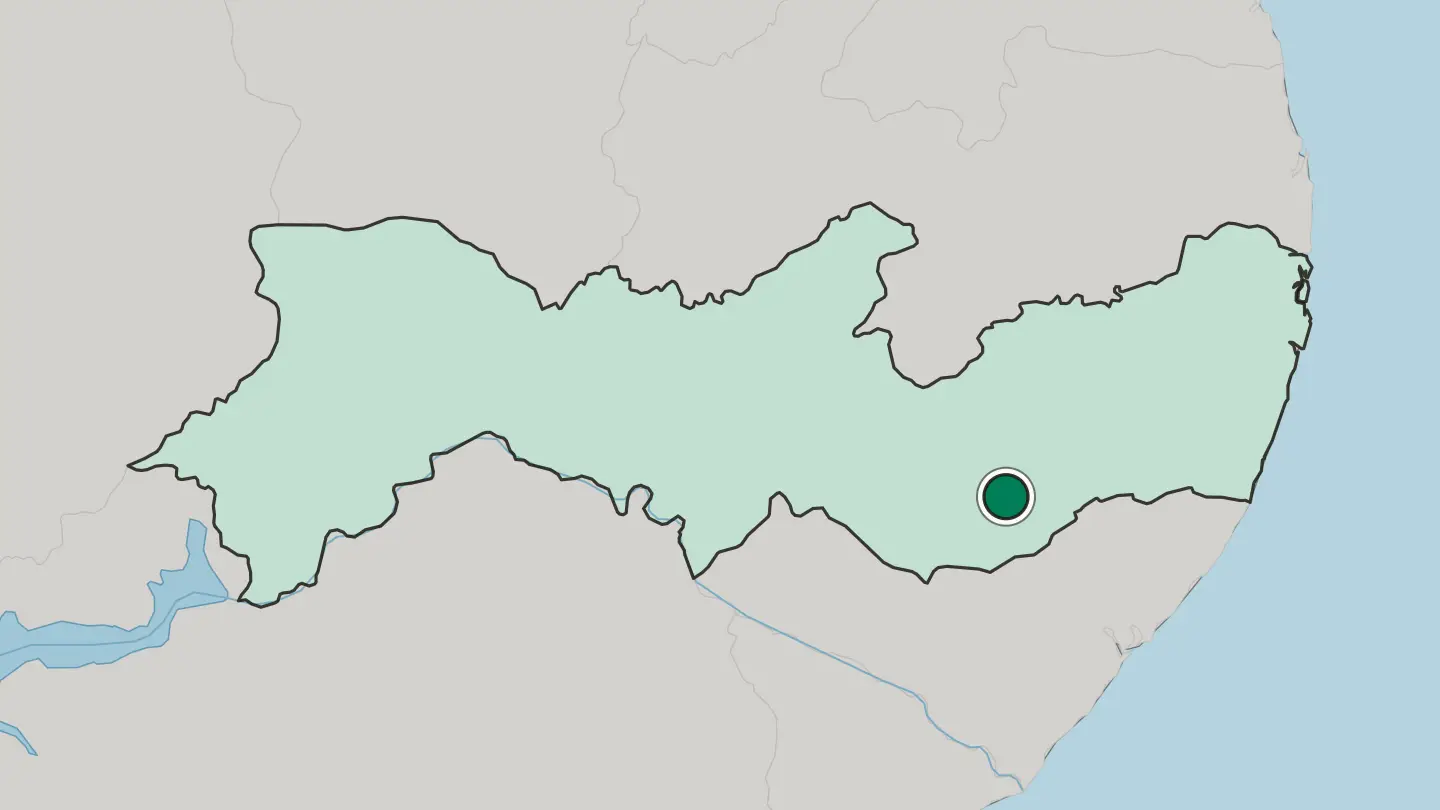 Brazil
Serra Talhada
Serra Talhada spreads across a broad stretch of the Pernambuco interior, high ground far from the coast. The Museu do Cangaço is here.Where to stay →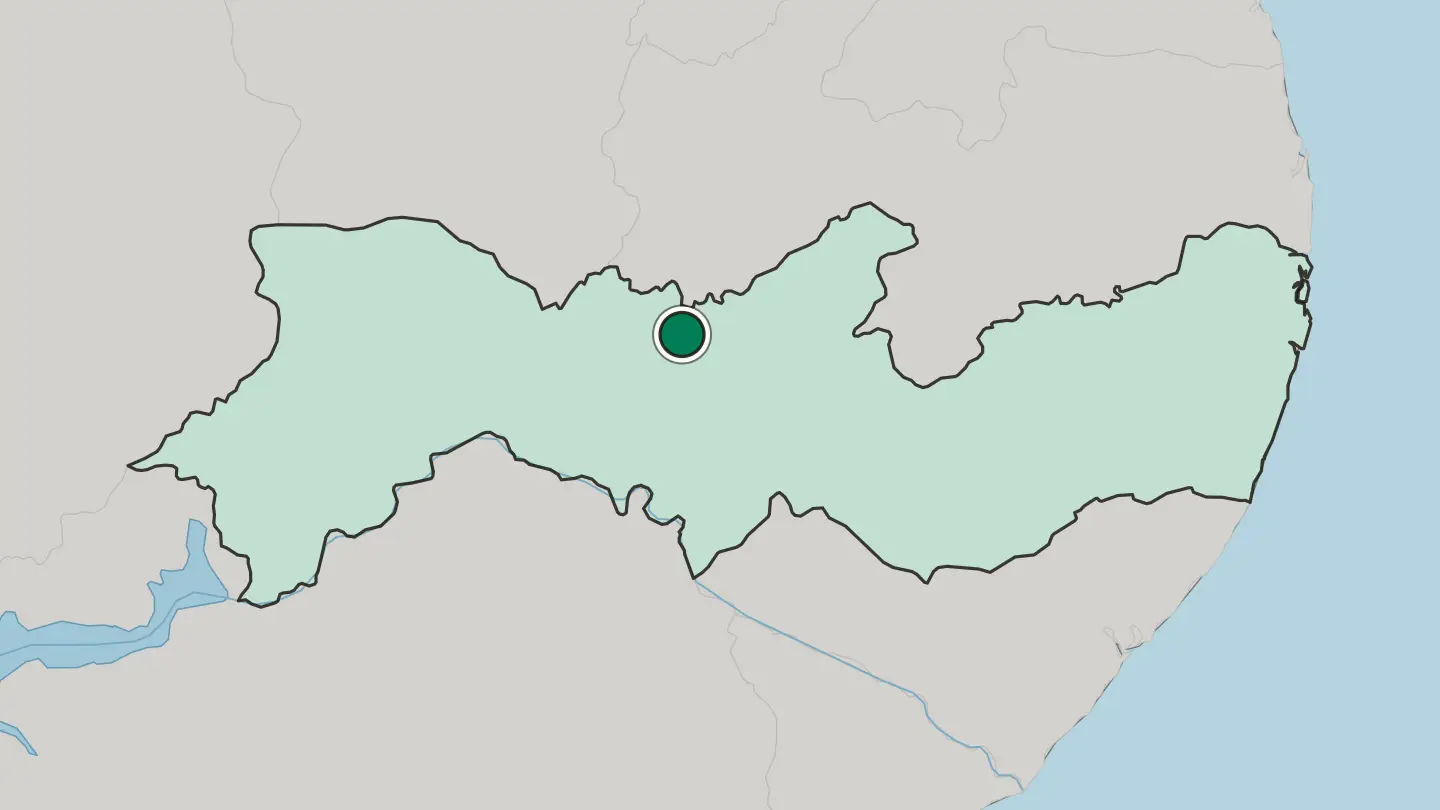
Hotel links are affiliate links: booking through them may earn us a commission, at no extra cost to you. It never affects how places are ranked. How this works
About Pernambuco
What is Pernambuco known for?
Recife and its hilltop neighbour Olinda anchor Pernambuco, and their Carnivals are famous. The music is frevo, a fast brass style danced under a small open umbrella, born in Recife's streets. Maracatu drums answer it.
South of the capital, the reef pools of Porto de Galinhas fill at low tide, while the volcanic archipelago of Fernando de Noronha sits far out in the Atlantic. Sugarcane built all of it, planted across the coastal Zona da Mata for four centuries.
Where is Pernambuco?
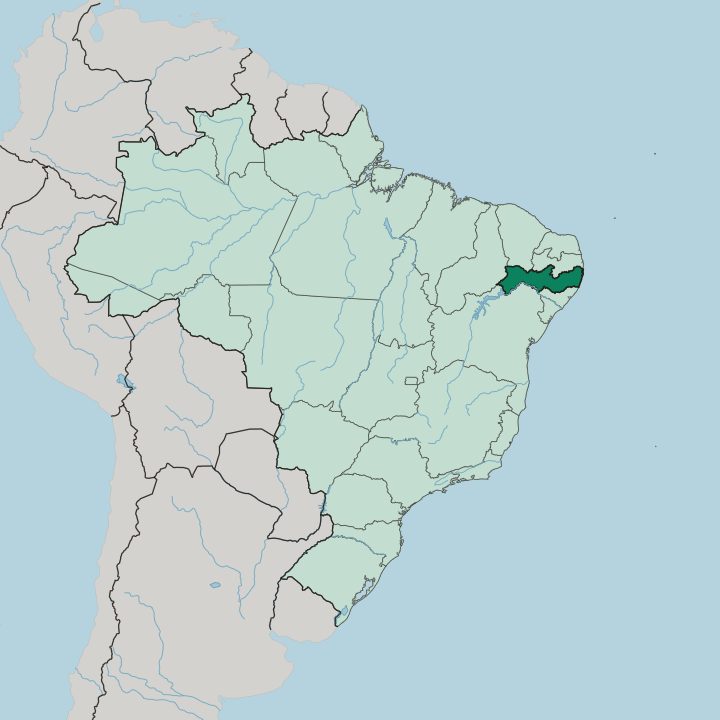
Pernambuco sits on the Atlantic bulge of the Northeast region of Brazil, a long, narrow state that starts at the ocean and runs hundreds of kilometres inland. Recife stands on the coast, built where several rivers braid into the sea across a cluster of islands and bridges. Paraíba borders it to the north.
Alagoas and Bahia lie to the south, Ceará and Piauí to the west, and the open Atlantic closes it off in the east. Off that coast, the volcanic archipelago of Fernando de Noronha rises alone from deep water, the state's furthest outpost. The land climbs westward in three bands.
First comes the Zona da Mata, the humid coastal plain where sugarcane has grown for four centuries and most of the cities cluster. Behind it the ground rises over the Borborema Plateau into the Agreste, a cooler transitional belt of hills and market towns such as Caruaru. Beyond that stretches the Sertão, the semi-arid backland of thorny caatinga scrub, sun-baked and thinly settled.
The São Francisco River draws the state's southern edge here, the great waterway locals call the Velho Chico, cutting past Petrolina before it turns toward the sea. Water rules everything in the Sertão. When the rains fail, the drought bites hard.
What is Pernambuco like?
Pernambuco's culture grew out of the sugar plantations, where African, Portuguese and Indigenous traditions fused over generations. Carnival is where it shows loudest. In Recife and Olinda the season belongs to frevo, the fast brass-and-umbrella dance that UNESCO lists as intangible heritage, and to the pounding maracatu drums that carry old Afro-Brazilian rites through the streets.
Cordel poets still print rhyming pamphlets. The sociologist Gilberto Freyre, a son of Recife, spent his life writing about exactly this blend of peoples. Inland the beat changes to forró, the accordion-driven music of the Sertão that fills the June São João festivals across the Agreste.
The accordion king Luiz Gonzaga came from the Sertão town of Exu, and his baião still sets the tone of the festivals. In Caruaru, the Alto do Moura potters, in the tradition of Mestre Vitalino, shape clay figurines sold across Brazil. The food is unmistakable, from sun-dried carne de sol to tapioca crêpes and the rolled sponge cake called bolo de rolo.
Portuguese is the language everywhere, threaded with words the region kept from Tupi and from West Africa. It all traces back to the coast and the cane.
What is the history of Pernambuco?
Duarte Coelho founded Olinda in 1535 as the seat of the Captaincy of Pernambuco. Sugar made the coast rich. That wealth drew the Dutch, who seized the region in 1630, ran it from Recife under Johan Maurits, and renamed the port Mauritsstadt.
Portuguese forces broke that hold at the Battles of Guararapes and drove them out by 1654. The captaincy stayed restless, launching the republican revolt of 1817 and the Confederation of the Equator. It joined Brazil's republic as a state in 1889.
What is the climate of Pernambuco?
Across Pernambuco, the warmth never lets up. The coastal Zona da Mata around Recife stays hot and humid all year, its heaviest rain arriving between April and July on the southeasterly winds off the Atlantic. Climb inland and the air dries out fast.
The Agreste is milder and greener after rain, but the Sertão beyond it is semi-arid, where the caatinga waits through long droughts for a short wet season. Temperatures rarely fall far, on the coast or in the backlands alike.
How do you get to Pernambuco?
Recife's Guararapes-Gilberto Freyre airport is the state's main link to Europe and the rest of the country. It sits right behind Boa Viagem beach. From there the BR-101 highway runs the coast south to Porto de Galinhas, about 70 km away, and north past Olinda toward the Paraíba line.
Fernando de Noronha is reachable only by a short flight from the mainland. Buses thread the dry interior toward Caruaru and Petrolina.
Common questions
What is the best area to stay in Pernambuco?
Recife (Boa Viagem): a beach-city base between Olinda and the reefs. Olinda: colonial hills and Carnival frevo. Porto de Galinhas: reef pools and warm shallow swimming. Fernando de Noronha: diving, turtles and dolphins offshore. Caruaru: the Agreste, forró and June festivals.
Good for
More regions in Brazil
Updated October 2026