Algeria
Wilaya de Biskra, Algeria — Towns & Travel Guide
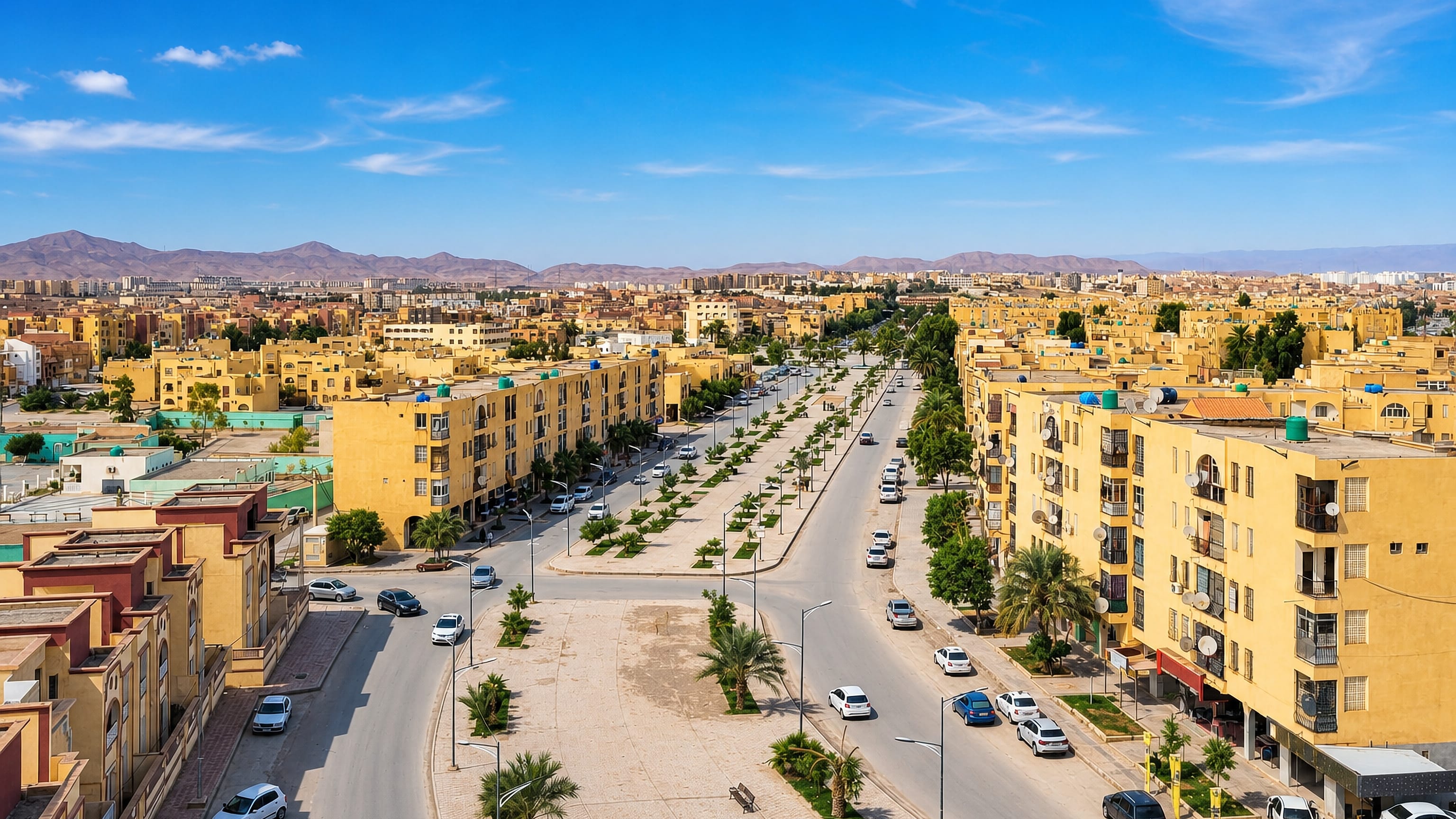
Wilaya de Biskra is Algeria's great date-palm province, spread along the northern rim of the Sahara below the Aurès Mountains.
Hotel links are affiliate links: booking through them may earn us a commission, at no extra cost to you. It never affects how places are ranked. How this works


Towns & cities in Wilaya de Biskra
One town here has its own guide — it links to where to stay.

 Algeria
Biskra
Biskra, called the Door of the Desert, is the main city of the Zibans and capital of Biskra Province in northeastern Algeria.Where to stay →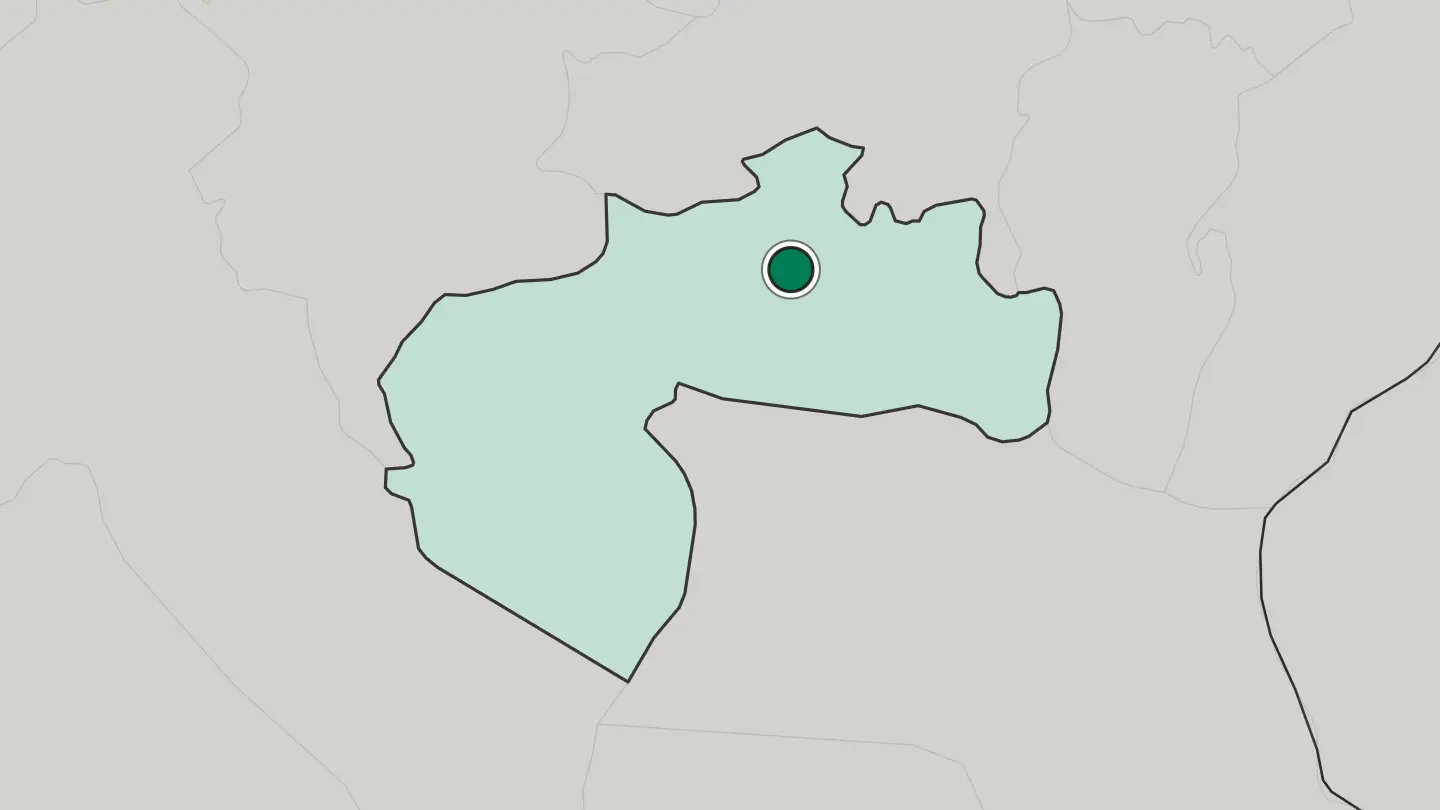
Hotel links are affiliate links: booking through them may earn us a commission, at no extra cost to you. It never affects how places are ranked. How this works
About Wilaya de Biskra
Dates.
What is Wilaya de Biskra known for?
Wilaya de Biskra grows the Deglet Nour, the translucent 'date of light' that made the Tolga oasis famous and won it one of Algeria's protected geographical indications. The palm groves of the Ziban fan out from the town of Biskra across the flat Saharan floor. Pilgrims come too, to the mosque at Sidi Okba that holds the tomb of the Arab conqueror Uqba ibn Nafi.
Warm winters draw the rest.
Where is Wilaya de Biskra?
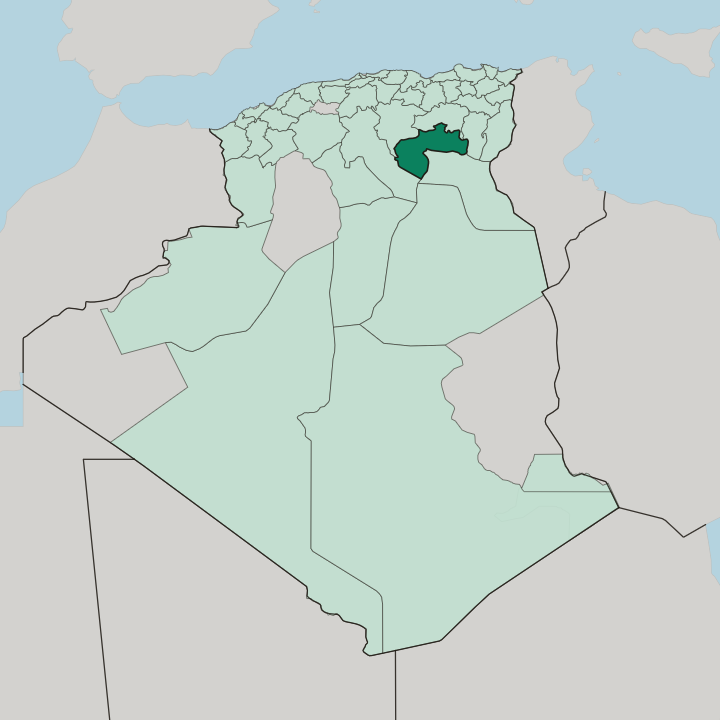
The province lies where Algeria stops being mountain and starts being desert. The Aurès Mountains rise along its northern edge, the last high wall of the Saharan Atlas, and south of them the land drops onto the flat, stony floor of the Sahara. Between the two runs a broad open depression, and the oasis towns string along it.
The town of Biskra sits at the foot of the Aurès, on the Oued Biskra, the wadi whose right bank carries the palm groves of the Ziban southward. It is low ground. Little rises above the plain once the mountains fall behind.
Water is the whole story here, and it arrives underground more than overhead. The Djedi River, one of the longest wadis of the northern Sahara, crosses the province from west to east and loses itself in Chott Melghir, the great salt pan south of the oases that lies below sea level, the lowest point in Algeria. North of Biskra the mountains are cut by the gorge of El Kantara, the narrow pass the Romans and every caravan since have used to drop from the Aurès onto the desert.
Beyond the palms, the ground is bare. Sand, gravel and salt run south toward the deep Sahara.
What is Wilaya de Biskra like?
Life in the province turns on the palm and the well. In the shade of the Deglet Nour groves, gardeners still layer fig, pomegranate and apricot beneath the date palms and thread water to them along earthen channels, the old three-tier oasis farming of the Ziban. The oasis draws pilgrims, too.
Sidi Okba holds the tomb and mosque of Uqba ibn Nafi, the seventh-century Arab commander who carried Islam across North Africa, and the cedar-wood doors of his tomb survive from the eleventh-century Zirid period. Pilgrims have walked to it for thirteen centuries. Biskra also drew a stranger kind of visitor.
André Gide came to the oasis to recover from tuberculosis and set much of his novel The Immoralist in its palm gardens, Oscar Wilde passed through, and Béla Bartók travelled out to record the drum-and-reed music of the surrounding villages. Henri Matisse carried the light of the place home and painted his Blue Nude beneath the subtitle Souvenir de Biskra. Arabic is the everyday tongue of the oases.
Up in the Aurès, though, the villages speak Chaoui, the Berber language of the mountains that wall the province off from the north.
What is the history of Wilaya de Biskra?
The Romans built a garrison here they called Vescera, holding the desert frontier of Numidia. It guarded the caravan road. Near it Uqba ibn Nafi, the Arab general who first carried Islam this far, was killed in 683, and his tomb at Sidi Okba grew into one of Africa's earliest Muslim shrines.
Biskra later ruled as capital of the medieval Emirate of the Zab, fell to the Ottomans in the sixteenth century, and was garrisoned by France in 1844. The palm-tax revolt at nearby Zaatcha followed. It held for weeks.
What is the climate of Wilaya de Biskra?
Biskra runs hot and dry, a Saharan climate in full. Summer is fierce. From late spring the desert floor bakes, and July and August afternoons turn the oasis into a furnace that empties the streets until dusk.
Rain is the rare thing. Barely a hand's depth falls across a whole year, most of it in a few winter downpours, because the Aurès wall to the north strips the clouds before they clear the mountains. Winter days stay mild, though the nights can slide toward freezing.
Clear skies are the year's one certainty.
How do you get to Wilaya de Biskra?
Most travellers reach Biskra from inside Algeria. Mohamed Khider Airport, on the edge of the town, links it by air to Algiers and the northern cities. The old Saharan railway also runs here, dropping south from Constantine through the Aurès by way of the El Kantara gorge and carrying on toward the deep-desert oases.
By road, Batna is the nearest big city over the mountains to the north, and the highway from Algiers crosses the high plains before descending to the palms. Once inside the province, roads thread the oases apart. The desert begins where they end.
Common questions
What is the best area to stay in Wilaya de Biskra?
Biskra: a first base in the Ziban oases. Tolga: the Deglet Nour date groves. Sidi Okba: the Uqba ibn Nafi pilgrimage. El Kantara: the mountain gorge onto the Sahara.
Good for
More regions in Algeria
Updated September 2026