Spain
Región de Murcia, Spain — Towns & Travel Guide
Región de Murcia is Spain's warm southeastern corner, where the Segura river feeds green huertas between dry hills and a Mediterranean coast.
Hotel links are affiliate links: booking through them may earn us a commission, at no extra cost to you. It never affects how places are ranked. How this works


Towns & cities in Región de Murcia
Pick a town or city — each links to where to stay.

 Spain
Spain
Murcia
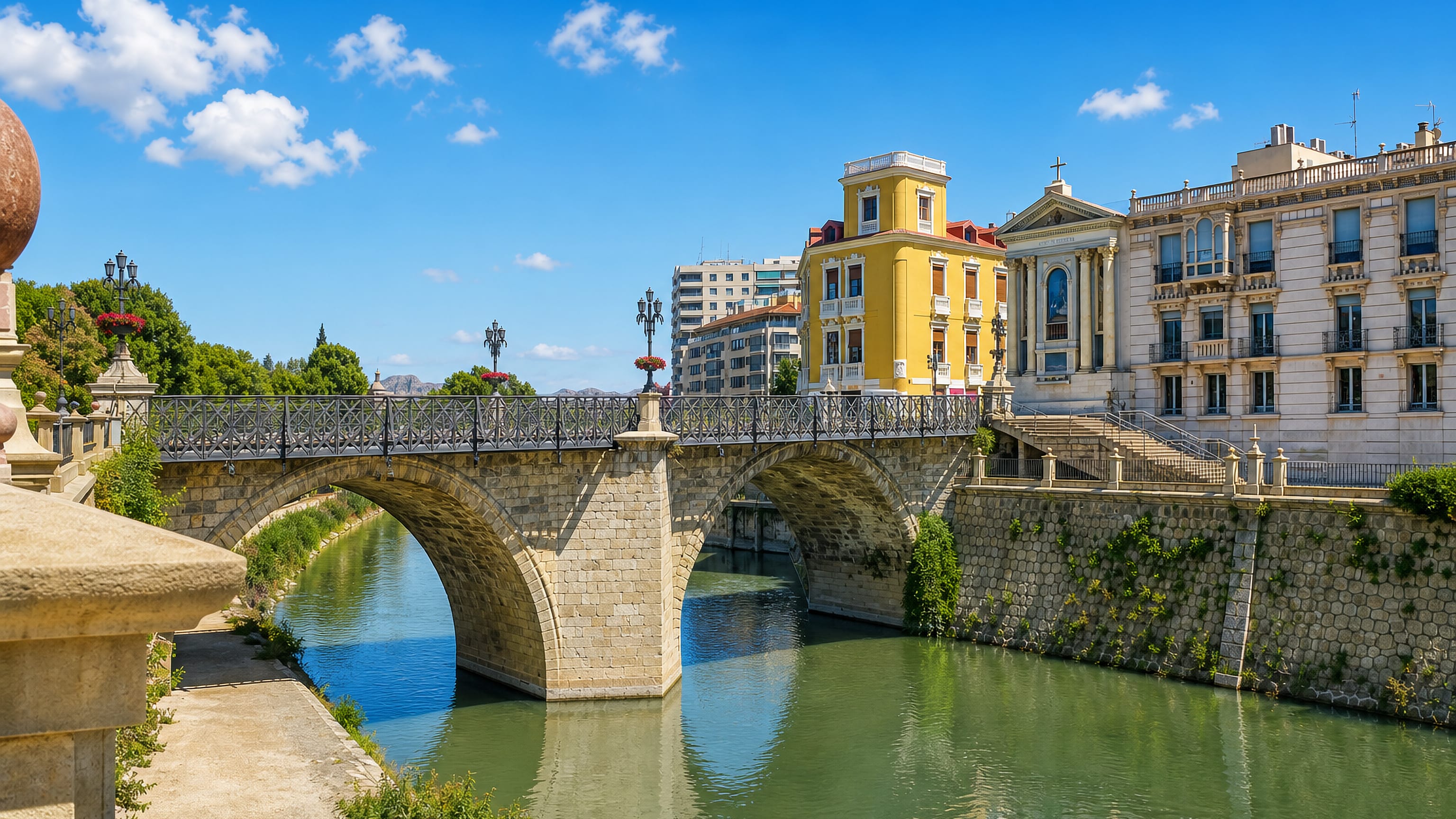
Murcia is the capital of the Región de Murcia, a cathedral city on the Segura River, with an Al-Andalusian palace at San Esteban.Where to stay →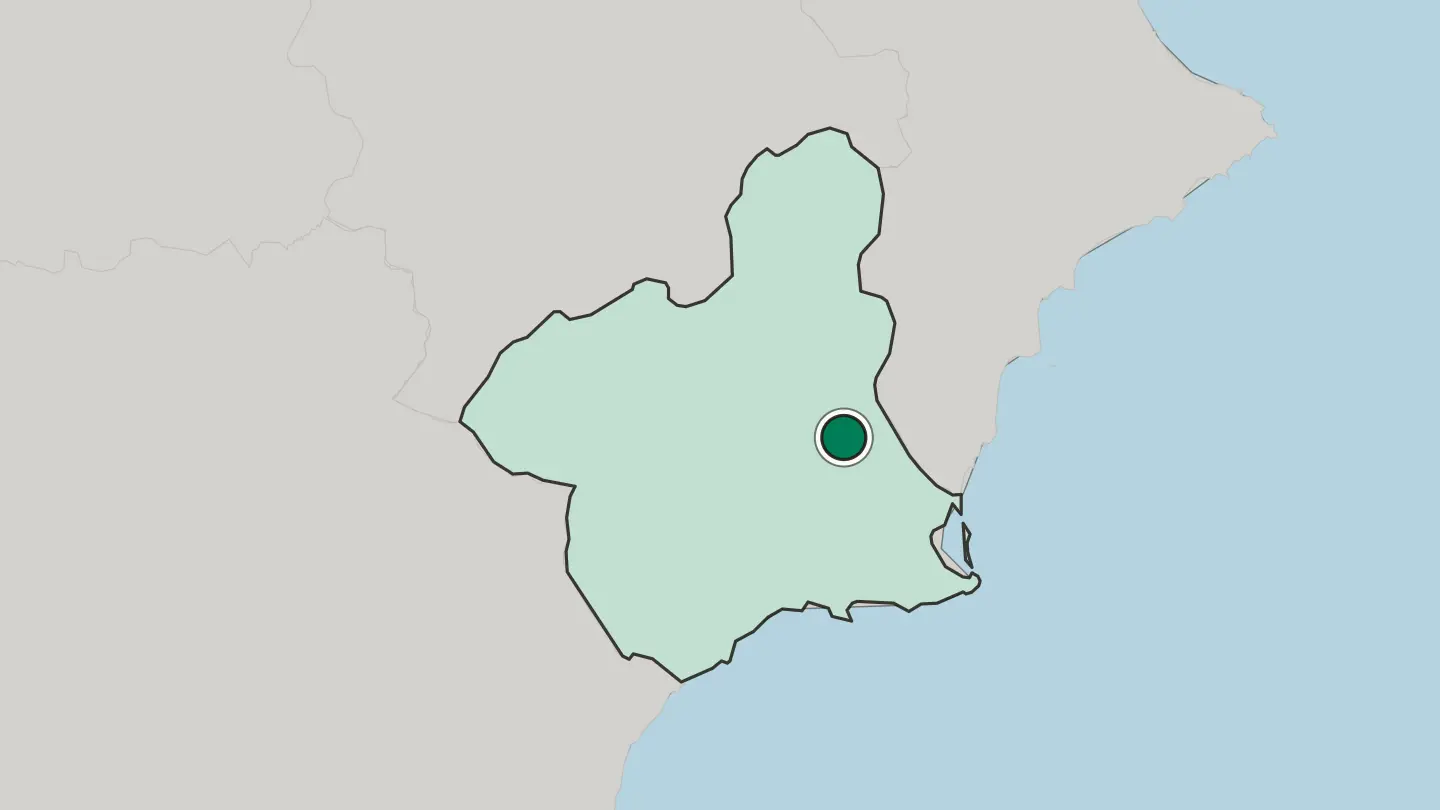
 Spain
Spain
Cartagena
Cartagena is a Spanish naval port on a natural Mediterranean harbour, with a Roman theatre below a ring of hill castles.Where to stay →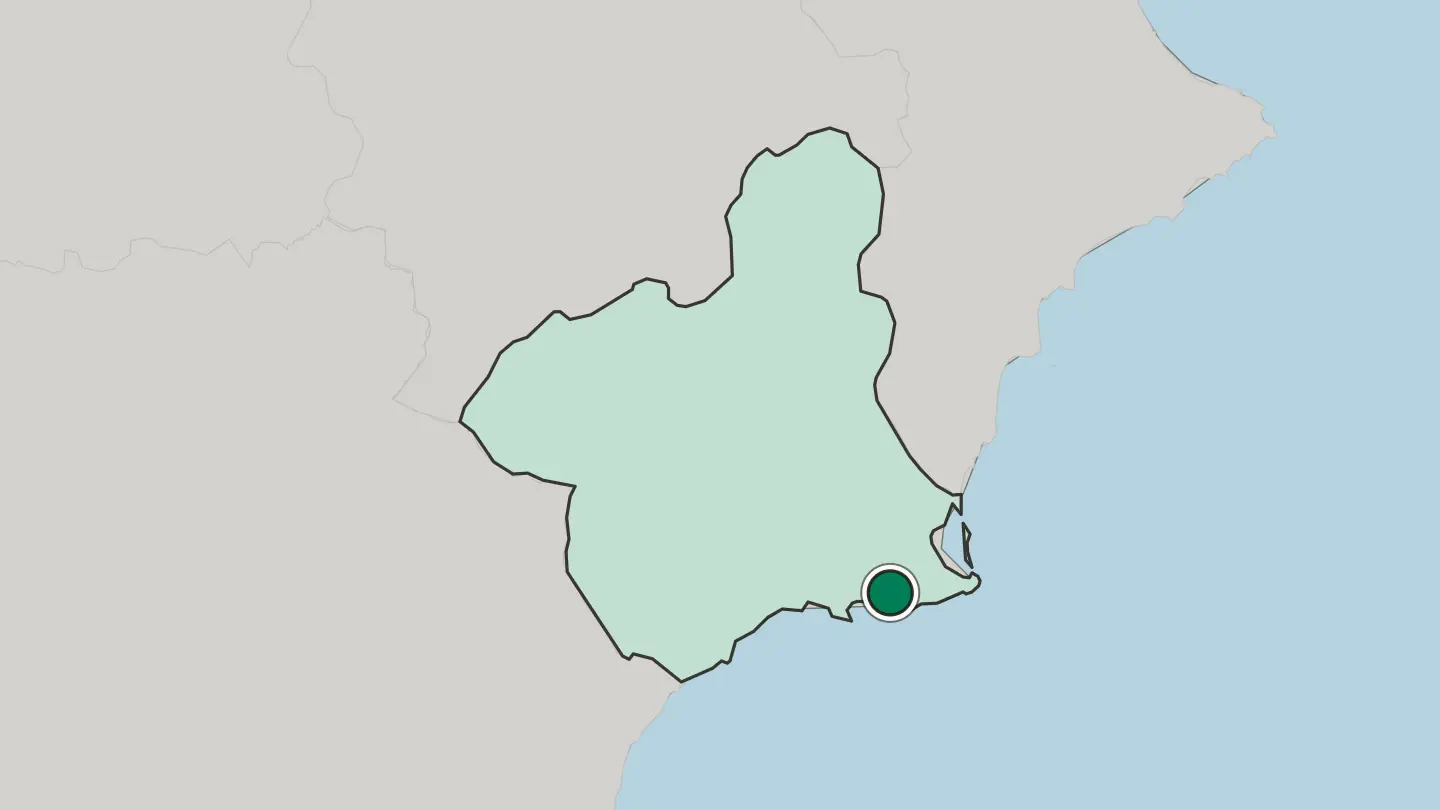
 Spain
Spain
Lorca
Lorca is an inland baroque city of the Región de Murcia, held under its castle, with embroidery museums for two Holy Week brotherhoods.Where to stay →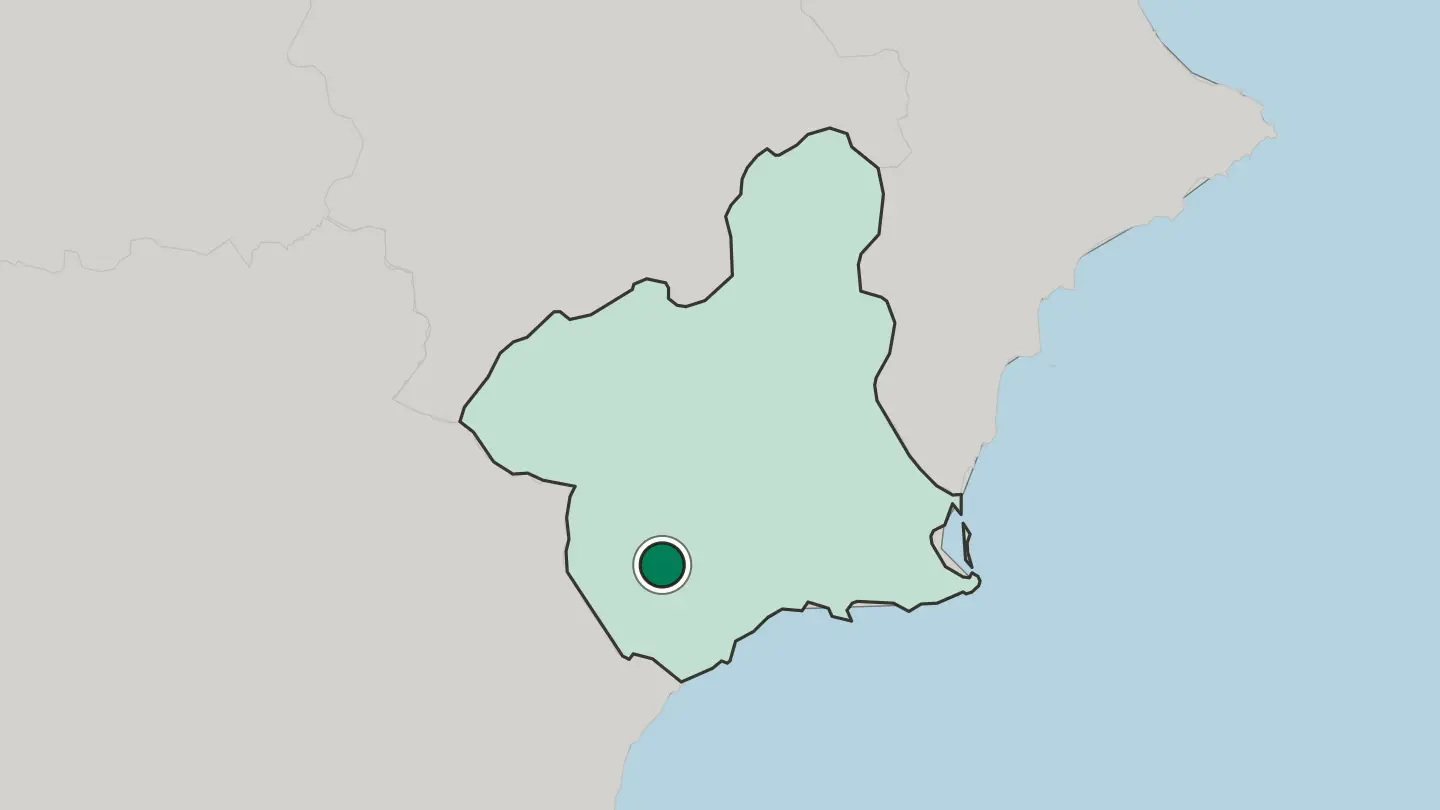
Hotel links are affiliate links: booking through them may earn us a commission, at no extra cost to you. It never affects how places are ranked. How this works
About Región de Murcia
Water rules here.
What is Región de Murcia known for?
The Segura river cuts through the middle and turns the flat land beside it into a market garden of citrus, peppers and vegetables that feeds much of the country. Along the coast sits the Mar Menor, the largest saltwater lagoon in Europe, held back from the open sea by the thin sandbar of La Manga del Mar Menor. Cartagena guards a deep natural harbour that the Romans prized and the Spanish Navy still uses.
Beyond the huerta the ground turns dry and pale, some of the most arid country anywhere in Spain.
Where is Región de Murcia?
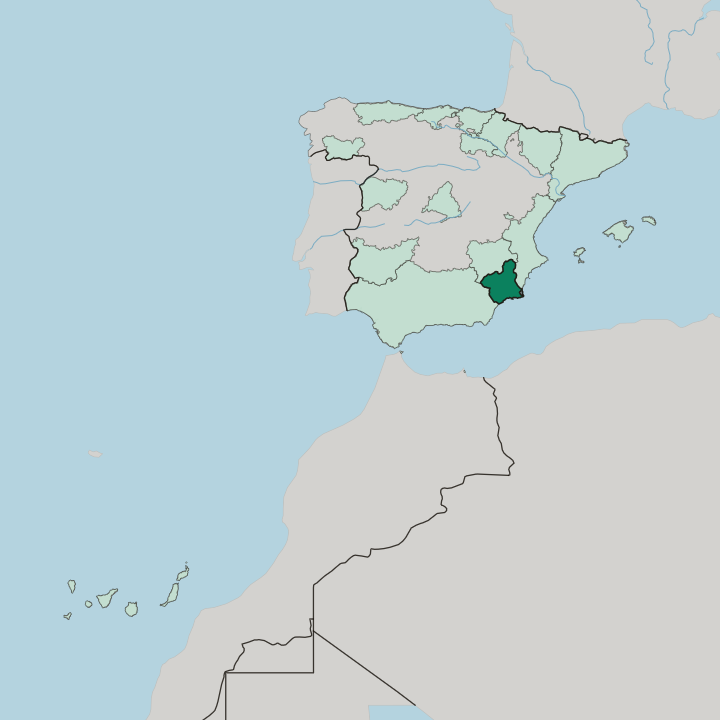
Región de Murcia occupies the southeastern edge of the Spanish mainland, on the Mediterranean. It is a compact corner of Spain. Andalusia lies to the southwest, Castilla-La Mancha inland to the north, and the Valencian Community along the northeast, while the sea forms the whole eastern side.
The Segura river is the spine of the region, entering from the west and winding southeast past the capital before reaching the Mediterranean near the border with the Valencian Community. Where its water spreads out the land becomes the huerta, a strip of intensely worked market gardens that stands out green against ground that is otherwise pale and dry. The coast runs for roughly 250 kilometres and carries the name Costa Cálida, the warm coast.
Its centrepiece is the Mar Menor, a shallow lagoon cut off from the open Mediterranean by La Manga del Mar Menor, a sandbar barely a hundred metres wide in places and around 21 kilometres long. Inland the ground climbs into the ranges of the Baetic System, dry sierras folded northeast to southwest. The highest of them, in the far northwest of the region, rises past 2,000 metres in the Revolcadores massif.
Between the mountains and the sea lie broad depressions of farmland and scrub. No point in the region is far from either a ridge or the coast.
What is Región de Murcia like?
Life here bends toward the huerta and the sea. The irrigated gardens along the Segura have shaped the local table for centuries, and the region cooks with what they grow: peppers dried into pimentón, tomatoes, artichokes, and the citrus that ripens along the valley. The Mar Menor yields fish and shellfish.
Wine comes from the dry inland vineyards around Jumilla and Yecla, where the Monastrell grape thrives in poor stony soil. The region's great public ritual is Holy Week. In the city of Murcia and in Lorca the processions are famous, and Lorca's are unlike anywhere else, staged as vast embroidered pageants that parade biblical and classical scenes through the streets.
Murcia carries the Baroque sculptures of Francisco Salzillo, carved in the city in the eighteenth century and still borne through it each spring. The everyday language is Spanish, spoken with a distinctive local accent and peppered with words from the region's Arabic and farming past. Cartagena adds another layer entirely, a naval and industrial city with Roman and Carthaginian roots that gives the coast a harder, older character than the beach resorts suggest.
What is the history of Región de Murcia?
The coast's story starts at Cartagena, founded by the Carthaginians and rebuilt by Rome as Carthago Nova, one of the richest ports of the ancient Mediterranean. The capital came much later. Muslim rulers founded the city of Murcia in 825, and under al-Andalus the Segura huerta was engineered into the productive garden it remains.
Christian Castile absorbed the territory in the thirteenth century, and the old Kingdom of Murcia endured for centuries before the modern Región de Murcia gained its statute of autonomy in 1982.
What is the climate of Región de Murcia?
This is the driest region in Spain. Rain falls rarely, and much of the interior sees only a couple of hundred millimetres in a year, which is why the Segura's irrigation matters so much. Summers are long, hot and cloudless, tempered a little on the Costa Cálida by the Mediterranean.
Winters stay mild along the coast and cooler up in the Baetic sierras, where the highest ground can hold snow. When rain does arrive it often comes as a sudden autumn downpour rather than steady drizzle.
How do you get to Región de Murcia?
Most visitors fly into the Región de Murcia International Airport at Corvera, a short drive from the capital, or reach the region from Alicante's larger airport just over the border in the Valencian Community. Trains and motorways run down from Madrid and along the coast. Cartagena has a deep harbour and takes cruise ships as well as the navy.
From the airport or the capital it is a quick run to the Mar Menor and the Costa Cálida beaches.
Common questions
What is the best area to stay in Región de Murcia?
Murcia: the capital and the huerta. Cartagena: Roman ruins by a working port. Mar Menor and La Manga: lagoon and beach resorts. Lorca: Baroque streets under a castle.
Good for
More regions in Spain
Updated September 2026