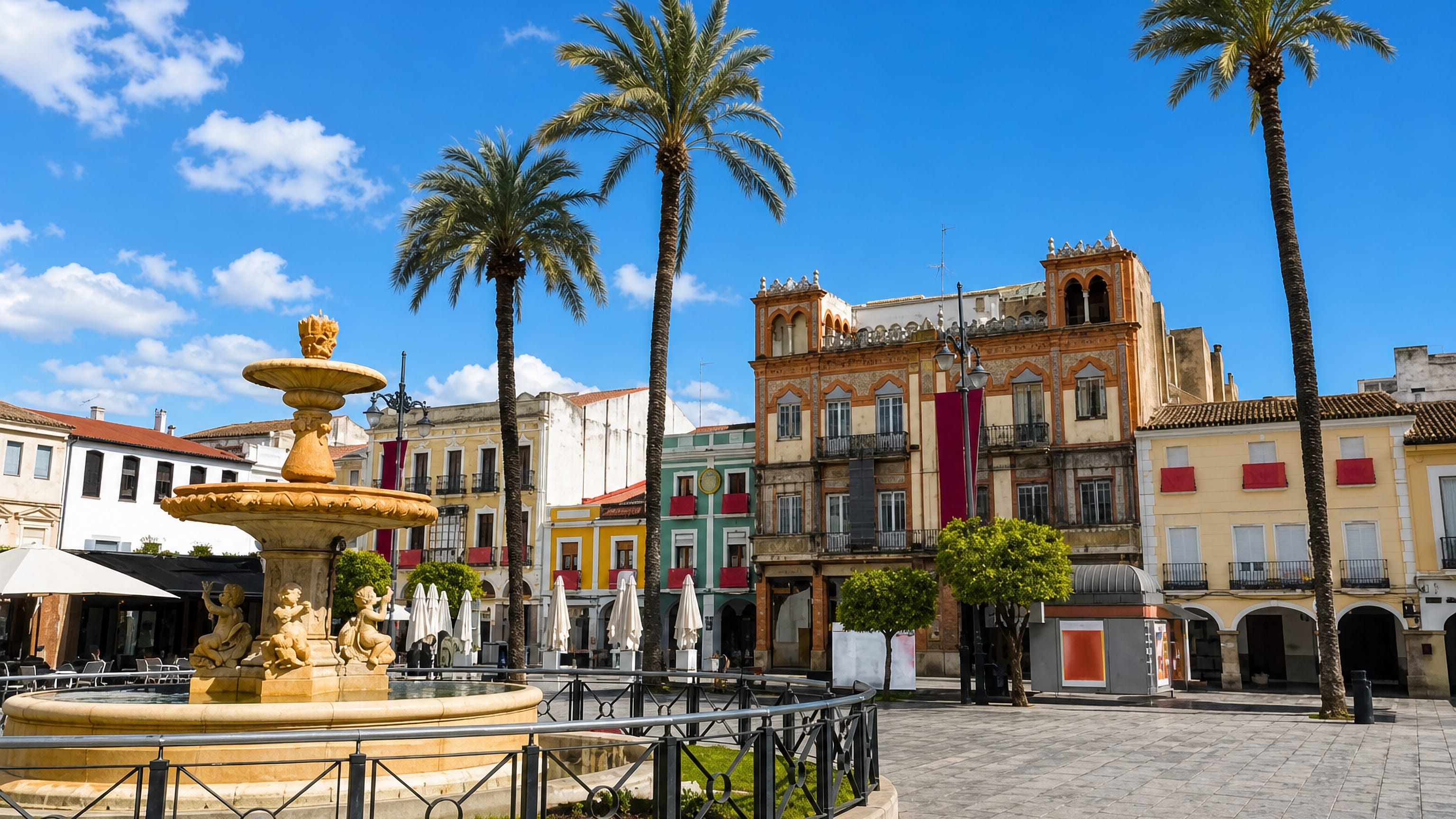
Spain
Extremadura, Spain — Towns & Travel Guide
Extremadura is inland Spain's western frontier, where the Tagus and Guadiana cut across oak dehesa to the Portuguese border.
Hotel links are affiliate links: booking through them may earn us a commission, at no extra cost to you. It never affects how places are ranked. How this works


Towns & cities in Extremadura
Pick a town or city — each links to where to stay.

 Spain
Spain
Badajoz
Badajoz stands on the left bank of the Guadiana near the Portuguese border, capital of its province in Extremadura, under the Alcazaba.Where to stay →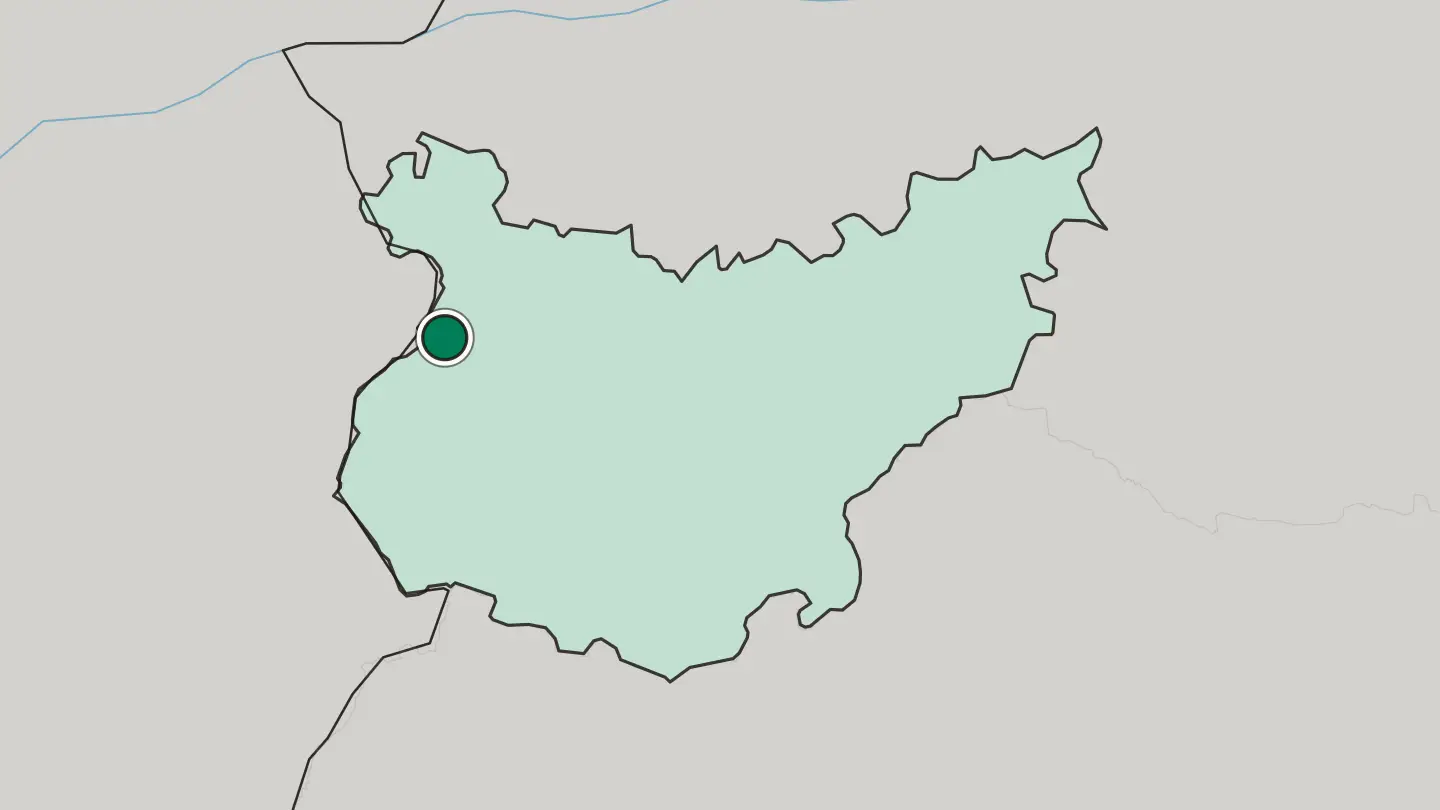
 Spain
Spain
Cáceres
Cáceres holds a UNESCO-listed old town of towers and palaces in the centre of Extremadura, capital of the province that carries its name.Where to stay →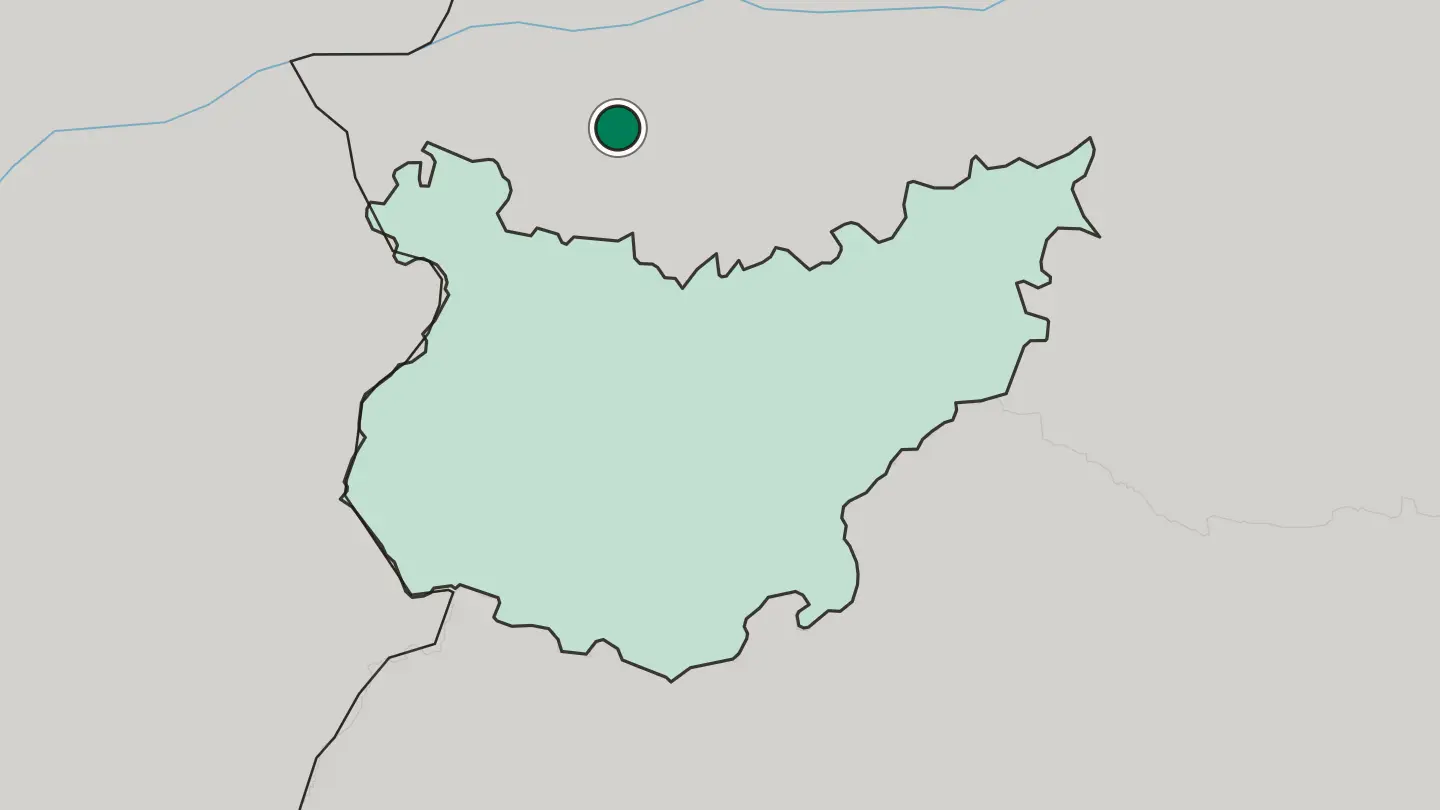
 Spain
Spain
Mérida
Mérida was Roman Augusta Emerita: amphitheatre, circus and aqueduct still stand in the capital of Extremadura, on the Guadiana.Where to stay →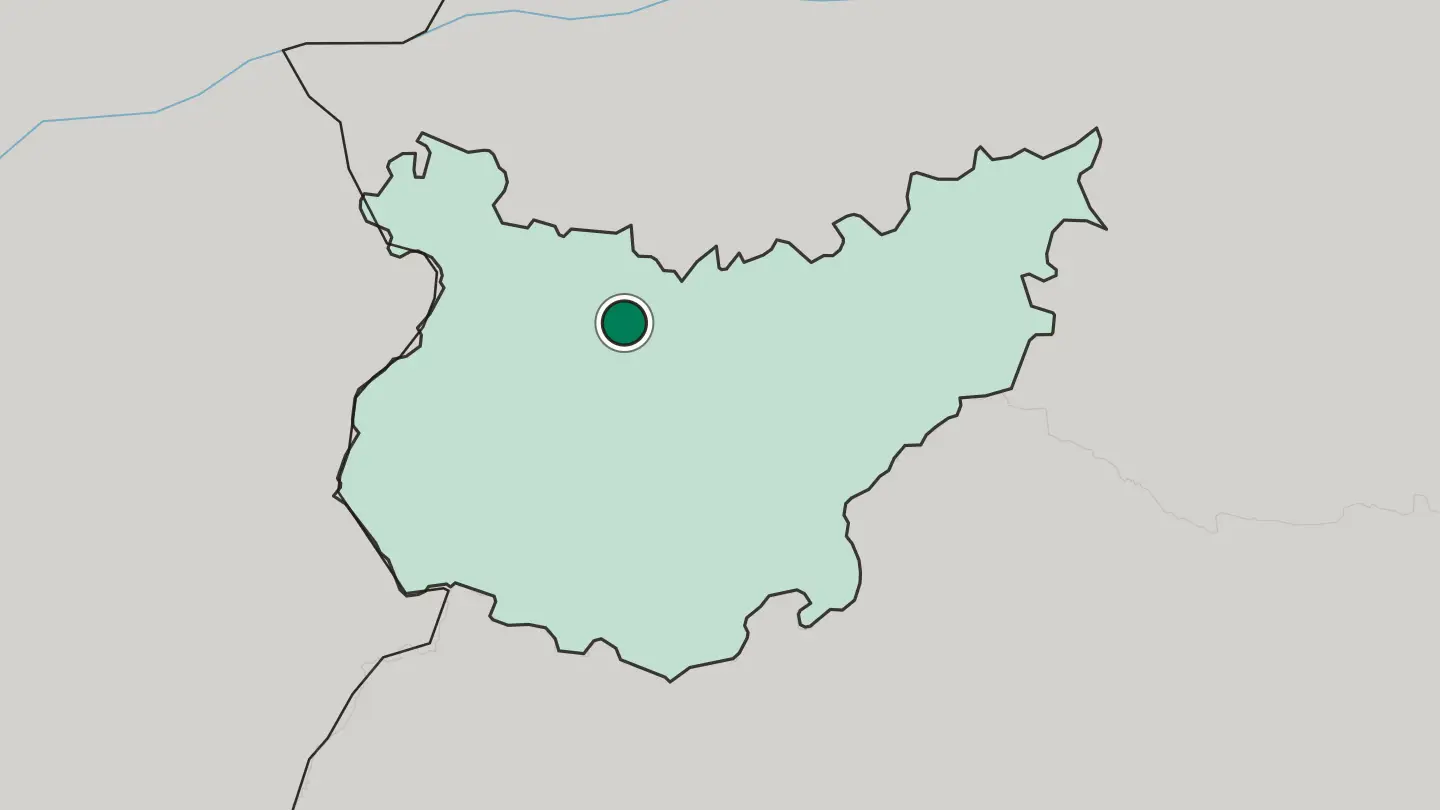
Hotel links are affiliate links: booking through them may earn us a commission, at no extra cost to you. It never affects how places are ranked. How this works
About Extremadura
What is Extremadura known for?
The region fills the far west of Spain, pressed against the Portuguese border. Two provinces make it up. Cáceres holds the mountainous north, and Badajoz the flatter farmland south of the Guadiana, while Mérida sits between them as the regional capital.
The land itself is the draw. Wide oak pasture called dehesa rolls across both provinces, grazed by the black Iberian pigs whose acorn-fed jamón defines the region's tables. Roman ruins, walled hill towns, and vast bird-rich reserves fill the rest.
Where is Extremadura?
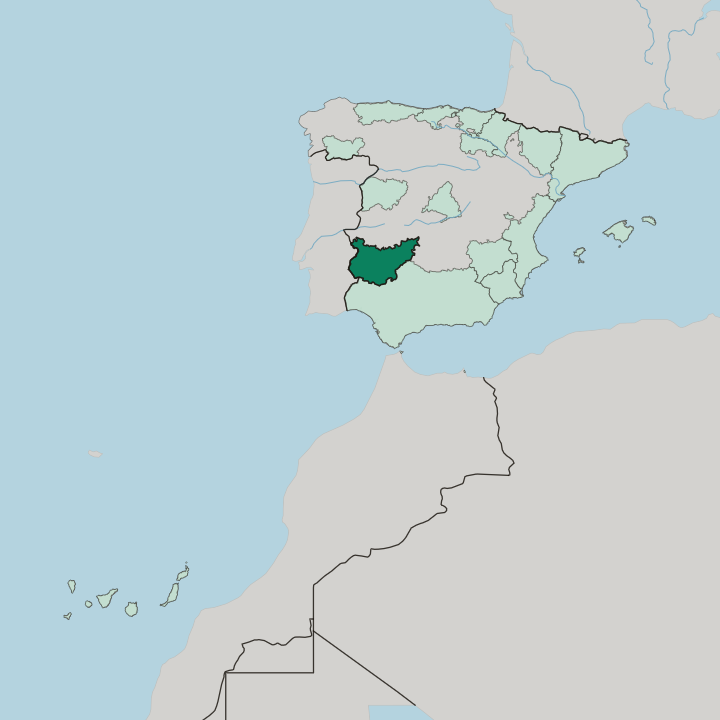
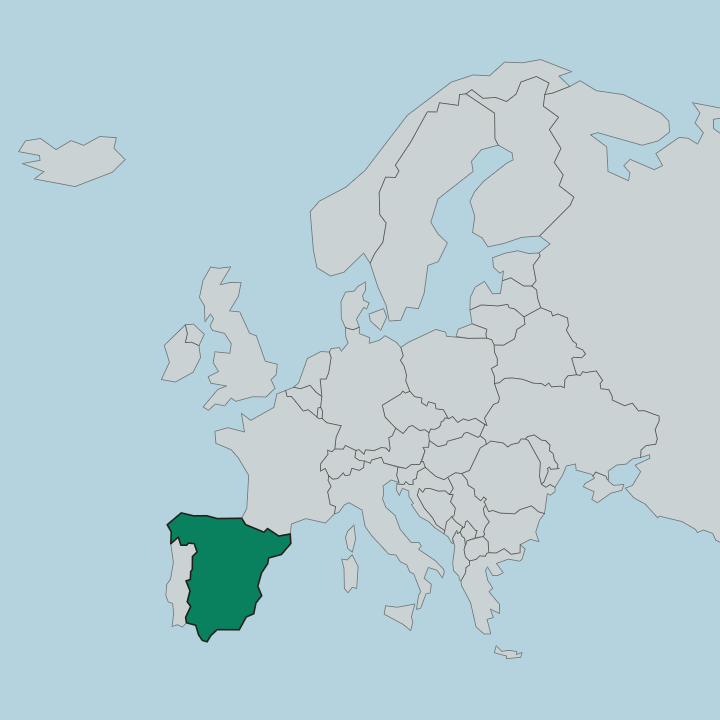
Extremadura holds the west of inland Spain, running the full length of the border with Portugal. It is the third-largest of Spain's regions. The Sistema Central rises along its northern rim, and the land then steps down in broad bands toward the south.
The Tagus drains the northern half through Cáceres, cutting gorges before it slips into Portugal. Between the two great rivers lies the Mesopotamia extremeña, a plain named for exactly that in-between ground caught midway across the region. The Guadiana waters the southern farmland of Badajoz on its own westward run to the Atlantic.
Sierra Morena walls the region off to the south, the divide with Andalusia. Castile and León borders it north, Castilla-La Mancha east. Over nearly all of it spreads the dehesa, the wooded pasture of holm and cork oak that gives Extremadura its open, savanna-like grain and its birds. Few corners of Europe feel this empty.
What is Extremadura like?
Extremadura sent more men to the conquest of the Americas than any other corner of Spain. Trujillo raised Francisco Pizarro, who toppled the Inca; Medellín raised Hernán Cortés, who brought down the Aztecs. Their fortunes built the granite palaces that still crowd the hill towns.
That imperial afterglow sits oddly against a region long counted among Spain's poorest and most rural. Life here runs on the land. The dehesa feeds the pigs, the pigs make the jamón ibérico de bellota, and the acorn-fed ham anchors a cooking of paprika-cured pork, sheep's-milk Torta del Casar, and migas.
Faith left deep marks too. Pilgrims still climb to the Royal Monastery of Santa María de Guadalupe, where Columbus prayed before sailing and where the New World's Guadalupes take their name. Spanish is the everyday tongue, carried west across an ocean by men born on these plains.
What is the history of Extremadura?
The name says frontier. Extremadura comes from the Latin Extrema Dorii, the far marches beyond the Duero that marked the edge of Christian land during the long Reconquista. Before it, this was Roman Lusitania, ruled from Mérida, which Augustus founded in 25 BC to settle his veteran legionaries.
The Kingdom of León drove the border south through Cáceres. Badajoz fell later from its own Moorish taifa, and from these hard lands the conquistadors sailed.
What is the climate of Extremadura?
Extremadura runs hot and dry, a continental interior softened only by Atlantic weather off the west. Summers on the Badajoz plains are among the fiercest in Spain, with the mercury sitting high for weeks. Across Extremadura the winters remain gentle.
Most of the rain falls between autumn and spring, and the eastern reaches of Badajoz are the parched exception, drier than the oak country to the north and west. Spring turns the dehesa green and loud with birds.
How do you get to Extremadura?
Badajoz keeps the region's only airport, flying mainly to Madrid and Barcelona, so most travellers arrive overland instead. A high-speed line now reaches Cáceres, Mérida, and Badajoz from Madrid. Trains are limited.
The A-66 motorway runs the region north to south through Plasencia, Cáceres, and Mérida, tracing the old Roman Vía de la Plata that once carried silver and legions along the same line. Seville lies a short drive south, and Portugal is minutes west of Badajoz. A car unlocks the empty distances.
Common questions
What is the best area to stay in Extremadura?
Cáceres: the medieval old town and birdwatching in Monfragüe. Mérida: sleeping among the best Roman ruins in Spain. Trujillo: the hilltop plaza and conquistador palaces. Badajoz: the far south and crossings into Portugal.
Good for
More regions in Spain
Updated September 2026