Hungary
Komárom-Esztergom, Hungary — Towns & Travel Guide
Komárom-Esztergom is Hungary's smallest county, pressed against the Danube where it forms the Slovak border, from Esztergom to Tatabánya.
Hotel links are affiliate links: booking through them may earn us a commission, at no extra cost to you. It never affects how places are ranked. How this works


Towns & cities in Komárom-Esztergom
One town here has its own guide — it links to where to stay.
 Hungary
Tatabánya
Tatabánya is the capital of Komárom-Esztergom county in northwestern Hungary, marked by the Turul Monument at Bánhida and by Szelim cave.Where to stay →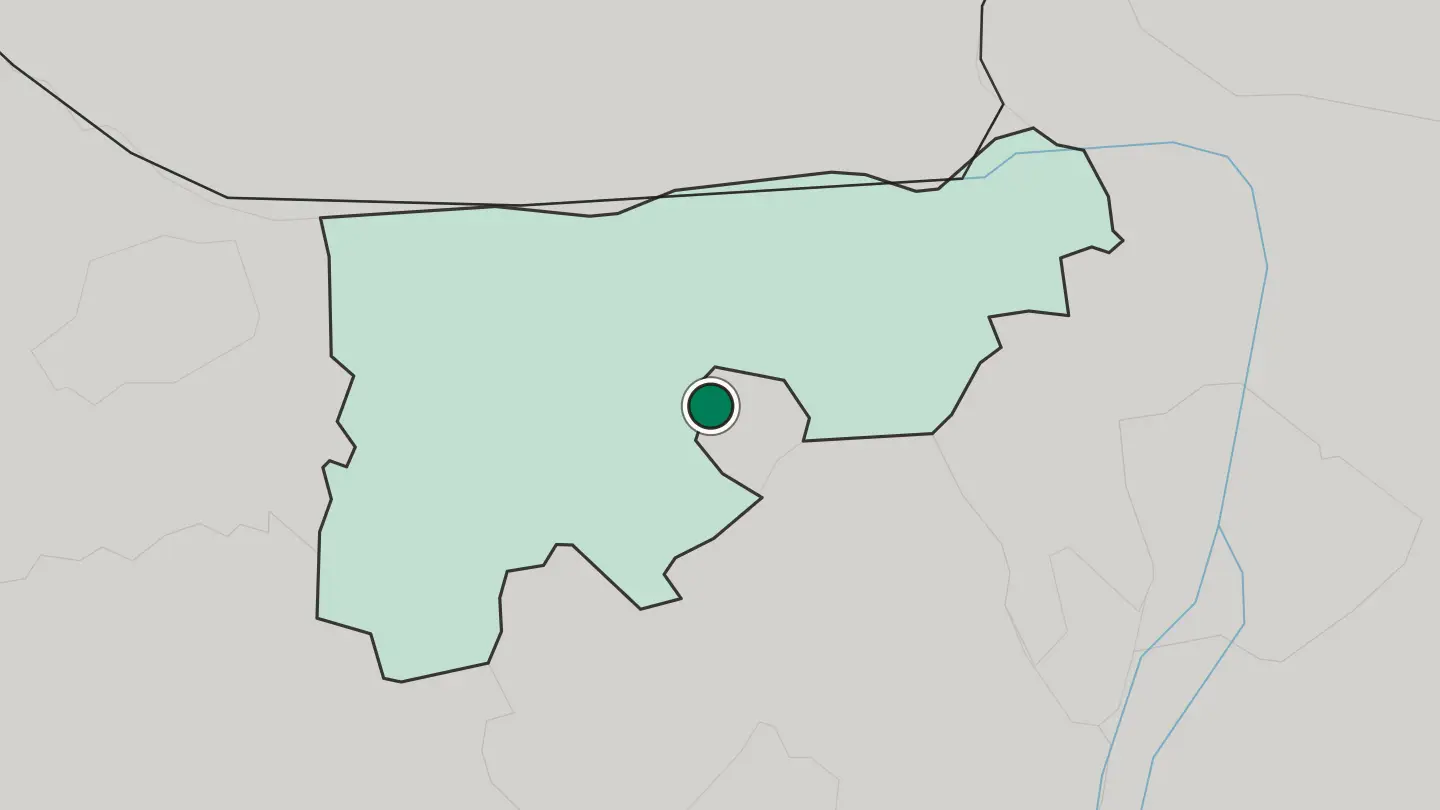
Hotel links are affiliate links: booking through them may earn us a commission, at no extra cost to you. It never affects how places are ranked. How this works
About Komárom-Esztergom
The Danube is the thread.
What is Komárom-Esztergom known for?
Esztergom, the old royal seat of Hungary, crowns the river with the country's largest church, the vast domed basilica that once served the kings who ruled from the town. Tatabánya, the county seat, sits inland in the valley between the Gerecse and the Vértes hills, a mining and industry town rather than a spire. Tata gathers its castle and its old lake a short way north-west of it.
Roman legions once held this stretch of the Danube from the fortress of Brigetio, beside what is now Komárom.
Where is Komárom-Esztergom?
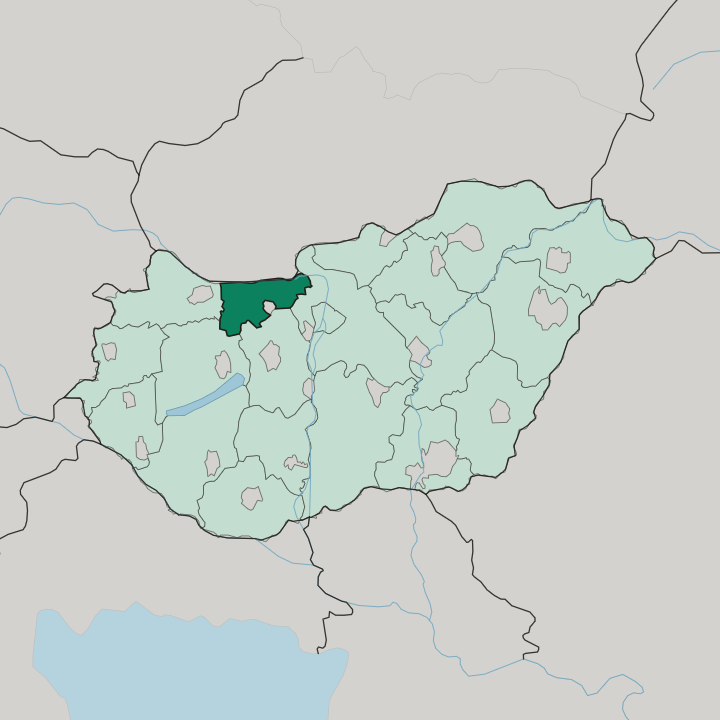
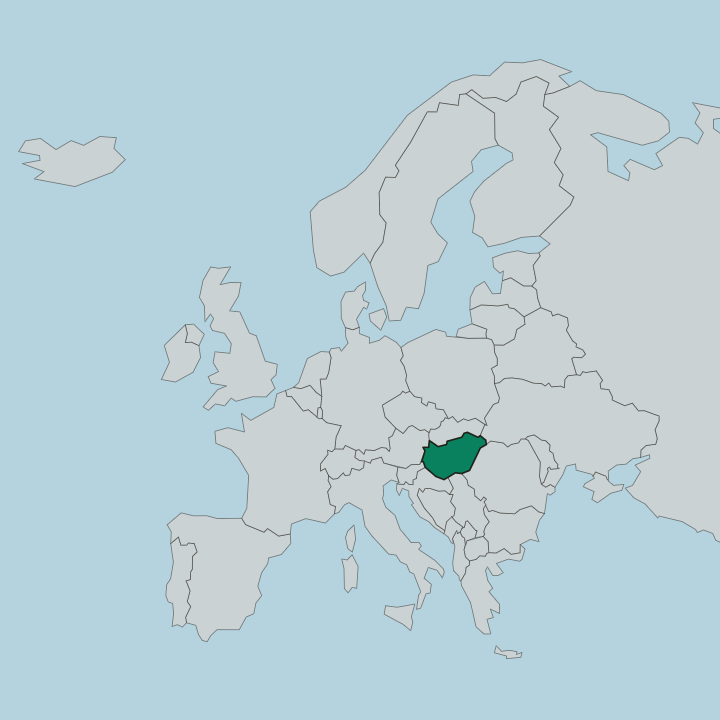
Komárom-Esztergom lies in north-western Hungary, in the Central Transdanubian country west of Budapest. It is the smallest of Hungary's counties. The Danube draws its whole northern edge, and across that water lies Slovakia, so the river is a national border here as much as a landscape.
Tatabánya, the county seat, sits inland to the south, in the valley that opens between two ranges of hills. Those hills give the county its shape. The Gerecse rises as a karst upland between Tatabánya and the Danube, its highest ground reaching a few hundred metres above the river.
The Vértes stands to the south, joined to the Gerecse across the same belt of the Transdanubian mountains. Between and around them run the fertile lowlands that carry the towns and the roads. Esztergom stands where the Danube bends, at the county's north-eastern corner, facing the Slovak town on the far bank.
Komárom sits further west along the same river. Győr-Moson-Sopron county lies to the west, Veszprém and Fejér to the south, and Pest county to the east toward the capital. The Danube is never far from the northern half of the county.
What is Komárom-Esztergom like?
Esztergom carries the county's deepest memory. The town was the seat of Hungary's early kings and remains the seat of the country's senior churchman, the Primate, whose basilica is the largest church in the land. That mix of crown and altar still colours the place.
Faith and old statehood are stamped into its skyline in stone. The rest of the county reads differently. Tatabánya grew up on coal and industry in the last century, a working town with none of Esztergom's medieval weight, and its story belongs to mines and factories rather than kings.
Tata sets a lakeside castle against that, an older and gentler picture beside the Öreg-tó. Komárom faces its twin across the Danube in Slovakia, a divided town split by the border that runs down the river. Hungarian is the language throughout.
What holds these pieces together is the river and the hills, not a single centre, and the county is better understood as a string of distinct towns along the Danube than as one place with one face.
What is the history of Komárom-Esztergom?
Rome held this bank first. The fortress of Brigetio guarded the Danube frontier beside what became Komárom, one link in the chain of camps along the river. Later the story shifted upstream to Esztergom, which the prince Géza chose as his residence and which served as capital of the Kingdom of Hungary from the tenth century until Béla IV moved the royal seat to Buda in the thirteenth.
The county in its present form was drawn in 1950, joining the older Komárom and Esztergom counties that Stephen I had first founded a thousand years before. Two ancient counties, one modern one.
What is the climate of Komárom-Esztergom?
The county has a continental climate, warm in summer and cold in winter. Summers along the Danube run into the low twenties, while January and February can hold at or below freezing. Rain is spread across the year rather than falling in one wet season, and the county is on the drier side by Hungarian standards.
The Gerecse and Vértes hills catch a little more of it than the river lowlands do. Winter turns sharp across Komárom-Esztergom, with January and February often locked at or below freezing along the Danube. Both extremes arrive in full.
How do you get to Komárom-Esztergom?
Most visitors come from Budapest. The capital lies just east, and the main road and rail line west toward Vienna run straight through the county, putting Tatabánya and Komárom on a fast link between the two cities. Esztergom sits at the end of its own branch line up the Danube from Budapest.
The Mária Valéria bridge crosses the river into Slovakia there, so the county can also be reached on foot or by road from Štúrovo on the far bank. There is no airport of its own; Budapest handles the flights.
Common questions
What is the best area to stay in Komárom-Esztergom?
Esztergom: the basilica and the river border. Tata: the lakeside castle town. Tatabánya: the county seat and rail links.
Good for
More regions in Hungary
Updated September 2026