
South Korea
Incheon, South Korea — Towns & Travel Guide
Incheon is South Korea's port on the Yellow Sea, the harbour city west of Seoul where the country's biggest airport sits on reclaimed islands.
Hotel links are affiliate links: booking through them may earn us a commission, at no extra cost to you. It never affects how places are ranked. How this works


Towns & cities in Incheon
One town here has its own guide — it links to where to stay.

 South Korea
Incheon
Incheon is a port city on the coast of northwestern South Korea, just west of Seoul and the birthplace of jajangmyeon.Where to stay →
Hotel links are affiliate links: booking through them may earn us a commission, at no extra cost to you. It never affects how places are ranked. How this works
About Incheon
Incheon is the doorway to South Korea.
What is Incheon known for?
Nearly every foreign arrival lands here, at Incheon International Airport on Yeongjongdo, before riding the rail or bridge east into Seoul. The port made the place, opening to foreign trade in 1883 and drawing merchants, missionaries and Chinese labourers to the old Jemulpo waterfront. Two things pull travellers who stop rather than pass through: Korea's only official Chinatown, birthplace of the black-bean noodle dish jjajangmyeon, and Songdo, a whole business district raised from the sea.
Where is Incheon?
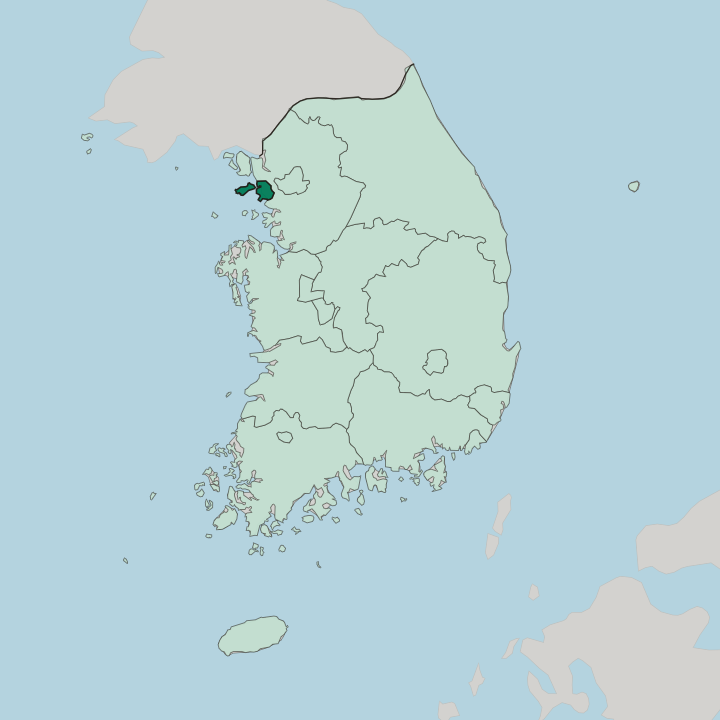
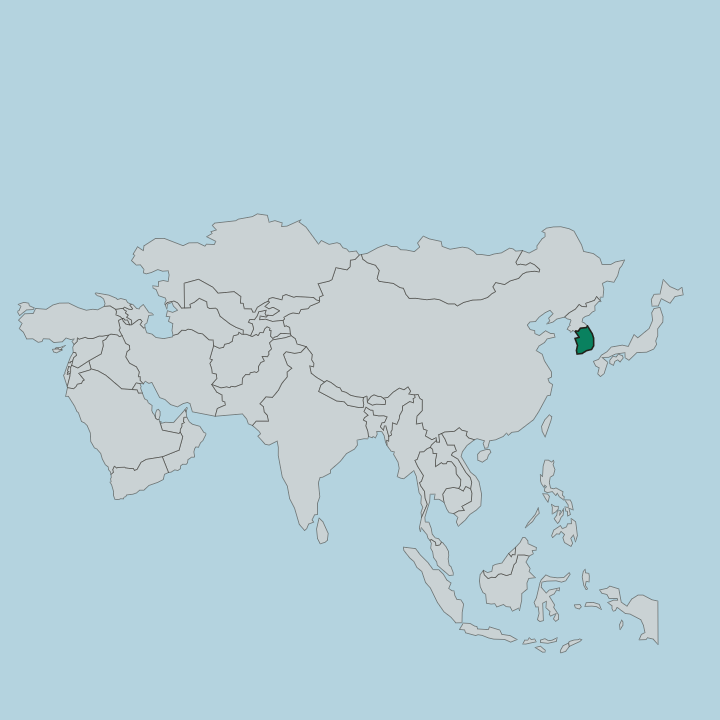
Incheon sits on the Yellow Sea in northwestern South Korea, directly west of Seoul, with Gyeonggi Province wrapping its landward side to the east. The Yellow Sea shapes everything about Incheon, its tidal mudflats baring and flooding twice a day along one of the widest tidal ranges on earth. Shallow water fringes the coast.
The Han River reaches the sea just to the north, and the city administers a scatter of islands strung out across the estuary and the open water beyond. Ganghwa Island is the largest, a broad island at the river's mouth guarding the approach to Seoul, close enough to North Korea that the far channel of the estuary touches the border. Yeongjongdo lies south of it and carries the airport, its old separate isles fused by reclaimed land.
Furthest out sits Baengnyeongdo. That lonely rock is the country's westernmost point. Much of the built city stands on reclaimed ground too, and Songdo was pulled straight from the open sea.
That habit of making land from water has shaped Incheon as firmly as the tides that made it necessary.
What is Incheon like?
Incheon wears its port past on its sleeve. When Jemulpo opened to foreign trade in 1883, Chinese, Japanese and Western traders settled the slopes above the docks, and their old consulates, brick warehouses and stepped streets still stand in Jung-gu. Chinatown is the living piece of that.
It is the only official Chinatown in the country, and the place where Korean-Chinese cooks invented jjajangmyeon, the noodles in dark black-bean sauce now eaten the length of the peninsula. The other face is deliberately new. Songdo was drawn on a planner's board and built from nothing on reclaimed flats, all wide boulevards, a central park and towers of glass, a showcase of what a city can be made to be.
Between the two lies the everyday: fish markets on the quays, ferry piers for the islands, the crab and clam of a coast that lives off the tidal shallows. Language here is Korean, as across South Korea. The pull of Seoul is always close, yet Incheon keeps a salt-air identity of its own.
What is the history of Incheon?
Incheon has been settled since the Neolithic, but its modern story starts at the water. A small fishing port under the Joseon dynasty, Jemulpo was opened to foreign trade in 1883 and grew fast into one of Korea's treaty ports. Its most famous day came in 1950.
General Douglas MacArthur landed United Nations forces at Incheon that September, an amphibious gamble against the tides that turned the Korean War and led to the retaking of Seoul. Wolmido, the little island by the harbour, was where the assault came ashore. The city was cut from Gyeonggi Province and made a metropolitan city in 1981.
What is the climate of Incheon?
Incheon has a humid climate of sharp seasons, tempered a little by the Yellow Sea at its door. Winters bite. Cold, dry northwesterly winds sweep down off the Asian mainland, and the harbour can turn raw and grey for weeks.
Summer is the opposite, hot and sticky, and the East Asian monsoon dumps most of the year's rain in the July and August wet season. Spring and autumn are the kind stretches, mild and clear, when the sea breeze softens the coast.
How do you get to Incheon?
Almost everyone reaches Incheon by air. Incheon International Airport, on Yeongjongdo, is South Korea's largest and the main entry point for the whole country, linked to the mainland by long bridges across the tidal flats. From the airport, an express train and the metro run east under and around the estuary to Seoul in about an hour.
Ferries sail from the port out to Ganghwa Island and the scattered western isles, and cross the Yellow Sea to ports in China. Getting in is the easy part.
Common questions
What is the best area to stay in Incheon?
Jung-gu and the old harbour: Incheon's Chinatown and open-port history. Songdo: Incheon's reclaimed-land new city. Yeongjongdo: a layover at Incheon International Airport.
Good for
More regions in South Korea
Updated September 2026