
South Korea
Daejeon, South Korea — Towns & Travel Guide
Daejeon is South Korea's science capital, a metropolitan city ringed by mountains at the middle of the peninsula.
Hotel links are affiliate links: booking through them may earn us a commission, at no extra cost to you. It never affects how places are ranked. How this works


Towns & cities in Daejeon
One town here has its own guide — it links to where to stay.

 South Korea
Daejeon
Daejeon fills a valley between the Sobaek Mountains and the Geum River, a research city of central Korea known for Daedeok Innopolis and Hanbit Tower.Where to stay →
Hotel links are affiliate links: booking through them may earn us a commission, at no extra cost to you. It never affects how places are ranked. How this works
About Daejeon
Research is the reputation.
What is Daejeon known for?
Daejeon holds Daedeok Innopolis, the cluster of government laboratories and university campuses that Koreans call their answer to Silicon Valley, and KAIST trains much of the country's scientific talent within it. The city drew the world's attention when it staged the 1993 Expo, whose Expo Park still marks the northern riverside. Beyond the laboratories, Yuseong is an old hot-spring quarter where travellers have soaked since the Baekje era, and the wooded slopes of Gyeryongsan rise along the western edge.
Where is Daejeon?
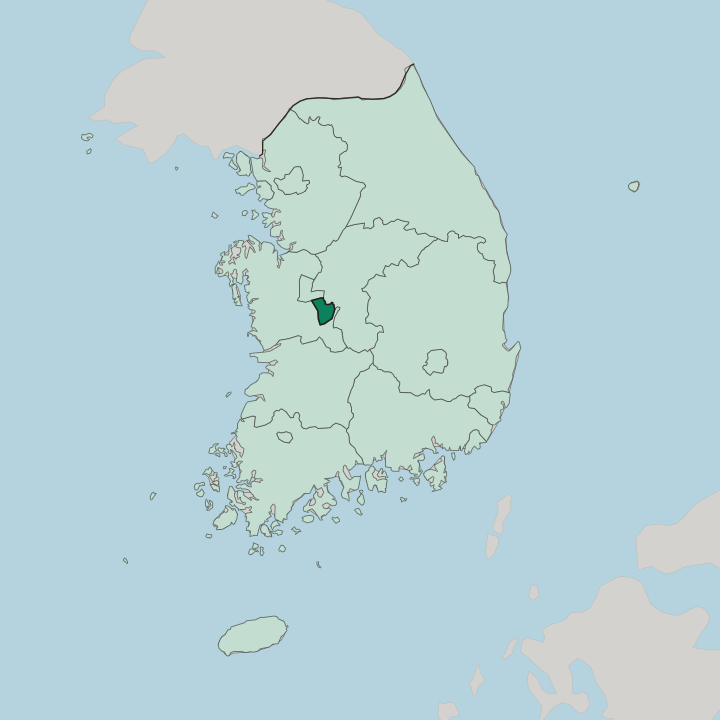
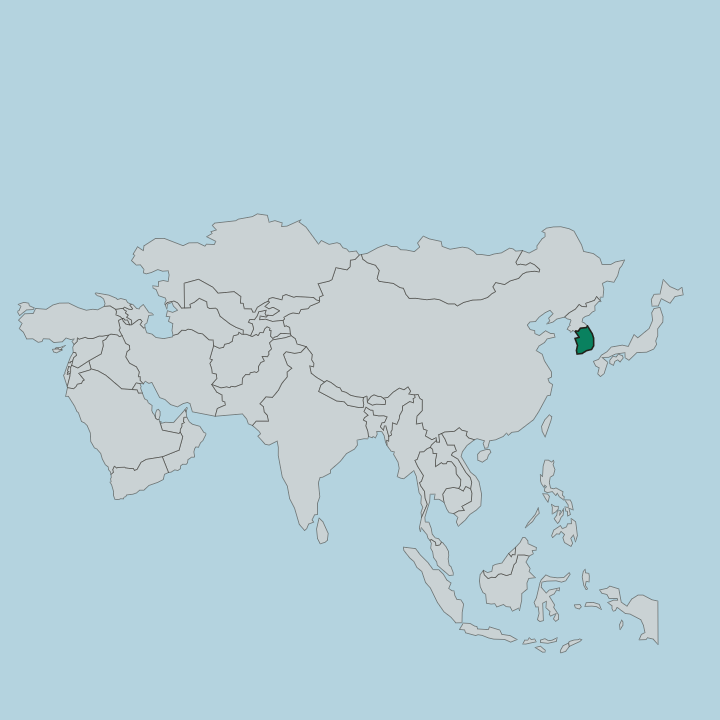
Daejeon sits at the middle of the Korean Peninsula, in central South Korea, roughly a hundred and seventy kilometres south of Seoul. It belongs to the inland Hoseo region. Mountains close it in on almost every side, so the city fills a broad basin rather than an open plain.
Gyeryongsan National Park straddles the western boundary, its granite ridges shared with the neighbouring towns of Gongju and Nonsan, while the foothills of the Sobaek Mountains press in from the south and the east. Three streams order the interior. The Gapcheon, the Yudeungcheon and the Daejeoncheon all run roughly northward through the districts, threading past the downtown and the science parks before they gather at the northern edge.
There they empty into the Geum River, which curves around the north-east of the city on its long arc toward the Yellow Sea. Sejong, the planned administrative capital, lies just to the north across that water. The five districts of Daejeon spread out from the confluence: Dong-gu and Jung-gu over the old centre, Seo-gu and Yuseong-gu to the west, and Daedeok-gu reaching north toward the river.
What is Daejeon like?
Daejeon wears its identity as a city of laboratories. Its self-image is built on research rather than on old palaces or castle walls, and that shows in the way the place carries itself. Daedeok Innopolis anchors it.
A landscape of research institutes and corporate campuses spreads out on a modern grid north of the Gapcheon, and KAIST sits at the centre of the whole cluster, with the students and engineers who fill Yuseong giving the western districts a young, technical air. The 1993 Expo left its own mark. Its riverside grounds became a public park of pavilions and towers that the city still uses for festivals and fairs.
Older threads run alongside the new ones. Yuseong has drawn bathers to its hot springs since the Baekje kingdom, and the spa quarter keeps that tradition of soaking alive under a modern skyline. Korean is the everyday language across every district, as it is throughout South Korea.
The mountains matter to daily life too. Gyeryongsan on the western skyline is a place of temples and hiking trails, and locals climb its ridges on weekends the way other cities take to their parks. Science and spa water sit oddly well together here.
What is the history of Daejeon?
Daejeon owes its rise to the railway. It was a small settlement until the Gyeongbu Line reached it in the early twentieth century, and the junction where that line met the Honam route toward the south-west turned the place into a growing transport town. For decades it served as the largest city of South Chungcheong province and its administrative seat.
In 1989 it was cut loose from the province and raised to a metropolitan city in its own right, governing itself directly. The 1993 Expo and the earlier planning of Daedeok Science Town, approved in 1973, set it on its course as the nation's research hub.
What is the climate of Daejeon?
Daejeon runs to four sharp seasons. Its inland basin, walled off from the sea by the Sobaek Mountains, gives it hotter summers and colder winters than the coast. July and August are hot and heavy with humidity, and the summer monsoon dumps most of the year's rain across those two months.
Winters turn cold and dry, with January nights dropping below freezing under clear skies. Spring and autumn are the settled seasons, mild and comfortable between the extremes.
How do you get to Daejeon?
For most visitors, Daejeon begins on the rails. Daejeon sits on the Gyeongbu Line, the main artery between Seoul and Busan, and KTX high-speed services stop at Daejeon Station in under an hour from the capital. The city is also the junction where the Honam route branches off toward the south-west, which makes it one of the busiest rail nodes in the country.
Expressways cross here for the same reason, linking the north and south of South Korea. There is no major airport in the city itself, so air passengers route through Seoul or Cheongju and finish the trip by rail or road. Most still arrive by rail.
Common questions
What is the best area to stay in Daejeon?
Yuseong-gu: hot springs and the science parks. Dong-gu (station district): arriving by rail and staying central. Jung-gu and Seo-gu: the modern city centre.
Good for
More regions in South Korea
Updated September 2026