South Korea
Ulsan, South Korea — Towns & Travel Guide
Ulsan is South Korea's industrial coast, where Hyundai shipyards and a restored river meet the Sea of Japan.
Hotel links are affiliate links: booking through them may earn us a commission, at no extra cost to you. It never affects how places are ranked. How this works


Towns & cities in Ulsan
One town here has its own guide — it links to where to stay.

 South Korea
Ulsan
Ulsan is a metropolitan city of South Korea neighbouring Busan and facing Gyeongju, known for the Bangudae Petroglyphs and the Yeongnam Alps inland.Where to stay →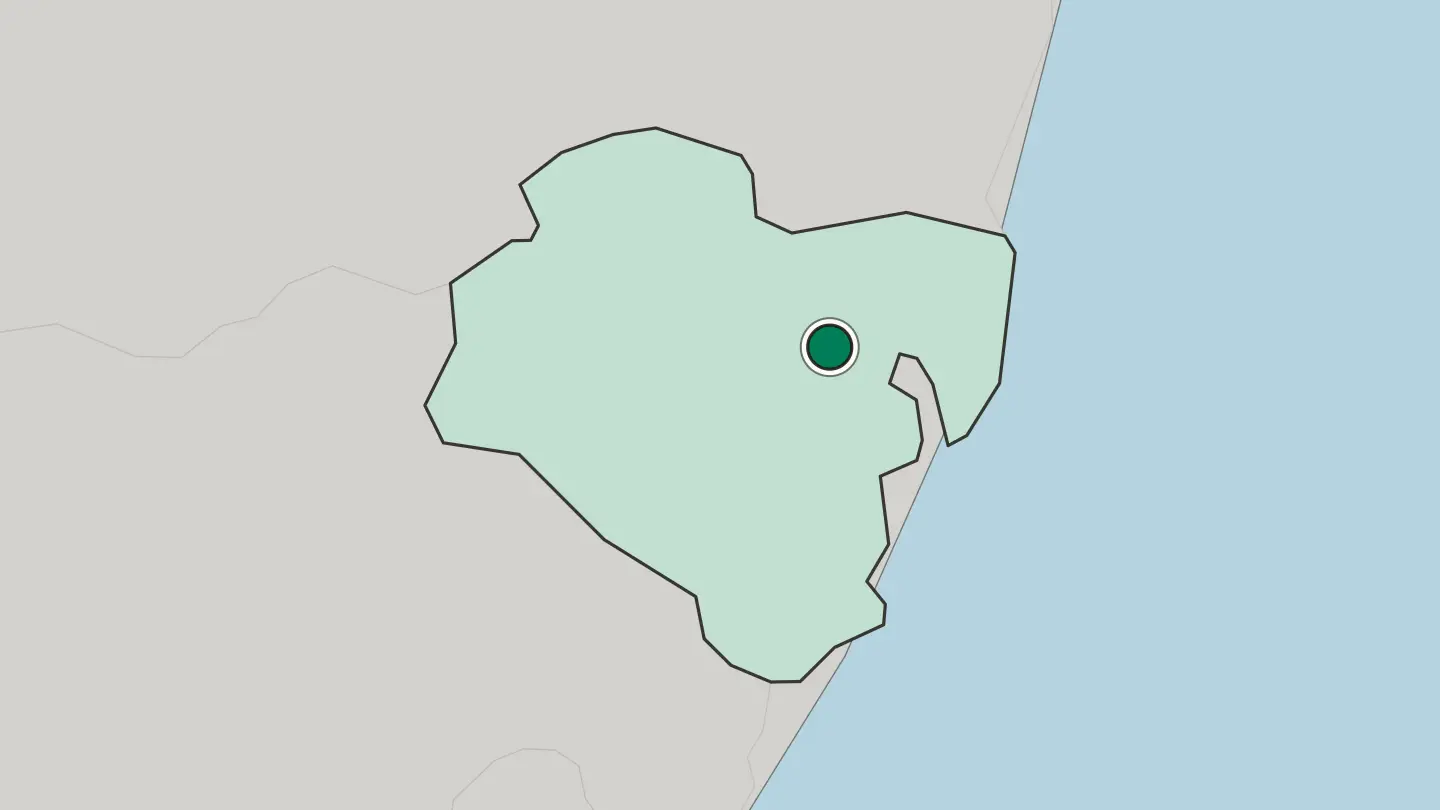
Hotel links are affiliate links: booking through them may earn us a commission, at no extra cost to you. It never affects how places are ranked. How this works
About Ulsan
Ulsan makes things.
What is Ulsan known for?
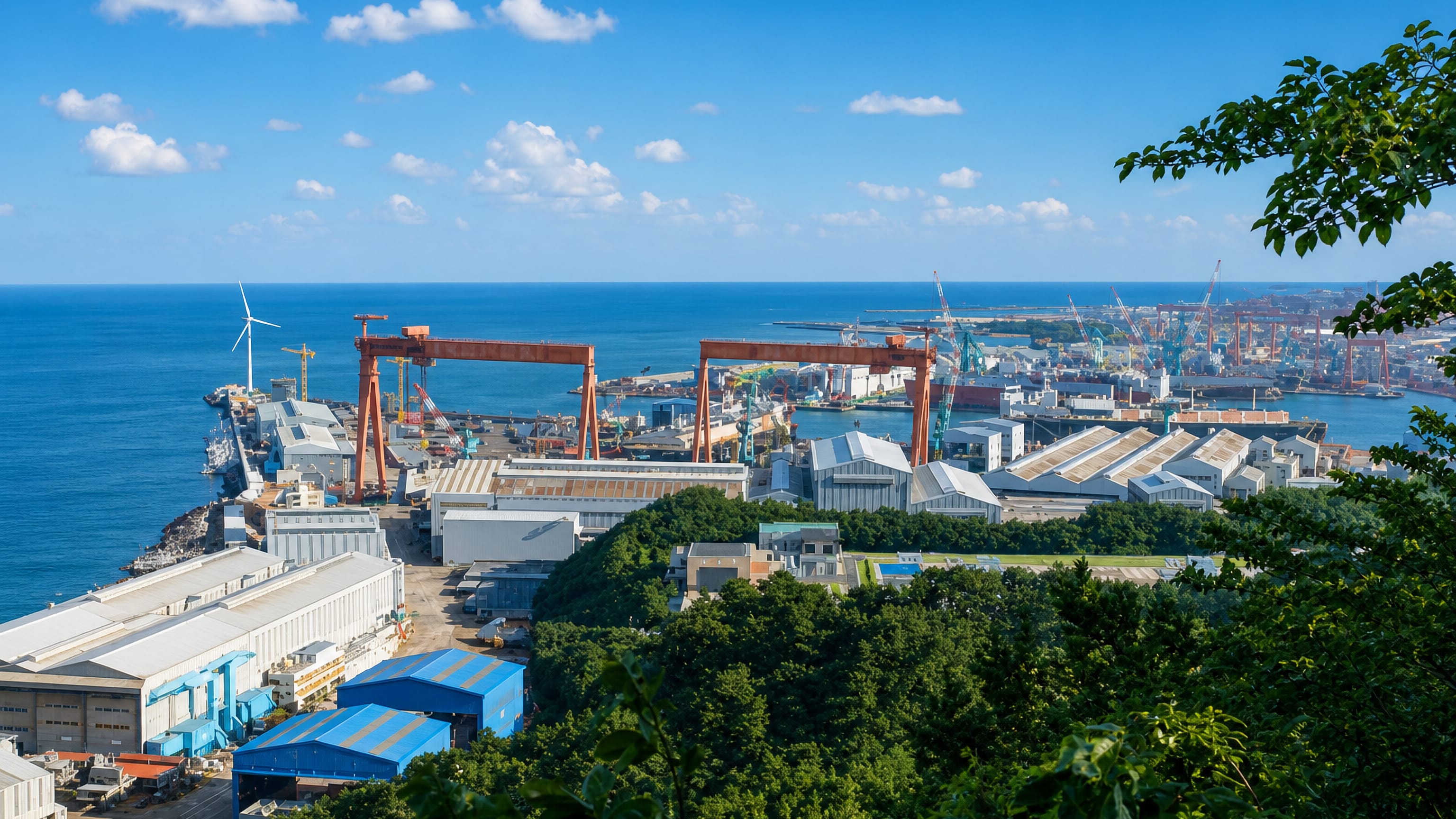
The world's largest car plant, run by the Hyundai Motor Company, and the shipyards of Hyundai Heavy Industries sit along its harbour on the Sea of Japan, in the far south-east of South Korea. Yet the Taehwa River that runs through the centre was reclaimed from ruin and turned into parkland, and the Yeongnam Alps rise close inland to the west. Busan, the country's second city, lies just to the south.
Where is Ulsan?
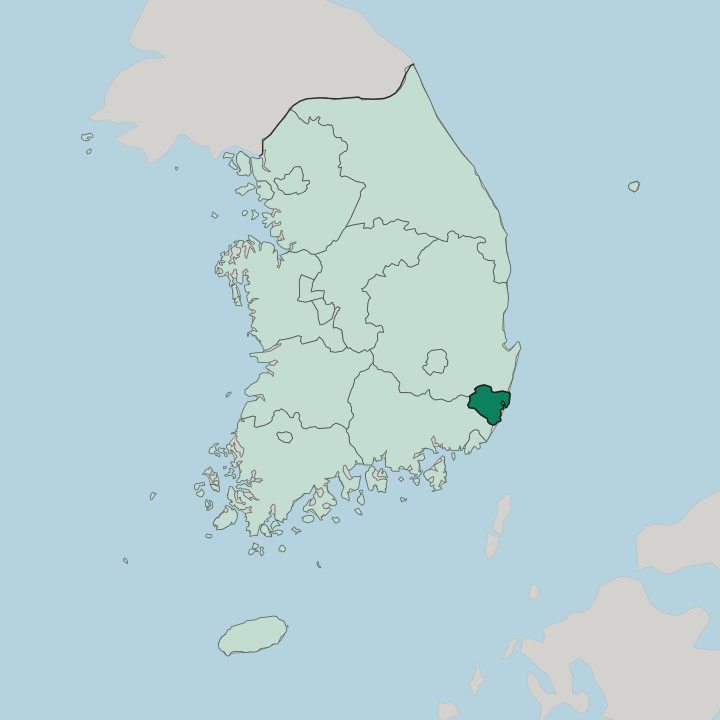
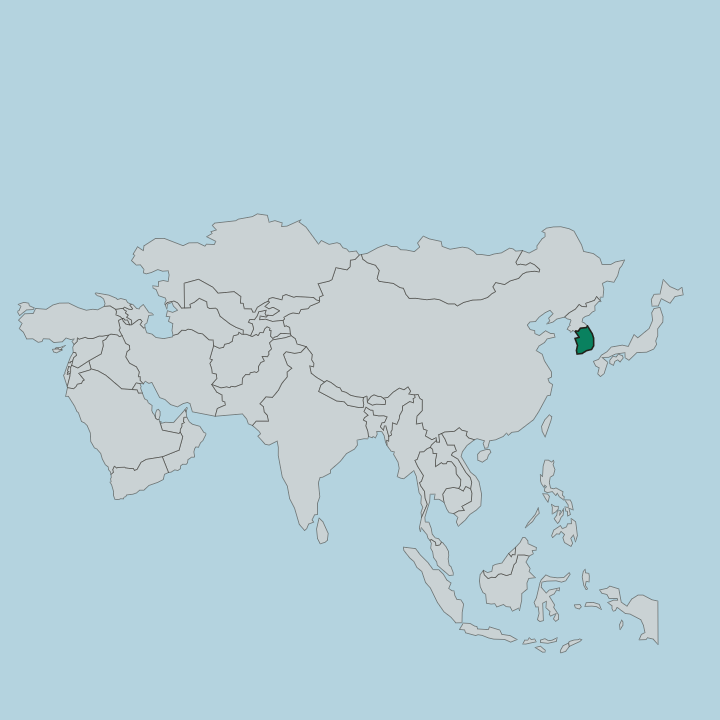
Ulsan sits at the south-eastern tip of the Korean Peninsula, where the land runs out into the Sea of Japan. The coast faces east into open water. Busan, the second city of South Korea, lies about seventy kilometres down the shore to the south, and the old royal capital of Gyeongju is close to the north.
The Taehwa River is the axis of the place. It rises among the mountains inland and runs east through the middle of the built-up city before emptying into the sea, dividing the northern districts from Nam-gu on its southern bank. West of the city the ground climbs sharply into the Yeongnam Alps, a cluster of peaks over a thousand metres that includes Gajisan and Sinbulsan, an outlier of the Taebaek range that walls Ulsan off from the interior.
The four urban districts of Jung-gu, Nam-gu, Dong-gu and Buk-gu press against the harbour and the river mouth, while the large county of Ulju wraps around them to the west and south, holding most of the farmland, the forest and the mountains. At the eastern edge the land ends at Ganjeolgot, the cape that reaches furthest into the Sea of Japan. It is the first point on the Korean mainland the sunrise touches.
Sea on one side and mountains on the other have hemmed the city into the river valley between them.
What is Ulsan like?
Whales run through Ulsan's sense of itself, older than any factory. The proof is carved into rock. On a cliff above a tributary of the Taehwa River, the Bangudae Petroglyphs show whales, boats and hunters cut into stone thousands of years ago, among the earliest depictions of whaling anywhere.
That old sea trade lives on at Jangsaengpo in Nam-gu, once the country's whaling port and now a whale museum and culture village where the industry is remembered rather than practised. The other half of the character is industrial and unapologetic about it. This is a working city built by the Hyundai Motor Company and Hyundai Heavy Industries, and the shipyards and assembly lines are part of the skyline the way cathedrals are elsewhere.
Between the two runs the Taehwa River, whose banks were choked and fouled within living memory and have since been remade as the Taehwagang National Garden, a broad stretch of reed beds and bamboo where migratory birds now roost inside the city. Korean is the language spoken across Ulsan, as in the rest of South Korea. The result is a place that carries a prehistoric coast and a heavy-industry present at the same time.
Few Korean cities hold that mix so plainly.
What is the history of Ulsan?
For most of its past Ulsan was a small fishing port and a market for the pears and grain of the Taehwa plain. The whaling at Bangudae is prehistoric. The turn came in 1962, when the government named the town a Special Industrial District and steered the Hyundai Motor Company and Hyundai Heavy Industries to build there, drawing rail and road down from Seoul.
In a generation a fishing harbour became the country's manufacturing engine, and in 1997 Ulsan was raised to a metropolitan city in its own right.
What is the climate of Ulsan?
Ulsan has a humid subtropical climate, softened by the Sea of Japan on its doorstep. Summers are the wet season. From June into September the air turns hot and sticky and the monsoon rains fall hardest, August being the warmest stretch of the year.
Winters run the other way, cold but dry and largely free of snow, with January the coldest month. The sea keeps the swing between day and night narrow along the coast, though the Yeongnam Alps inland stay cooler and catch more weather.
How do you get to Ulsan?
Most travellers reach Ulsan by land from Busan, an hour or so down the coast to the south. The fast way is the KTX. High-speed trains from Seoul stop at Ulsan Station out in Eonyang, at the western edge of Ulju under the Yeongnam Alps, a bus ride from the centre.
Ulsan Airport in Buk-gu handles domestic flights from Seoul and Jeju for those who prefer to fly. Many arrivals simply come across from Busan and its larger international airport nearby.
Common questions
What is the best area to stay in Ulsan?
Samsan, Nam-gu: a first stay near the Ulsan centre. Ganjeolgot, Ulju-gun: the earliest sunrise on the coast. Ilsan, Dong-gu: the coastal pine forest and shipyard edge. Eonyang, Ulju-gun: the fast train and the mountain trailheads.
Good for
More regions in South Korea
Updated September 2026