Kazakhstan
West Kazakhstan, Kazakhstan — Towns & Travel Guide
West Kazakhstan is the country's north-western corner, where the Ural River crosses the steppe into Europe.
Hotel links are affiliate links: booking through them may earn us a commission, at no extra cost to you. It never affects how places are ranked. How this works


Towns & cities in West Kazakhstan
One town here has its own guide — it links to where to stay.

 Kazakhstan
Oral
Oral is a city of far western Kazakhstan on the Ural river, an old Cossack town on the line between Europe and Asia, once called Uralsk.Where to stay →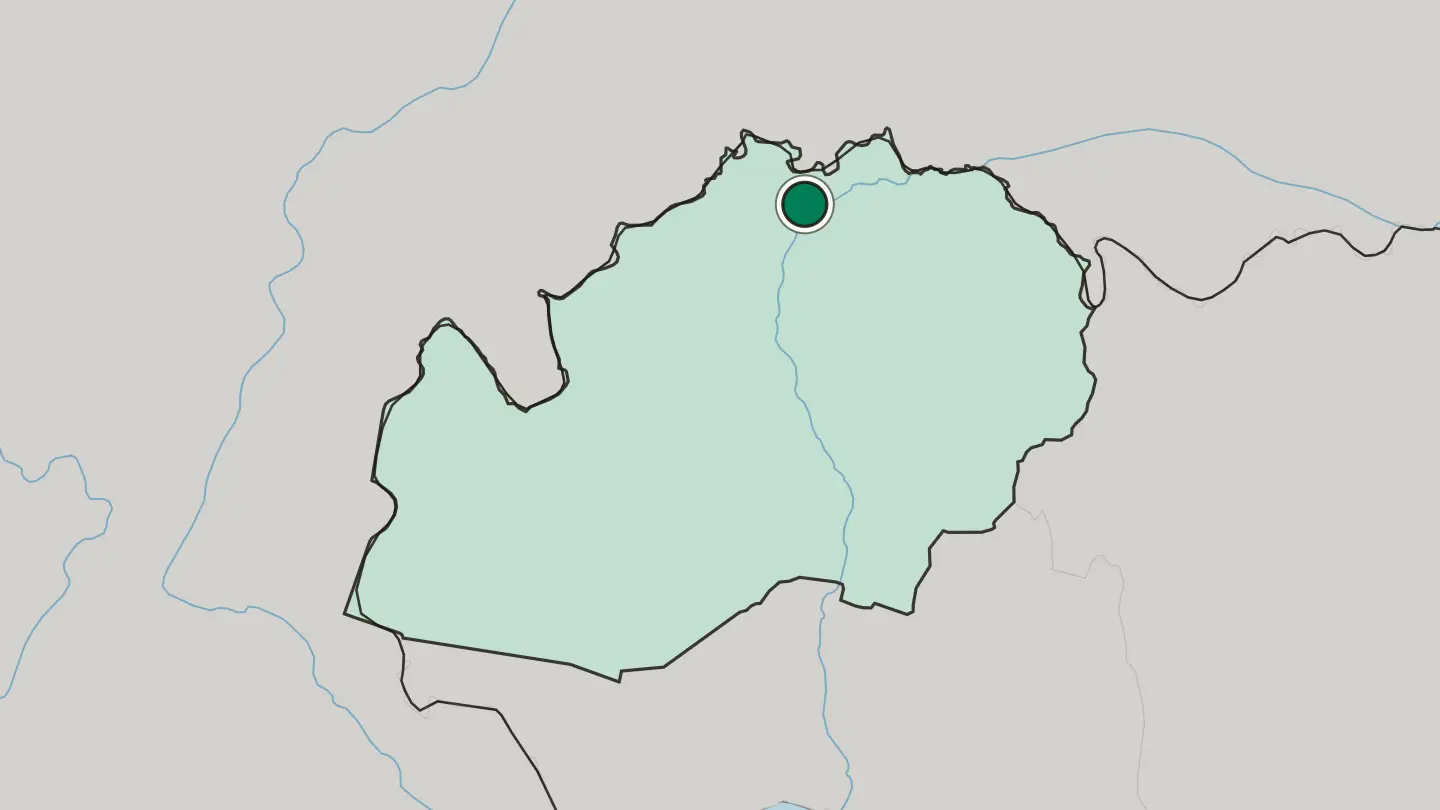
Hotel links are affiliate links: booking through them may earn us a commission, at no extra cost to you. It never affects how places are ranked. How this works
About West Kazakhstan
This region trades on its Cossack past and its gas.
What is West Kazakhstan known for?
Oral, the capital, grew from a Yaik Cossack fort at the meeting of the Ural and Chagan rivers, and it kept the churches, log houses and museums to prove it. Out east near Aksai sits Karachaganak, one of the largest gas-condensate fields anywhere, discovered in 1979. Between the two lies flat steppe.
The Ural River threads through all of it, marking the line where Asia gives way to Europe.
Where is West Kazakhstan?
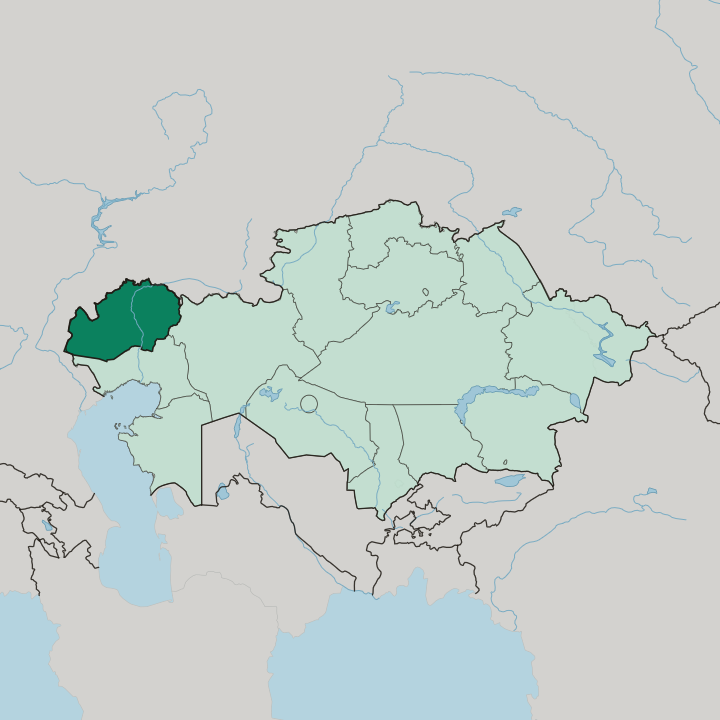
West Kazakhstan fills the far north-western corner of the country, wedged against Russia. It is big. The region spreads over 151,339 square kilometres of the Caspian lowlands, mostly flat steppe and semi-desert that fades from grass in the north to scrub in the south.
Russia wraps around its top and side, with the Astrakhan, Volgograd, Saratov, Samara and Orenburg oblasts on the far bank; Aktobe Region lies to the east and Atyrau Region to the south. The Ural River is the spine of the whole place. It runs down from Russia through the western part of the region, all year round, the only river here that never dries, and it carries the accepted boundary between Europe and Asia along its channel toward the Caspian Sea.
Oral, the capital, sits where the Ural meets the Chagan. Because the city stands on the west bank, it counts as European ground. Away from that river the land is thirsty.
Many of the region's smaller streams and lakes shrink or vanish in the heat of summer. What water there is gathers along the Ural, and so do the towns.
What is West Kazakhstan like?
Two languages, two heritages, one steppe. Kazakh is the state language and the one you hear most in daily speech, but Russian is understood by nearly everyone, a legacy of the Cossacks and settlers who held this frontier for centuries. That double inheritance shows plainly in Oral.
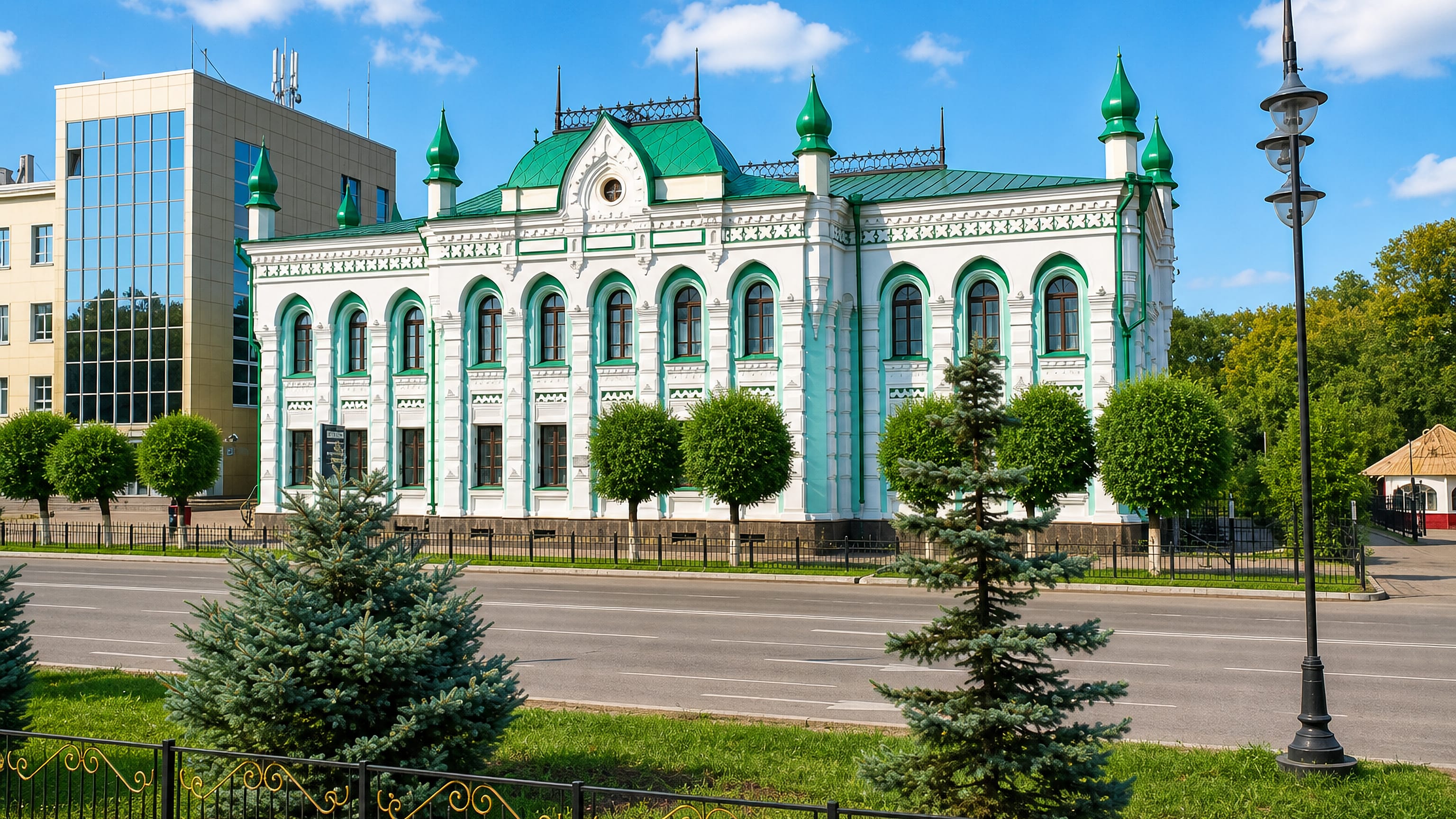
The capital keeps a run of Orthodox churches beside its mosques, chief among them the seven-domed Cathedral of Christ the Saviour, raised between 1891 and 1907 to mark three hundred years of Ural Cossack service. Older still is the Cathedral of Archangel Michael, begun in 1741 when the town was a wood-walled fort. The city wears its literary past as openly as its faith.
Alexander Pushkin came here in 1833 to research the Pugachev rebellion, and the Ataman House now holds a museum to him. Leo Tolstoy and Vladimir Dal passed through too. Museums are the regional habit rather than the exception, with more than a score of them scattered across the towns and villages.
The Pugachev House Museum, a plain eighteenth-century Cossack log cabin, keeps the weapons and papers of the revolt. Culture here is a border culture, part Russian and part Kazakh, and it does not pretend otherwise.
What is the history of West Kazakhstan?
Oral began as a Yaik Cossack settlement in 1613, a fort on the river that gave the Cossacks their name. It became a byword for revolt. The Ural Cossacks joined Stenka Razin's rising in 1667 and made the town the headquarters of Yemelyan Pugachev's great rebellion of 1773 to 1775.
When that revolt was crushed, Catherine II set out to erase its memory: she renamed the Yaik River the Ural and the town Uralsk in 1775. The modern region took shape as a Soviet oblast in 1932.
What is the climate of West Kazakhstan?
The steppe here runs to extremes. Summers turn hot and dry, with July afternoons in Oral pushing past thirty degrees over parched grassland, while winters bite hard and long, snow lying for weeks as January drops well below freezing. Precipitation is thin across the year, which is why so many of the region's streams and lakes shrink away by late summer and only the Ural River keeps flowing.
The shoulder seasons pass quickly on the West Kazakhstan steppe. This is a markedly continental country, far from any moderating sea.
How do you get to West Kazakhstan?
Most travellers fly into Oral. Its airport, about 17 kilometres south-east of the centre, takes scheduled flights from Astana, Almaty, Aktau, Atyrau and Moscow. The rails are the odd part.
The one railway line through Oral runs west to east and dips across Russia in both directions, so reaching other Kazakh cities by train means clearing a Russian border and its visa. That quirk of the map makes the plane the sensible choice for most. From Oral, roads fan out east across the steppe toward Aksai.
Common questions
What is the best area to stay in West Kazakhstan?
Oral: an initial stop in West Kazakhstan. Aksai: travellers working the Karachaganak field. The steppe beyond Oral: day trips out from the capital.
Good for
More regions in Kazakhstan
Updated September 2026