Poland
Opole Voivodeship, Poland — Towns & Travel Guide
Opole Voivodeship is Poland's smallest region, a warm Silesian lowland on the Oder where Polish and German heritage overlap.
Hotel links are affiliate links: booking through them may earn us a commission, at no extra cost to you. It never affects how places are ranked. How this works


Towns & cities in Opole Voivodeship
Pick a town or city — each links to where to stay.
 Poland
Opole
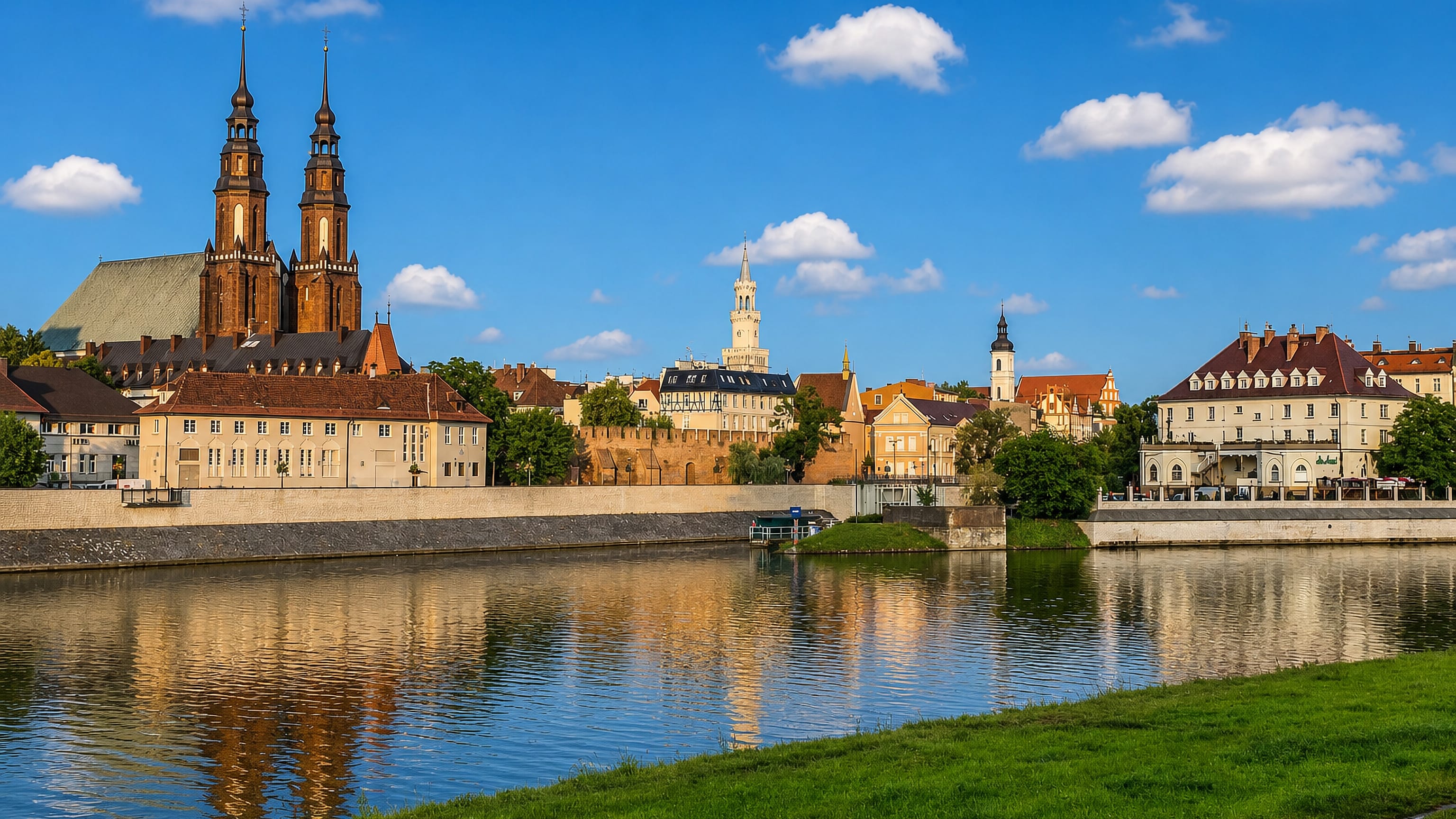
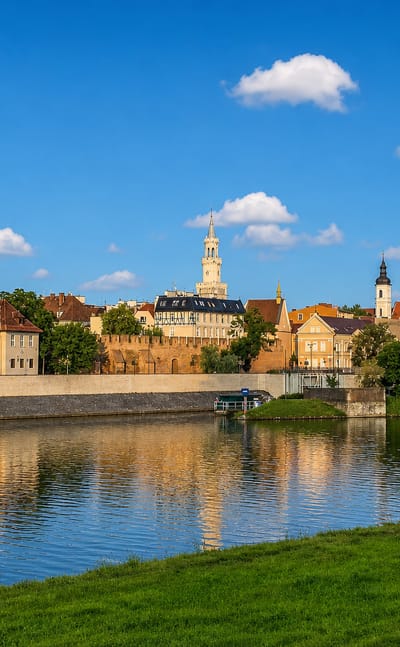
The Oder curves past Opole in southern Poland, the historic capital of Upper Silesia, gathered around its Market Square and the Piast Tower.Where to stay →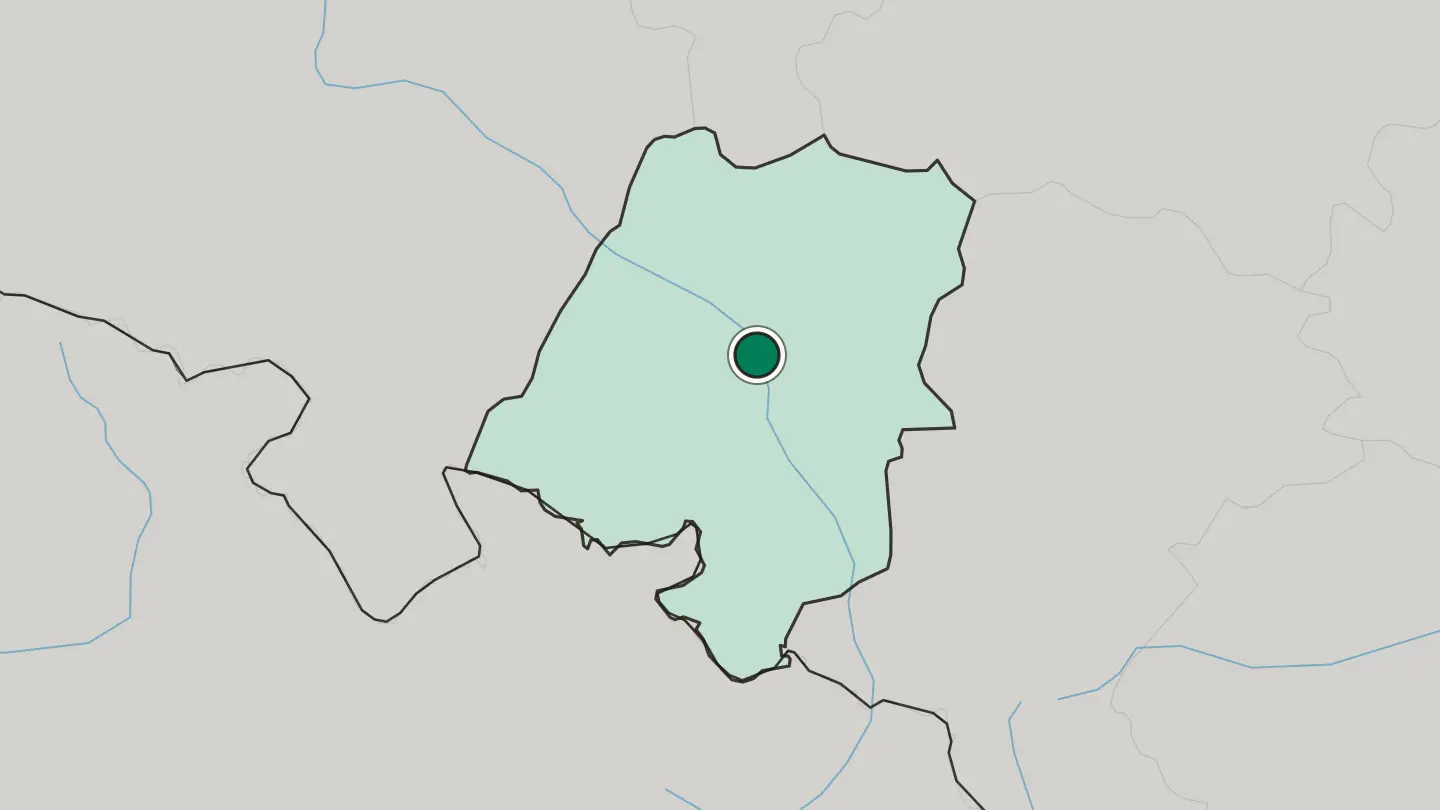
 Poland
Kędzierzyn-Koźle
Kędzierzyn-Koźle is one city made from two towns, Kędzierzyn and Koźle, joined in 1975 in the Opole Voivodeship.Where to stay →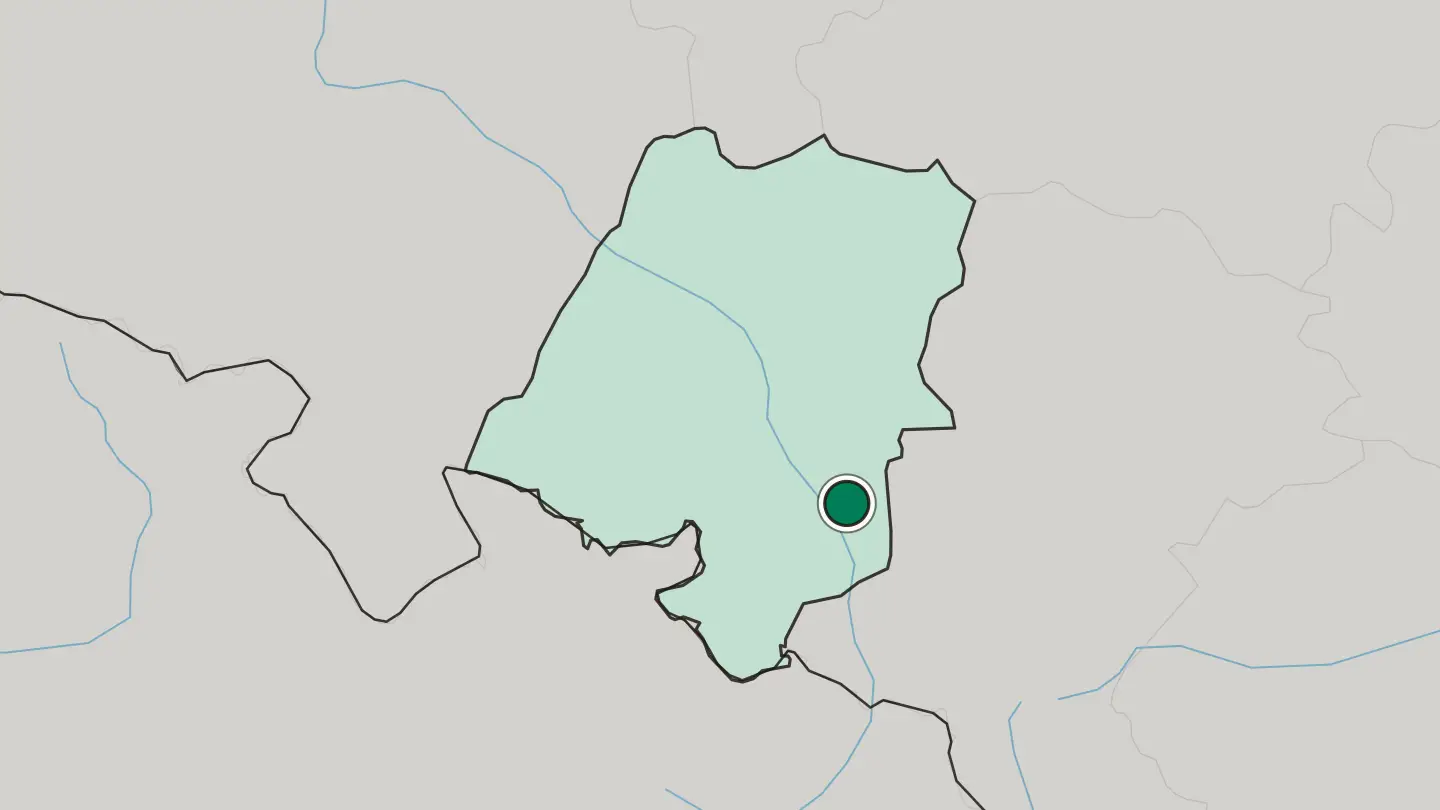
Hotel links are affiliate links: booking through them may earn us a commission, at no extra cost to you. It never affects how places are ranked. How this works
About Opole Voivodeship
What is Opole Voivodeship known for?
It is the smallest of Poland's regions, and the country's warmest. Opole, its capital, hosts the National Festival of Polish Song each summer in the Millennium Amphitheatre, a fixture of Polish television since 1963 that gives the city its nickname as the home of Polish song. The region also carries the largest German minority in Poland, so German runs as a second official language across a belt of communes and shapes the food, surnames, and bilingual road signs.
Saint Anne Mountain rises over the eastern uplands as a Franciscan pilgrimage site, a lone basalt cone visible for miles across the surrounding lowland fields. Song and Silesian heritage define it.
Where is Opole Voivodeship?
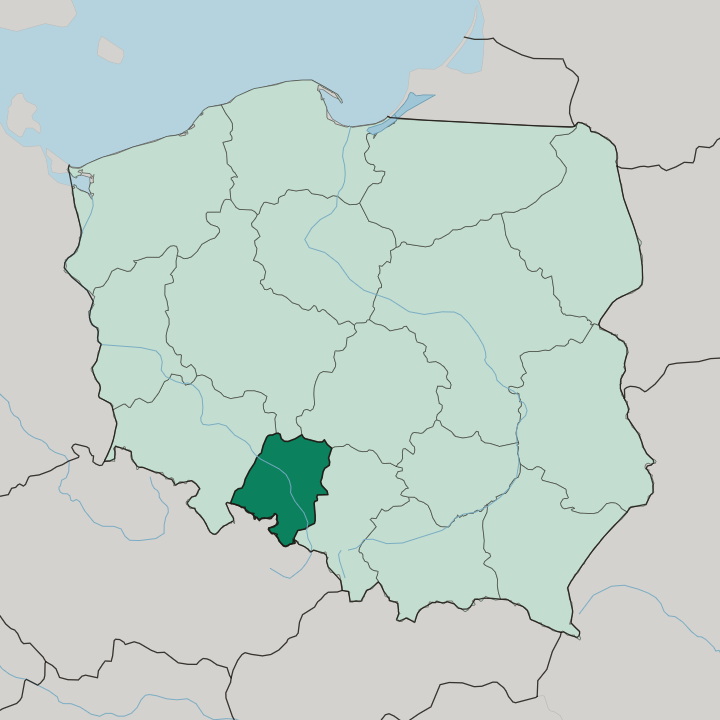
Opole Voivodeship sits in south-western Poland, on the Silesian Lowland that opens across the middle of Upper Silesia. The Oder cuts through the centre of the region, running north-west from the industrial south past Kędzierzyn-Koźle, through Opole, and on toward Brzeg and the wider Silesian plain. Most of the land is low and flat.
This is farm country, its dark soils among the most fertile in Poland, worked into wide fields of wheat and sugar beet. The edges break that flatness. To the south-west the Opawskie Mountains, an outlier of the Sudetes, rise along the border with the Czech Republic.
To the east the ground lifts into the Silesian Upland, where Saint Anne Mountain stands as a lone basalt cone above the fields, the easternmost basalt in Europe. The north is different again, a sandy, pine-forested belt drained by the Mała Panew river toward the Oder. Lower Silesia lies to the west, the Silesian Voivodeship to the east, and Greater Poland to the north.
Small in area, the region packs lowland, upland, and hill country into a short drive.
What is Opole Voivodeship like?
Two languages share this region. Opole holds the largest German minority in Poland, the surviving remnant of the Prussian and Habsburg centuries that ruled Upper Silesia before 1945, and German stands as a co-official language in a cluster of communes across the region's centre. You see it in bilingual signs, in old family names, and in villages that keep German-language schooling and Sunday Mass.
Radłów was the first commune to adopt German alongside Polish. The blend runs deeper than language. Silesian cooking here leans on the local table: rolada, a rolled beef roulade, served with red cabbage and the round potato dumplings called kluski śląskie.
The region's other signature is song. Since 1963 Opole's Millennium Amphitheatre has staged the National Festival of Polish Song, broadcast nationwide, and the neighbouring Polish Song Museum keeps the festival's costumes and recordings. Faith marks the calendar too, above all the pilgrimages that climb Saint Anne Mountain to its Franciscan monastery and calvary.
Polish, German, and Czech threads run through everything. It is a borderland that wears its layers openly.
What is the history of Opole Voivodeship?
This land has changed hands for a thousand years. It entered the Polish state around 990, but by 1173 Silesia had split, and the Piast Duchy of Opole and Racibórz took shape as the core of Upper Silesia. Bohemian, then Habsburg, then Prussian rule followed, as Silesia passed to the Austrian crown in 1526 and to Prussia after the wars of the 1740s.
German settlement deepened over those centuries. The region returned to Poland in 1945, and the present voivodeship, drawn in its modern borders, dates only to the reforms of 1999.
What is the climate of Opole Voivodeship?
Opole is the warmest corner of Poland. The sheltered Oder valley records the country's mildest annual temperatures, and spring arrives here earlier than almost anywhere else in the land. Summers are warm and long enough to ripen the sugar beet and wheat of the Silesian Lowland, while winters stay comparatively short and gentle for this part of Central Europe.
Rain falls moderately through the year, heaviest over the Opawskie Mountains in the south-west. That warmth is the region's quiet advantage.
How do you get to Opole Voivodeship?
Most visitors arrive by rail. Opole sits on the busy main line between Wrocław and Katowice, so fast trains reach it from across Poland, and the same line carries you on to Kraków and Warsaw. Wrocław, an hour to the north-west, holds the nearest large international airport, while Katowice to the east adds a second.
Drivers use the A4 motorway, which runs the length of the region past Opole and Brzeg. Once here, local trains and buses thread out to Nysa, Kędzierzyn-Koźle, and the smaller towns.
Common questions
What is the best area to stay in Opole Voivodeship?
Opole: the Polish-song capital and its riverside old town. Nysa: Silesian Baroque churches and star-fort walls. Brzeg: a Piast castle stop toward Wrocław. Kędzierzyn-Koźle: the working Oder south and its canal port.
Good for
More regions in Poland
Updated September 2026