Romania
Botoşani, Romania — Towns & Travel Guide
Botoșani County caps the far north-east of Romania, a rolling corner of Moldavia held between the Prut and the Siret.
Hotel links are affiliate links: booking through them may earn us a commission, at no extra cost to you. It never affects how places are ranked. How this works


Towns & cities in Botoşani
One town here has its own guide — it links to where to stay.
 Romania
Botoşani
Botoşani is the seat of Botoșani County, a town recorded from 1350 whose oldest fabric is Popăuți Monastery and the archaeology at Curtești.Where to stay →
Hotel links are affiliate links: booking through them may earn us a commission, at no extra cost to you. It never affects how places are ranked. How this works
About Botoşani
This is Eminescu country.
What is Botoşani known for?
Botoșani County is where Romania's national poet, Mihai Eminescu, was born, in the village of Ipotești just outside the county seat. The historian Nicolae Iorga came from the town of Botoșani itself, and that pair of names gives the county an outsized weight in Romanian letters. Textiles built the modern economy, and the plain between the Prut and the Siret has fed Moldavia's grain trade for centuries.
Travellers come for the literary pilgrimage and the quiet agricultural country rather than for crowds.
Where is Botoşani?
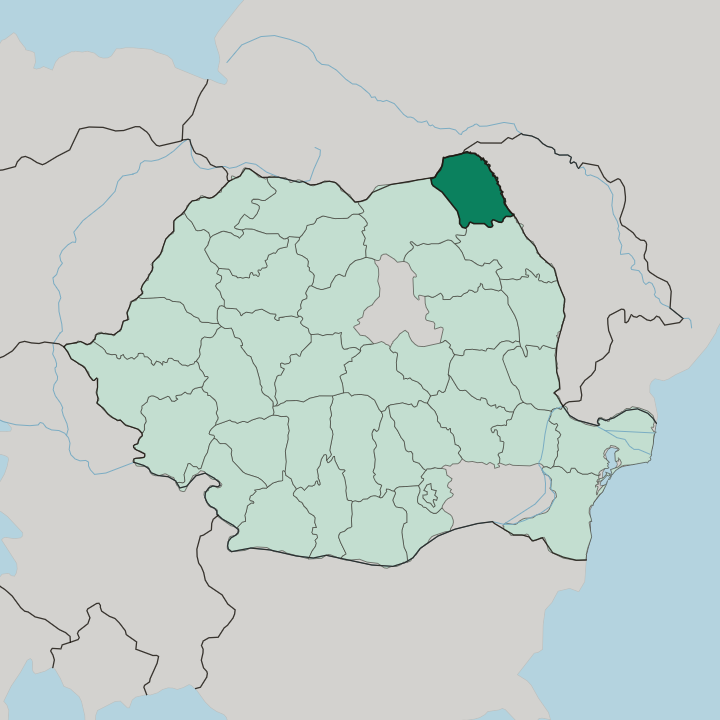
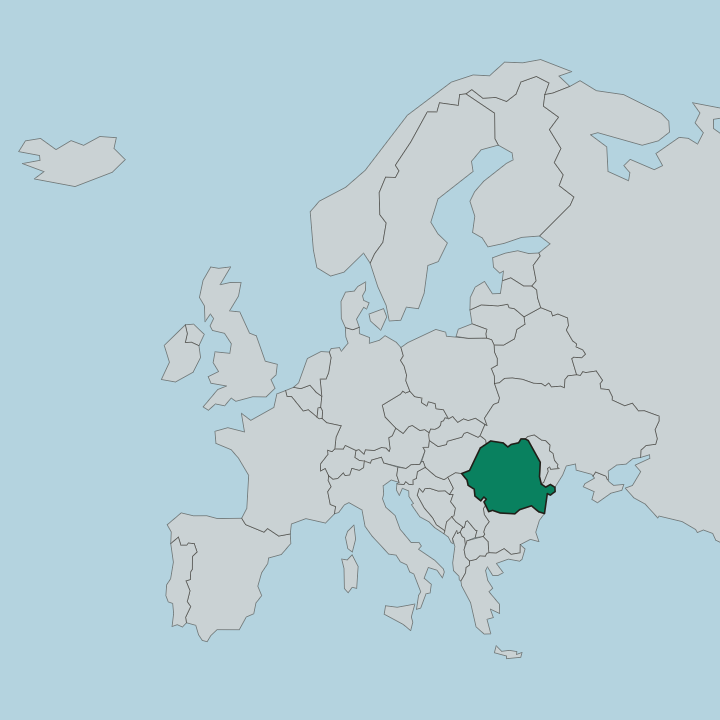
Botoșani County occupies the far north-eastern tip of Romania, the last stretch of the country before the land runs out at Ukraine. It sits inside the historical region of Moldavia, on the high plain that Romanians call the northern hills of Moldova. Two rivers draw its edges.
The Prut forms the whole eastern boundary, the frontier with the Republic of Moldova, while the Siret runs down the western side and separates the county from neighbouring Suceava. Between them the land falls into two grains. The Siret hills rise in the west, and the lower, drier Jijia plain, part of the wider Moldavian Plain, spreads across the east.
The county reaches Romania's northernmost point, and the small town of Horodiștea marks the very top of the country. Water is everywhere in the low ground. The Jijia and the Bașeu thread south through the plain, and generations of farmers have dammed the smaller streams into scores of artificial lakes and fish ponds that catch the light across the fields.
Botoșani town stands roughly in the county's centre, with Dorohoi to its north near where the Jijia broadens into a lake. It is farming country from border to border, open and worked and rarely steep.
What is Botoşani like?
Few small counties have given Romania so many of its names. Mihai Eminescu, whose verse every Romanian schoolchild learns, grew up at Ipotești, where the family estate is now a museum wrapped around the lake and woods that fed his poems. Nicolae Iorga, the historian who wrote hundreds of volumes and briefly led the country, was a Botoșani man too.
So was the biologist Grigore Antipa and the mathematician Octav Onicescu. The county wears that inheritance plainly, in a memorial house here and a bust there, rather than in any grand display. The streets tell an older story.
Botoșani grew wealthy as a trade town on the route linking the lower Danube to Poland, and its merchant quarters once held one of the largest Jewish communities in all of Moldavia, second only to Iași for centuries. Old synagogues and painted townhouses survive among the newer blocks. Beyond the towns the culture is rural and agricultural, tied to the church calendar, the harvest, and the villages strung along the Jijia.
It is unhurried. Life here still turns on the land.
What is the history of Botoşani?
Botoșani enters the written record in 1439, when a chronicle notes that raiders burned their way as far as the town. Its fortune came from the road. Sitting on the trade route that tied the lower Danube to Poland, the town prospered under the medieval Principality of Moldavia, and near it Stephen the Great turned back an Ottoman army led by Sultan Bayezid II in 1498.
For four centuries the surrounding plain was Moldavian farmland and market country, its fairs drawing merchants from across the region. Modern textile mills later gave Botoșani a second life as an industrial centre.
What is the climate of Botoşani?
The county has a humid continental climate, shaped by its inland position far from any sea. Winters bite. Cold air settles over the Moldavian plain, snow covers the ground for weeks, and January nights drop well below freezing across the Jijia lowlands.
Summers swing the other way into warm, sometimes hot afternoons, with most of the year's rain arriving in late spring and early summer to green the grain fields. The county's spring and autumn are brief and unsettled, changing fast between the two extremes. The open plain gives the weather nothing to hide behind.
How do you get to Botoşani?
The nearest airport is small and close. Suceava International Airport lies just west of the county line, around 30 km from Botoșani town, with flights from a handful of European cities. Larger connections run through Iași, whose airport sits south-east across the plain.
Trains and roads link Botoșani to Suceava and on into the Romanian network, though the county's northern reach toward Ukraine is served mainly by regional roads. Most visitors arrive overland from elsewhere in Moldavia rather than flying straight in.
Common questions
What is the best area to stay in Botoşani?
Botoșani: the literary pilgrimage and the county's main hotels. Dorohoi: the far north of the county near the Ukrainian border.
Good for
More regions in Romania
Updated September 2026