Russia
Kurgan Oblast, Russia — Towns & Travel Guide
Kurgan Oblast is a flat, lake-strewn region of the Trans-Urals, where the Tobol River threads the West Siberian Plain toward Kazakhstan.
Find your area →


Towns & cities in Kurgan Oblast
Pick a town or city — each links to where to stay.
 Russia
Kurgan
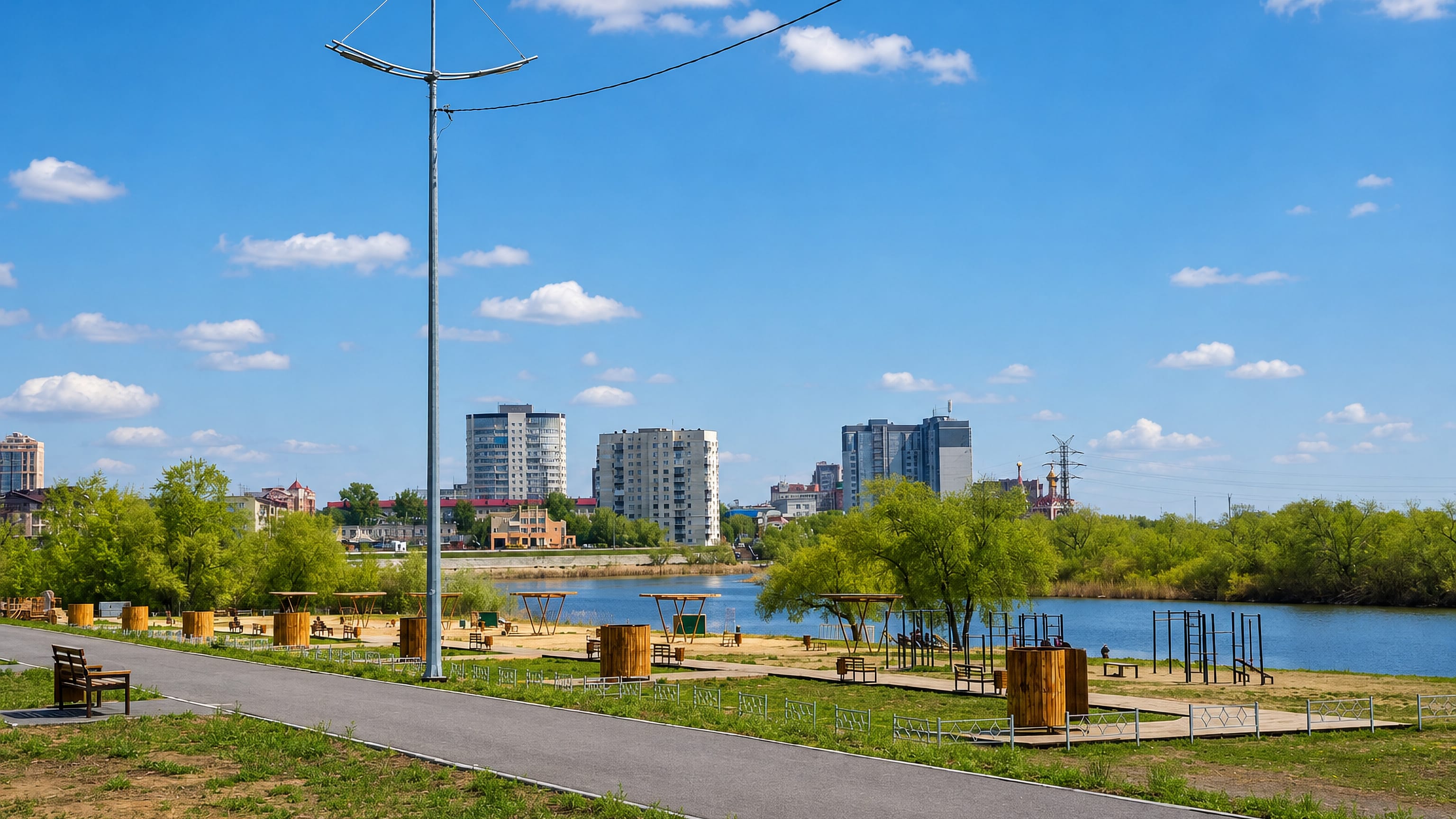
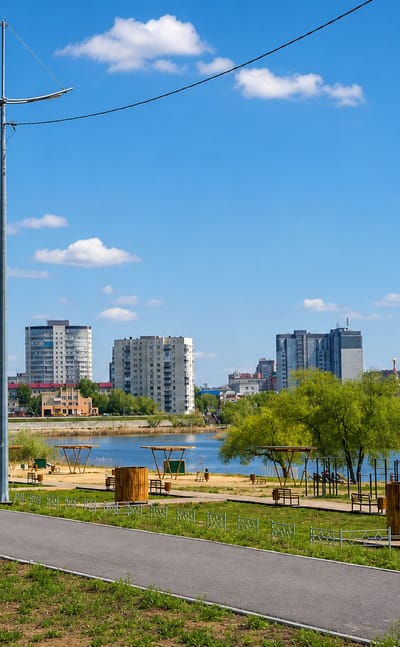
Merchant houses and the Saint Alexander Nevsky cathedral mark Kurgan, a city on the West Siberian plain in Kurgan Oblast.Where to stay →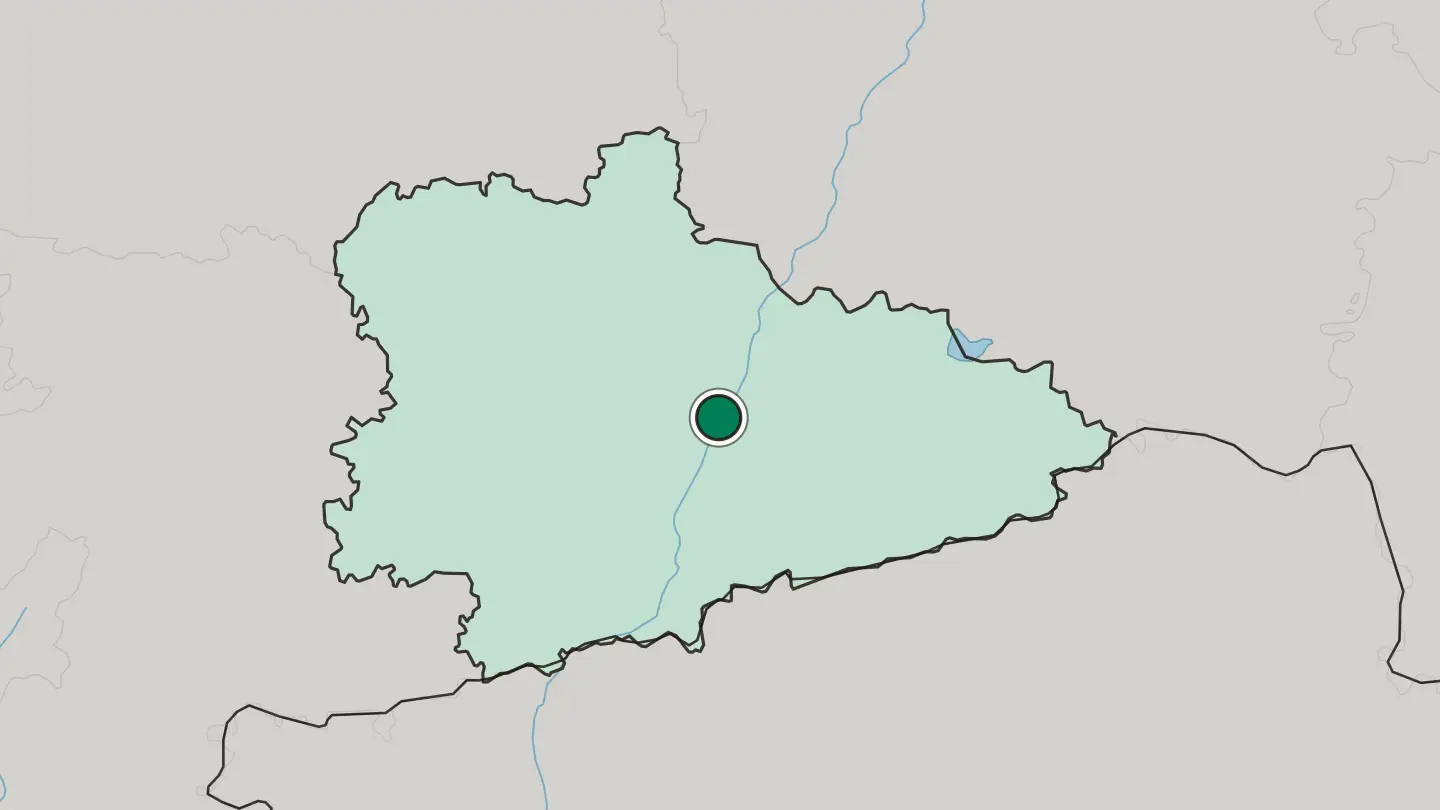 Russia
Shadrinsk
Shadrinsk, founded in 1662 on the left bank of the Iset River, protects whole streets of listed houses northwest of Kurgan in Kurgan Oblast.Where to stay →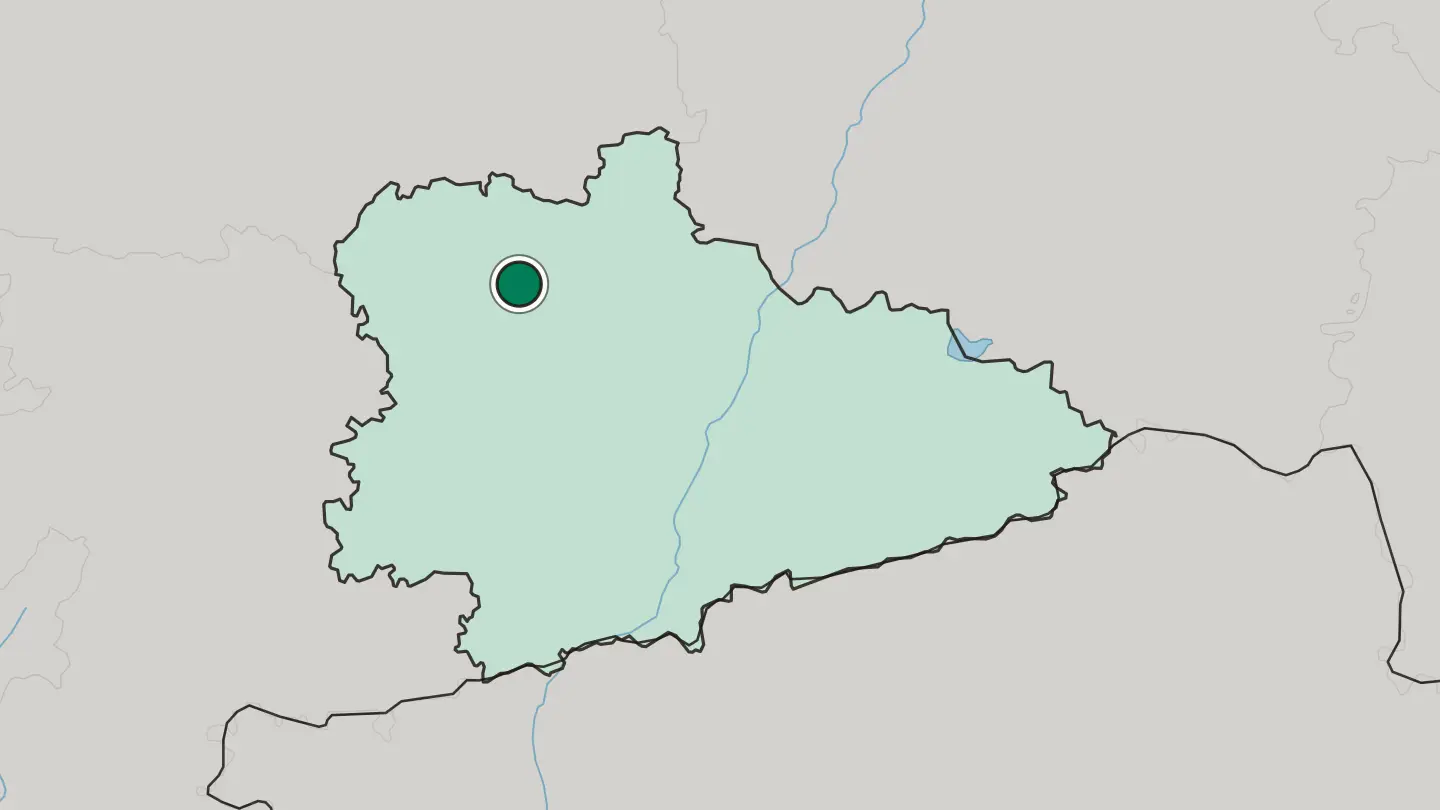
About Kurgan Oblast
Kurgan Oblast is farm country.
What is Kurgan Oblast known for?
Its black-earth plains grow grain and feed the cattle that made the region's name in the wider Ural economic region. The oblast is also known for the Ilizarov orthopaedic centre in the city of Kurgan and for Lake Medvezhye, a salt lake in the east whose black mud draws people seeking treatment. Kurgan itself, standing on the Tobol River, builds the tracked vehicles that give the region much of its heavy industry.
Where is Kurgan Oblast?
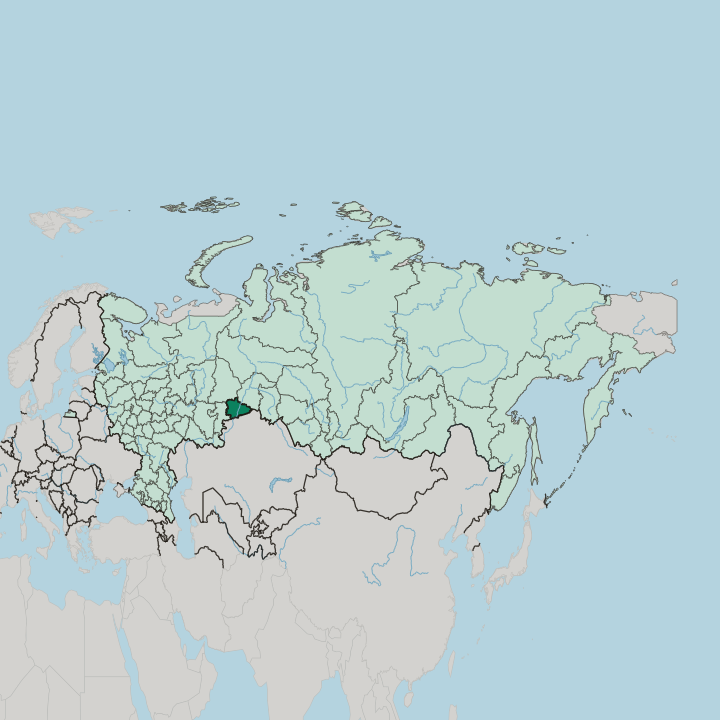
Kurgan Oblast lies in the Trans-Urals, on the flat southwestern edge of the West Siberian Plain. Relief here is close to absent. It runs a little over four hundred kilometres from west to east and roughly three hundred from north to south, without a real hill anywhere in it.
The Ural Mountains stand off to the west, in Chelyabinsk Oblast and Sverdlovsk Oblast, but the range never reaches into Kurgan itself. What fills the plain instead is water and grass. The Tobol River crosses the region from the south, gathering the Iset before both run on north into Tyumen Oblast, and the oblast counts more than a hundred rivers and well over two thousand lakes, many of them shallow and salty.
Kazakhstan forms the long southern border. Sverdlovsk Oblast lies to the northwest and Tyumen Oblast to the northeast, so the region sits where the Urals hand over to Siberia. The city of Kurgan stands near the middle, on the Tobol.
Because nothing shelters the plain from the north or the south, weather moves across it freely, and the flatness that makes for good farmland also leaves the region open to every wind off the steppe.
What is Kurgan Oblast like?
The region takes its name from a grave. Kurgan is the Russian word for the ancient burial mounds that dot the steppe, and the city grew up beside one that locals called the Tsar's Mound. That deep past sits under a much younger settled history.
Russians pushed into the Trans-Urals in the seventeenth century, and the earliest anchors of their culture here were fortress-monasteries and stockaded towns rather than cathedrals or courts. The Dalmatovo monastery, founded on the Iset River in 1644, became one of the first centres of literacy and Orthodox learning in the whole Trans-Ural country. A sharper jolt came in 1830.
Exiled Decembrists were sent to Kurgan after their failed revolt against the tsar, and these educated men, used to St Petersburg drawing rooms, opened schools, gave medical help, and held literary evenings that their old houses now commemorate as museums. Everyday life beyond the towns stays agricultural and plain-spoken, shaped by grain, cattle, and long distances. Russian is the common language across the oblast, as it is throughout Russia.
Merchant Shadrinsk, monastic Dalmatovo, and industrial Kurgan each carry a different piece of that story.
What is the history of Kurgan Oblast?
Settlement came from the west. The fortified town of Tsarevo Gorodishche, later renamed Kurgan, was founded on the Tobol River in 1679 as an outpost guarding Russian farmland from steppe raiders. Catherine II granted it town status in 1782, and the Trans-Siberian railway reaching Kurgan in the 1890s turned the plain into serious grain and butter country.
The oblast in its present form is young: it was carved out of Chelyabinsk Oblast and neighbouring territory by Soviet decree in 1943, in the middle of the war.
What is the climate of Kurgan Oblast?
Kurgan Oblast has a sharply continental climate, and the open plain makes it harsher still. Here the land lies flat and open. Nothing blocks the cold Arctic air sliding down from the north or the dry heat rising off the Kazakh steppe to the south, so the weather swings hard and fast.
Winters are long and bitter, with January settling deep below freezing across the West Siberian Plain. Come summer the heat off the Kazakh steppe bakes the oblast dry. Rainfall is thin and often comes in short storms, which is why the region's grain harvest lives or dies by how much of it falls.
How do you get to Kurgan Oblast?
Most travellers come by rail. Kurgan sits on the Trans-Siberian railway between Yekaterinburg and Omsk, and long-distance trains stop here on the run east from Moscow. Kurgan Airport, just outside the capital, handles domestic flights for those who would rather fly.
By road the region is reached along the federal highway that shadows the railway across the plain. From the west the usual approach is through the Ural Mountains from Yekaterinburg.
Common questions
What is the best area to stay in Kurgan Oblast?
Kurgan: arrivals and city services in the Trans-Urals. Shadrinsk: the old Trans-Ural merchant quarter.
Good for
More regions in Russia
Updated September 2026