Russia
Respublika Khakasiya, Russia — Towns & Travel Guide
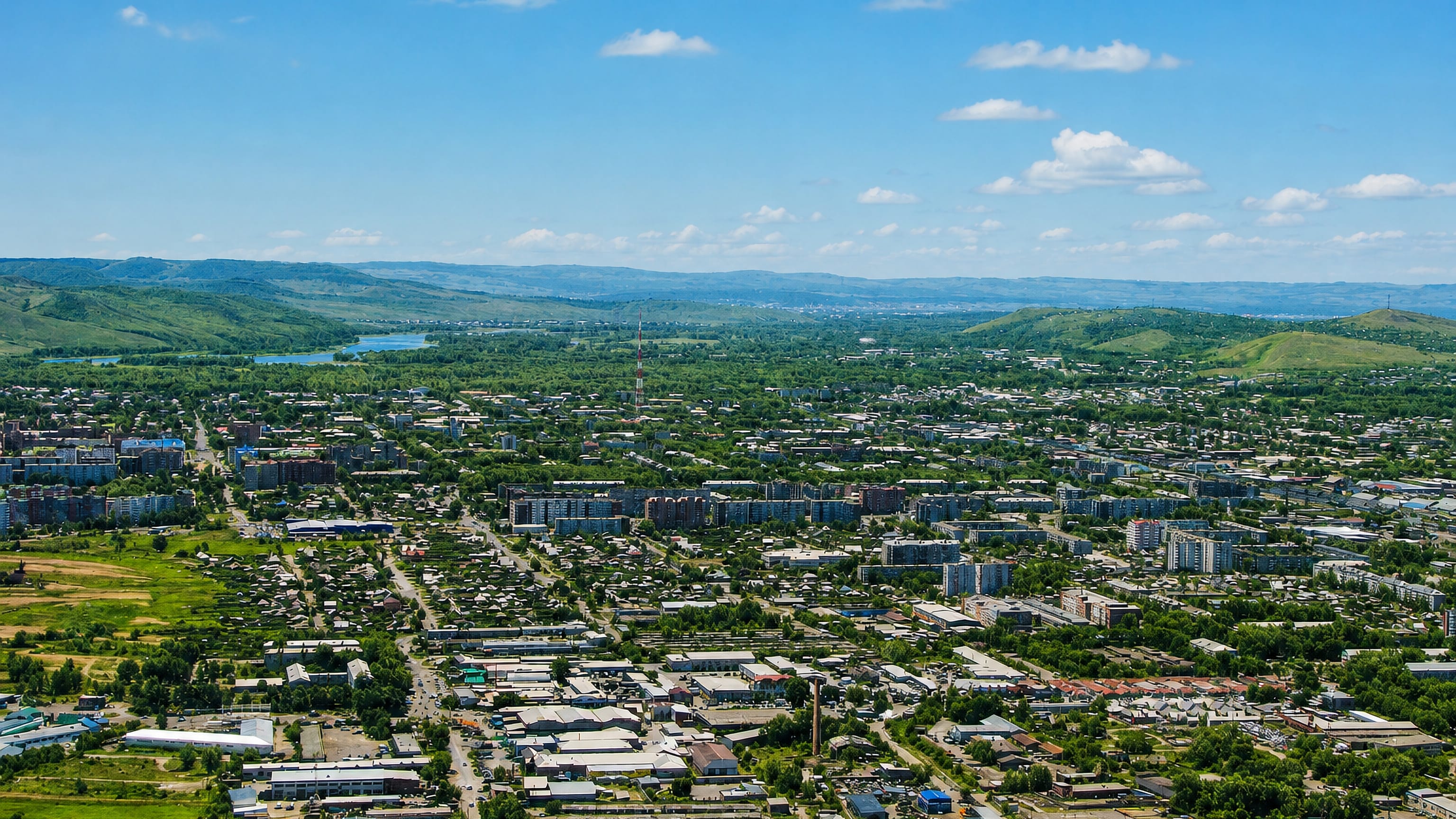
Khakassia is a republic of southern Siberia, a steppe-and-mountain homeland of the Turkic Khakas on the upper Yenisei.
Find your area →


Towns & cities in Respublika Khakasiya
Pick a town or city — each links to where to stay.

 Russia
Abakan
Abakan, capital of Khakassia, stands at the confluence of the Yenisei and Abakan Rivers in the Minusinsk Depression.Where to stay →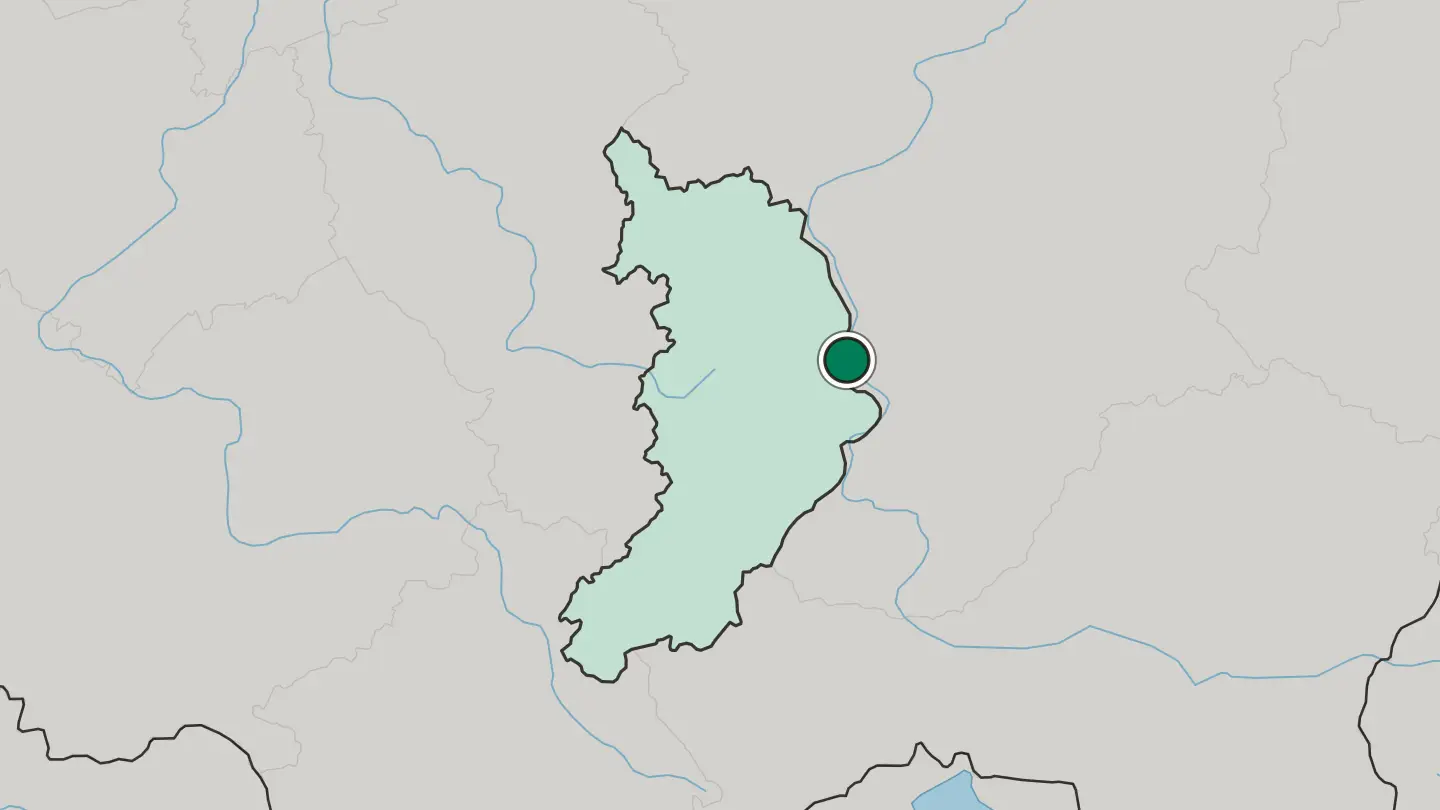
 Russia
Chernogorsk
Chernogorsk dates from 1936. The town belongs to the Republic of Khakassia in Russia, and the name Харатас stands on its official record.Where to stay →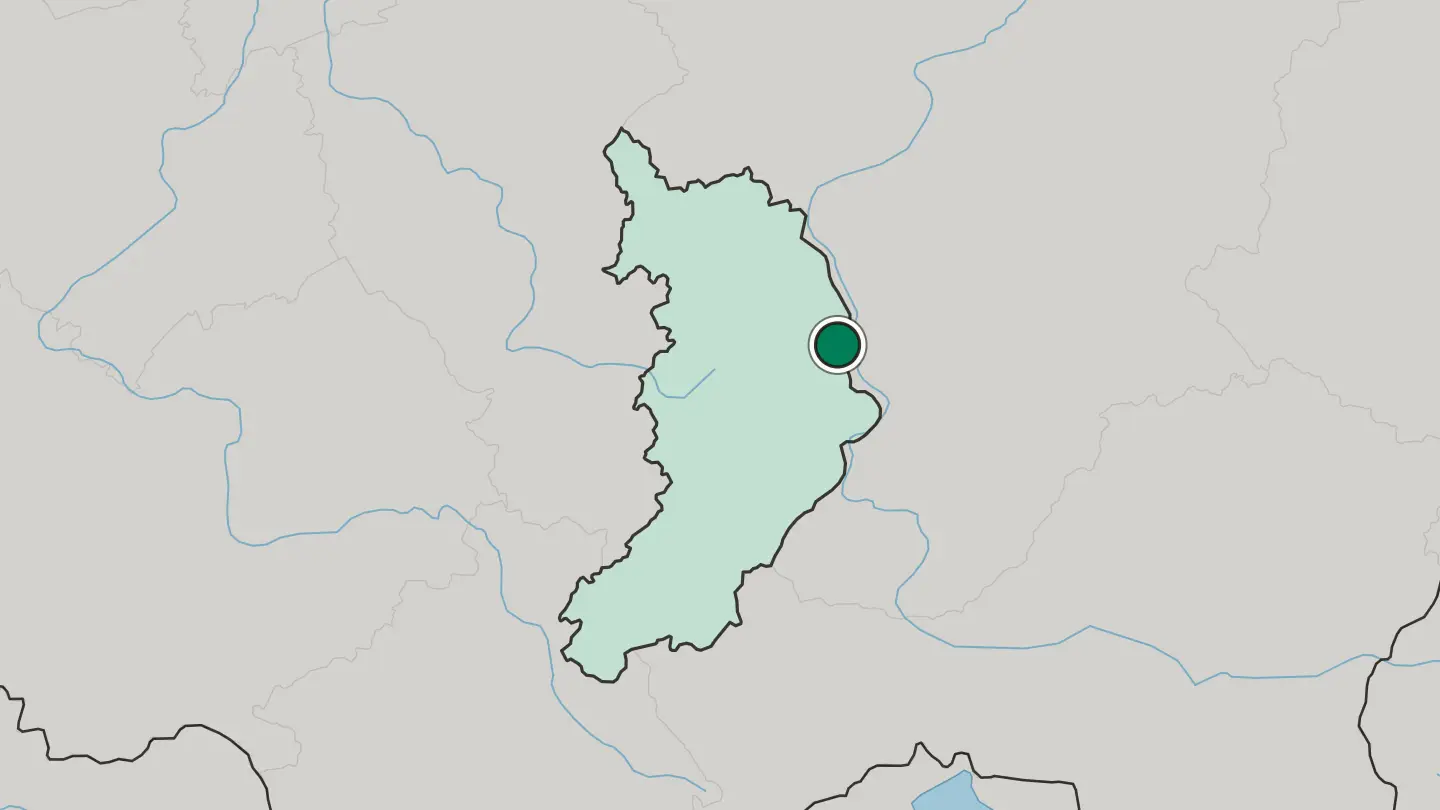
About Respublika Khakasiya
Khakassia is Turkic Siberia.
What is Respublika Khakasiya known for?
It fills a broad steppe basin on the upper Yenisei, hemmed by the Kuznetsk Alatau to the west and the Western Sayan to the south, and its grasslands are studded with thousands of ancient burial mounds. The Khakas, a Turkic people descended from the Yenisei Kyrgyz, give the republic its name and its throat-singing tradition. Abakan is the capital.
Down the Yenisei near Sayanogorsk stands the Sayano-Shushenskaya Dam.
Where is Respublika Khakasiya?
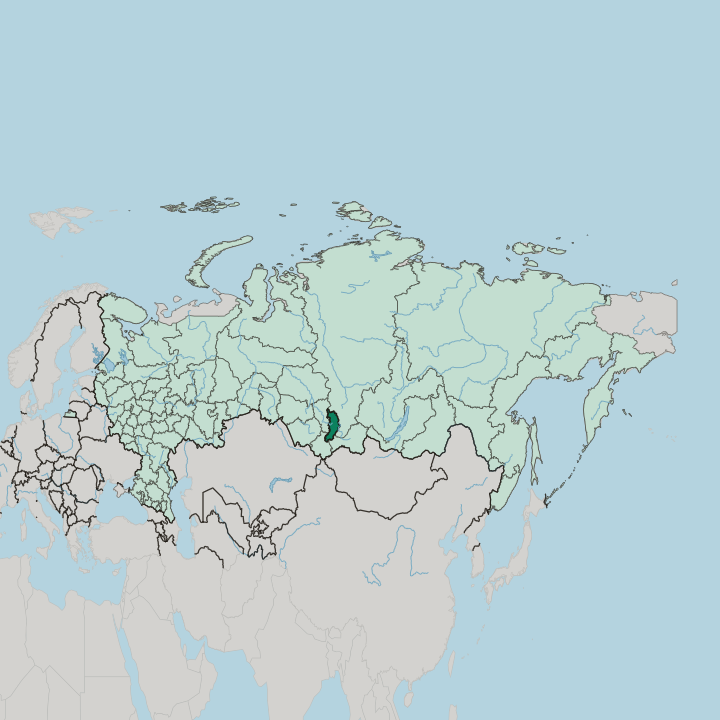
Khakassia lies in southern Siberia, on the west bank of the upper Yenisei. Its heart is the Minusinsk Depression, a wide steppe basin of grassland and low hillocks. Mountains ring the rest.
The Kuznetsk Alatau walls off the west, the Abakan Range and the Western Sayan close in from the south, and together the highlands cover roughly two-thirds of the republic in taiga forest. Water drains off those slopes toward the Yenisei, which forms much of the eastern edge and gathers the Abakan river coming up from the south. More than three hundred lakes lie across the steppe, some fresh and some salt.
The borders are all with other parts of Siberia. Krasnoyarsk Krai wraps the north and east, Tuva sits to the south-east, the Altai Republic to the south-west, and Kemerovo Oblast to the west across the Kuznetsk Alatau. Khakassia has no seaboard at all. This is deep-interior land, a thousand kilometres and more from any sea, where the steppe of the Minusinsk basin gives way abruptly to forested ranges on every side but the river.
What is Respublika Khakasiya like?
The republic takes its name and its character from the Khakas. They are a Turkic people of the upper Yenisei, counted as descendants of the Yenisei Kyrgyz who once held these steppes, and they make up a little over a tenth of the population. Their language, Khakas, belongs to the Siberian branch of the Turkic family and survives alongside Russian in schools and broadcasting.
Its signature art is khai, a form of throat singing that carries the long heroic epics, sung to the plucked chatkhan zither by a reciter who may hold an audience through a poem thousands of lines long. Older beliefs persist beneath a Christian surface. Shamanism and nature worship still shape festivals and the reverence paid to certain mountains, springs, and standing stones.
The land itself is a museum. The Minusinsk steppe holds prehistoric monuments, from Tagar-culture kurgans to petroglyph-covered cliffs. Craft, food, and song lean nomadic and pastoral rather than Russian-provincial.
That older Turkic layer is what sets Khakassia apart from the Slavic towns downriver.
What is the history of Respublika Khakasiya?
The Turkic story here is old. These steppes were the core of the Yenisei Kyrgyz, a power that ruled the upper Yenisei from around the sixth century, until the Mongol conquests of the thirteenth century scattered most of the Kyrgyz south-west toward Central Asia and left the ancestors of the Khakas behind on their old ground. Russia took the region under Peter the Great in the early eighteenth century, and it entered the empire as a mining and Cossack frontier.
In the Soviet period it became the Khakas Autonomous Oblast in 1930. The republic of Russia came in 1991.
What is the climate of Respublika Khakasiya?
Khakassia has a sharply continental climate, the kind that comes with sitting deep inside Siberia far from any moderating sea. Winters are long and hard, summers short and warm, and the yearly average hovers near freezing. The steppe of the Minusinsk basin is one of the drier, sunnier corners of southern Siberia, which is why its salt lakes and grassland draw summer visitors.
Snow lingers on the Kuznetsk Alatau and the Western Sayan long after it has gone from the plain. Come in July for the warmth.
How do you get to Respublika Khakasiya?
Almost everyone arrives through Abakan. The capital's airport runs the scheduled flights that tie the republic to Moscow, Novosibirsk, and other Russian cities across the many time zones between. A rail line reaches Abakan too, hooking the republic onto the Trans-Siberian network by way of Taishet to the north-east.
Roads run down from Krasnoyarsk and across from Kemerovo Oblast for those coming overland. Once here, buses and hired cars carry you out to the Salbyk mounds, the Shira lakes, and the dam on the Yenisei.
Common questions
What is the best area to stay in Respublika Khakasiya?
Abakan: arrivals and the Salbyk kurgan day trip. Chernogorsk: the industrial Minusinsk basin.
Good for
More regions in Russia
Updated October 2026