Thailand
Changwat Maha Sarakham, Thailand — Towns & Travel Guide
Changwat Maha Sarakham is a flat rice province in the heart of Thailand's Isan, the education hub locals call the Taxila of Isan.
Hotel links are affiliate links: booking through them may earn us a commission, at no extra cost to you. It never affects how places are ranked. How this works


Towns & cities in Changwat Maha Sarakham
One town here has its own guide — it links to where to stay.
 Thailand
Maha Sarakham
Maha Sarakham straddles the Chi River on the southern Khorat plain, the capital of Maha Sarakham province in the Isan region.Where to stay →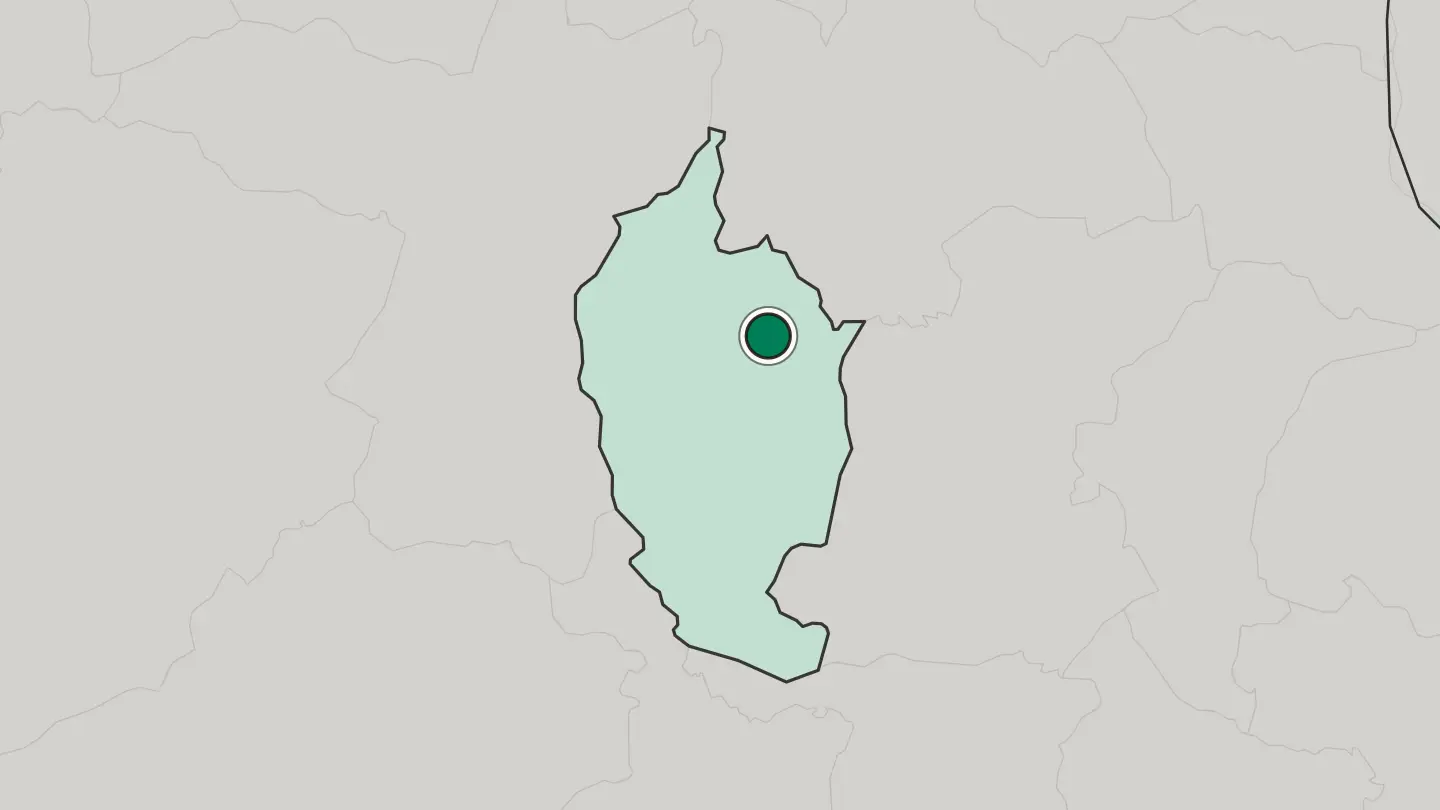
Hotel links are affiliate links: booking through them may earn us a commission, at no extra cost to you. It never affects how places are ranked. How this works
About Changwat Maha Sarakham
Maha Sarakham runs on classrooms.
What is Changwat Maha Sarakham known for?
Two large campuses, Mahasarakham University and Rajabhat Mahasarakham University, pull students from across the northeast, which is why people call the province the Taxila of Isan. Buddhism runs deep here too, centred on the towering white chedi of Phra That Na Dun, built over a relic unearthed at the old Dvaravati town of Nakhon Champasi. Weavers turn out silk and cotton by hand, and rice fills the plains along the Chi River.
Where is Changwat Maha Sarakham?
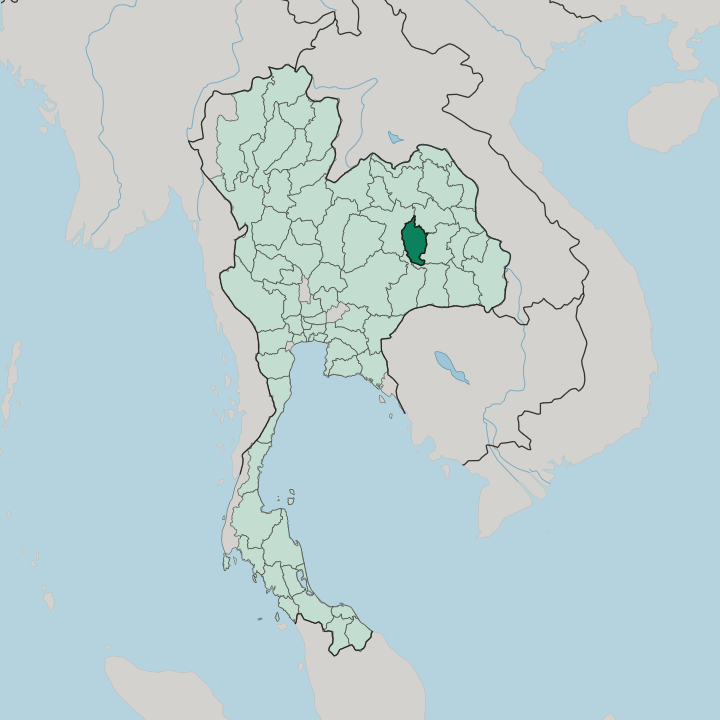
Maha Sarakham lies at the centre of Isan, the broad northeastern region of Thailand. It sits near the middle of the Khorat Plateau, the saucer of low, tilted sandstone that holds the whole northeast. The province lies flat and open on the middle of the Khorat Plateau, its paddies running unbroken to the horizon.
Rice paddies run to the edge of sight, broken only by low rises in the north and east, and the ground nowhere climbs far above the surrounding plain. The Chi River is the spine of the province, cutting west to east across it on its long course toward the Mun River and, past that, on to the Mekong. No sea comes near this place.
Five provinces ring it. Khon Kaen sits to the west, Kalasin to the north, Roi Et to the east, Surin to the south-east, and Buriram along the south. Thirteen districts divide the province, from Kosum Phisai on the Chi in the north-west to Na Dun and its ancient town of Nakhon Champasi in the south. Bangkok lies far to the south-west, a night's drive across the plateau rim.
Distance from the coast and capital alike has kept the province rural, a country of paddy, weaving villages and market towns strung along the Chi.
What is Changwat Maha Sarakham like?
Two things shape daily life here: the university and the rice year. Term time fills Maha Sarakham town with students from every corner of Isan, and the campuses of Mahasarakham University and Rajabhat Mahasarakham University give the place a young, restless character it would not have as a farming seat alone. The everyday language is Isan, the Lao-rooted speech of the northeast, closer to Vientiane than to Bangkok.
Central Thai is the language of the lecture hall and the office. Most people speak both. Beyond the classroom, the culture is deep Isan.
Meals lean on sticky rice, green-papaya som tam and grilled river fish, eaten by hand from shared baskets. The music is mor lam, the reedy khaen mouth-organ carrying long sung poems out across temple fairs and weddings. Craft matters.
Village looms in districts like Borabue weave silk and cotton that the province is known for across the northeast. Faith runs through all of it, from the palm-leaf scriptures kept at Wat Mahachai to the pilgrim crowds who climb to the white chedi of Phra That Na Dun each cool season.
What is the history of Changwat Maha Sarakham?
People have farmed this stretch of the Chi for well over a thousand years. Long before the modern town, a Dvaravati settlement stood at Nakhon Champasi in the south, and Khmer builders later raised the laterite shrine of Ku Santarat as a wayside hospital on their road north. The town of Maha Sarakham itself is young.
It was founded in 1865 as an offshoot of Roi Et, peopled by Lao families moved west across the plateau, and in 1868 Bangkok cut it loose as a province in its own right. Schooling came to define it afterward.
What is the climate of Changwat Maha Sarakham?
Three seasons run through Maha Sarakham. The hot months from March to May are punishing, when the plain bakes and the heat climbs into the low forties. Then the south-west monsoon arrives.
Rain falls hardest in August and September, filling the paddies and swelling the Chi until parts of the lowland flood. The cool, dry season from November to February is the kind time to visit, with clear skies and cold nights on the open plateau. It rarely rains then.
Farmers time the rice year to that wet-and-dry swing.
How do you get to Changwat Maha Sarakham?
No airport serves the province. Most visitors fly into Roi Et to the east or Khon Kaen to the west, each about an hour away by road, then finish the trip by bus or car. Long-distance coaches run through the day from Bangkok, crossing the plateau overnight to reach the northeastern towns.
The railway skips Maha Sarakham; the nearest trains stop at Khon Kaen, on the main line up from the capital. Once here, songthaews and local buses tie the districts together, and the roads to Kosum Phisai and Na Dun are quick and flat.
Common questions
What is the best area to stay in Changwat Maha Sarakham?
Maha Sarakham town: a base among the Isan campuses. Kosum Phisai: riverbank and monkey-forest days. Na Dun: pilgrims to the great Isan chedi. Borabue: silk and cotton village stays.
More regions in Thailand
Updated September 2026