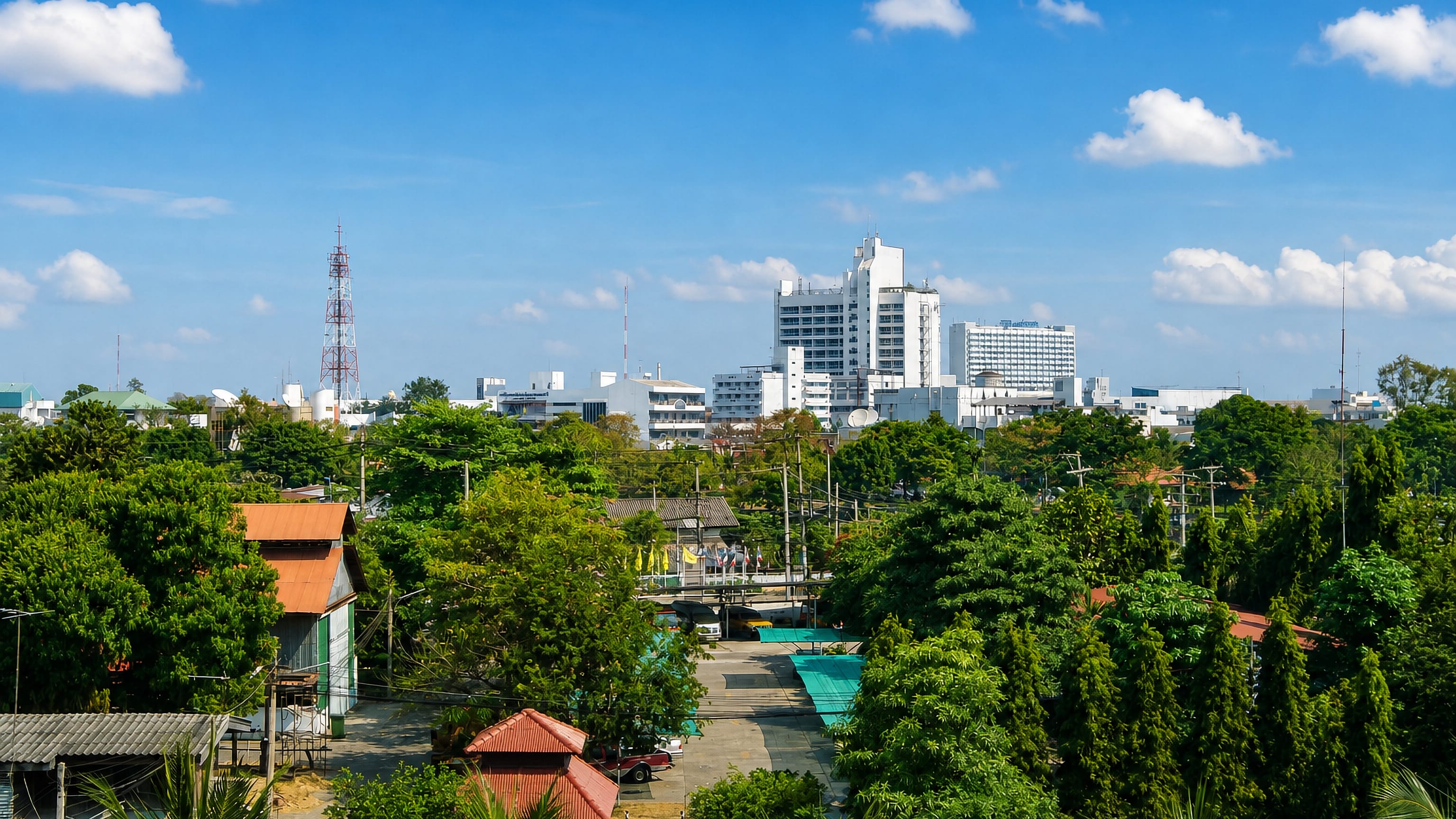
Thailand
Changwat Phitsanulok, Thailand — Towns & Travel Guide
Changwat Phitsanulok is a province of lower northern Thailand, strung along the Nan River between the central plains and the Phetchabun Mountains.
Hotel links are affiliate links: booking through them may earn us a commission, at no extra cost to you. It never affects how places are ranked. How this works


Towns & cities in Changwat Phitsanulok
One town here has its own guide — it links to where to stay.

 Thailand
Phitsanulok
Phitsanulok is a historic city of Lower Northern Thailand on the banks of the Nan River, built around Wat Phra Si Rattana Mahathat.Where to stay →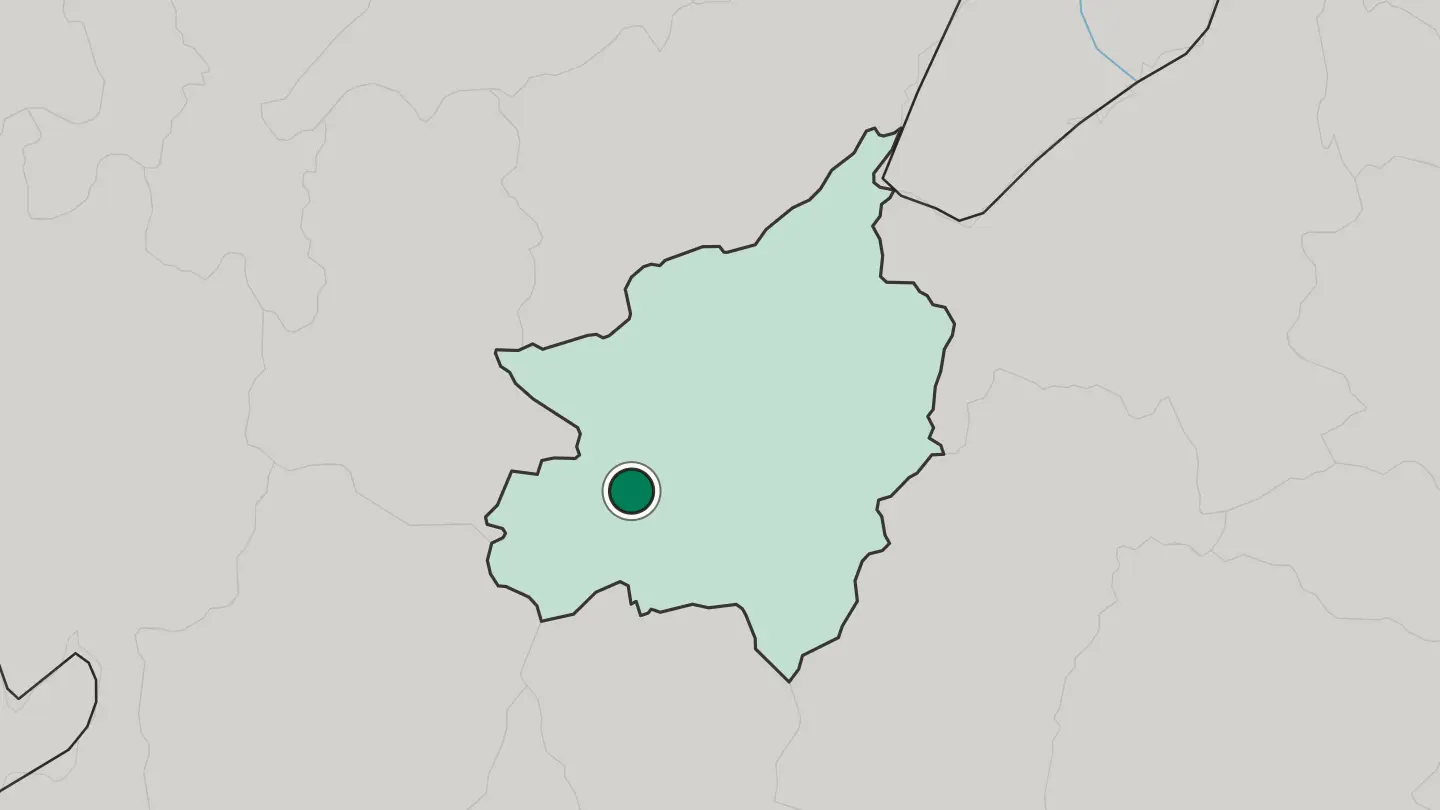
Hotel links are affiliate links: booking through them may earn us a commission, at no extra cost to you. It never affects how places are ranked. How this works
About Changwat Phitsanulok
Two things fix Phitsanulok in the Thai imagination.
What is Changwat Phitsanulok known for?
One is the Nan River, which slides through the heart of the provincial capital and gave the old town its name, Song Khwae, the settlement of two rivers. The other is Wat Phra Si Rattana Mahathat, the riverside temple whose hall shelters the Phra Phuttha Chinnarat, among the most copied bronze Buddha images cast anywhere in the country. Naresuan was born here.
Travellers also come for the highland parks that rise toward the Phetchabun Mountains in the east.
Where is Changwat Phitsanulok?
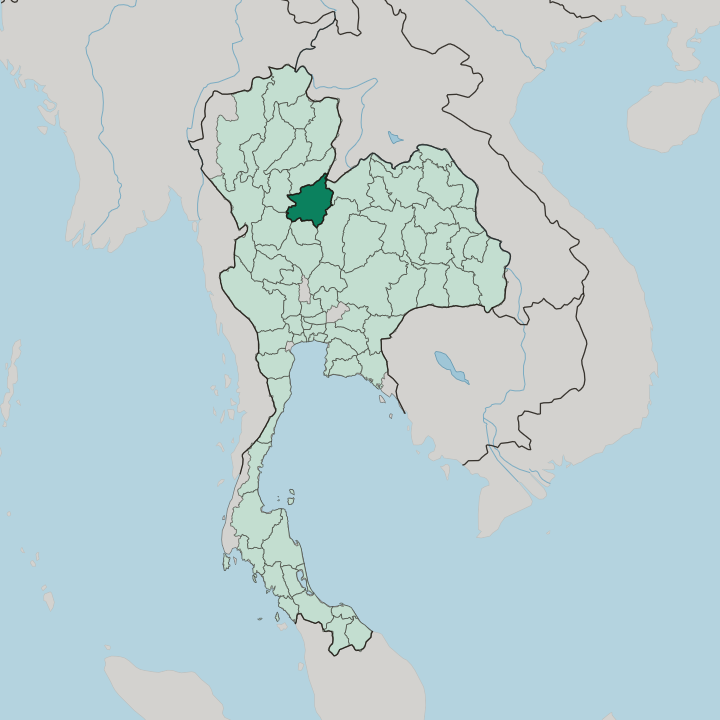
Phitsanulok sits in the lower north of Thailand, a long day's drive up the Northern rail line from Bangkok. Its shape is easy to read. The land tilts from the flat rice country of the west and south up into the rolling ridges of the Phetchabun Mountains along its eastern rim, and the Nan River threads the whole province from north to south down the middle of that slope.
The river is the axis of settlement. Along it the towns and paddies gather, while the forested uplands stay thinly peopled. Six Thai provinces ring Phitsanulok. Uttaradit lies to the north, Phichit to the south, and Sukhothai off to the west, with Kamphaeng Phet at the south-western corner and Loei and Phetchabun banked along the east.
In the north-east the province reaches the Lao border at Sainyabuli. The Khwae Noi River drains the northern hills before joining the Nan, and it was the meeting of those two waters that gave the old capital its name of Song Khwae. Two national parks crown the highlands.
Thung Salaeng Luang spreads its meadows and waterfalls east of the city, and Phu Hin Rong Kla guards the sandstone plateau where the border ridges begin.
What is Changwat Phitsanulok like?
Daily life in Phitsanulok turns on the Nan River and the temple beside it. Faith anchors the province. Pilgrims from across Thailand come to bow before the Phra Phuttha Chinnarat, the fourteenth-century bronze in Wat Phra Si Rattana Mahathat whose flame-shaped halo has been copied into temples nationwide, and the riverbank fills with monks, market stalls and votive candles at dusk.
Thai is the everyday language, in a central dialect edged with northern words. The old name Song Khwae, the town of two rivers, still carries weight. The province wears its history as civic pride.
Naresuan, the Ayutthaya king who broke Burmese overlordship, was born here, and a shrine and the halls of Naresuan University keep his name in daily use. The kitchens have their own signature. Phitsanulok is the home of phak bung loi fa, the flying morning glory that cooks toss flaming across the street into a waiting plate, a piece of theatre served at the night market.
Folk memory is curated too, most vividly at the Sergeant Major Thawee Folk Museum. Food, faith and a soldier-king: that is the local trinity.
What is the history of Changwat Phitsanulok?
Phitsanulok began as Song Khwae, a strategic river town that rose under the Sukhothai Kingdom as its eastern stronghold, and its temple and the Phra Phuttha Chinnarat were cast in 1357. Then power shifted downstream. For twenty-five years the kings of Ayutthaya ruled Siam from Phitsanulok itself, holding it as a second capital before the throne returned south.
Naresuan was born here in 1555. He grew up to break Burmese rule over Siam. Fire and flood have remade the town many times since.
What is the climate of Changwat Phitsanulok?
Phitsanulok runs on a tropical savanna rhythm of three seasons. The cool, dry months from November into February are the kindest, with warm days and nights that drop pleasantly along the Nan River. April is the furnace.
Then the southwest monsoon arrives, and rain falls hard from May through October, peaking in the storms of August that swell the river and its canals. Come in the cool season.
How do you get to Changwat Phitsanulok?
Phitsanulok sits at a natural crossroads, which is much of why it grew. The Northern railway threads straight through the provincial capital, so trains between Bangkok and Chiang Mai stop here through the day and the night. Flights link the town's airport to Bangkok in under an hour.
By road, Route 12 runs east to west across the middle of the country, meeting the north-south highways that climb up from the central plains. Buses pour in from every direction.
Common questions
What is the best area to stay in Changwat Phitsanulok?
Mueang Phitsanulok: riverside temples and the night bazaar. The station quarter: rail travellers breaking the northern run. The eastern highlands: meadows and waterfalls at Thung Salaeng Luang. Phu Hin Rong Kla country: the old insurgent plateau.
Good for
More regions in Thailand
Updated September 2026