United States · Missouri
Where to Stay in Kansas City, Missouri
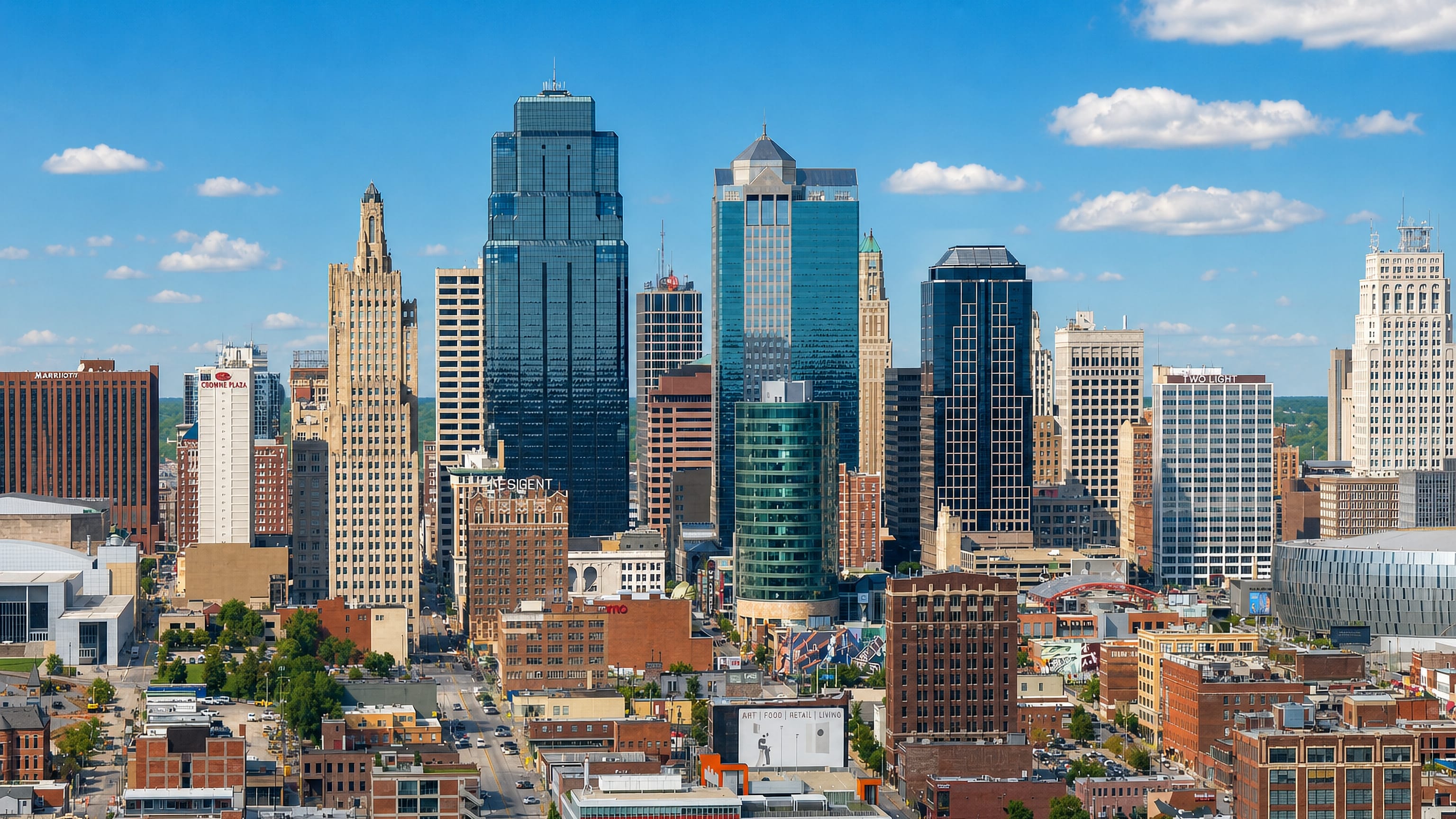
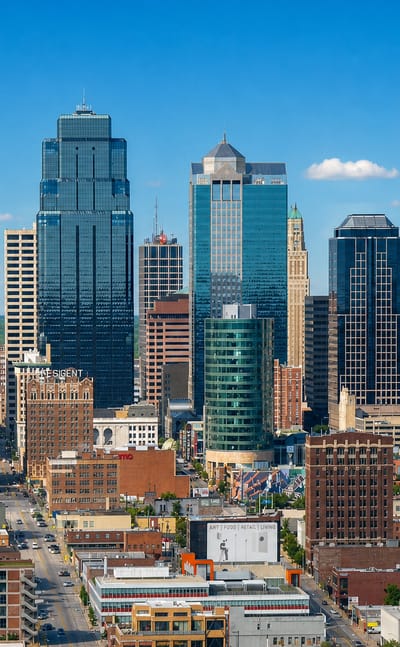
Fountains and boulevards run through Kansas City, a river city in Missouri where the Kansas River joins the Missouri and the Nelson-Atkins Museum stands.
Hotel links are affiliate links: booking through them may earn us a commission, at no extra cost to you. It never affects how places are ranked. How this works


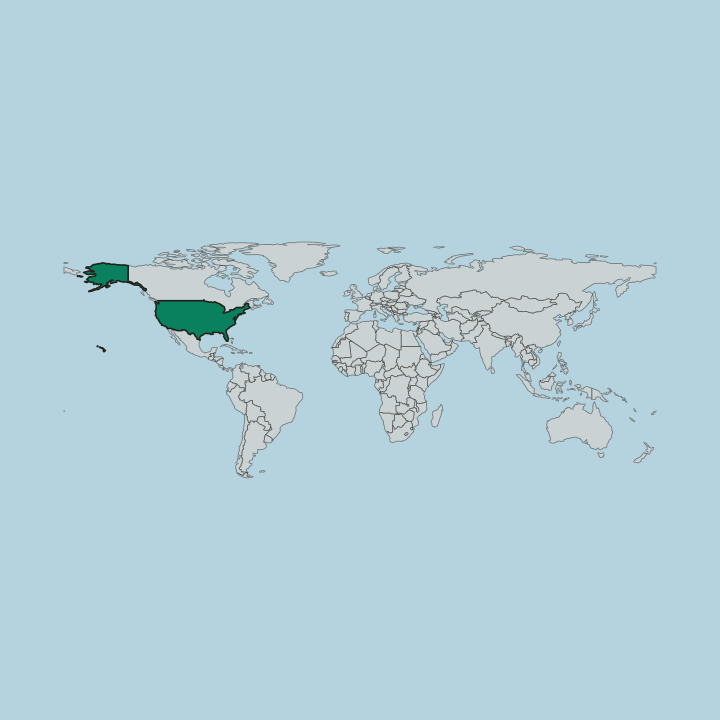
Where to stay in Kansas City
The right area depends on your trip — here's what each neighbourhood is best for.
 Kansas CityUnited States
Southmoreland
Southmoreland is the museum quarter of Kansas City, a grid of large houses and gallery lawns between Main Street and Gillham Road.Where to stay →Kansas CityUnited StatesVolker
Volker is a historic neighborhood of Kansas City, just northwest of Westport, running from 31st Street down to Westport Road.Where to stay →Kansas CityUnited StatesWestport
Westport is a historic neighbourhood and the main entertainment district of Kansas City, formally incorporated in February 1857.Where to stay →Kansas CityUnited StatesHyde Park
Hyde Park is a historic residential neighbourhood of Kansas City, Missouri, built around the city park that hands the district its name.Where to stay →Kansas CityUnited StatesCountry Club Plaza
Country Club Plaza opened in 1923 as the first planned outdoor suburban shopping center in the United States, built for shoppers arriving by car.Where to stay →Kansas CityUnited StatesUnion Hill
Union Cemetery's headstones hold the middle of Union Hill, a Kansas City neighbourhood that climbs from Crown Center to the crest at East 31st Street.Where to stay →Kansas CityUnited StatesBlue Hills
Blue Hills is a Kansas City neighborhood squared off by Swope Parkway, 63rd Street, Prospect Avenue and The Paseo.Where to stay →Kansas CityUnited StatesCrown Center
Crown Center is a shopping and residential quarter beside Downtown Kansas City, anchored by the Halls department store run by Hallmark Cards.Where to stay →Kansas CityUnited StatesCountry Club District
The Country Club District gathers a set of historic residential neighborhoods in Kansas City, laid out by the developer J. C. Nichols.Where to stay →Kansas CityUnited StatesHospital Hill
Hospital Hill is a Kansas City neighbourhood on the rise where public hospitals have stood since 1870, between Gillham Road and Troost Avenue.Where to stay →Kansas CityUnited StatesBrookside
Brookside gathers several Kansas City neighborhoods between Ward Parkway and Troost, built around the Brookside Shopping District.Where to stay →Kansas CityUnited StatesCrossroads
The Crossroads Arts District is the gallery quarter of Kansas City, filling renovated warehouses south of the Downtown Loop.Where to stay →All neighbourhoods (29)
Kansas CityUnited StatesArmour Hills
Armour Hills is a Kansas City neighbourhood of platted house lots, named for the Armour family who held the land before the streets came.Where to stay →Kansas CityUnited States18th and Vine-Downtown East
18th and Vine-Downtown East is where Kansas City jazz was worked out, in clubs on blocks that also held an African-American business hub.Where to stay →Kansas CityUnited StatesWashington-Wheatley
Washington-Wheatley runs between 18th Street and 27th Street in Kansas City, with the American Jazz Museum among its listed landmarks.Where to stay →Kansas CityUnited StatesKansas City Power & Light District
Nine blocks of downtown Kansas City run as one entertainment quarter, anchored by the renovated Midland Theatre.Where to stay →Kansas CityUnited StatesDowntown
Downtown is Kansas City's central business district, the largest in the metropolitan area, holding Union Station and the National World War I Memorial.Where to stay →Kansas CityUnited StatesEast Village
East Village is an area of Downtown Kansas City, Missouri, lying north-east of City Hall and reaching east from Ilus W. Davis Park.Where to stay →Kansas CityUnited StatesLibrary District
The Library District is the slice of downtown Kansas City between 9th and 11th Streets, Main Street to Broadway.Where to stay →Kansas CityUnited StatesWest Bottoms
West Bottoms is the brick warehouse flat west of downtown Kansas City, where the Kansas River joins the Missouri River.Where to stay →Kansas CityUnited StatesGarment District
The Garment District is a loft quarter of Downtown Kansas City, second only to New York City for clothing manufacture in the 1930s.Where to stay →Kansas CityUnited StatesQuality Hill
Quality Hill stands on a bluff west of downtown Kansas City, high above the West Bottoms and the meeting of the Kansas and Missouri rivers.Where to stay →Kansas CityUnited StatesWaldo
Waldo is a neighbourhood on the south side of Kansas City between Gregory Boulevard and 85th Street, annexed in 1909 yet keeping its own character.Where to stay →Kansas CityUnited StatesRiver Market
River Market is the oldest incorporated district in Kansas City, a riverfront quarter once known as Westport Landing, the City Market and River Quay.Where to stay →Kansas CityUnited StatesPendleton Heights
Pendleton Heights is a historic Kansas City neighborhood between the Paseo and Chestnut Trafficway, north of Independence Avenue.Where to stay →Kansas CityUnited StatesRed Bridge
Red Bridge is a South Kansas City neighborhood gathered around the Red Bridge Road and Holmes Road crossing, south of I-435.Where to stay →Kansas CityUnited StatesHickman Mills
Hickman Mills is a neighborhood of Kansas City, Missouri, built around Longview Lake and the highway knot of the Grandview Triangle.Where to stay →Kansas CityUnited StatesRuskin Heights
Ruskin Heights is a postwar neighbourhood of Kansas City, Missouri, platted on Jackson County farmland in the early 1950s.Where to stay →Kansas CityUnited StatesHampton
Hampton is the Platte County edge of Kansas City, Missouri, farm ground where a small hamlet of that name once stood.Where to stay →Hotel links are affiliate links: booking through them may earn us a commission, at no extra cost to you. It never affects how places are ranked. How this works
Find hotels in Kansas City
Direct booking searches for these neighbourhoods.
Union Station District
The National World War I Memorial, Science City, and the Legoland Discovery Center Kansas City all gather around the restored Union Station.Find hotels in Union Station DistrictArt and old streetcar-suburb housesMuseum District
The Nelson-Atkins Museum of Art, the Kemper Museum of Contemporary Art, and the Epperson House stand among the grand streets south of downtown.Find hotels in Museum DistrictFountains and river viewsDowntown Bluffs
The downtown fountains and boulevards run along the bluffs above the Missouri River where Kansas City meets the Kansas state line.Find hotels in Downtown BluffsHotel links are affiliate links: booking through them may earn us a commission, at no extra cost to you. It never affects how places are ranked. How this works
Things to do in Kansas City
Ranked by global recognition; descriptions from Wikidata (CC0).
Museums & Galleries
3- National World War I Memorial Heritage
- The Nelson-Atkins Museum of Art
- American Jazz Museum
Churches & Religious Sites
8- Cathedral of the Immaculate Conception Heritage
- St. Mary's Episcopal Church Heritage
- Sacred Heart Church, School and Rectory Heritage
- Westminster Congregational Church Heritage
- Pilgrim Lutheran Church for the Deaf of Greater Kansas City and Parsonage Heritage
Show 3 more →
- Christian Church Hospital Heritage
- Grand Avenue Temple and Grand Avenue Temple Building Heritage
- Independence Boulevard Christian Church Heritage
Nature & Outdoors
1- World War II Memorial (Jackson County)
Stadiums & Sports
2- Exposition Park
- Gordon and Koppel Field
Landmarks & Notable Places
8- Bernard Corrigan House Heritage
- Thomas Hart Benton Home and Studio State Historic Site Heritage
- Mineral Hall Heritage
- House at 5011 Sunset Drive Heritage
- House at 54 E. 53rd Terrace Heritage
Show 3 more →
- Reverend Nathan Scarritt Home Heritage
- William Chick Scarritt House Heritage
- William D. Repp House Heritage
worth knowingacross 5 categories in Kansas City
About Kansas City
What is Kansas City known for?
Kansas City is known for its fountains, its boulevards, and its museums. The scale is deliberate. Laid out with more boulevards than Paris and more fountains than any city but Rome, it wears its planning openly across the bluffs above the Missouri River.
The Nelson-Atkins Museum of Art holds the great collection, with the National World War I Memorial rising over the rail yards and the restored Union Station below it. Jazz and barbecue carry the rest of the name.
What are the main landmarks in Kansas City?
The main landmarks of Kansas City run from a war memorial to an art museum. High on its bluff, the National World War I Memorial crowns the rail district above Union Station, whose restored concourse now holds Science City, so that the whole quarter reads as one civic set over the valley. Art fills the southern districts.
The Nelson-Atkins Museum of Art and the Kemper Museum of Contemporary Art carry the collections, and the Thomas Hart Benton Home and Studio keeps the painter's rooms.
What is the history of Kansas City?
Kansas City was founded in 1853 on the bluffs where the Kansas River joins the Missouri. The town grew as a river landing and then a rail hub, and Union Station rose to serve the traffic that poured through the confluence. The state line ran straight through the settlement, splitting it between Missouri and Kansas from the start.
Trade built the early fortunes. Boss politics shaped the decades that followed, and the Tom Pendergast House survives from the era of the machine that ran the city. Wealth from cattle and rail raised the mansions of the southern districts, among them the Epperson House and the Bernard Corrigan House.
Faith and civic pride left their own marks, from Sacred Heart Church to the modernist Community Christian Church. The National World War I Memorial was raised on its hill to honour the war dead, and the Nelson-Atkins Museum of Art followed as the city turned its rail wealth toward culture. From landing to railroad to boulevard, the city kept building outward from its rivers.
Where is Kansas City?
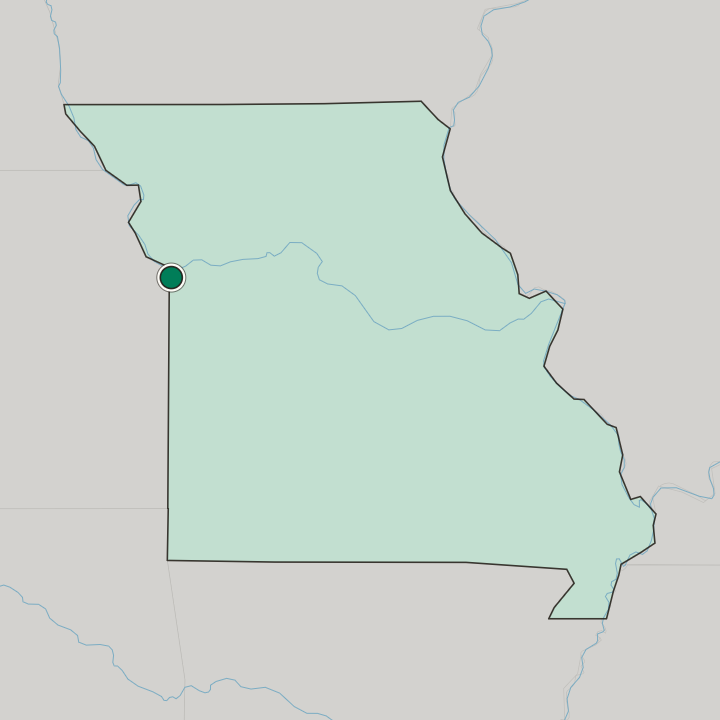
Kansas City sits at the confluence of the Kansas River and the Missouri River. Bluffs rise from the water. The land climbs from the river bottoms to rolling upland, and the state line between Missouri and Kansas runs straight through the built-up area, splitting the city between the two states.
Fountains and boulevards trace the higher ground away from the rivers.
What is the climate of Kansas City?
Kansas City has a temperate continental climate with four clear seasons. Summers run hot and humid over the river valley, and storms build across the open Missouri plain on the warmest afternoons. The cold sets in through winter.
Snow falls through the season, and spring and autumn bring the mild, changeable weather of the mid-continent between the extremes.
How do you get to Kansas City?
Kansas City is reached by air, road, and rail. An international airport serves the metro from the north, and interstate highways cross the Missouri River to knit the two-state city together. Trains still call at the restored Union Station.
The old river landing that founded the town lies below the bluffs where the Kansas River meets the Missouri.
Common questions
What is the best area to stay in Kansas City?
Union Station District: Civic landmarks and family stops. Museum District: Art and old streetcar-suburb houses. Downtown Bluffs: Fountains and river views.
Good for
More cities in Missouri
Updated October 2026