Uzbekistan
Karakalpakstan, Uzbekistan — Towns & Travel Guide
Karakalpakstan is a vast desert republic across northwestern Uzbekistan, holding the shrunken Aral Sea, the Amu Darya delta and the art city of Nukus.
Hotel links are affiliate links: booking through them may earn us a commission, at no extra cost to you. It never affects how places are ranked. How this works


Towns & cities in Karakalpakstan
One town here has its own guide — it links to where to stay.

 Uzbekistan
Nukus
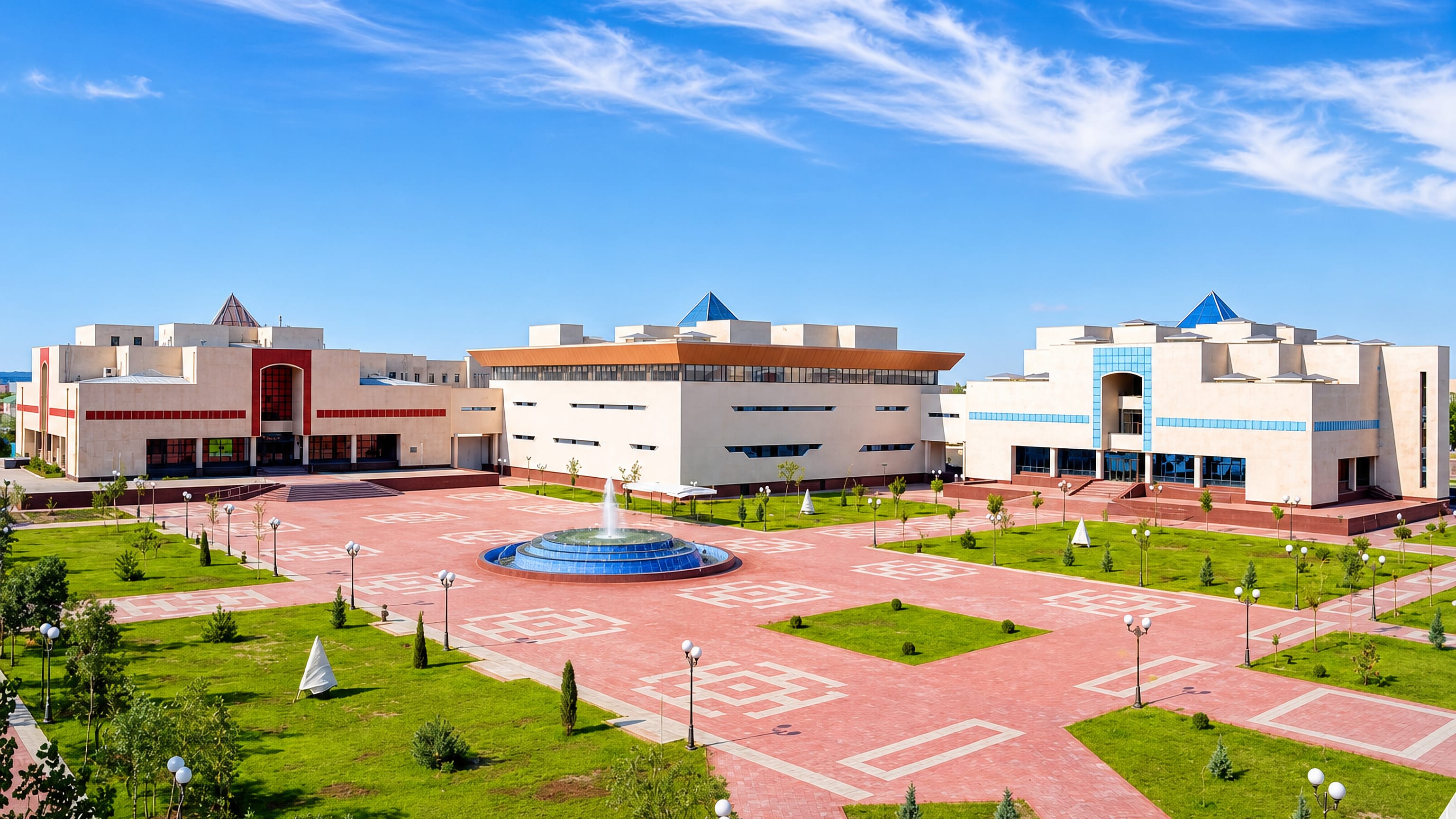
Nukus is the capital of Karakalpakstan in the far west of Uzbekistan, a remote desert city famous for a great museum of hidden art.Where to stay →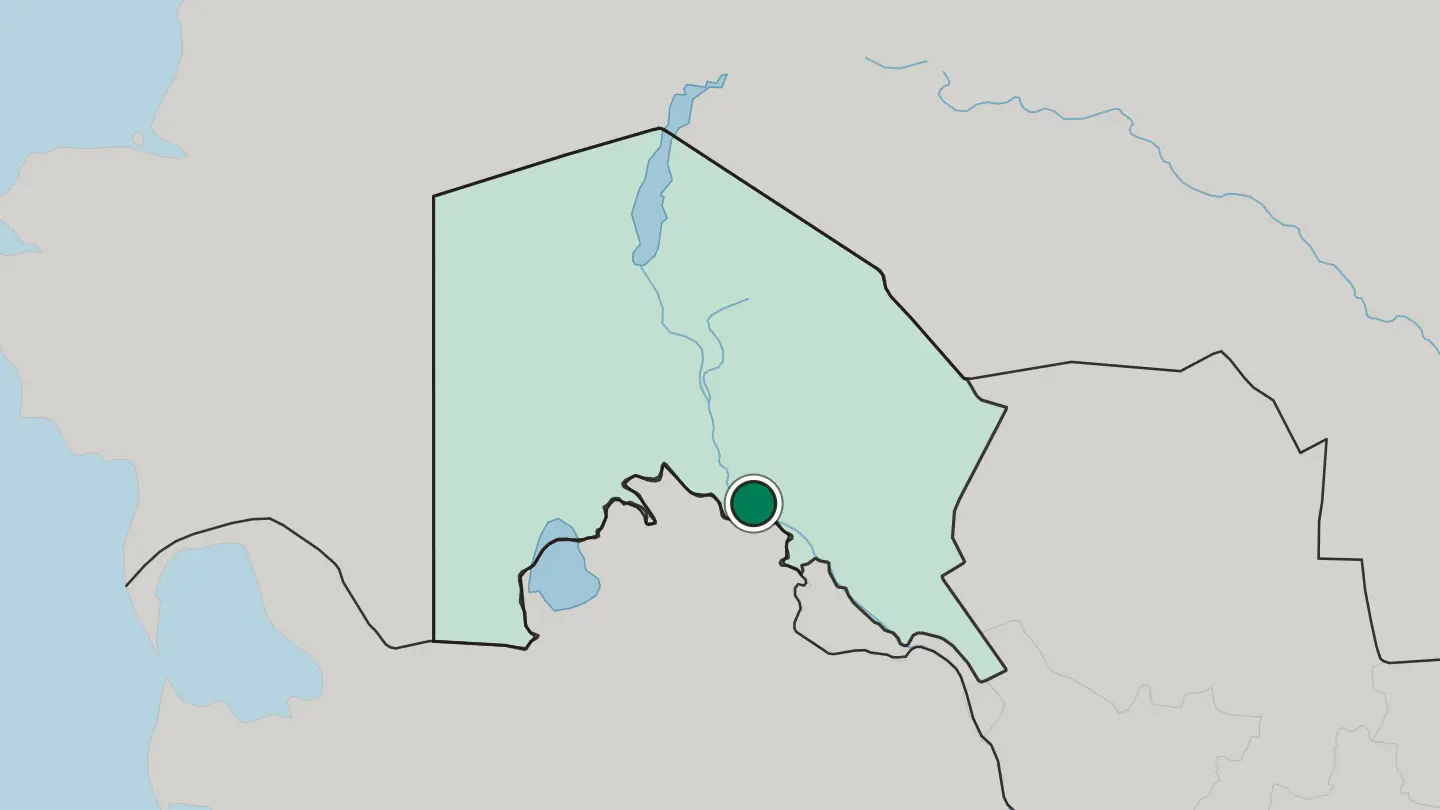
Hotel links are affiliate links: booking through them may earn us a commission, at no extra cost to you. It never affects how places are ranked. How this works
About Karakalpakstan
What is Karakalpakstan known for?
Karakalpakstan is known above all for the Aral Sea, once one of the largest lakes on earth and now a warning, its water drained away up the Amu Darya to feed the cotton of Central Asia. The retreat was catastrophic. At Moʻynoq, a stranded fleet of fishing trawlers rusts on bare sand kilometres from the vanished shore.
Its capital, Nukus, keeps an unlikely prize, the Savitsky hoard of banned Soviet avant-garde art, carried into the desert far from Moscow.
Where is Karakalpakstan?
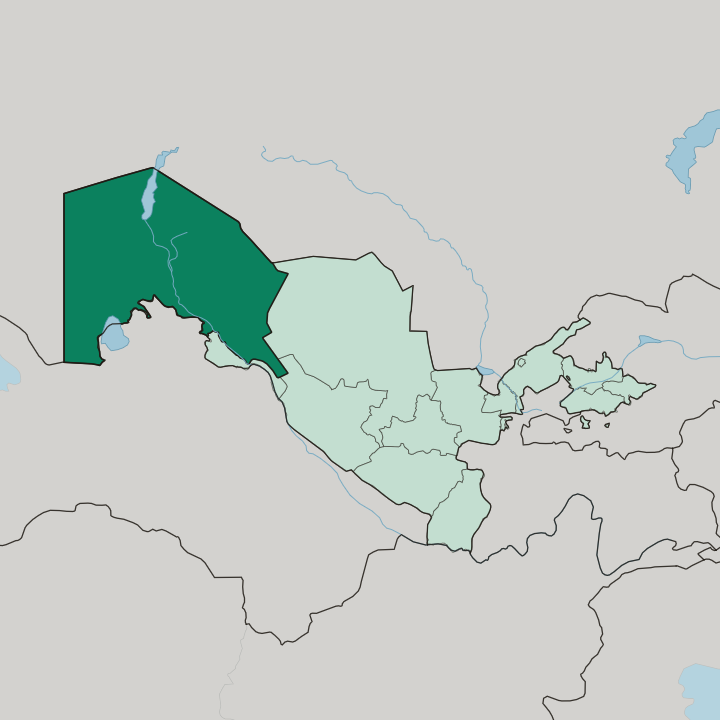
Karakalpakstan spreads across the whole northwestern corner of Uzbekistan, the largest of the country's regions by far and one of the emptiest. It is mostly desert. The bare Ustyurt Plateau walls off the west toward the Caspian, while the red sands of the Kyzylkum press in from the east, and between them the Amu Darya threads north through a broad green delta before giving out.
That delta is the republic's lifeline and its wound. Where the river once poured into the Aral Sea it now barely arrives, and the exposed seabed has hardened into a new salt desert, the Aralkum, that did not exist within living memory. Reedbeds and shallow lakes survive at Sudochye, drawing pelicans and flamingos to a shrinking oasis.
Everything green here is the river's doing. Beyond its banks the land runs flat and pale to the horizon, scoured by wind, so that the contrast between the watered delta and the dead sea it used to feed is the single fact that shapes the whole territory.
What is Karakalpakstan like?
Karakalpakstan takes its name and its character from the Karakalpaks, a Turkic people whose language sits closer to Kazakh than to Uzbek and whose past was one of herders and fishermen along the river and the lake. Theirs is a steppe inheritance. The great national epic, Qyrq Qyz, the Forty Girls, tells of a fortress of warrior women on the delta, and it is still sung by bards to a two-stringed dutar.
Older crafts hold on in felt, carpet and embroidery. The republic's other cultural anchor is unexpected. In Soviet years the collector Igor Savitsky filled a Nukus museum with avant-garde canvases that Moscow had condemned, and that gallery now draws travellers who would never otherwise cross the desert.
Two identities meet in the capital. The nomad heritage of the Karakalpak steppe and a smuggled archive of banned modern art share the same dusty streets, and both are spoken of with pride in Karakalpak and Uzbek alike.
What is the history of Karakalpakstan?
This desert was the heart of ancient Khorezm, and its clay ruins still stand. Dozens of mudbrick citadels, the Elliq Qala, or fifty fortresses, among them Ayaz Qala and Toprak Qala, guarded the Amu Darya oases two thousand years ago. On a bluff above the river the Zoroastrian dakhma of Chilpik once received the dead.
Caravans of the Silk Road passed below. In the twentieth century the land became a Soviet autonomous republic, and it was Soviet cotton planning that doomed the Aral Sea.
What is the climate of Karakalpakstan?
Karakalpakstan has one of the harshest continental climates in Central Asia, set deep inland with no sea left to soften it. Summers are savage. Temperatures climb well past comfort over the open sands while winters bite hard, and the wind that crosses the dried Aralkum now lifts salt and dust from the old seabed across the delta.
Rain is scarce in every season.
How do you get to Karakalpakstan?
Most travellers reach Karakalpakstan through Nukus, which has an airport with daily flights from Tashkent and a station on the line west. Trains are slow but cheap. The overland approach most visitors take runs from the walled city of Khiva and nearby Urgench, a couple of hours east, since Karakalpakstan is usually paired with that Khorezm circuit.
Beyond the capital, every road is a long desert drive.
Common questions
What is the best area to stay in Karakalpakstan?
Nukus: Museum days and Aral Sea expeditions. Moʻynoq: The Aral Sea ship graveyard. Ayaz Qala: A night among desert fortresses.
Good for
More regions in Uzbekistan
Updated September 2026