Uzbekistan
Samarqand Region, Uzbekistan — Towns & Travel Guide
Samarqand Region is the historic core of Uzbekistan, an oasis along the Zeravshan where Timur's blue-domed capital and old Silk Road towns stand.
Hotel links are affiliate links: booking through them may earn us a commission, at no extra cost to you. It never affects how places are ranked. How this works


Towns & cities in Samarqand Region
One town here has its own guide — it links to where to stay.
 Uzbekistan
Samarkand
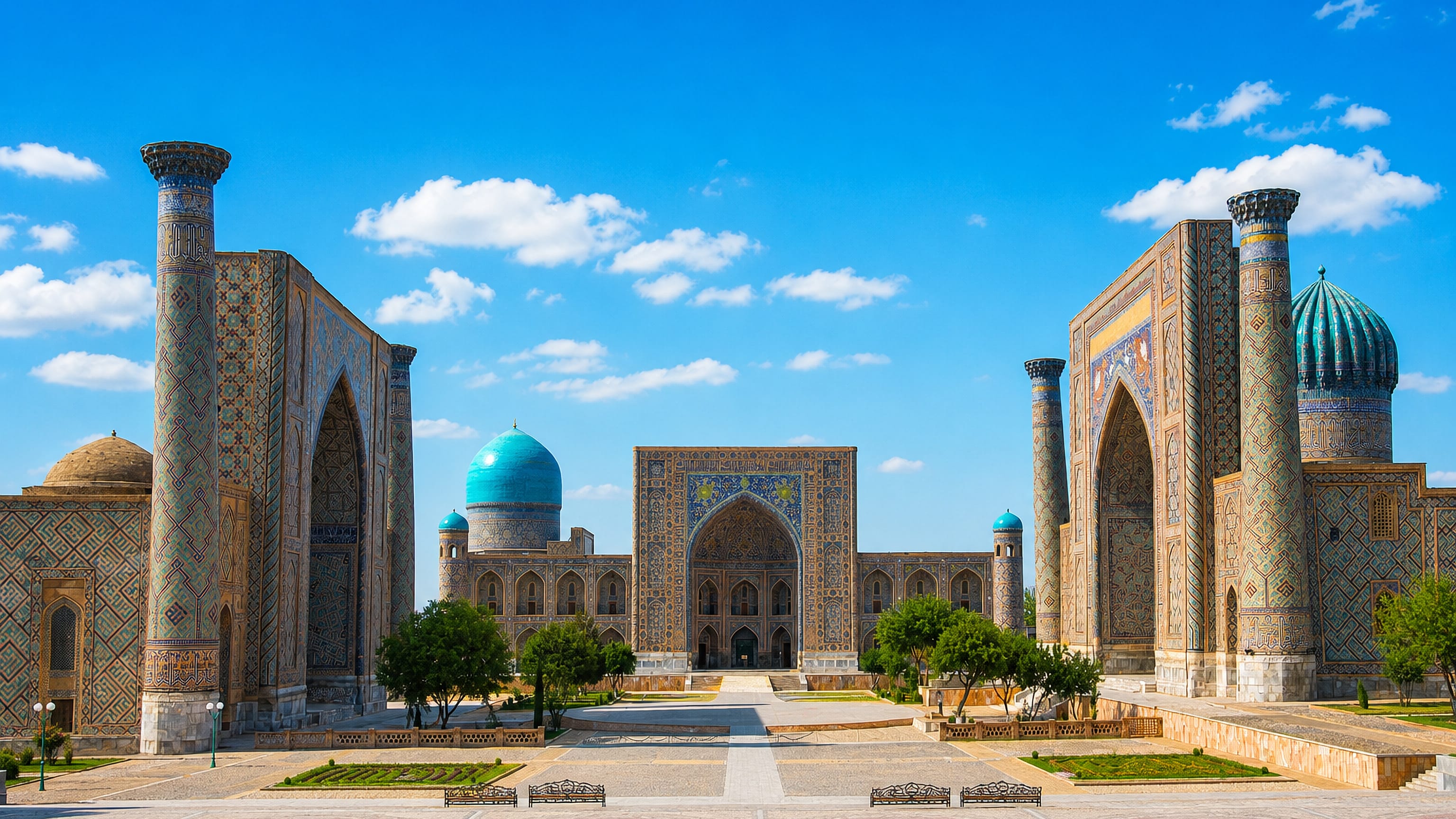
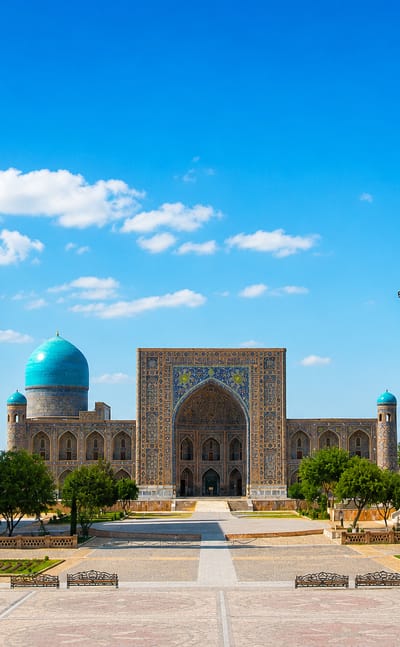
Turquoise domes and tiled minarets crown Samarkand, a Silk Road city in the Samarkand Region of Uzbekistan, known for its Old Town and ancient Afrasiyab.Where to stay →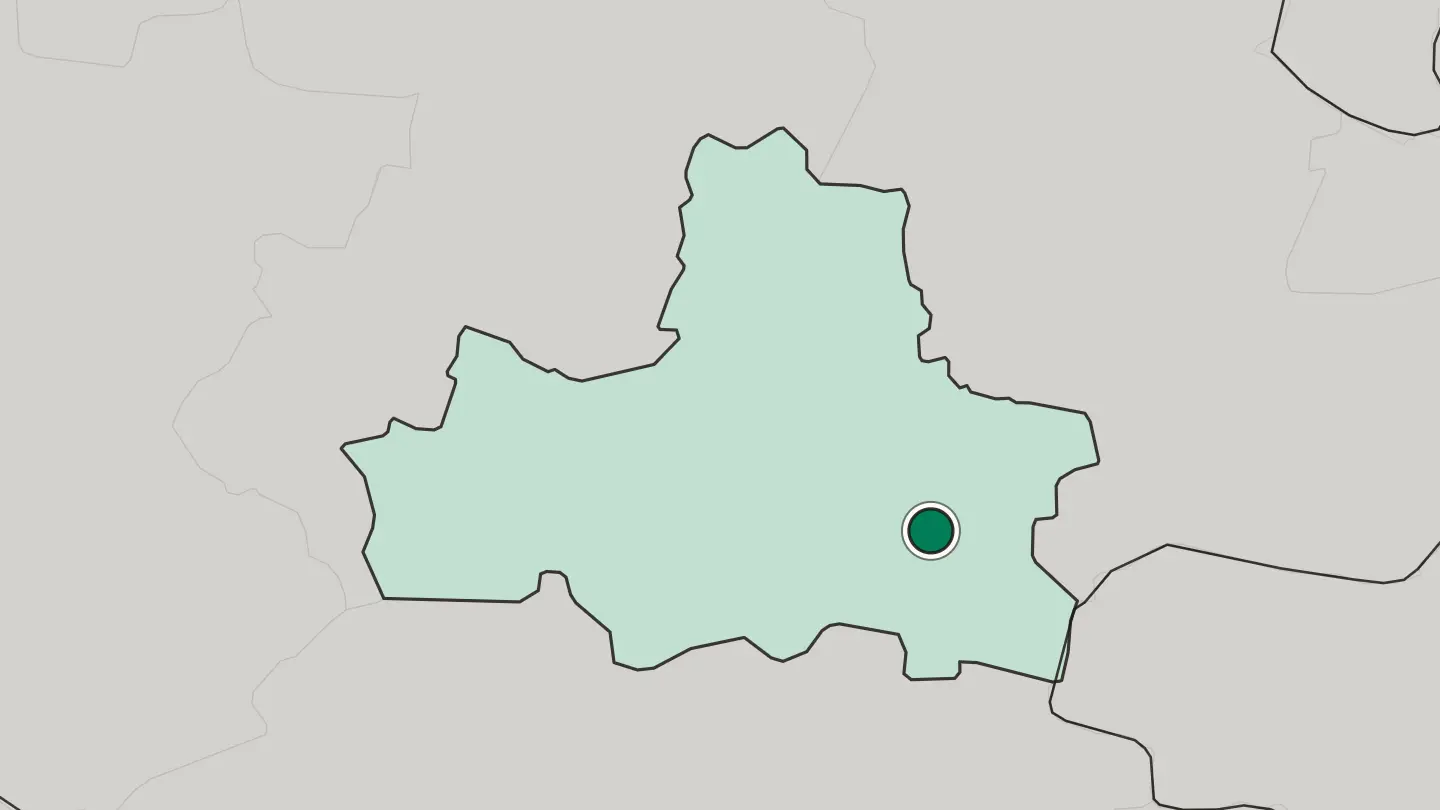
Hotel links are affiliate links: booking through them may earn us a commission, at no extra cost to you. It never affects how places are ranked. How this works
About Samarqand Region
What is Samarqand Region known for?
Samarqand Region is known for one of the oldest inhabited places on Earth. Its capital, Samarkand, grew rich on the Silk Road and became the seat of Timur's empire, and the tiled madrasas that ring the Registan draw travellers from across the world to a city Uzbeks call the country's second heart after Tashkent. Blue domes define the skyline.
Beyond the capital, the region is a green oasis fed by the Zeravshan, planted with cotton, wheat, orchards, and mulberry trees for silk. Bread and craft carry its name too.
Where is Samarqand Region?
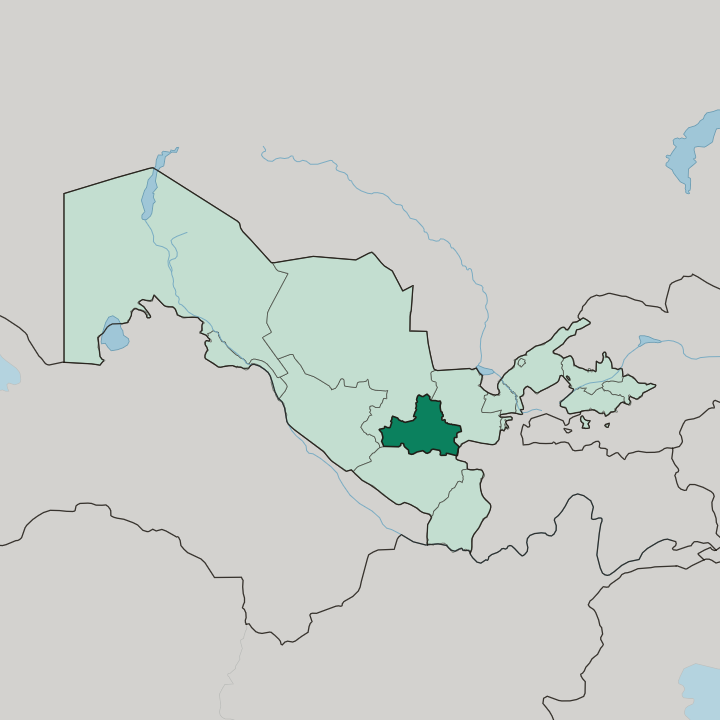
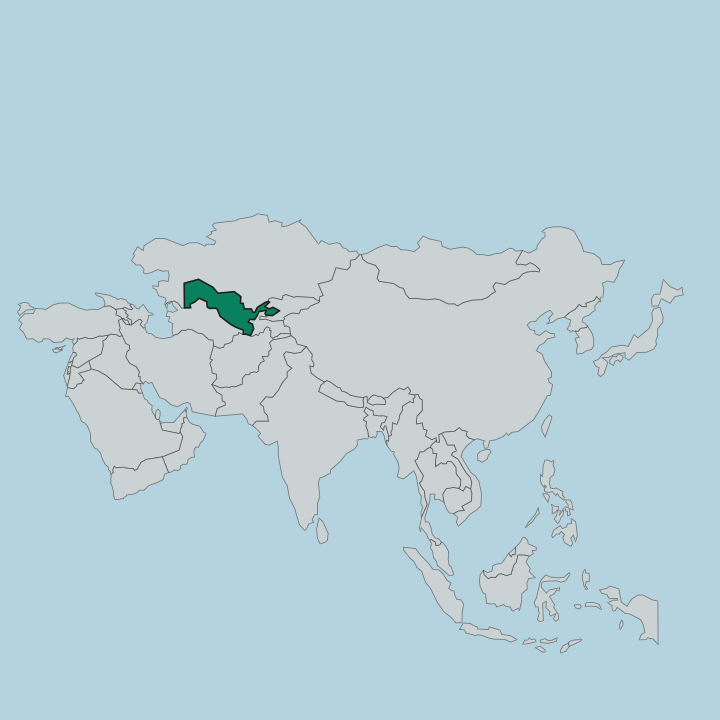
Samarqand Region sits in the centre of Uzbekistan, strung along the middle course of the Zeravshan as the river runs west out of the mountains toward the desert. The whole region is one long oasis. Water makes it.
The Zeravshan gathers its flow from glaciers in the Turkistan and Zarafshan ranges of Tajikistan, then spreads across a fertile valley of cotton fields, orchards, and mulberry groves before losing itself in the sands far downstream near the Amu Darya. The Zarafshan Range walls the valley on the south, rising toward Urgut and the Tajik border in a line of foothills that turn green in spring and bare in high summer. Beyond the watered ground the land goes dry fast.
Steppe and semi-desert edge the region north and west, where the river no longer reaches. Kattakurgan lies out that way down the valley, its reservoir catching the Zeravshan to hold water through the hot months. The region borders Tajikistan to the east, the Jizzakh Region to the north, the Navoiy Region to the west, and the Qashqadaryo Region across the hills to the south.
Samarkand stands near the heart of it all, on the north bank where the caravans once crossed. Almost everything here follows the river.
What is Samarqand Region like?
Culture here reads as Persian as much as Turkic. Samarkand and the towns around it hold a large Tajik-speaking population, and the northern Tajik dialect of the Bukhara-Samarkand oases became the base of standard Tajik in the last century, so you hear that older Persian speech in the bazaars alongside Uzbek. The city's monuments carry the same double inheritance, blue-tiled and calligraphic, built under Timur and his grandson Ulugh Beg, the astronomer-prince whose observatory once measured the stars from a hill above the town.
Faith and learning both mark the place. Daily life still turns on the oasis and its craft. Weavers, potters, and papermakers work the old trades, and the Urgut market fills each weekend with embroidery and knives brought down from the mountain villages.
Bread is close to sacred here. The round Samarkand non, stamped and baked heavy in tandoor ovens, is famous across Uzbekistan and carried home by travellers as a gift. Silk from the region's mulberry groves feeds carpet and ikat workshops.
Mulberry trees line the irrigation channels for that reason, planted long ago to feed the worms.
What is the history of Samarqand Region?
Samarkand began as Marakanda, capital of ancient Sogdiana, and was already old when Alexander the Great took it. Its Sogdian merchants ran the caravan trade along the Silk Road for a thousand years, until Genghis Khan's Mongols sacked the walled city of Afrasiyab and drove the town downhill to its present ground. Then came Timur.
He and his grandson Ulugh Beg raised the Registan, the Gur-e Amir, and the Shah-i-Zinda that still crown the city, and the region took its modern administrative shape as a Soviet province in 1938.
What is the climate of Samarqand Region?
The region has a dry continental climate, softened a little by the oasis. Summers along the Zeravshan run long and fierce, with cloudless heat baking the valley through July and August while the river and its channels keep the fields alive. Winters are short and cool.
Frost and some snow reach the valley floor, and the Zarafshan Range above Urgut holds real cold, but the mercury rarely stays below freezing for long down in Samarkand. Most rain falls in the spring, when the foothills green over and the orchards flower before the heat returns.
How do you get to Samarqand Region?
Most travellers reach the region from Tashkent, and the easy way is the train. The high-speed Afrosiyob covers the run from the capital to Samarkand in a little over two hours, gliding across the steppe to a station near the old town, and slower trains carry on west down the valley toward Bukhara. Flights land here too.
Samarkand's airport takes direct services from Tashkent and a growing list of foreign cities, a short drive from the monuments. Shared cars and buses fill in the rest, linking Samarkand with Kattakurgan, Urgut, and the villages of the oasis.
Common questions
What is the best area to stay in Samarqand Region?
Samarkand old town: the Registan and the monuments on foot. Eastern Samarkand: quiet nights and larger hotels. Kattakurgan: a road stop down the Zeravshan valley. Urgut: the mountain-edge weekend market.
Good for
More regions in Uzbekistan
Updated September 2026