Uzbekistan
Bukhara Region, Uzbekistan — Towns & Travel Guide
Bukhara Region is a desert province of western Uzbekistan, built around the Silk Road oasis city of Bukhara on the Zeravshan.
Hotel links are affiliate links: booking through them may earn us a commission, at no extra cost to you. It never affects how places are ranked. How this works


Towns & cities in Bukhara Region
One town here has its own guide — it links to where to stay.
 Uzbekistan
Bukhara
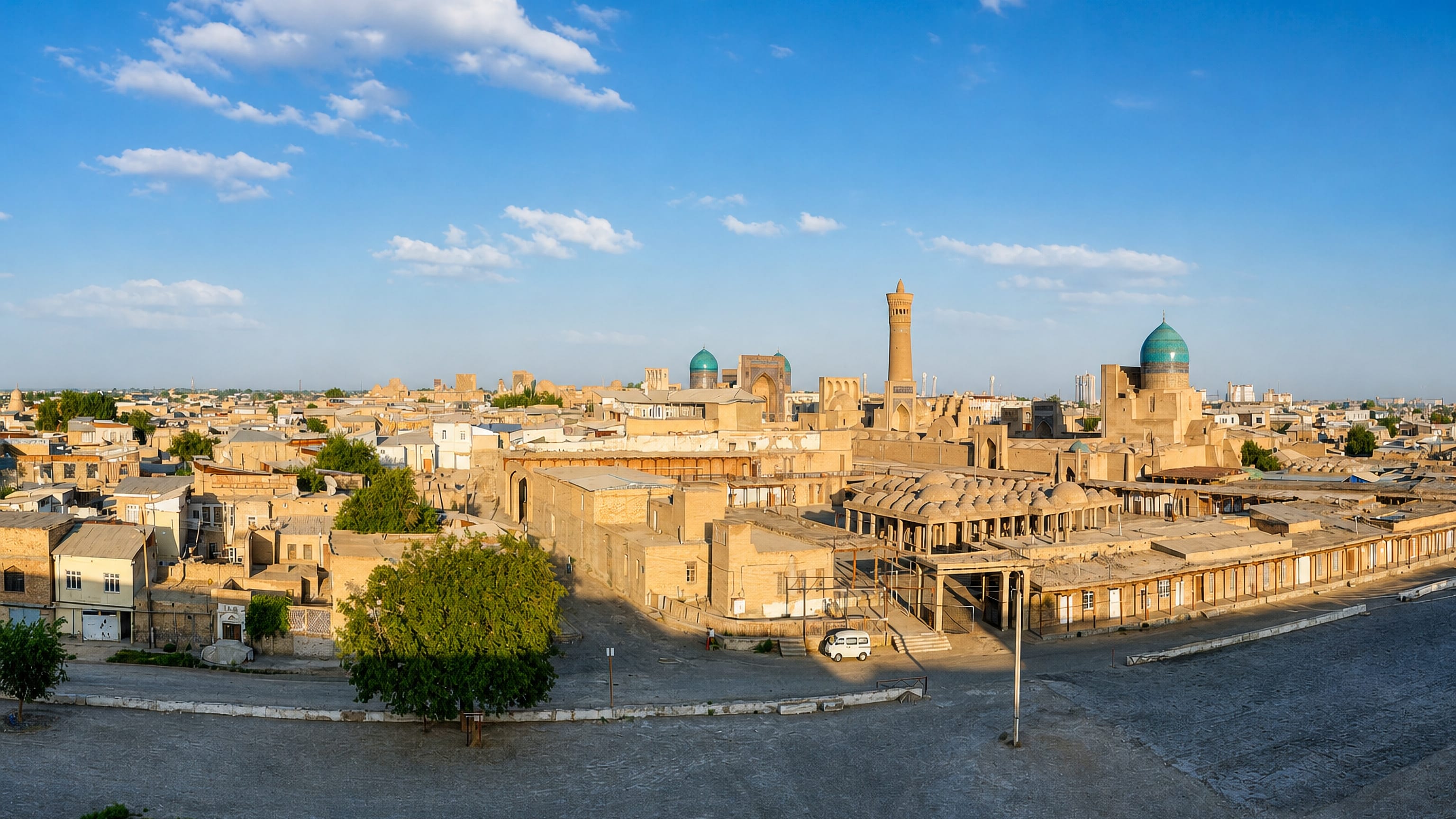
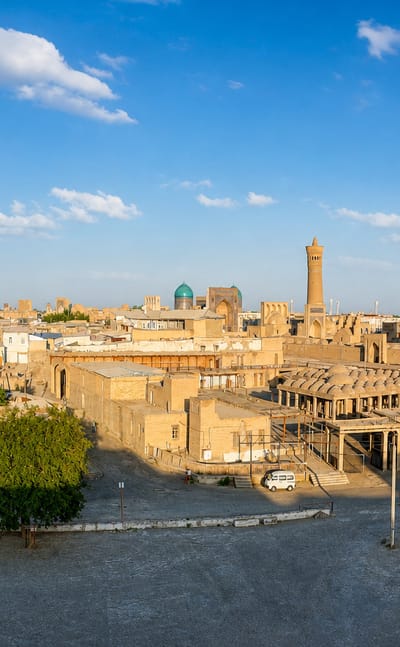
The Kalyan Minaret rises over Bukhara, a Silk Road city in the Bukhara Region of Uzbekistan, known for its walled Old Town of mosques and madrasahs.Where to stay →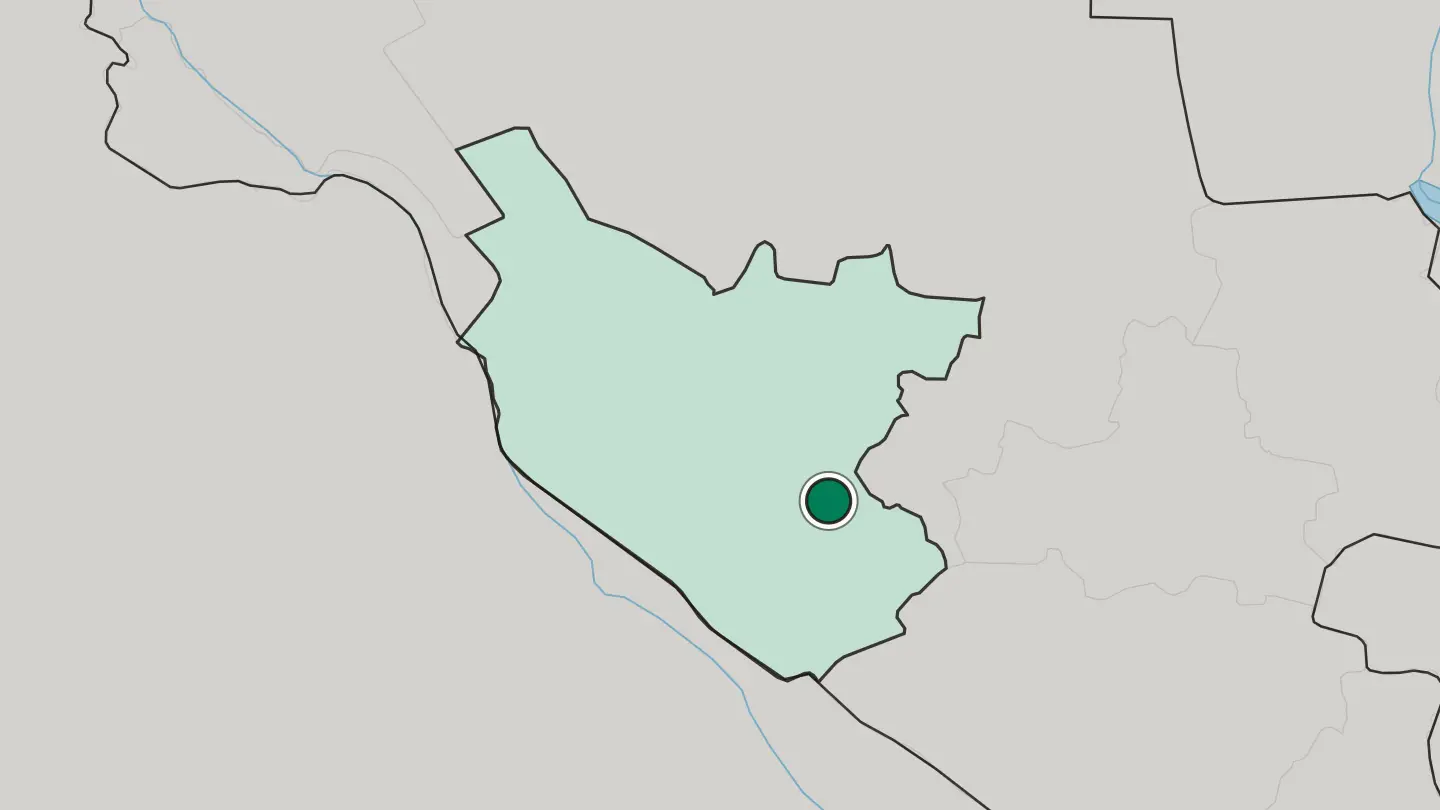
Hotel links are affiliate links: booking through them may earn us a commission, at no extra cost to you. It never affects how places are ranked. How this works
About Bukhara Region
The region is known for Bukhara.
What is Bukhara Region known for?
That one city carries it. The old town survives as a living museum, and its mosques, madrasas and trading domes made the UNESCO-listed Historic Centre of Bukhara. Beyond the oasis, the Kyzylkum desert fills most of the map, and the flocks that graze its fringe gave the region its other name to trade on: karakul pelts.
The Zeravshan waters the whole of it.
Where is Bukhara Region?
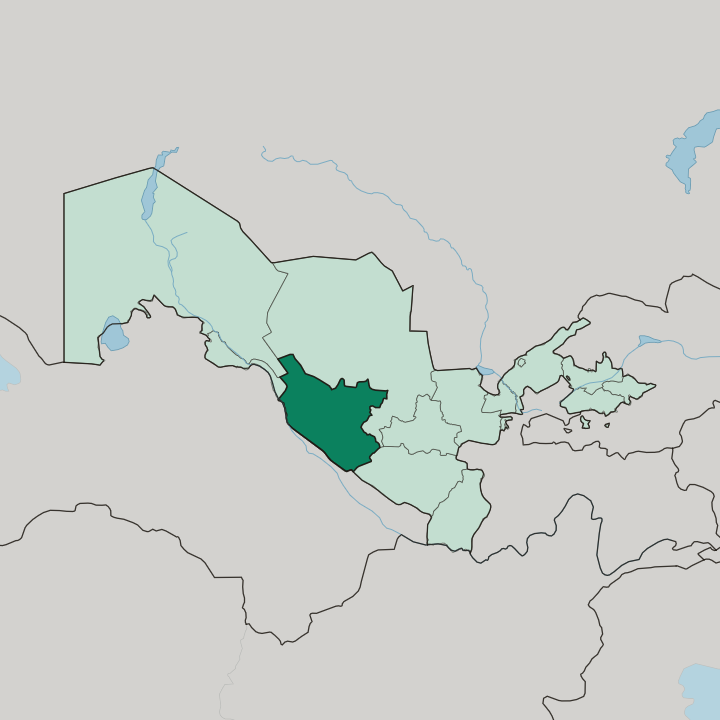
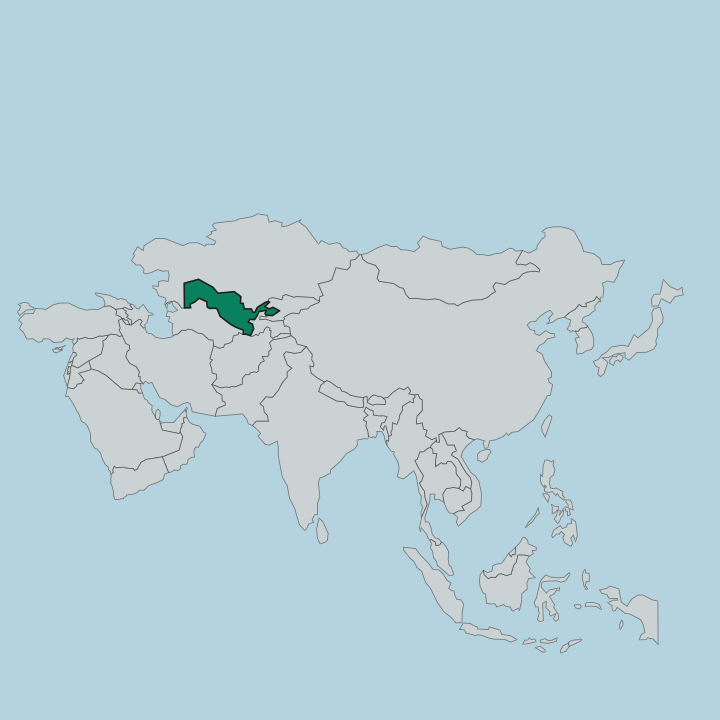
Bukhara Region sits in the south-west of Uzbekistan, a broad low province of oasis and sand. Sand dominates. The Kyzylkum desert covers the northern and central bulk of the territory, a flat expanse of shifting dune and dry steppe that reaches toward the Aral basin.
Life gathers instead along one thread of green: the Zeravshan, which rises far off in the mountains of Tajikistan and runs west past Samarkand before it fans out here into the Bukhara and Karakul deltas and dies in the sand short of the Amu Darya. That failing river is the reason the oasis exists at all. Its irrigation channels feed the cotton fields, the mulberry groves and the walled towns that ring the desert's edge.
The Amu Darya marks the far southern limit, dividing this region from Turkmenistan across the water. Gas fields at Gazli sit out on the dry plateau to the north-west, where the settlements thin to almost nothing. It is a landscape of extremes, green line against grey waste.
The population presses into the oases and leaves the Kyzylkum to the shepherds.
What is Bukhara Region like?
Bukhara has been a seat of Persian learning for a thousand years, and that inheritance still colours the region. Two tongues live side by side. Uzbek is the state language, but the oasis towns of Bukhara also speak Tajik, the local Persian speech, spoken in the courtyards and bazaars much as it was under the emirs.
The crafts carry the same long memory. Gijduvan, north-east of the city, is a pottery town whose workshops still fire the blue-and-green glazed ware sold across the country as Bukhara ceramics, the recipes passed down one family at a time. Gold embroidery, silk ikat and hand-knotted carpets came out of these workshops for the Silk Road caravans, and the trade never fully stopped.
Faith runs through it too. Bukhara was once called the dome of Islam, ringed with madrasas, and the Mir-i-Arab still teaches. Out on the desert margin the older economy holds: karakul flocks, the tight-curled black lambskin that the region breeds and cures better than anywhere in the country.
Craft, faith and pasture braid together here. The city sets the tone and the desert supplies it.
What is the history of Bukhara Region?
This oasis has been settled for some five thousand years. Its high point came under the Samanids, when Bukhara ruled as their capital and grew into an intellectual centre of the Islamic world. Later it gave its name to the states that governed here: the Khanate and then the Emirate of Bukhara, which held the lower Zeravshan and the desert around it until Soviet forces ended the emirate in 1920.
The modern region was drawn in 1938. Old power, redrawn lines.
What is the climate of Bukhara Region?
The climate is cool desert, dry and sharply seasonal. Summers are fierce. July afternoons in Bukhara climb toward the high thirties Celsius under a sun the Kyzylkum returns as heat, while January can slip below freezing on the same streets.
Rain barely registers, a thin scatter of winter and spring showers that the desert soaks up almost at once. Spring and autumn are the kind windows, when the oasis greens and the light falls soft on the Kalyan minaret.
How do you get to Bukhara Region?
The main railway runs through the region. The fast Afrosiyob service links Tashkent and Samarkand to the region in a few hours, though the region's largest station is Kogon, the old railway town a short drive east of Bukhara. From that station a taxi or shared minibus finishes the trip into the old town.
Bukhara keeps a small airport too, working the odd domestic and regional flight. Roads take over from there, running out across the Kyzylkum to the scattered desert towns beyond the oasis.
Common questions
What is the best area to stay in Bukhara Region?
Bukhara old town: the medieval Silk Road core on your doorstep. Kogon: catching an early train out of the region.
Good for
More regions in Uzbekistan
Updated October 2026