Uzbekistan
Andijan Region, Uzbekistan — Towns & Travel Guide
Andijan is Uzbekistan's most crowded region, filling the eastern floor of the Fergana Valley, birthplace of Babur, founder of the Mughal Empire.
Hotel links are affiliate links: booking through them may earn us a commission, at no extra cost to you. It never affects how places are ranked. How this works


Towns & cities in Andijan Region
One town here has its own guide — it links to where to stay.
 Uzbekistan
Andijon
Andijon is the chief city of the Fergana Valley in eastern Uzbekistan, an old Silk Road town and the birthplace of Babur.Where to stay →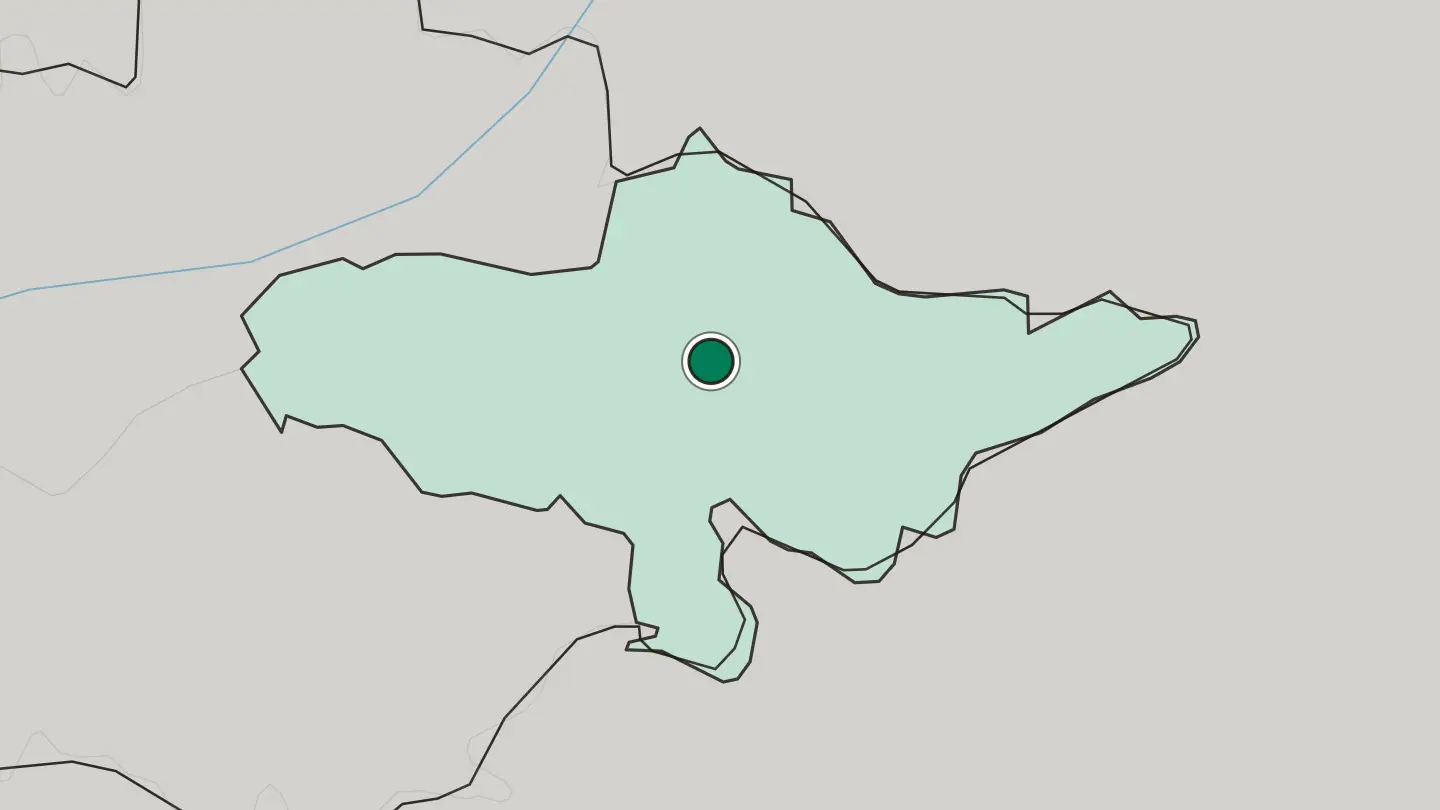
Hotel links are affiliate links: booking through them may earn us a commission, at no extra cost to you. It never affects how places are ranked. How this works
About Andijan Region
What is Andijan Region known for?
Andijan is known as the cradle of an emperor and the workshop of a valley. From here Babur set out to conquer northern India and found the Mughal dynasty, and the city keeps his memory in a park and literary museum above the town. The region is also Uzbekistan's industrial east, its plants at Asaka turning out most of the country's cars amid some of the most intensively farmed land in Central Asia.
Cotton and mulberry fill every spare field.
Where is Andijan Region?
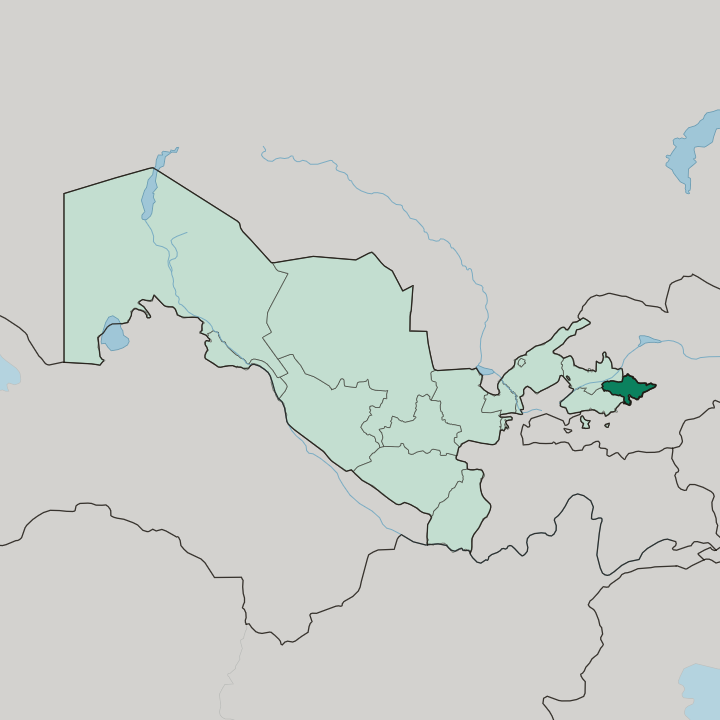
Andijan occupies the far eastern end of the Fergana Valley, where Uzbekistan runs up against the mountains of Kyrgyzstan. It is a place with almost no wasteland. The Kara Darya, one of the two rivers that join to make the Syr Darya, crosses the province and feeds a canal network so dense that the plain reads as one continuous field, giving Andijan the highest rural population density in the whole country.
People are everywhere. Hills close the horizon on three sides. The valley narrows here toward its eastern mouth, the ranges of the Tian Shan curving round from the north and east, so that the Uzbek lowland ends and Kyrgyzstan's uplands begin within sight of the fields.
The land is low, flat and warm. That combination of rich alluvial soil, generous river water and a long growing season is exactly why so many people have always packed into this small, fertile corner.
What is Andijan Region like?
Andijan's culture leans on its most famous son and on the life of a working valley. Babur is the region's touchstone. The prince who was born here in the fifteenth century, lost his valley throne and went on to found the Mughal Empire in India, wrote a famous memoir, the Baburnama, that still colours how the province sees itself.
Locals speak of him as one of their own. Beyond that royal thread runs an everyday Fergana culture of markets, music and craft. The city gave its name to the andijanskaya polka and to a lively bazaar tradition, and its teahouses and mahalla neighbourhoods keep the close, communal texture of valley life.
Food is central to it. The pilaf, breads and mulberry sweets of Andijan, grown on the fields that surround the town, tie the region's culture firmly to the soil that feeds it.
What is the history of Andijan Region?
Andijan is an old Silk Road town that once outshone its neighbours. It was the seat of the Fergana appanage where Babur came to power before his march on Kabul and Delhi, and for centuries it prospered on the caravan trade in silk and cotton. Later it fell under the Khanate of Kokand, then Tsarist Russia.
Then disaster struck. A great earthquake levelled much of the old city in 1902. Soviet planners rebuilt it as a cotton and engineering centre, the role its industry still fills.
What is the climate of Andijan Region?
Andijan shares the warm continental climate of the eastern Fergana Valley, with the mountains around it trapping summer heat over the plain. July and August are sultry. Long hot summers ripen the cotton and fruit while the rivers thin, and winters stay cold and short, seldom as brutal as the exposed steppe because the encircling ranges hold off the worst of the wind.
Spring rain greens the fields fast.
How do you get to Andijan Region?
Andijan is joined to Tashkent by air and by the railway that tunnels through the mountains into the Fergana Valley. The airport is the fast option. Trains and buses climb over or bore under the Kamchik pass on the Kurama range, a long half-day from the capital, while the city also sits close to one of the main road crossings into Kyrgyzstan and on toward Osh.
Marshrutkas link it to every town in the valley.
Common questions
What is the best area to stay in Andijan Region?
Andijan city centre: Babur sites and valley bazaars. Asaka: Industry and the car-plant belt. Khanabad: Farm country near the border.
Good for
More regions in Uzbekistan
Updated September 2026