Bosnia and Herzegovina · Federation of Bosnia and Herzegovina
Where to Stay in Sarajevo, Federation of Bosnia and Herzegovina
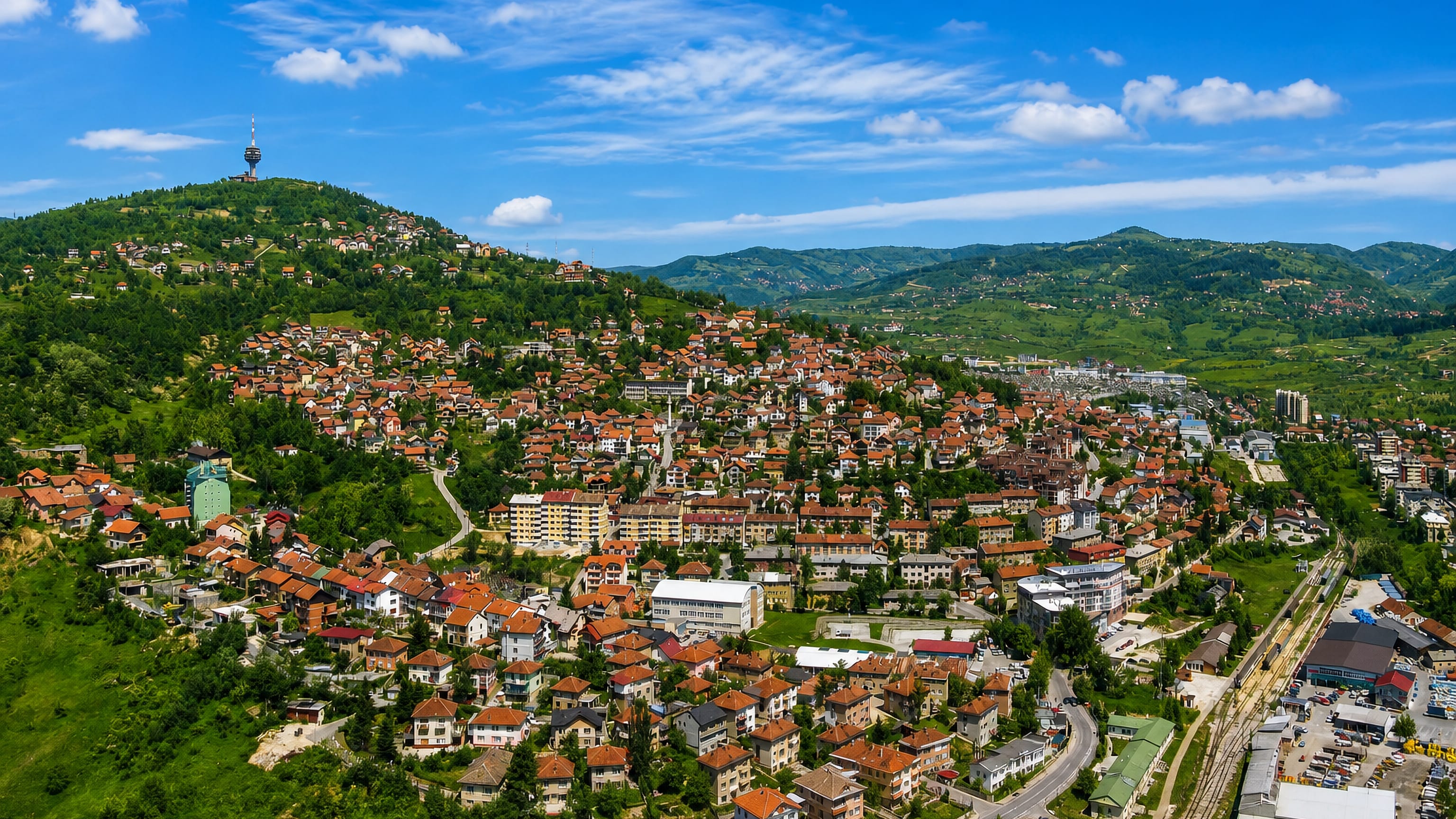
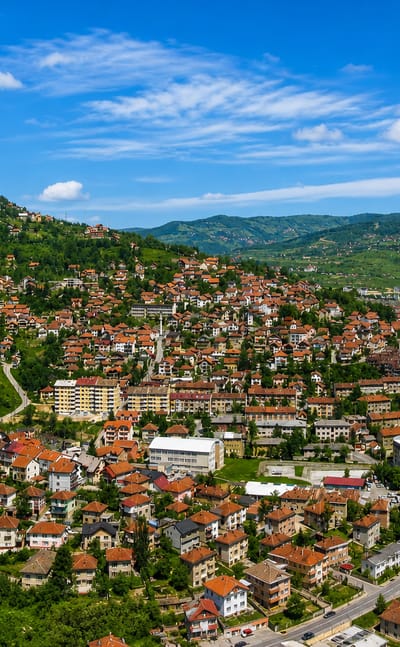
The Miljacka River threads the valley at Sarajevo, capital of Bosnia and Herzegovina, ringed by the Dinaric Alps and known for its Ottoman-era Old Town.
Hotel links are affiliate links: booking through them may earn us a commission, at no extra cost to you. It never affects how places are ranked. How this works


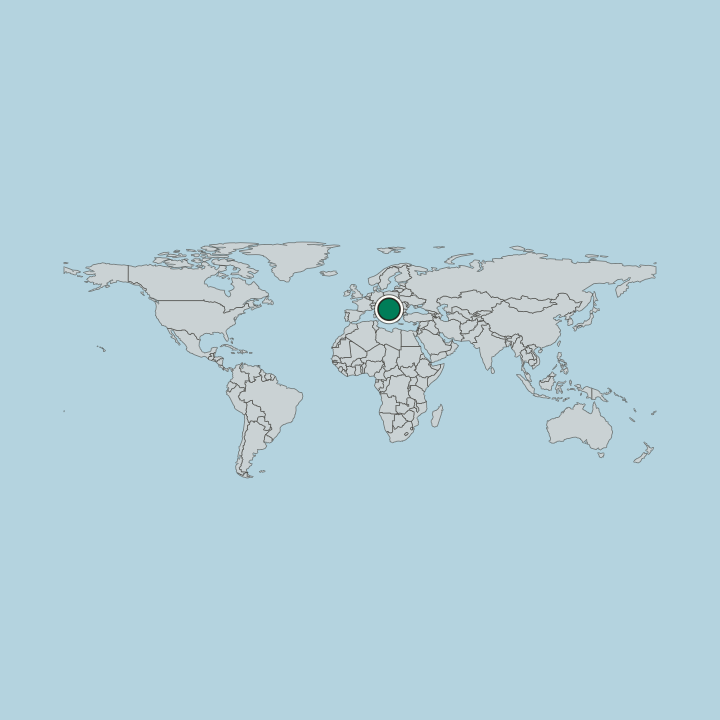
Where to stay in Sarajevo
Each area has its own feel; here's who each one suits.
 SarajevoBosnia and Herzegovina
Mejtaš
Mejtaš is a central neighbourhood of Sarajevo, the capital of Bosnia and Herzegovina, and one of the city's most prestigious addresses.Where to stay →SarajevoBosnia and HerzegovinaMarijin Dvor
Marijin Dvor is Sarajevo's modern centre, a boulevard quarter of ministries, museums, and glass towers along Zmaja od Bosne.Where to stay →SarajevoBosnia and HerzegovinaBistrik
Bistrik, one of Sarajevo's oldest quarters, climbs the left bank of the Miljacka inside the Stari Grad municipality.Where to stay →SarajevoBosnia and HerzegovinaVraca
Vraca is a hillside neighbourhood of Sarajevo, part of Novo Sarajevo, known for its memorial complex to the victims of the Second World War.Where to stay →SarajevoBosnia and HerzegovinaBardakčije
Bardakčije is an outlying local community of Sarajevo, the last of Centar's neighbourhoods before the boundary with Stari Grad.Where to stay →SarajevoBosnia and HerzegovinaKoševo II
Koševo II is one half of the Koševo neighbourhood in Sarajevo's Centar municipality, between old Stari Grad and newer Novo Sarajevo.Where to stay →SarajevoBosnia and HerzegovinaGrbavica
Grbavica is a neighbourhood of Sarajevo inside the municipality of Novo Sarajevo, split into Grbavica I and Grbavica II. Skenderija stands close by.Where to stay →SarajevoBosnia and HerzegovinaČengić vila
Čengić vila is a neighbourhood of Sarajevo in the Novo Sarajevo municipality, recorded in two units, Čengić Vila I and Čengić Vila II.Where to stay →SarajevoBosnia and HerzegovinaNovi Grad
Novi Grad, the westernmost of Sarajevo's four municipalities in Bosnia and Herzegovina, takes in the villages of Bojnik and Rečica.Where to stay →SarajevoBosnia and HerzegovinaŠvrakino selo
Švrakino selo is a residential neighbourhood of Sarajevo, Bosnia and Herzegovina, beside the Olimpijski Bazen Otoka.Where to stay →SarajevoBosnia and HerzegovinaAlipašino polje
Alipašino polje is a planned housing estate in western Sarajevo, laid out in phases A, B and C inside the municipality of Novi Grad.Where to stay →SarajevoBosnia and HerzegovinaCiglane
Ciglane is a brutalist hillside neighbourhood of Sarajevo on Crni Vrh, and the only one in the city with a funicular of its own, the Kosi Lift.Where to stay →SarajevoBosnia and HerzegovinaKovači
Kovači is a Sarajevo neighbourhood on the right bank of the Miljacka, between Baščaršija and Vratnik.Where to stay →Hotel links are affiliate links: booking through them may earn us a commission, at no extra cost to you. It never affects how places are ranked. How this works
Find hotels in Sarajevo
Direct booking searches for these neighbourhoods.
Old Town
The coppersmiths' lanes around Svrzo's House and the Latin Bridge put the oldest quarter of Sarajevo on foot.Find hotels in Old TownGrand facades and the tram lineAustro-Hungarian centre
The imperial streets laid out after 1878 gather the Cathedral of Jesus' Heart and Saint Joseph's Church along wider pavements.Find hotels in Austro-Hungarian centreHotel links are affiliate links: booking through them may earn us a commission, at no extra cost to you. It never affects how places are ranked. How this works
Things to do in Sarajevo
Ranked by global recognition; descriptions from Wikidata (CC0).
Museums & Galleries
4- Historical Museum of Bosnia and Herzegovina Heritage
- Svrzo's House Heritage
- Despić House Heritage
- Museum of the Revolution (History Museum) of Bosnia and Herzegovina, the historic building Heritage
Churches & Religious Sites
8- Cathedral of Jesus' Heart Heritage
- Serbian Orthodox Cathedral in Sarajevo Heritage
- Sarajevo Old Orthodox Church Heritage
- Saint Joseph's Church Heritage
- Old Synagogue in Sarajevo Heritage
Show 3 more →
- Church of the Holy Trinity, the historic building Heritage
- Saint Vincent de Paul church in Sarajevo Heritage
- Church of the Assumption in Stup Heritage
Castles & Historic Sites
5- Latin Bridge Heritage
- Goat's Bridge Heritage
- Šeher-Ćehaja Bridge Heritage
- Tašlihan Heritage
- Sarajevo Judicial Palace Heritage
Stadiums & Sports
3- Skenderija
- Mirza Delibašić Hall
- Zetra Ice Rink
worth knowingacross 4 categories in Sarajevo
About Sarajevo
What is Sarajevo known for?
Sarajevo is known for a compact Old Town where mosques, churches, and a single old synagogue stand within a few short streets of one another, gathered along the Miljacka River. The Latin Bridge crosses the water beside the bazaar. Nearby sit the National Museum of Bosnia and Herzegovina and the War Childhood Museum.
Ottoman minarets share the skyline with the twin spires of the Cathedral of Jesus' Heart. Four faiths shaped it.
What are the main landmarks in Sarajevo?
The main landmarks of Sarajevo cluster along the Miljacka River, where the Latin Bridge, the Ottoman Šeher-Ćehaja Bridge, and the older Goat's Bridge span the water in turn between the bazaar and the hills. Three bridges mark the walk. The National Museum of Bosnia and Herzegovina and the Historical Museum of Bosnia and Herzegovina hold the country's collections.
Faith left the Serbian Orthodox Cathedral, the Old Synagogue, and Saint Vincent de Paul church. The Eternal Flame Memorial burns near the centre.
What is the history of Sarajevo?
Sarajevo took shape as an Ottoman town from 1462, when the empire founded a market settlement in the valley of the Miljacka River. The bazaar, the covered market of Tašlihan, and the earliest mosques date from those centuries of Ottoman rule. Traders, craftsmen, and clergy of several faiths settled the narrow quarters.
Svrzo's House survives from that world. Rule passed to Austria-Hungary in 1878, and the empire rebuilt the western streets in stone, adding the Cathedral of Jesus' Heart and Saint Joseph's Church. In 1914 the Latin Bridge became the site of the assassination that helped set off the First World War.
Through the twentieth century the city gathered the National Museum of Bosnia and Herzegovina and the Historical Museum of Bosnia and Herzegovina, institutions that still hold the region's record. The Eternal Flame Memorial marks the losses of the Second World War. Layers of empire and faith remain legible in its streets, and the War Childhood Museum keeps a later chapter of that long history in the public eye.
Where is Sarajevo?
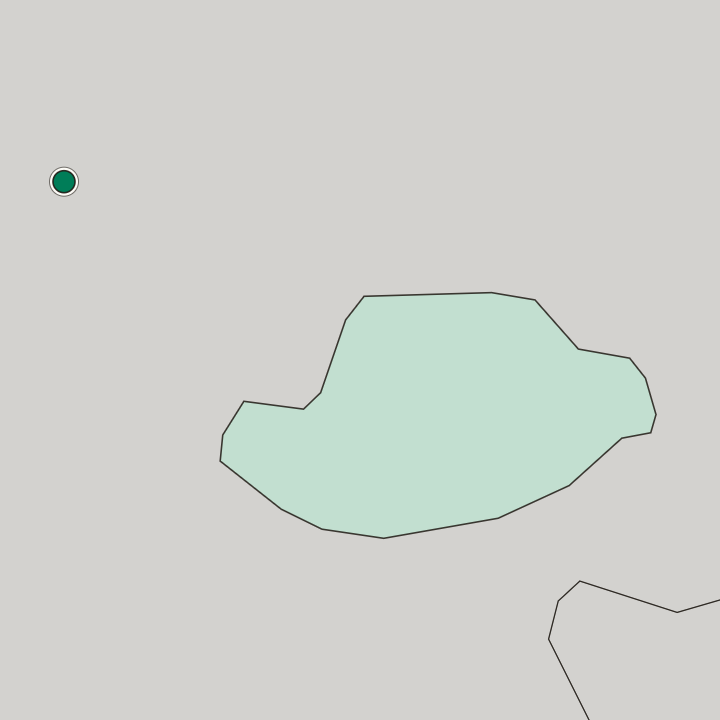
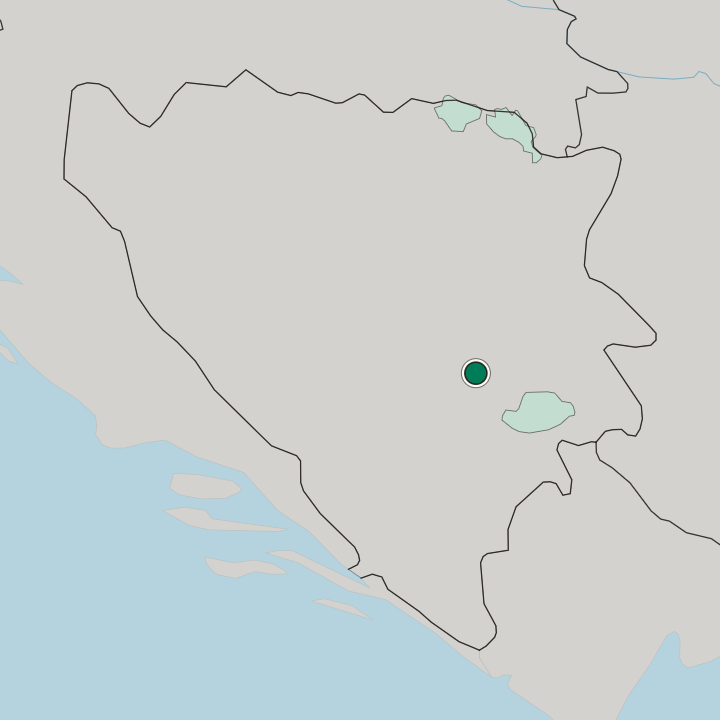
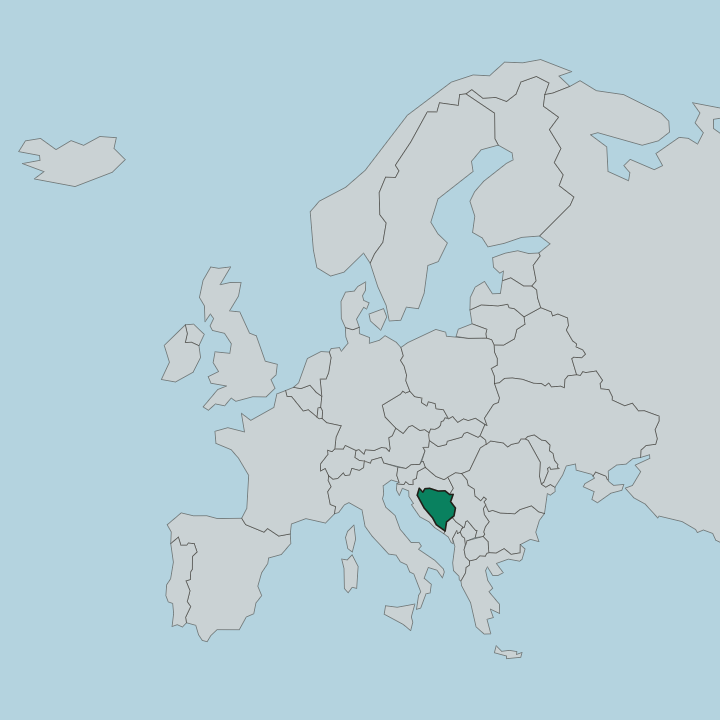
Sarajevo sits on the floor of the Sarajevo valley, in the heart of the Balkans within Southeastern Europe, where ridges of the Dinaric Alps rise on every side and the built-up streets climb their lower slopes. The Miljacka River runs west through the centre before joining the Bosna basin. That bowl of hills shapes the view.
Cold air pools on the valley floor in the colder months.
What is the climate of Sarajevo?
Sarajevo has a climate shaped by its enclosing valley and the Dinaric Alps. Winters are cold and often snowy, as chilled air settles on the low valley floor beside the Miljacka River and lingers under the surrounding ridges. Summers turn warm and green on the slopes.
Spring and autumn stay changeable. The ring of mountains holds the weather in.
How do you get to Sarajevo?
Sarajevo is reached through the valley that carries road and rail into the Balkans. The city's airport lies on the flat ground west of the centre, past the open floor of the Sarajevo valley, where the hills briefly give way to level land. Rail and coach routes follow the Miljacka River and the Bosna corridor.
Trams thread the valley axis. Mountain roads drop in from the Dinaric Alps.
Common questions
What is the best area to stay in Sarajevo?
Old Town: First-time visitors wanting the Ottoman bazaar at the door. Austro-Hungarian centre: Grand facades and the tram line.
Good for
More cities in Federation of Bosnia and Herzegovina
Updated October 2026