Colombia
Departamento de Risaralda, Colombia — Towns & Travel Guide
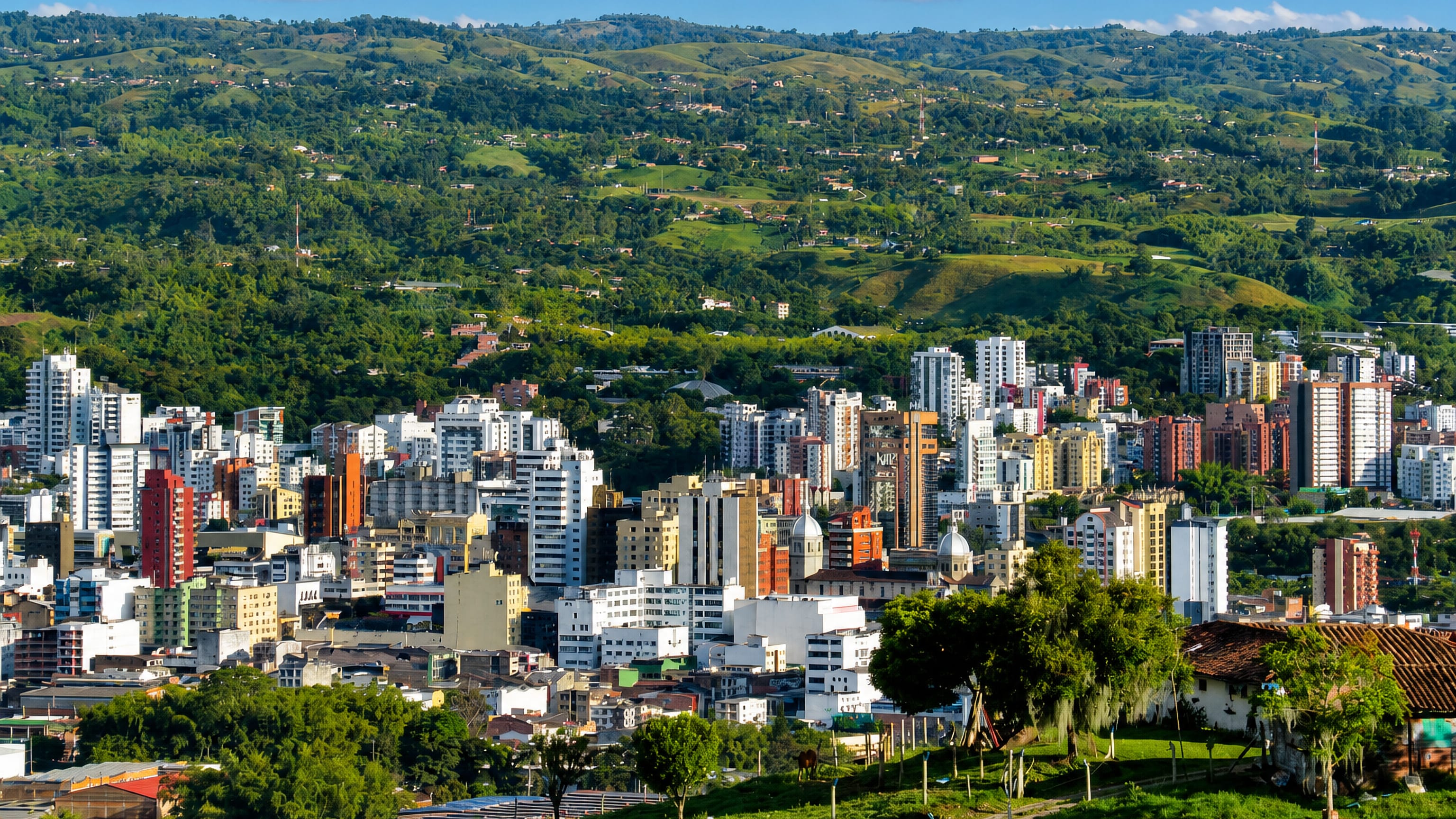
Risaralda is a small Andean department in western Colombia, coffee country pressed between two mountain ranges around its capital, Pereira.
Hotel links are affiliate links: booking through them may earn us a commission, at no extra cost to you. It never affects how places are ranked. How this works


Towns & cities in Departamento de Risaralda
Pick a town or city — each links to where to stay.
 Colombia
Pereira
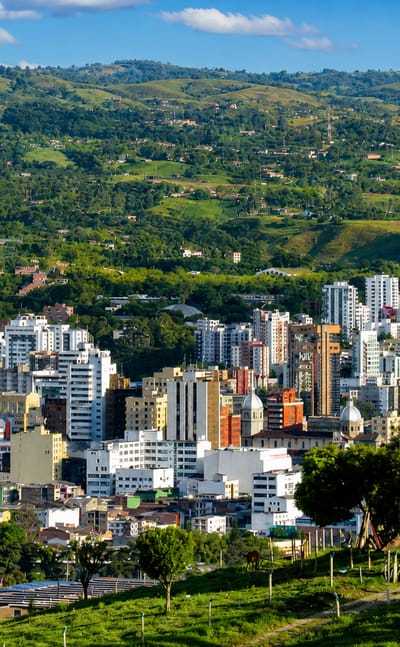
Coffee terraces climb the slopes around Pereira, capital of Colombia's Departamento de Risaralda, in the Otún valley on the Central Cordillera.Where to stay →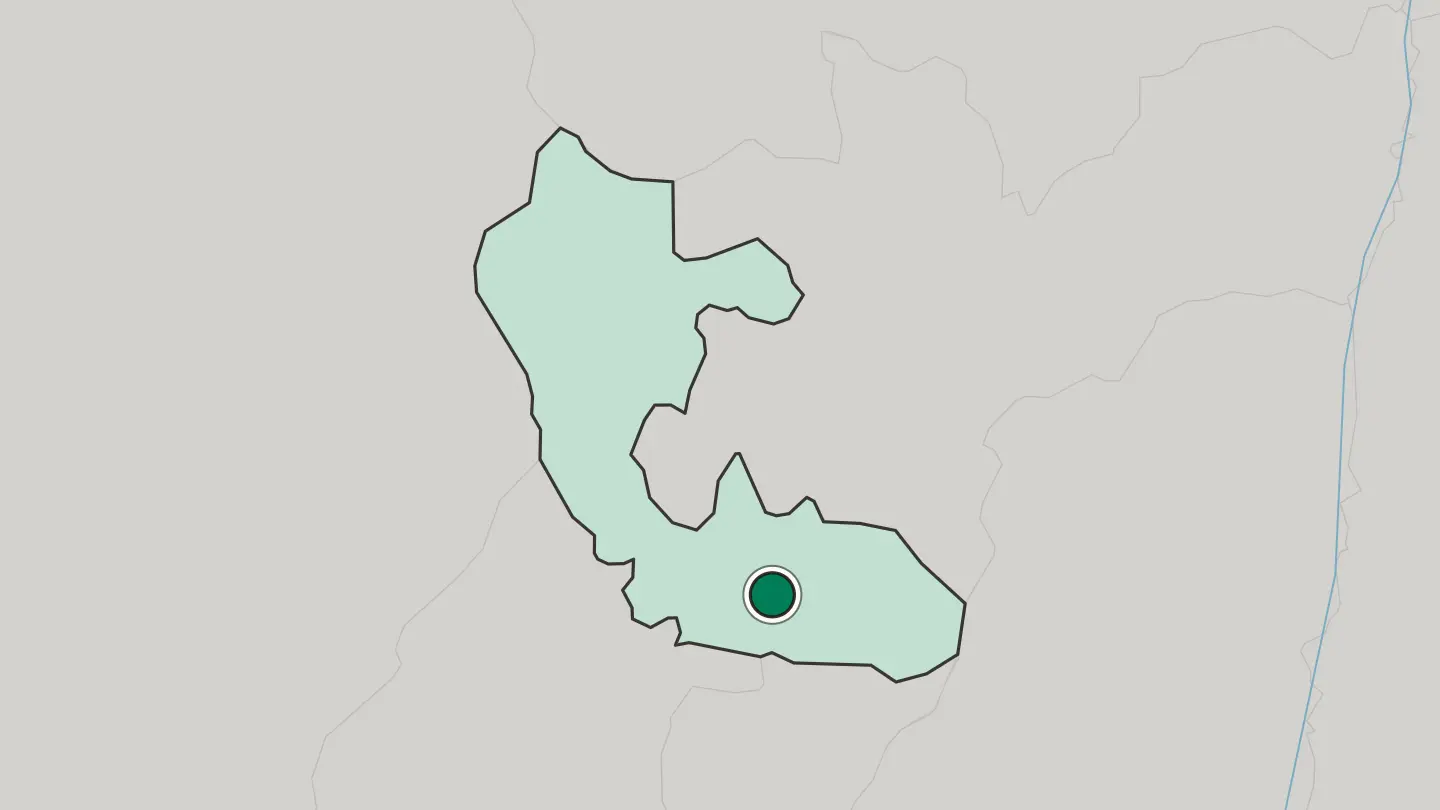
 Colombia
Santa Rosa de Cabal
Santa Rosa de Cabal sits in the Zona Cafetera of Risaralda, on the western slopes of the Cordillera Central, about 14 km from Pereira.Where to stay →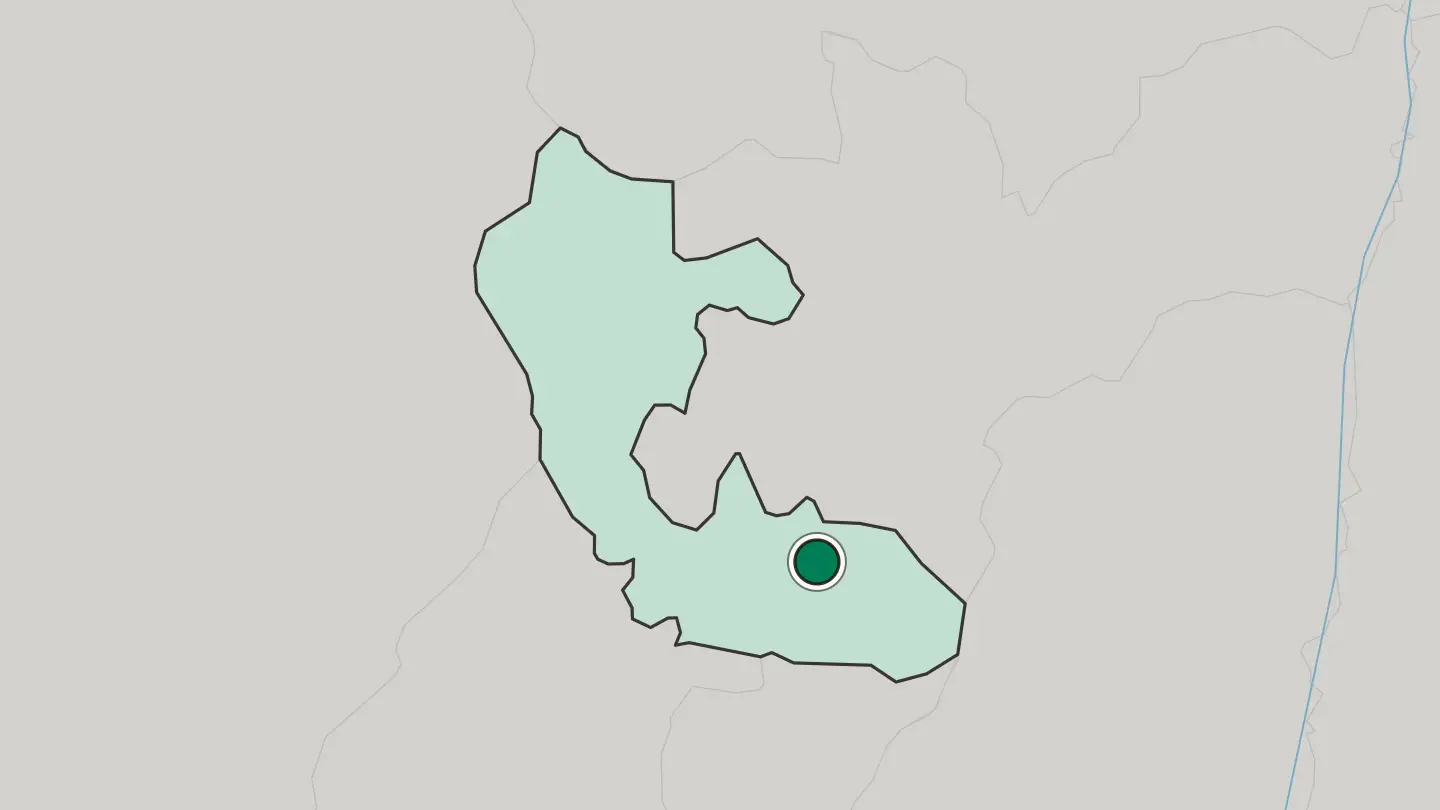
Hotel links are affiliate links: booking through them may earn us a commission, at no extra cost to you. It never affects how places are ranked. How this works
About Departamento de Risaralda
Coffee, above all.
What is Departamento de Risaralda known for?
Risaralda is one of the three departments of the Colombian coffee growing axis, the region UNESCO inscribed in 2011 as a Coffee Cultural Landscape, and its steep green farms climb the slopes on either side of the Cauca River. Pereira anchors it all, a working city on the Otún River that most travellers use as their base. Beyond the plantations lie the thermal springs of Santa Rosa de Cabal and the snow of Los Nevados National Natural Park.
The land does a great deal in a small space.
Where is Departamento de Risaralda?
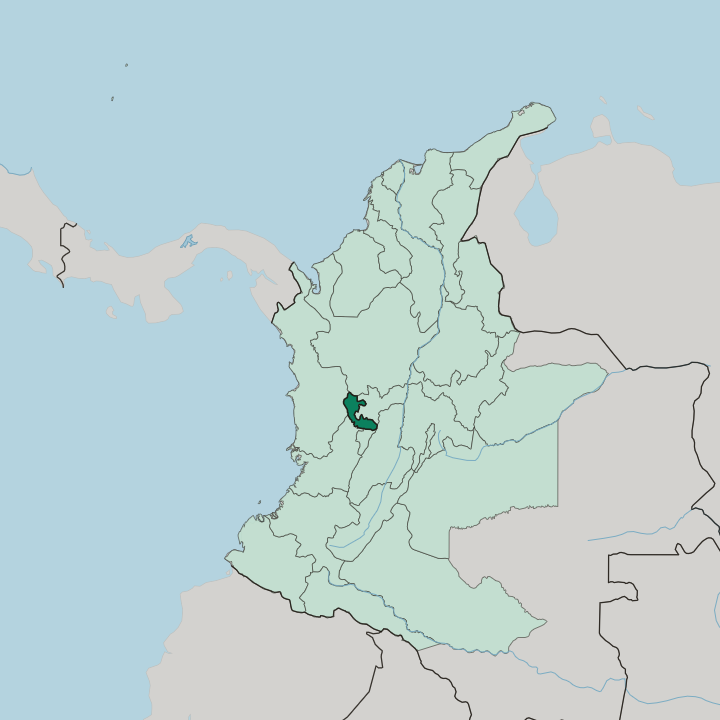
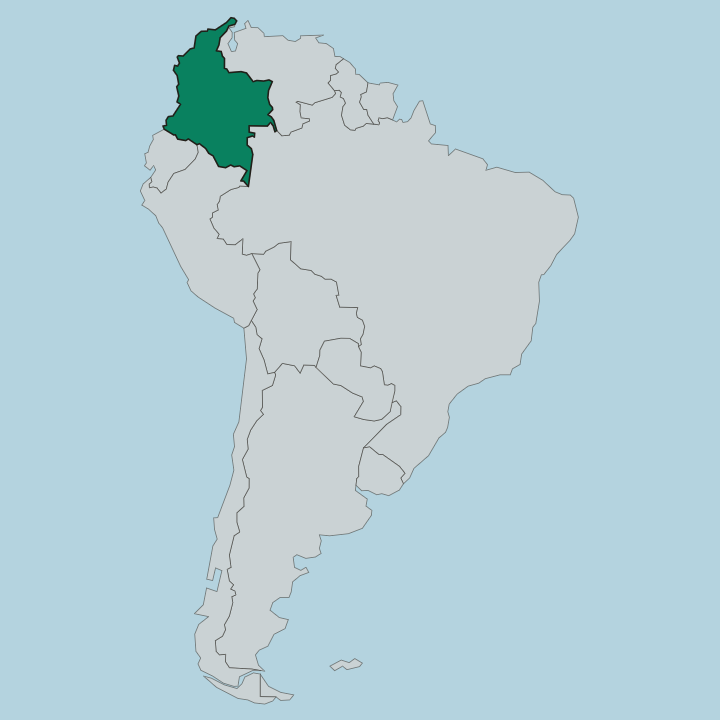
Risaralda lies in western-central Colombia, one of the smaller departments and one of the most vertical. Two branches of the Andes frame it. The Cordillera Central rises to the east, snowcapped at Los Nevados National Natural Park, and the lower Cordillera Occidental walls off the west, crowned by Cerro Tatamá in Tatamá National Natural Park.
Between the two ranges the Cauca River runs north along the floor of its valley, the lowest ground in the department. The Otún River drops off the eastern range from Lake Otún, high in the snowfields, and threads through Pereira before it reaches the Cauca. That fall from snow line to river valley is steep and short. Caldas Department wraps the north-east and Tolima lies over the eastern peaks, while Quindío sits to the south.
To the west and south-west the land drops toward Chocó Department and the Valle del Cauca. Because the ground climbs so fast, a single day can carry you from warm valley farms to cold high páramo without leaving the department.
What is Departamento de Risaralda like?
Life in Risaralda is built around the coffee farm. Spanish is the language, and the culture is paisa, the mountain-farmer world of the old Antioquian colonists who cleared these slopes for coffee in the nineteenth century. That heritage carries the department's share of the Coffee Cultural Landscape, the working farms and hillside towns UNESCO recognised across the Colombian coffee growing axis.
The jeep still matters here. The Willys jeep hauls sacks of beans down from farms too steep for anything larger, and it has become a small emblem of the region. Weekends in Pereira and the towns around it turn on the plaza, the café, and the drive up to the hot springs at Santa Rosa de Cabal.
Food leans to the paisa table of beans, plantain, and grilled meat washed down with coffee grown within sight of the pot. Birds pull a different crowd. The cloud forest of the eastern range, protected around Los Nevados National Natural Park, is some of the finest birding country in Colombia, and quiet reserves near Pereira draw watchers from far away.
Coffee, mountains, and the paisa welcome run through all of it.
What is the history of Departamento de Risaralda?
Risaralda is a young department on old land. The Quimbaya people worked these slopes long before the Spanish came, and their goldwork survives from the valley of the Cauca River. Antioquian settlers pushed south into the hills through the nineteenth century, founding Pereira in 1863 and planting the coffee that still defines the place.
For decades the territory belonged to Caldas Department, governed from Manizales to the north-east. That changed in 1966. Law 70 carved Risaralda out of Caldas on the first of December that year and made Pereira the capital of a department of its own.
What is the climate of Departamento de Risaralda?
Altitude rules here. The valley of the Cauca River stays warm year round, the hillside coffee farms sit in a mild spring-like band, and the páramo above Los Nevados National Natural Park holds cold and snow. Rain comes in two wetter spells each year rather than one long season, heaviest around April and October, and the coffee slopes stay green through both.
Mornings clear over Pereira often cloud by afternoon as damp air lifts off the valley. Season barely matters. You climb into a colder climate simply by driving uphill.
How do you get to Departamento de Risaralda?
Most travellers reach Risaralda through Pereira. The capital's airport handles domestic flights from Bogotá and Medellín along with a few international connections, and it is the usual way in. By road the department sits on the main highway down the Cauca River valley, a few hours from Medellín to the north and from Cali to the south.
Buses climb in over the passes of the Cordillera Central from Bogotá. Once you have landed, short runs link Pereira with the hot springs at Santa Rosa de Cabal and the forest reserves toward Los Nevados National Natural Park.
Common questions
What is the best area to stay in Departamento de Risaralda?
Pereira: a first base in the coffee axis. Santa Rosa de Cabal: the thermal springs. Dosquebradas: cheaper beds beside Pereira.
Good for
More regions in Colombia
- Distrito Capital de Bogotá
- Departamento de Antioquia
- Departamento del Valle del Cauca
- Departamento de Cundinamarca
- Departamento del Atlántico
- Departamento de Santander
- Departamento de Bolívar
- Departamento de Córdoba
- Departamento de Nariño
- Departamento de Norte de Santander
- Departamento del Cauca
- Departamento del Magdalena
Updated October 2026