Algeria
El Tarf, Algeria — Towns & Travel Guide
El Tarf is Algeria's far north-east, a coastal province of lagoons, cork oak forest and the wetland lakes of El Kala National Park.
Hotel links are affiliate links: booking through them may earn us a commission, at no extra cost to you. It never affects how places are ranked. How this works


Towns & cities in El Tarf
How the towns here differ, and where visitors usually base themselves.
Most trips base at El Kala, the coastal town beside the national park and the Mellah lagoon. Boats leave from its old harbour. The provincial capital, El Tarf, sits inland among the cork oak hills, a working administrative town rather than a resort.
If you want a full choice of hotels and the nearest airport, you stay just west in Annaba, in its own province, and drive in for the day. El Kala remains the one place inside the province built for visitors.
About El Tarf
El Kala National Park defines the province.
What is El Tarf known for?
Its wetlands are the reason people come. Three lakes sit close together behind the dunes: Lake Tonga, the freshwater Lake Oubeira, and the salt lagoon of Mellah, which drains to the Mediterranean through a single narrow channel. Cork oak forest climbs the hills behind them, sheltering the Barbary stag, the only wild red deer left in North Africa.
Migrating waterbirds crowd the reedbeds each winter. The old coral-fishing port of El Kala anchors the coast.
Where is El Tarf?
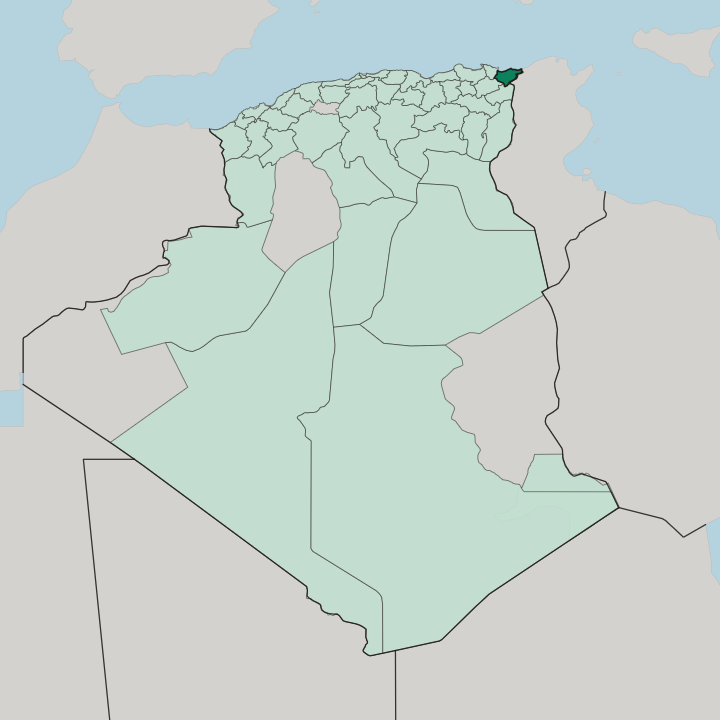
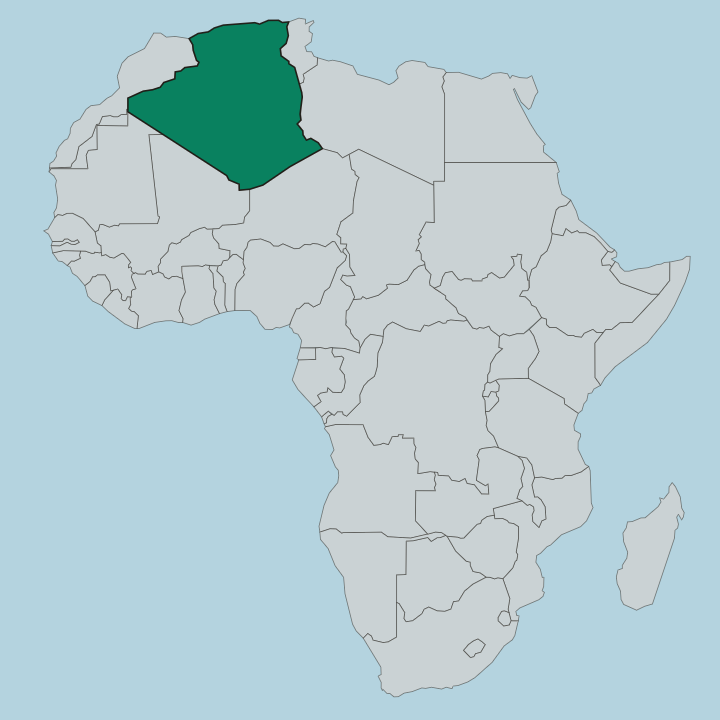
El Tarf occupies the far north-eastern corner of Algeria, the last province before the Tunisian frontier. The Mediterranean forms its whole northern edge, a low coast of dunes, beaches and shallow lagoons. To the east the land runs up to the border with Tunisia, only a short drive beyond El Kala.
Annaba and its port lie just to the west, in the neighbouring province. Inland, to the south, the plain gives way to the wooded hills of Souk Ahras and Guelma. It is a small province by Algerian standards.
Yet nearly all of its rivers and lakes drain north into the same warm sea. The coast is what sets it apart. A belt of freshwater and brackish lakes sits behind the dunes, the largest of them Lake Tonga and Lake Oubeira, ringed by reedbeds that fill with waterbirds through the winter.
The salt lagoon of Mellah opens to the Mediterranean through one narrow channel, the only lagoon in Algeria that does. Behind the water, cork oak forest covers the hills, climbing inland toward djebel El-Ghorra, the high point of El Kala National Park. Sandbars, marsh and old cork woodland run together the length of the shore.
Few Algerian coasts stay this green.
What is El Tarf like?
Life here faces the sea. El Kala grew up around coral, the deep-red coral of the Mediterranean floor that Corsican and French crews fished from the sixteenth century onward. Sardine boats and small trawlers still work the harbour.
Inland, the cork oak forests are stripped for their bark every few years, cut into the pale cork that has been one of the province's exports for generations. This is farming and fishing country, green and wet, closer in feel to a Mediterranean hillside than to the Algeria of the south. The desert is a long way off.
The everyday language is Algerian Arabic, as across most of the north-east. Annaba, the big city next door, sets the cultural tone, and many families keep one foot in the province and one in its markets and mosques. The wetlands pull a different crowd.
Ornithologists and hunters have come to Lake Tonga and Lake Oubeira for well over a century, drawn by the ducks, coots and flamingos that winter on the water. El Kala National Park has since put a fence of protection around what the hunters once chased. Fish, cork and birds run through the whole story.
What is the history of El Tarf?
The province is young; its coast is old. Corsican merchants built the Bastion de France on this shore in 1561 to work the red coral beds, and the trade later shifted to the port they called La Calle, the present El Kala. A French company held the coral concession until war closed it in 1798, and French troops seized La Calle outright in 1836 as they pushed east toward Tunisia.
The wilaya of El Tarf itself was drawn up only in 1984, split from the provinces of Annaba and Guelma. Coral came first; the borders came last.
What is the climate of El Tarf?
El Tarf has a Mediterranean climate, and it catches more rain than almost anywhere else in Algeria. Winters are mild and wet, when Atlantic and Mediterranean fronts pile up against the coastal hills and fill Lake Tonga and Lake Oubeira. Come summer, the El Tarf coast bakes hot and dry.
The cork oak forest and the reed-fringed lakes owe their green to that winter rain, not to any river out of the interior. Rain, not drought, shapes this coast.
How do you get to El Tarf?
El Tarf lacks any runway within the province. The nearest runway is Rabah Bitat Airport at Annaba, a short drive west, linking the province to Algiers and on to European cities. Annaba does the flying.
From the city, the coast road and the old railway run east through the plain to El Kala and the wetland lakes, the last towns before the Tunisian frontier. A frontier post beyond El Kala crosses into Tunisia toward Tabarka. Most people arrive overland from Annaba.
Common questions
What is the best area to stay in El Tarf?
El Kala: the national park and the coast. El Tarf: the provincial capital inland. Annaba: flying in and city hotels.
Good for
More regions in Algeria
Updated September 2026