Algeria
Wilaya de Guelma, Algeria — Towns & Travel Guide
Wilaya de Guelma is an inland province of north-eastern Algeria, built around Roman Calama and the boiling springs of Hammam Debagh.
Hotel links are affiliate links: booking through them may earn us a commission, at no extra cost to you. It never affects how places are ranked. How this works


Towns & cities in Wilaya de Guelma
One town here has its own guide — it links to where to stay.
 Algeria
Guelma
Guelma is the capital of Guelma Province in Algeria, an inland town on the site of the Roman city of Calama.Where to stay →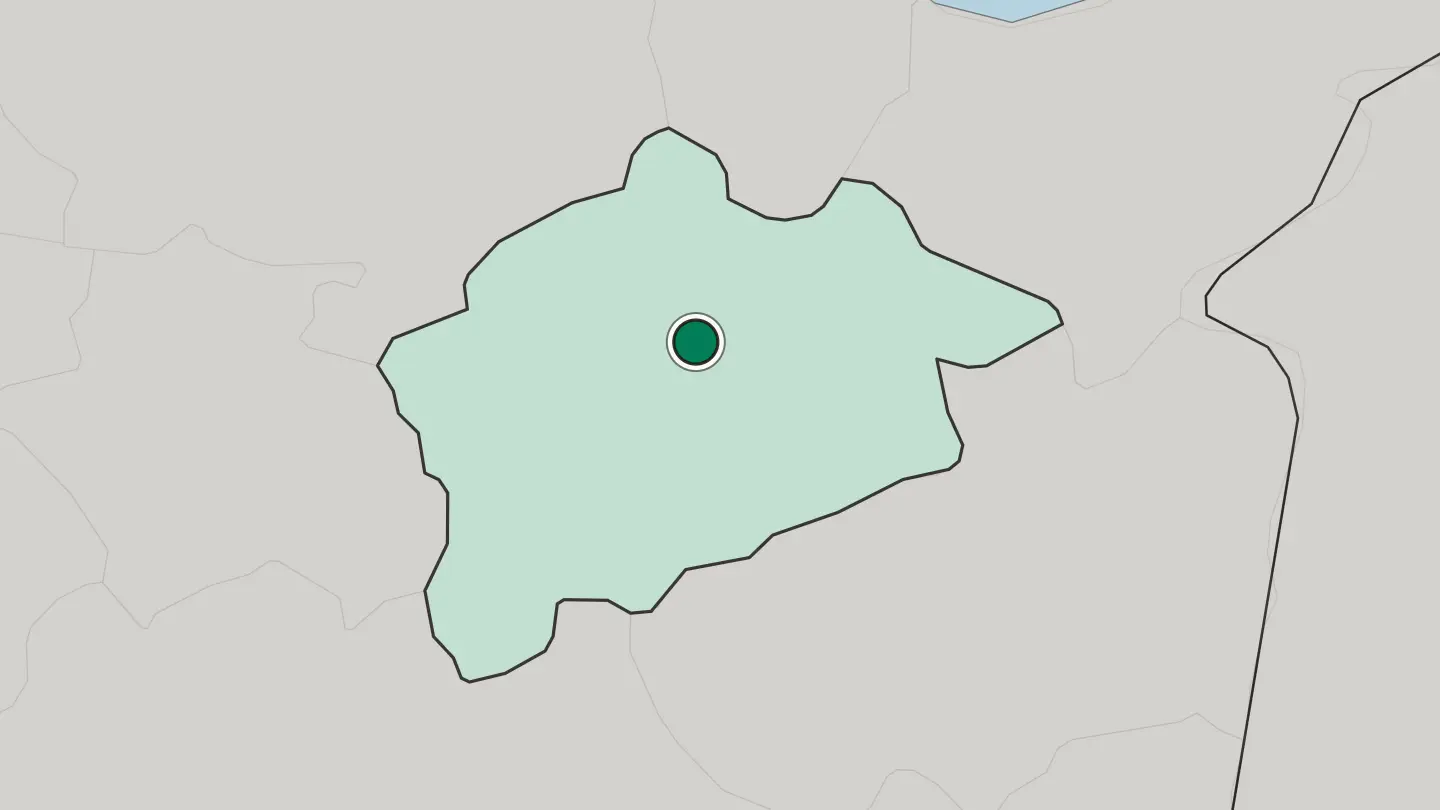
Hotel links are affiliate links: booking through them may earn us a commission, at no extra cost to you. It never affects how places are ranked. How this works
About Wilaya de Guelma
What is Wilaya de Guelma known for?
Two things put Guelma on the map: deep Roman history and hot water. The provincial capital, Guelma, stands on the ruins of Calama, whose restored Roman theatre still seats an audience of stone tiers above the Seybouse valley. West of the city, the travertine terraces of Hammam Debagh spill scalding mineral water down petrified white cascades, among the hottest springs on Earth.
Between them runs farmland. The Seybouse and its tributaries water one of eastern Algeria's most fertile inland plains, planted with cereals, olives, and tobacco.
Where is Wilaya de Guelma?
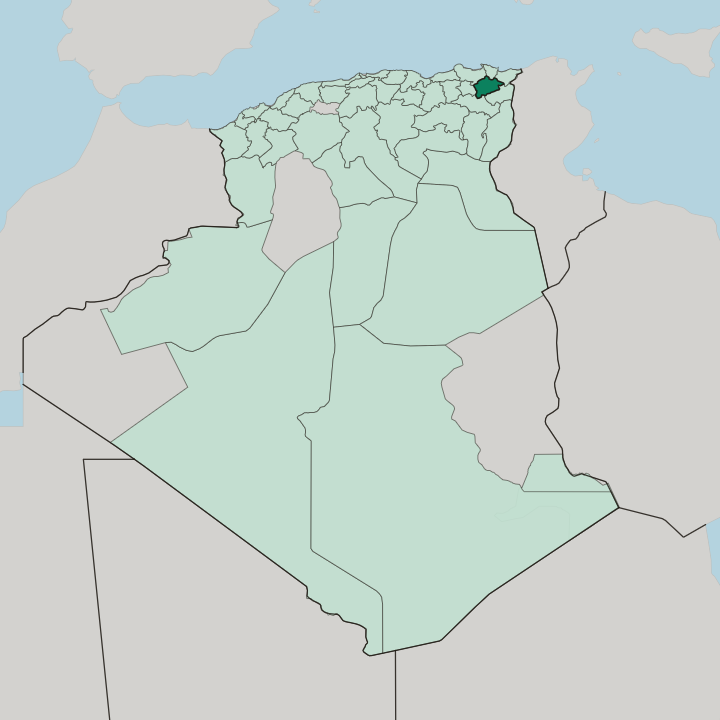
Wilaya de Guelma lies inland in north-eastern Algeria, in the folded hills of the Tell Atlas, well back from the Mediterranean coast. It is one of the country's smaller provinces. Six wilayas ring it: Annaba, Skikda, and El Tarf along the north, Constantine to the west, Souk Ahras to the east, and Oum El Bouaghi to the south.
No stretch of its border touches the sea. The coast, and the port of Annaba, lie a short drive north through the Seybouse gap. The land is mountain and valley.
Wooded ridges of Aleppo pine, cork oak, and Algerian oak rise around a fertile central plain, with the mass of Djebel Maouna standing over the capital. Through that plain runs the Seybouse, formed near Medjez Amar where the Bouhamdane and Cherf wadis meet, then carrying the province's water north-east toward Annaba and the sea. A dam on the Oued Bouhamdane backs up a reservoir above Hammam Debagh.
Cereal fields, olive groves, and tobacco cover the bottomland, while the higher slopes stay forest and rough pasture. It is fertile ground, and it has been farmed since Roman Calama shipped grain to Rome.
What is Wilaya de Guelma like?
Guelma is provincial eastern Algeria at its most rooted: a farming country of market towns, olive presses, and Friday mosques, where daily life turns on the land and the seasons. Arabic is the everyday language. In the hills toward the Aurès, Shawiya Berber is still spoken, and the province leans culturally toward that Chaoui highland world as much as toward the coast.
The past is not buried here. Roman columns and mosaics from Calama fill the town's archaeological museum, and the curative springs of Hammam Meskhoutine have drawn bathers since antiquity. Names carry the harder memory too.
The city's university is called 8 Mai 1945, after the day in 1945 when the French army killed thousands of Algerians across Guelma and the surrounding country. That wound sits at the centre of how the province remembers itself. Alongside it runs an easier culture of thermal cures, mountain picnics on the slopes of Djebel Maouna, and the slow social life of a small inland capital.
Food is eastern Algerian: semolina breads, chorba soup, dates, and the olive oil pressed from the valley groves. It is unhurried, agrarian, and proud of its ruins.
What is the history of Wilaya de Guelma?
The provincial capital began as Calama, a town of Numidia that Rome rebuilt into a walled colonia with a theatre, forum, and baths, and a granary that helped feed the empire. Saint Augustine's friend Possidius was its bishop. Vandals, then Byzantines under Justinian's general Solomon, held the site before it fell away after the Arab conquest.
It lay largely empty for centuries. The French refounded Guelma in 1836, quarrying the Roman ruins for their new town, and here in 1945 colonial forces answered nationalist protest with mass killings that hardened the drive to independence.
What is the climate of Wilaya de Guelma?
Guelma has a hot-summer Mediterranean climate, softened inland by the Tell Atlas hills. Summers are long, dry, and hot, the valley baking under clear skies from June into September. The Guelma winter turns gentle and rain-soaked.
Most of the rain falls between autumn and spring, feeding the Seybouse and greening the plain, with snow dusting the higher ridges of Djebel Maouna in cold spells. The contrast is sharp: parched gold in August, damp green by March.
How do you get to Wilaya de Guelma?
Guelma has no airport of its own. The nearest is Rabah Bitat Airport at Annaba, on the coast to the north, and from there most arrivals drive inland up the Seybouse valley in about an hour. Everything moves by road.
A national highway ties the town west to Constantine and east to Souk Ahras, and shared taxis and inter-city buses work these routes through the day. The approach from Annaba is a steady climb into the Tell Atlas hills.
Common questions
What is the best area to stay in Wilaya de Guelma?
Guelma: Roman ruins, the museum, and everyday city life in the wilaya. Hammam Debagh: thermal cures and the petrified travertine waterfalls. Annaba: the Mediterranean coast and the nearest flights.
Good for
More regions in Algeria
Updated September 2026