
Spain
Melilla, Spain — Towns & Travel Guide
Melilla is a Spanish city on the North African coast, wrapped by Morocco and facing the Alboran Sea.
Hotel links are affiliate links: booking through them may earn us a commission, at no extra cost to you. It never affects how places are ranked. How this works


Towns & cities in Melilla
One town here has its own guide — it links to where to stay.

 Spain
Spain
Melilla
Melilla is an autonomous city of Spain on the African shore of the Mediterranean Sea, a walled port bordering Morocco, ringed by old forts.Where to stay →
Hotel links are affiliate links: booking through them may earn us a commission, at no extra cost to you. It never affects how places are ranked. How this works
About Melilla
What is Melilla known for?
Melilla is one of two Spanish cities on the African mainland, a small enclave of Spain set into the coast of Morocco. It calls itself the City of Four Cultures, home to Christians, Muslims, Jews and Hindus who have long shared its streets. The other draw is architecture.
After Barcelona, no Spanish city holds more modernista buildings, most of them the work of Enrique Nieto. Above the port stands Melilla la Vieja, the old walled fortress that guarded the enclave for centuries.
Where is Melilla?
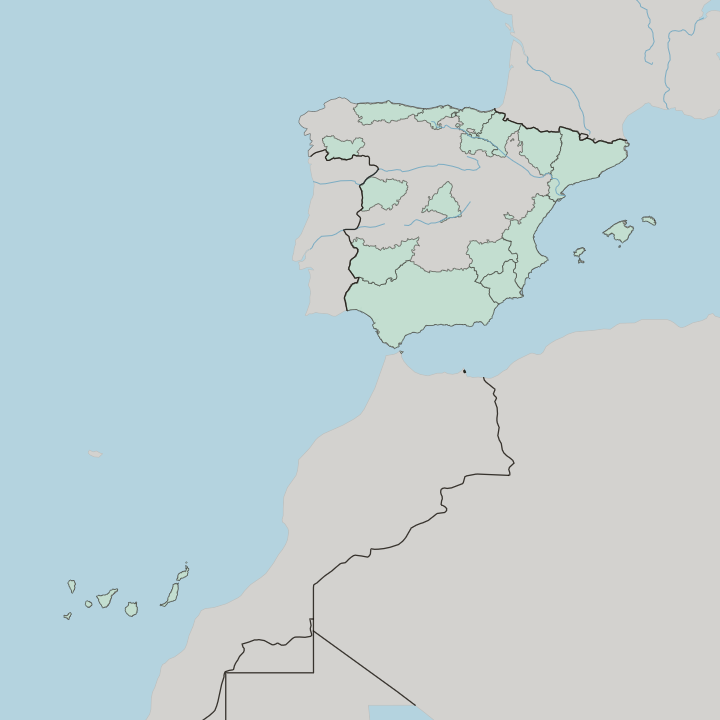
Melilla sits on the eastern side of Cape Three Forks, a rocky peninsula that pushes north into the Alboran Sea from the coast of Morocco. That sea is the westernmost reach of the Mediterranean, the water that separates the enclave from mainland Spain across the strait. The land side tells a different story.
Morocco surrounds Melilla on every side but the sea, and the mountains of the Rif rise inland behind the city. Mount Gurugú looms over the enclave from the south-west, a peak that has watched over the port for as long as ships have called there. The territory itself is tiny.
Barely twelve square kilometres hold the whole city, its beaches and its fortress. A fenced perimeter marks the frontier with Morocco, running from the shore around the built-up ground and back to the water. Melilla la Vieja stands on high ground above the harbour, the old fort commanding the approach by sea.
The new town spreads inland from the port on flatter ground, laid out block by block. Nowhere in the enclave lies far from the coast. The Alboran Sea is always close, and the mountains of the Rif are never out of view.
What is Melilla like?
Four cultures define Melilla. The city counts Christian, Muslim, Jewish and Hindu communities among its people, and it wears that mix openly, from the churches and mosque to the synagogue and the Hindu temple standing within the same small enclave. Spanish is the official language, spoken across the city and its institutions.
Alongside it runs Tarifit, the Amazigh tongue of the Rif, heard in homes and streets among the families whose roots lie in the mountains behind the coast. The built city is the other half of its character. Enrique Nieto arrived from Barcelona, a pupil of Antoni Gaudí, and stayed to fill Melilla with modernista facades.
His curved balconies and floral stonework crowd the streets around Plaza de España, in the district the city calls its Golden Triangle. The Palacio de la Asamblea, the city hall, is among his grandest work. Cuisine follows the same crossing of worlds.
Andalusian dishes sit beside Riffian and North African cooking, and the markets carry both. Festivals move through the calendar for each community in turn. Little of this feels staged.
It is simply how a Spanish city on the edge of Africa has learned to live.
What is the history of Melilla?
Melilla began as Rusaddir, a Phoenician trading post, later held by Carthage and then Rome as part of the province of Mauretania Tingitana. Its Spanish chapter opened in 1497. Troops of the Duke of Medina Sidonia under Pedro de Estopiñán took the abandoned town almost without a fight, and it has stayed Spanish ever since.
Melilla weathered centuries of siege from the mainland yet never changed hands. When Morocco won independence in 1956, Spain kept the enclave, and in 1995 it became an autonomous city with its own statute of self-government.
What is the climate of Melilla?
Melilla holds a hot Mediterranean climate edging toward semi-arid, but the sea on three sides softens every extreme it might otherwise share with the African interior. Summers stay cooler and a little wetter than the dry land beyond the Rif. Winters are mild.
Most of the rain falls in the cooler months rather than in the heat of summer, leaving spring and autumn warm, dry and easy for walking the old town. Sun is the rule.
How do you get to Melilla?
Most travellers reach Melilla from mainland Spain by sea or air. Ferries cross the Alboran Sea to Málaga and other Andalusian ports such as Almería and Motril, and the small airport links the enclave with cities on the peninsula. The land route is short but different.
A single frontier crossing at Beni Enzar joins Melilla to Nador on the Moroccan side, reached by local bus or taxi. From the port and the airport, the modernista centre and the old fortress are only minutes away.
Common questions
What is the best area to stay in Melilla?
Plaza de España and the modernista centre: Melilla's modernista core. Melilla la Vieja: the old walled town. Playa de San Lorenzo: a stay by the sand.
Good for
More regions in Spain
Updated September 2026