Spain
Navarra, Spain — Towns & Travel Guide
Navarra is a chartered region of northern Spain, running from the Pyrenees down to the Ebro, with Pamplona at its heart.
Hotel links are affiliate links: booking through them may earn us a commission, at no extra cost to you. It never affects how places are ranked. How this works


Towns & cities in Navarra
One town here has its own guide — it links to where to stay.
 Spain
Spain
Pamplona
Bastioned walls drop to the Arga at Pamplona, capital of Navarra, known for the encierro through Calle Estafeta and its Gothic cathedral.Where to stay →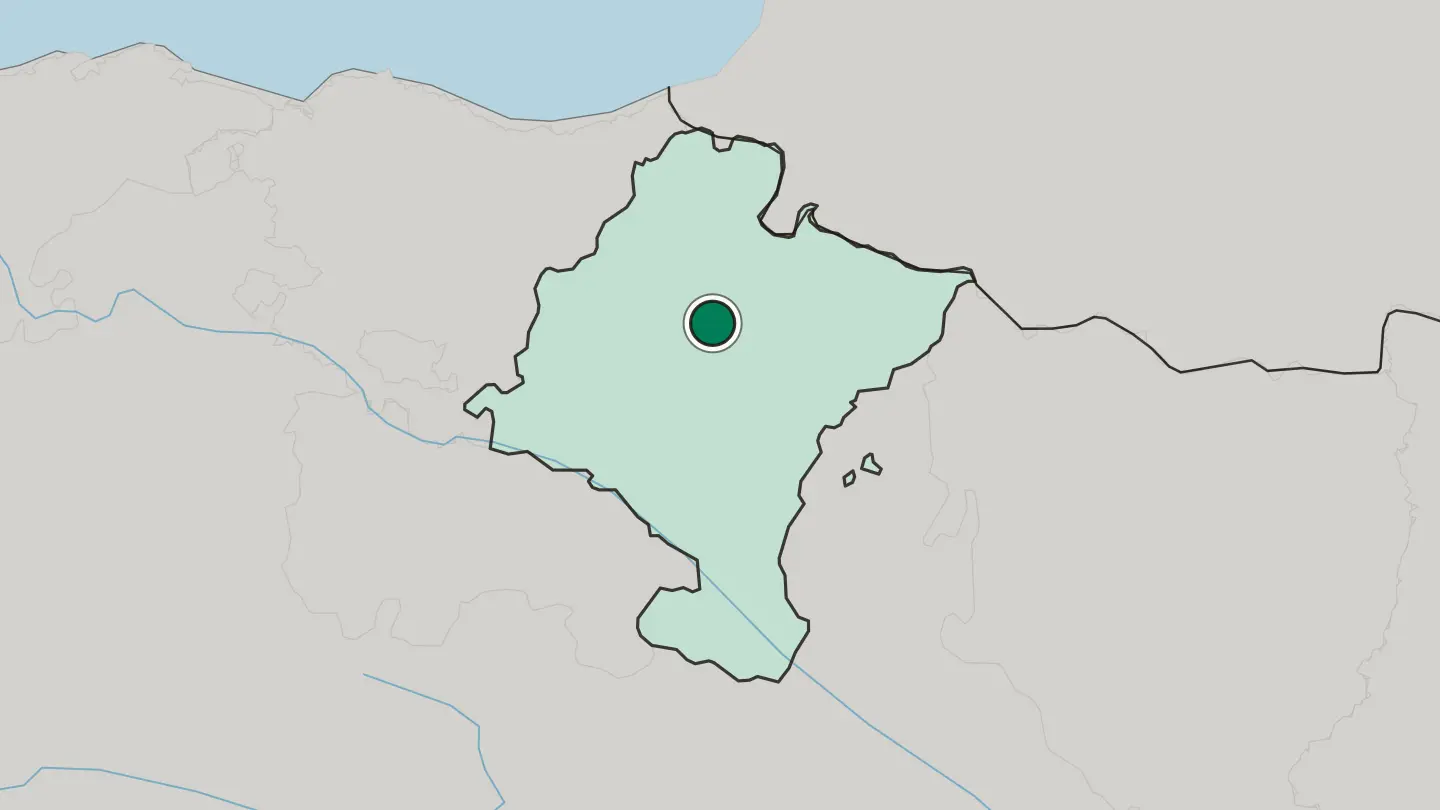
Hotel links are affiliate links: booking through them may earn us a commission, at no extra cost to you. It never affects how places are ranked. How this works
About Navarra
What is Navarra known for?
Two things carry Navarra's name abroad. One is San Fermín, the July festival in Pamplona whose morning bull-run down the old-town streets draws crowds from across the world. The other is the land itself, which changes utterly from north to south: green Pyrenean valleys give way to the wheat and vineyards of the Ebro basin, and then to the dry, wind-carved badlands of the Bardenas Reales.
Wine country fills the middle, and the old pilgrim road to Santiago crosses the whole region on its way west.
Where is Navarra?
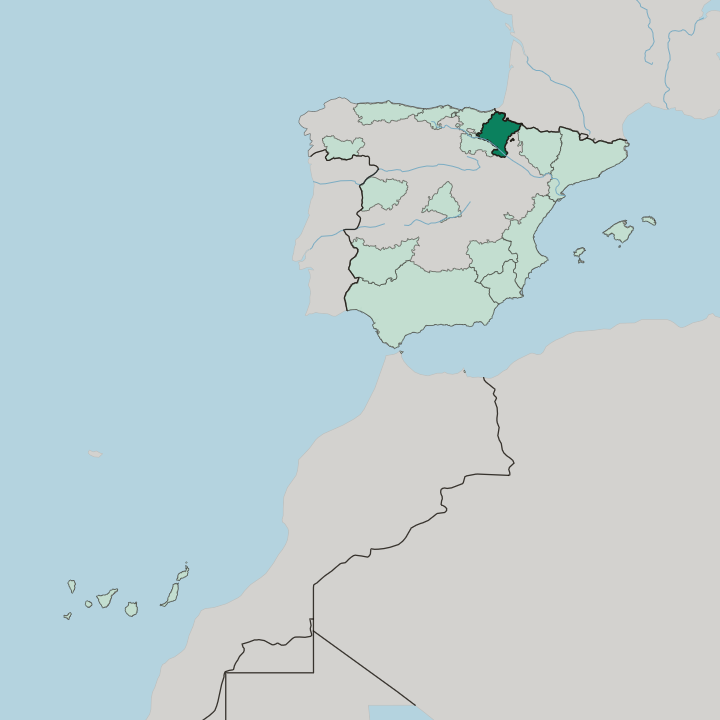
Navarra fills a wedge of northern Spain between the Pyrenees and the Ebro. France lies along its northern edge, over the high passes of the western Pyrenees where the peak of Mesa de los Tres Reyes marks the frontier. The Basque Country borders it to the west, Aragon wraps around the east and south, and La Rioja meets it at the south-western corner across the Ebro. The land tilts as it runs south.
High country holds the north. Wooded Pyrenean valleys fall toward a belt of basins and hills through the middle of the region, and then the ground flattens and dries into the Ebro plain along the southern rim. Pamplona sits in that middle belt, north of centre, where the Arga loops through the city on its way down to join the Ebro's tributaries.
The river system knits the region together: the Arga, the Ega, and the Aragón all gather the mountain water and carry it south into the Ebro. Southeast of Tudela the plain breaks into the Bardenas Reales, a semi-desert of clay and sandstone eroded into ravines and flat-topped buttes. Nowhere else in Navarra looks like it.
That single fall of the land, mountain to river to badland, is the whole geography in miniature.
What is Navarra like?
Navarra is split down the middle by language. In the northern valleys, close to the French border, Basque is the mother tongue, and the region wears its Basque name Nafarroa alongside the Spanish one. South of Pamplona, Castilian Spanish takes over, and by the time you reach the Ebro plain it is the only tongue you hear.
That divide is old. It runs through the place-names, the music, the food, and the festivals of every valley. The region keeps its own charter, the fuero, a body of self-government it has defended for centuries and that still sets it apart within Spain.
San Fermín is the festival the world knows. For nine days each July the whole of Pamplona turns out in red and white for the running of the bulls, but the calendar is thick with smaller village fiestas the rest of the year. Table and cellar matter as much as any monument here.
The Ebro market gardens around Tudela send up asparagus, artichokes, and piquillo peppers, and the vineyards of the central valleys pour a wine tradition all Navarra's own. The old pilgrim road threads it all together. Walkers on the Camino de Santiago have crossed these valleys for a thousand years, and the towns along it still keep the churches, bridges, and hostels the route was built on.
What is the history of Navarra?
Navarra began as a kingdom. In the ninth century a Basque chieftain, Iñigo Arista, was raised up as King of Pamplona, and the realm that grew from that seat came to be called Navarre. It peaked under Sancho III in the eleventh century, when its writ reached across most of Christian Spain south of the Pyrenees.
Castile absorbed the southern part in 1512, but the old kingdom kept its own laws and charter even inside the larger Spain. That long autonomy ended only in stages. The Act of 1841 turned the former kingdom into a province while leaving it a measure of the self-rule it holds to this day.
What is the climate of Navarra?
Navarra holds three climates at once. The northern Pyrenean valleys are Atlantic, cool and green and wet, watered by cloud coming off the Bay of Biscay. Down on the Ebro plain around Tudela the weather turns Mediterranean and near semi-arid, hot and dry in summer with the Bardenas Reales baking under the sun.
In between, the central basins run to a continental rhythm of cold winters and warm summers. This is why the vineyards vary so. Where the region sits, at the meeting of ocean, mountain, and dry south, gives each valley its own weather and its own harvest.
How do you get to Navarra?
Most travellers reach Navarra through Pamplona. The city has its own small airport, but the busier gateways are the airports of Bilbao and the Basque Country to the west and Zaragoza in Aragon to the south, each a couple of hours by road. Rail and motorway run down the Ebro corridor and up to the capital.
Walkers arrive on foot. The Camino de Santiago drops over the Pyrenees from France at Roncesvalles and threads west through Pamplona and Puente la Reina, the same way pilgrims have entered the region for a thousand years.
Common questions
What is the best area to stay in Navarra?
Pamplona: a natural first base in the heart of Navarre. Tudela and the Ebro valley: the southern Ebro plain and the badlands. Olite and the wine country: vineyards and a medieval palace. The Pyrenean valleys: mountains and Basque villages.
Good for
More regions in Spain
Updated September 2026