France
Corse, France — Towns & Travel Guide
Corse is a mountainous French island in the Mediterranean, north of Sardinia, its granite peaks rising straight from the sea.
Hotel links are affiliate links: booking through them may earn us a commission, at no extra cost to you. It never affects how places are ranked. How this works


Towns & cities in Corse
One town here has its own guide — it links to where to stay.
 France
Ajaccio
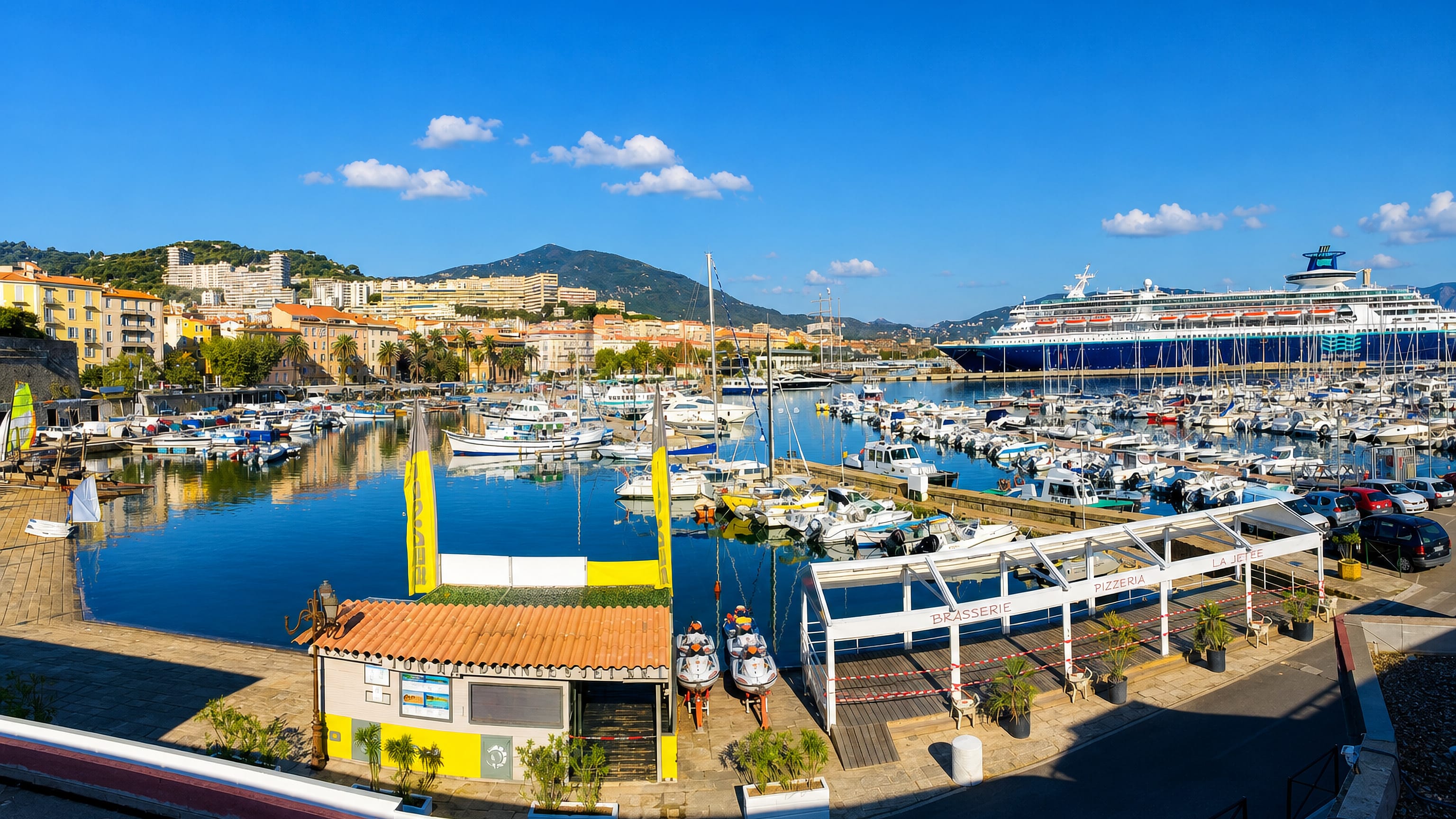
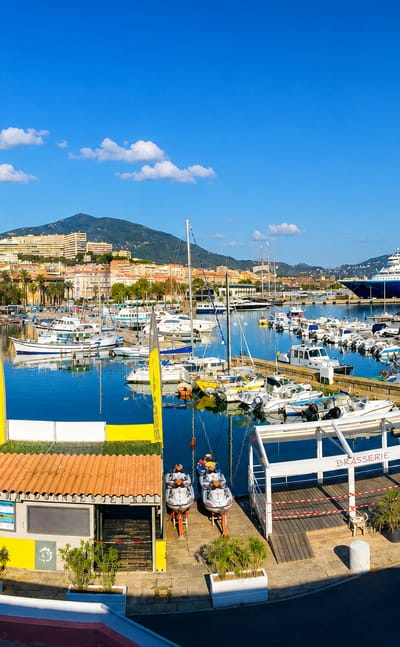
Pale facades face the bay at Ajaccio, a port city on the coast of Corse and the birthplace town of Napoleon at the Maison Bonaparte.Where to stay →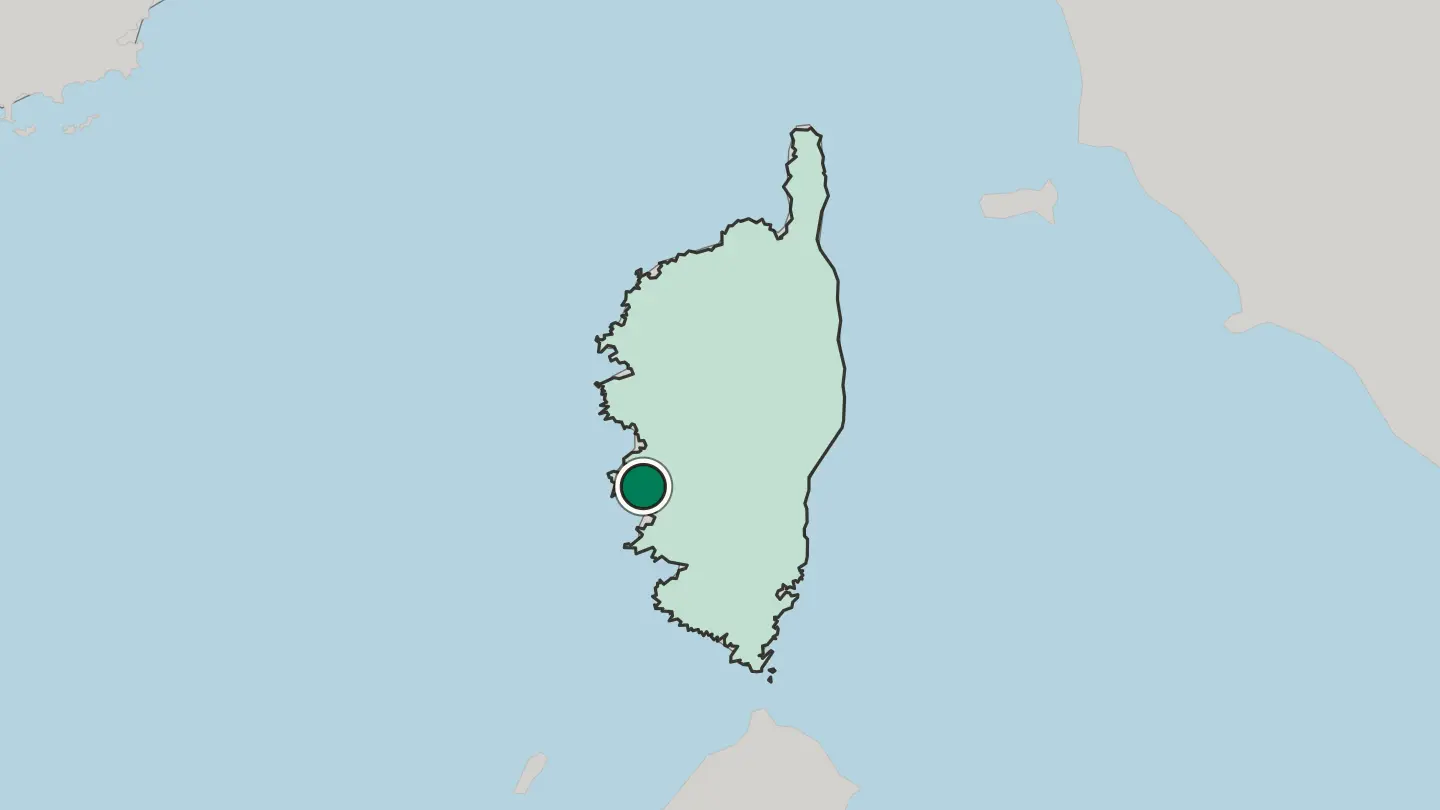
Hotel links are affiliate links: booking through them may earn us a commission, at no extra cost to you. It never affects how places are ranked. How this works
About Corse
Corse is the most mountainous island in the Mediterranean.
What is Corse known for?
Travellers call it a mountain in the sea. A single granite chain runs the length of it, crowned by Monte Cinto and ringed by roughly a thousand kilometres of indented coastline where beaches sit below cliffs. Ajaccio, the birthplace of Napoleon, is its capital, while the walled citadel town of Corte holds the island's old heart inland.
The scented maquis scrub covers the slopes between.
Where is Corse?
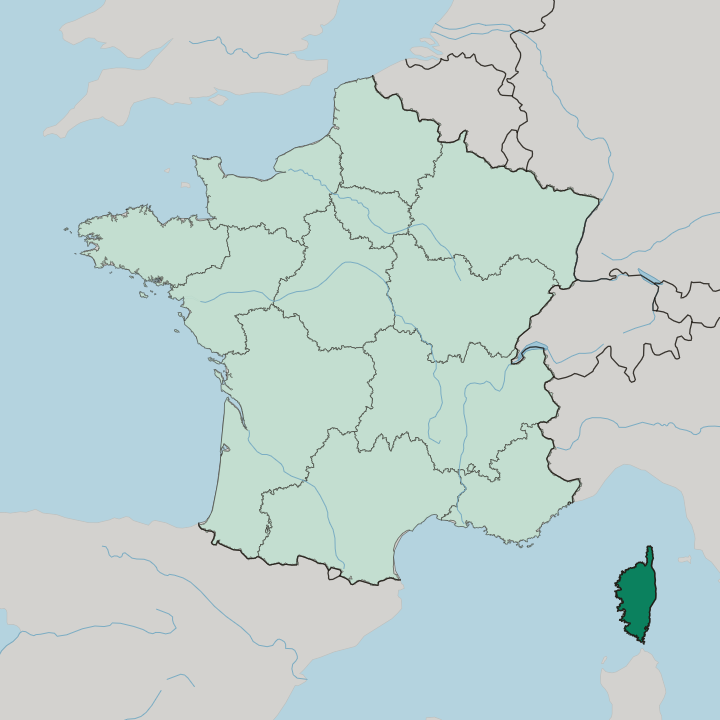
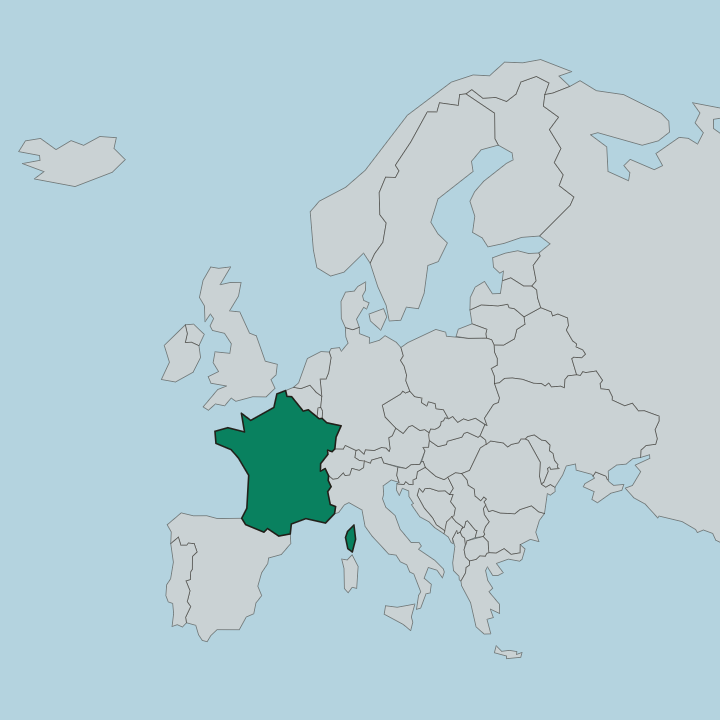
Corse lies in the western Mediterranean, off the south-eastern coast of the French mainland and west of the Italian peninsula. Sardinia sits just across a narrow strait to the south. It is the fourth-largest island in the Mediterranean, after Sicily, Sardinia and Cyprus, and by some way the most mountainous of them all.
A single chain of granite runs the length of the island. That chain fills about two-thirds of the land, and Monte Cinto, its highest summit, rises above every other peak on the island. Around it stand scores of summits over two thousand metres, snow-capped well into the warm months.
The rock tells the island's age. Its granite backbone on the western side was raised first, and later the softer schists of the east were pressed against it, splitting Corse into two contrasting flanks. Deep gulfs and red cliffs break the west at places like Ajaccio and the Calanques of Piana.
The eastern shore runs flatter, a long coastal plain behind its beaches. More than two hundred beaches line the roughly thousand kilometres of coast. No point inland lies far from the sea, yet the interior can feel a world apart.
The mountains have kept the heart of Corse hard to reach, and that has shaped its history as much as any invader ever did.
What is Corse like?
Corse guards a strong identity of its own, distinct from the French mainland. The Corsican language carries much of it. A Romance tongue close to Tuscan Italian, it survives in daily speech, in road signs, and above all in song.
Polyphonic singing is the island's deepest tradition. Unaccompanied male voices weave three overlapping lines, a sound that had almost died out before a revival brought it back from the villages in the 1970s. It sits at the centre of how Corse sees itself.
The land shapes the culture as much as language does. Chestnut flour from the inland groves, cured charcuterie from mountain pigs, sheep and goat cheeses, and honey drawn from the flowering maquis all belong to the island table. That maquis, the dense aromatic scrub that clothes the hills, gives Corse its old name of the Scented Isle, its smell carried out to sea.
Napoleon, born in Ajaccio, remains the island's most famous son. Pride here runs to the mountains and the sea, and to a history of standing apart.
What is the history of Corse?
For centuries Corse belonged to the Republic of Genoa, whose citadels still guard Bastia and Calvi. Revolt against Genoese rule gave rise in 1755 to the Corsican Republic under Pasquale Paoli, whose short-lived state adopted one of the earliest written constitutions in the world and made Corte its capital. Independence did not last.
Genoa sold the island to France in 1768, and a French army defeated the nationalists the following year. Napoleon was born in Ajaccio that same year, 1769. Corse has been French ever since, an island that has never quite stopped standing apart.
What is the climate of Corse?
Corse has a Mediterranean climate that shifts sharply with height. The coast runs hot and dry through the long summer, with mild wet winters along the shore at Ajaccio and Bastia. Climb inland and the pattern changes fast.
Snow settles on Monte Cinto and the high granite through the cold months, and the summits can hold it into early summer while swimmers are already on the beaches below. Rain falls mainly outside the summer, feeding the streams that cut the gorges of the interior.
How do you get to Corse?
Reaching Corse means crossing water. Most visitors fly into the airports at Ajaccio, Bastia or Calvi, or sail in by ferry from the French and Italian mainland ports. Bastia and Ajaccio take the bulk of the boats.
On the island itself a slow single-track railway links Bastia to Ajaccio over the mountains through Corte, with a branch running out to Calvi. Roads climb and twist across the granite, so distances that look short on a map take real time to drive.
Common questions
What is the best area to stay in Corse?
Ajaccio: a coastal first base on Corse. Bastia: the north coast and Cap Corse. Corte: the granite interior and gorges. Calvi: the north-western beaches.
Good for
More regions in France
Updated September 2026