Greece
Central Greece, Greece — Towns & Travel Guide
Central Greece is the mainland region between Athens and Thessaly, holding Delphi, Mount Parnassus and the island of Euboea.
Hotel links are affiliate links: booking through them may earn us a commission, at no extra cost to you. It never affects how places are ranked. How this works


Towns & cities in Central Greece
Pick a town or city — each links to where to stay.

 Greece
Chalkída
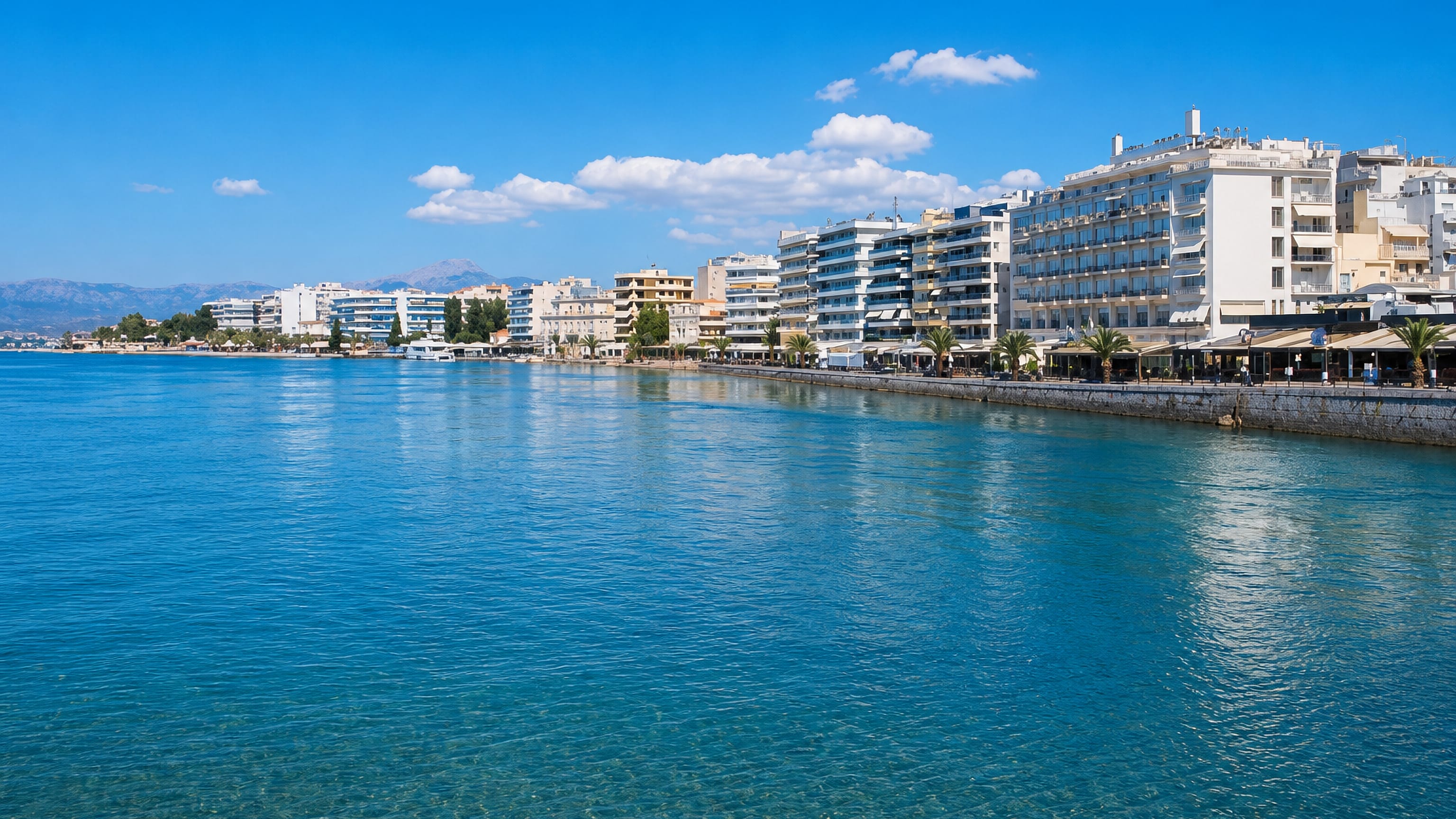
Chalkída is the main town of the island of Euboea, on the narrow Euripus Strait in central Greece.Where to stay →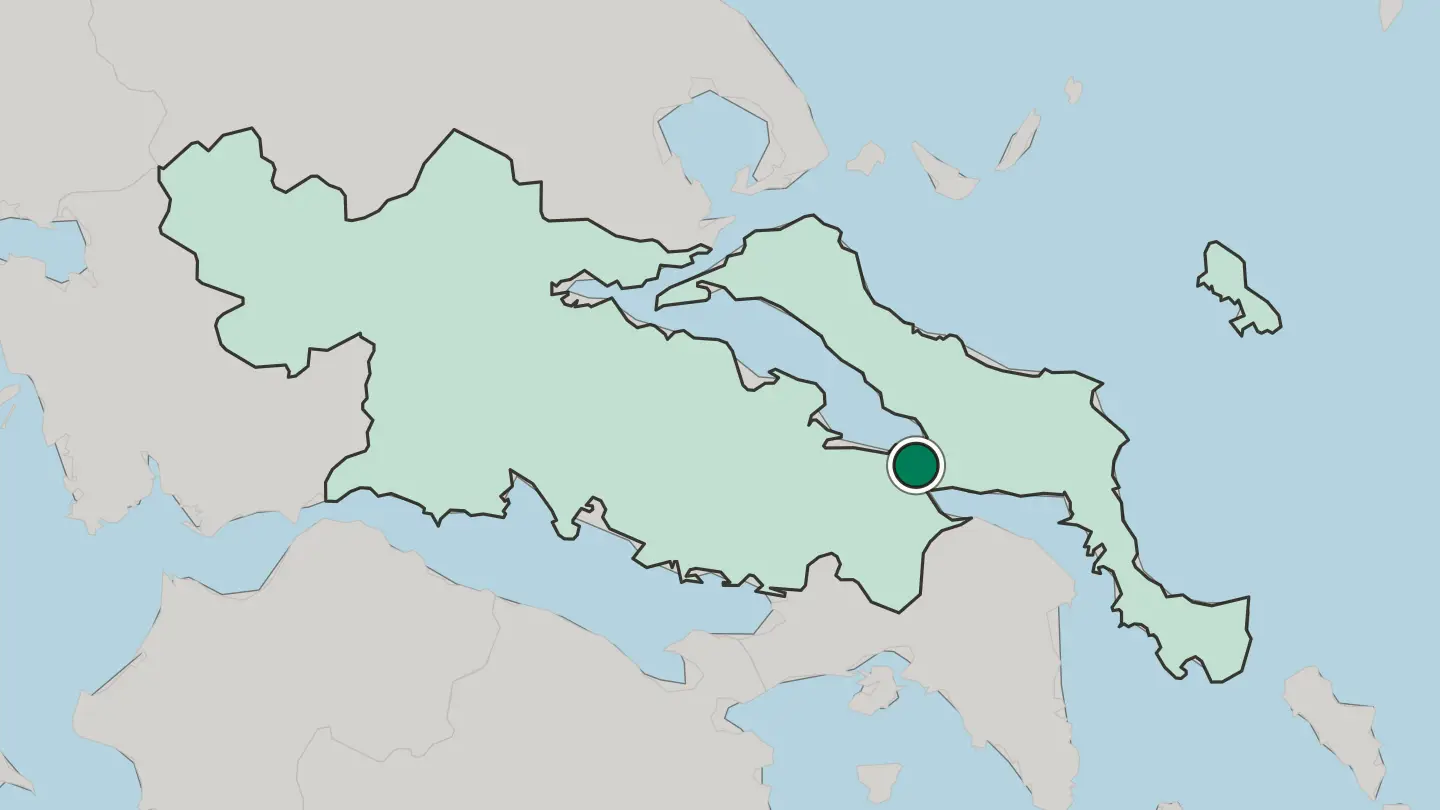
 Greece
Lamía
Lamía, capital of Phthiotis and of the Central Greece region, stands on the slopes of Mount Othrys above the farmland of the Spercheios.Where to stay →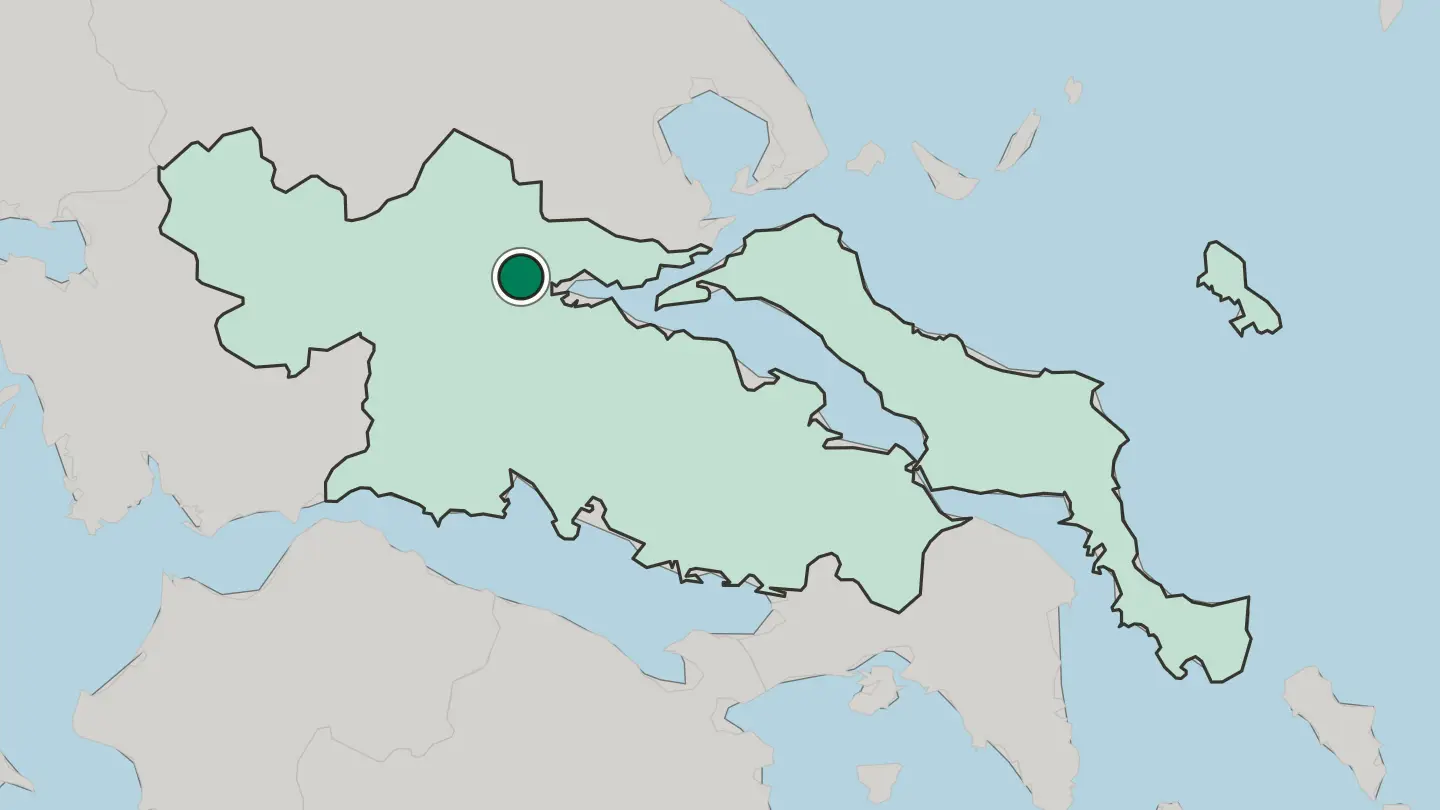
Hotel links are affiliate links: booking through them may earn us a commission, at no extra cost to you. It never affects how places are ranked. How this works
About Central Greece
Delphi is the name that carries.
What is Central Greece known for?
On the terraced slope of Mount Parnassus, the ancient sanctuary of Apollo drew supplicants from across the classical world to consult its oracle, and its ruins are now a UNESCO World Heritage Site. The region gathers much of ancient Greece into one stretch of country: the narrow pass at Thermopylae, the seven-gated city of Thebes in Boeotia, and the fir forests of Evrytania inland. Lamia is the modern capital, set in the Spercheios valley, while Chalkída on Euboea is the largest city.
Mountains and coast share the ground here.
Where is Central Greece?
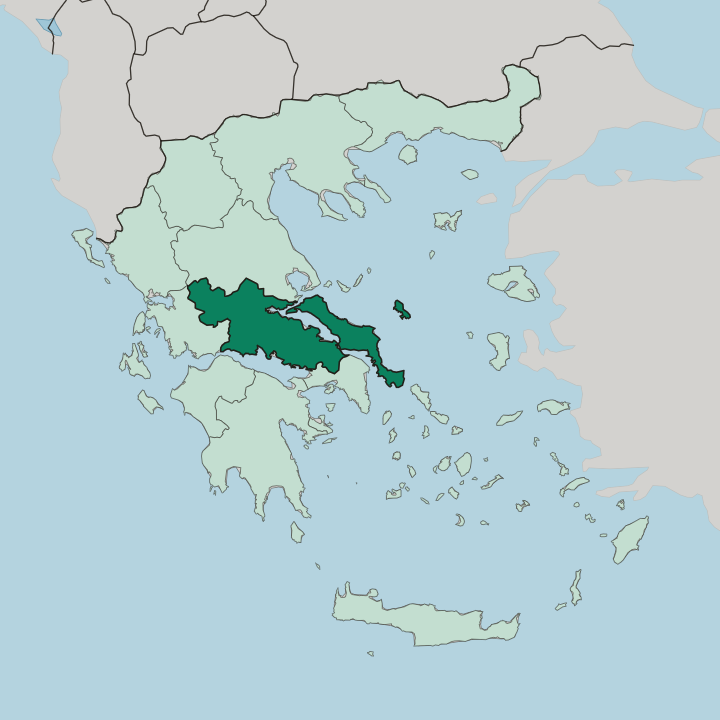
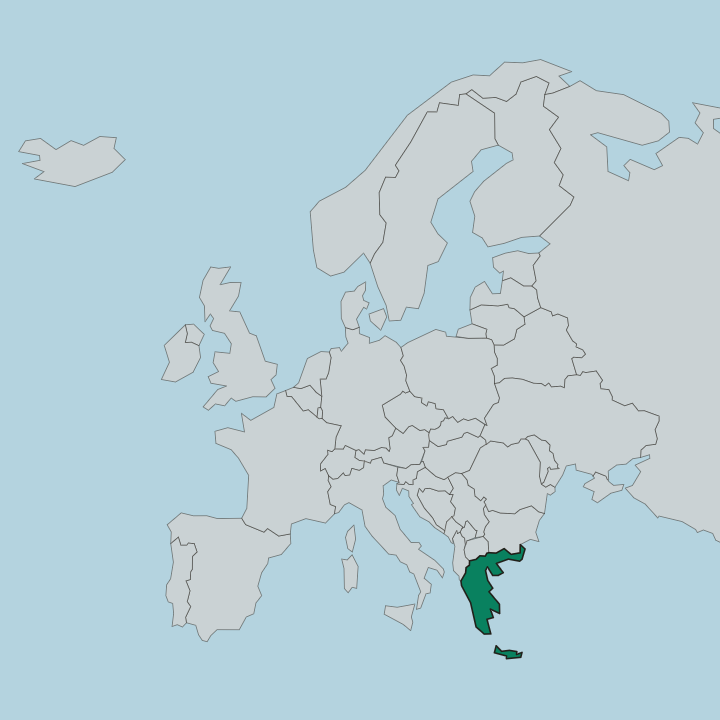
Central Greece fills the southern mainland, between the plains of Thessaly to the north and the Gulf of Corinth to the south. It is the second-largest region in the country. Five regional units make it up: Boeotia, Euboea, Evrytania, Phocis and Phthiotis.
The land is mostly mountainous. Offshoots of the Pindus range swing east across it, and Mount Parnassus rises above Delphi to more than two thousand metres, snow-capped for much of the year. Between the ridges run valleys and small plains, the widest of them carrying the Spercheios river down toward the sea near Lamia.
The east coast meets the Aegean Sea, and the Gulf of Corinth cuts along the south, separating the mainland from the Peloponnese. The island of Euboea lies close along the eastern shore, so close that at Chalkída the Euripus Strait narrows to less than forty metres, spanned by a bridge. Western Greece borders the region to the west, and a short frontier touches Epirus to the north-west.
Attica and its capital sit just beyond the south-eastern edge. That mix of high mountain and sea coast defines the region far more than any single feature does.
What is Central Greece like?
The ancient past is never far underfoot. Delphi was held by the Greeks to be the centre of the world, marked by a stone called the omphalos, and its sanctuary of Apollo drew pilgrims and city-states to weigh their questions before the oracle. Thebes, the old power of Boeotia, gave Greek myth the stories of Oedipus and the seven-gated walls.
That heritage sits alongside a living rural culture rooted in the mountains and the coast. Herding, olive groves and vineyards work the valleys, and the fir forests of Evrytania supply timber and honey. The common language is Greek, as across the whole country.
Village festivals mark the church calendar with music and roasted meat. Arachova, above Delphi, is known for its woven textiles and its hard graviera cheese, and it fills with visitors when snow settles on Parnassus. Food leans local and plain: mountain herbs, wild greens, lamb and goat.
The region reads as two Greeces at once, the archaeological and the pastoral, laid over the same ground. Neither cancels the other.
What is the history of Central Greece?
History here is measured in millennia. Delphi and Thebes were powers in classical Greece, and in 480 BC a small force held the pass at Thermopylae against a far larger Persian army before it fell. Boeotia later broke Spartan dominance on its own fields.
The modern region is far younger: it was drawn up in 1987, when Greece reorganised its territory into administrative regions, and given Lamia as its capital. Ancient ground, recent borders.
What is the climate of Central Greece?
Two climates share the region, split by height. The Aegean coast around Chalkída runs Mediterranean, with hot dry summers and mild wet winters. Climb inland and the pattern flips.
Mount Parnassus above Delphi and the ranges around Karpenisi in Evrytania hold heavy winter snow, feeding a short ski season, while their summers stay cool at night even when the coast bakes. Rain falls mostly in the colder months, and the high peaks keep snow long after the shore has warmed.
How do you get to Central Greece?
Most travellers come overland from Athens. The capital's airport lies just beyond the south-eastern border, and the national road and rail line run north through the region toward Lamia and on to Thessaly. Delphi is a two- to three-hour drive from Athens by way of Livadeia and Arachova.
To reach Euboea you cross the Euripus Strait at Chalkída, where two bridges join the island to the mainland. Ferries also link the island's ports to the Aegean coast. Inside the region, a car opens up the mountain roads that buses reach only slowly.
Common questions
What is the best area to stay in Central Greece?
Delphi and Arachova: the oracle of Delphi and Parnassus. Chalkída: the Euripus tides and Euboea. Karpenisi: forested mountains and winter snow. Lamia: the capital and Thermopylae.
Good for
More regions in Greece
Updated September 2026