Greece
Crete, Greece — Towns & Travel Guide
Crete is the largest island of Greece, a long mountainous ridge between the Sea of Crete and the Libyan Sea.
Hotel links are affiliate links: booking through them may earn us a commission, at no extra cost to you. It never affects how places are ranked. How this works


Towns & cities in Crete
Pick a town or city — each links to where to stay.
 Greece
Irákleion
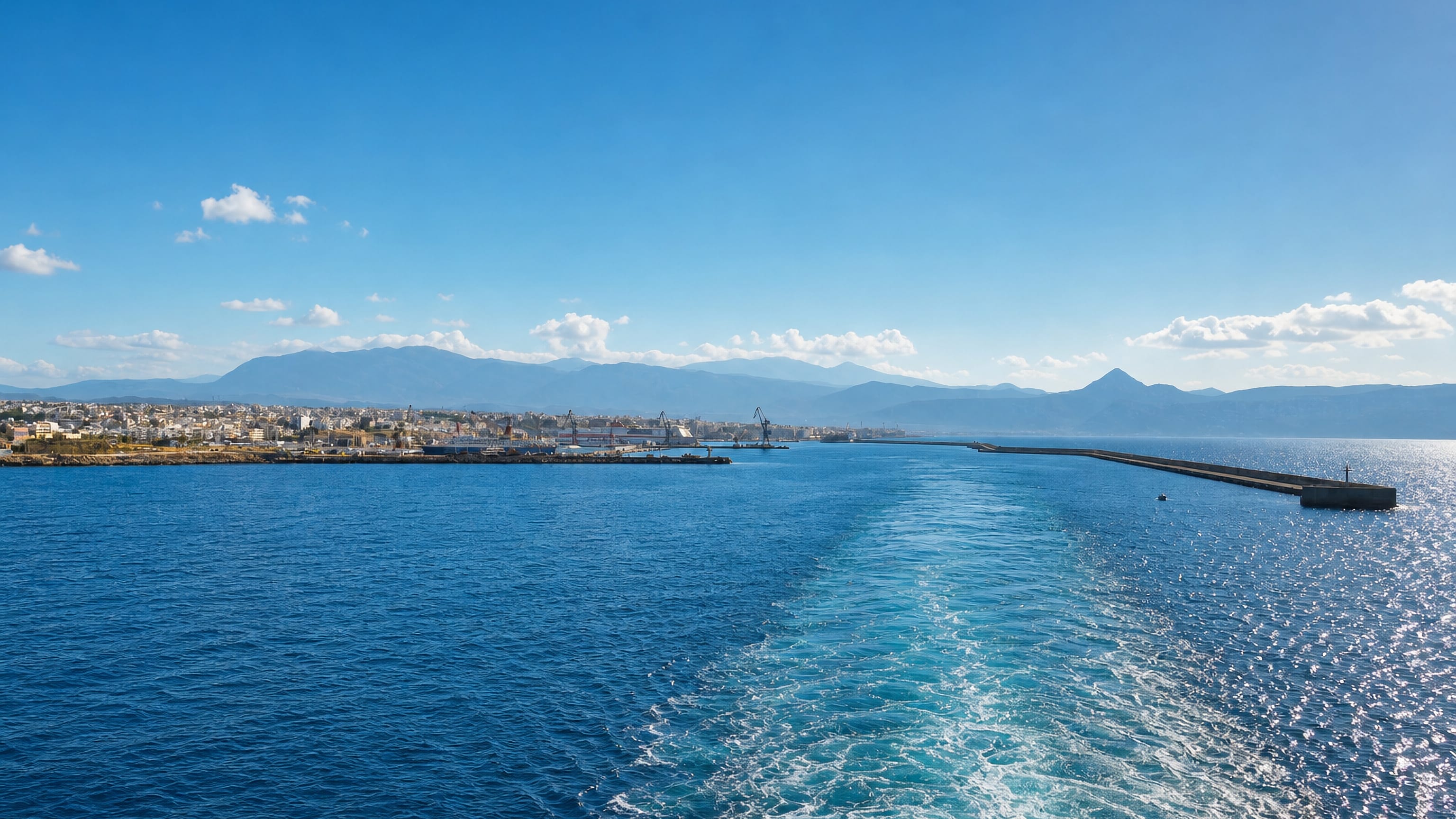
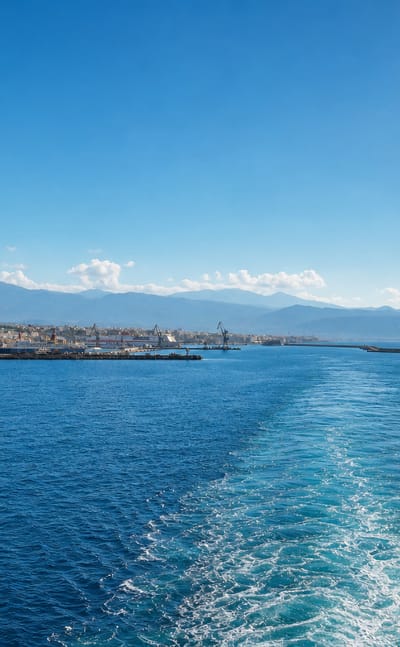
Venetian ramparts ring the old harbour at Irákleion, the capital of Crete, known for the Heraklion Archaeological Museum and nearby Knossos.Where to stay →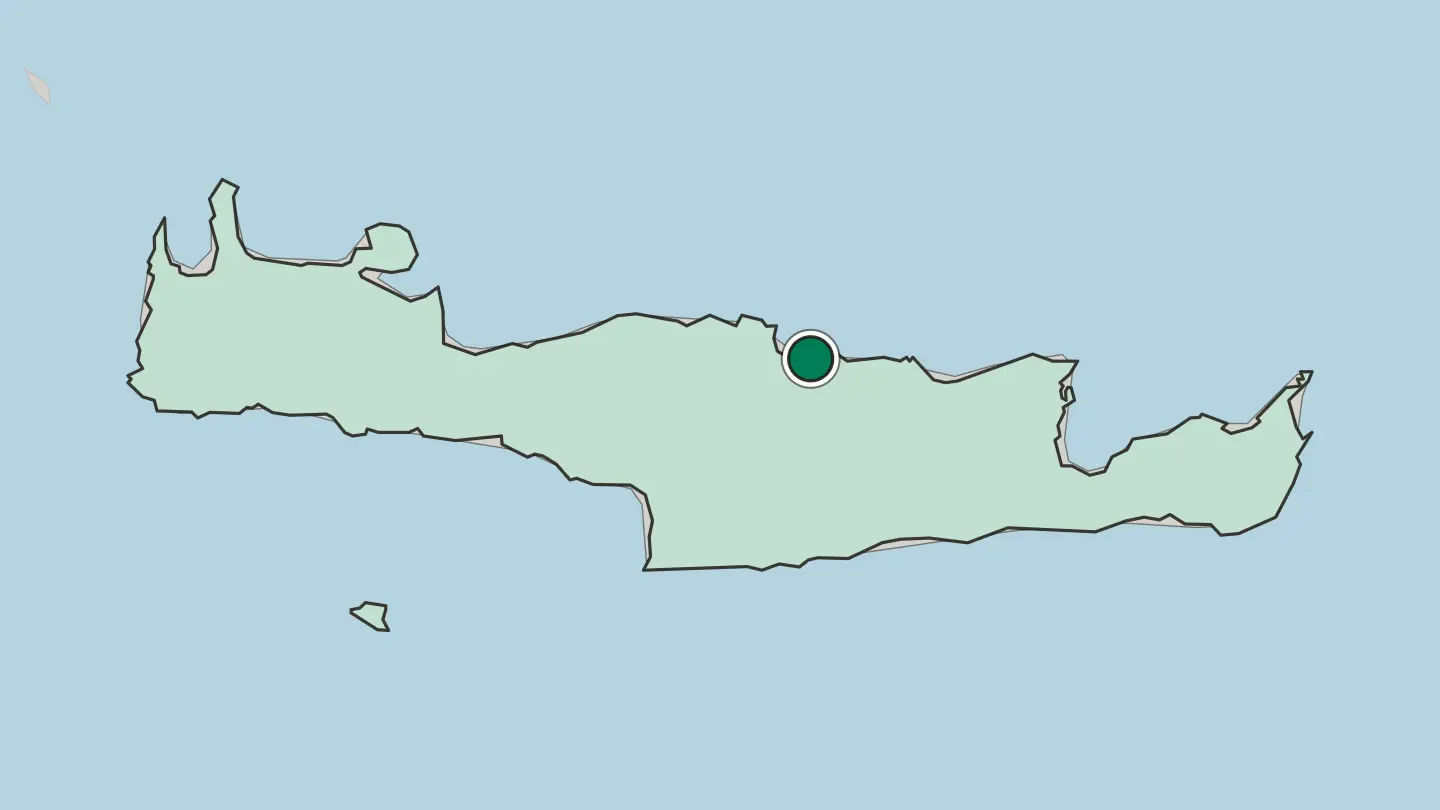
 Greece
Chaniá
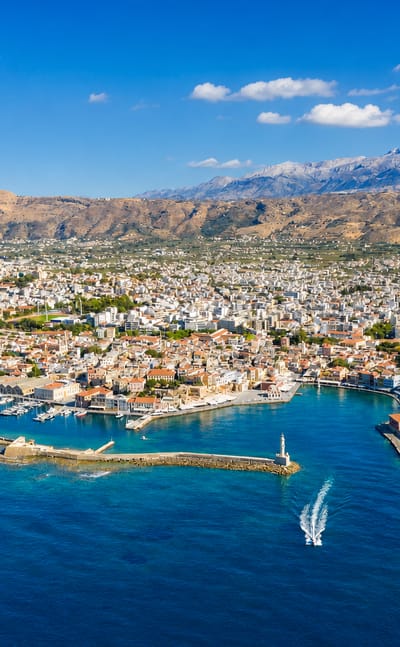
A Venetian harbour curves through Chaniá, a port town on the northwest coast of Crete, capital of the Chania regional unit with an old Ottoman quarter.Where to stay →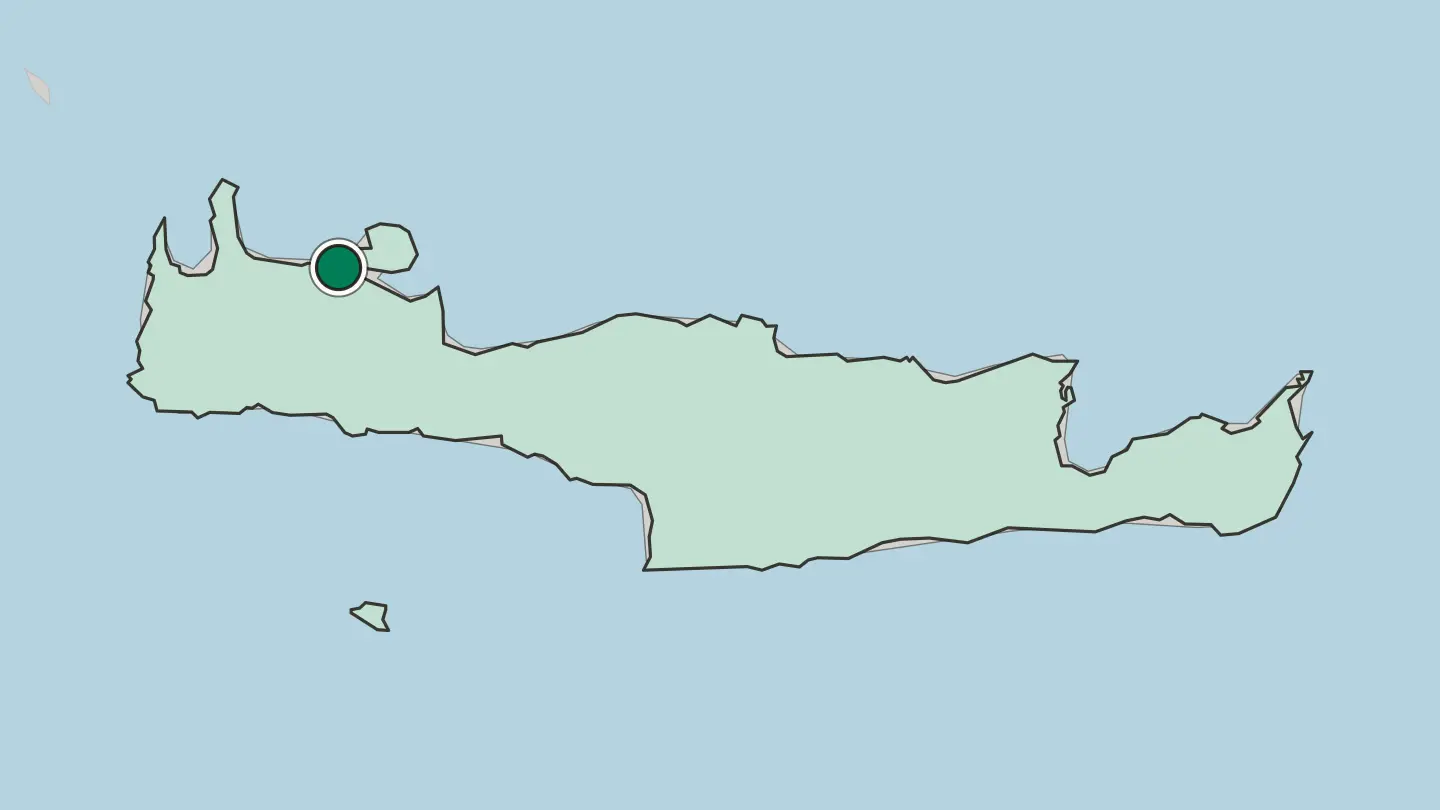
Hotel links are affiliate links: booking through them may earn us a commission, at no extra cost to you. It never affects how places are ranked. How this works
About Crete
Two threads run through every Crete trip.
What is Crete known for?
The first is the deep past, the palace of Knossos outside Heráklion, whose throne room and painted frescoes belong to the Minoan civilization that flourished here in the Bronze Age long before mainland Greece. The second is the land itself. A spine of mountains runs the length of the island, splitting to shelter the Samariá Gorge, and its lower slopes carry olive groves, vineyards, and mountain villages.
The kitchen matters too, built on wild greens, sheep cheese, and raki.
Where is Crete?
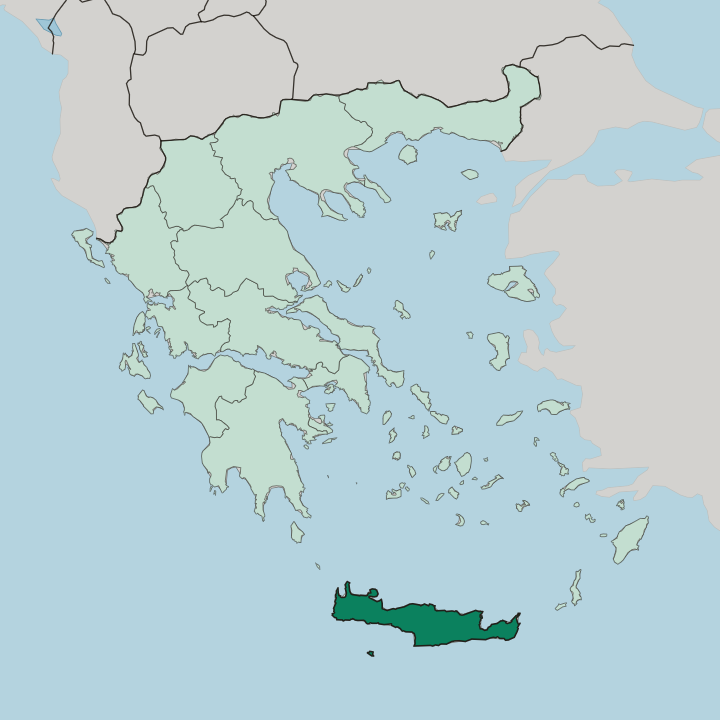
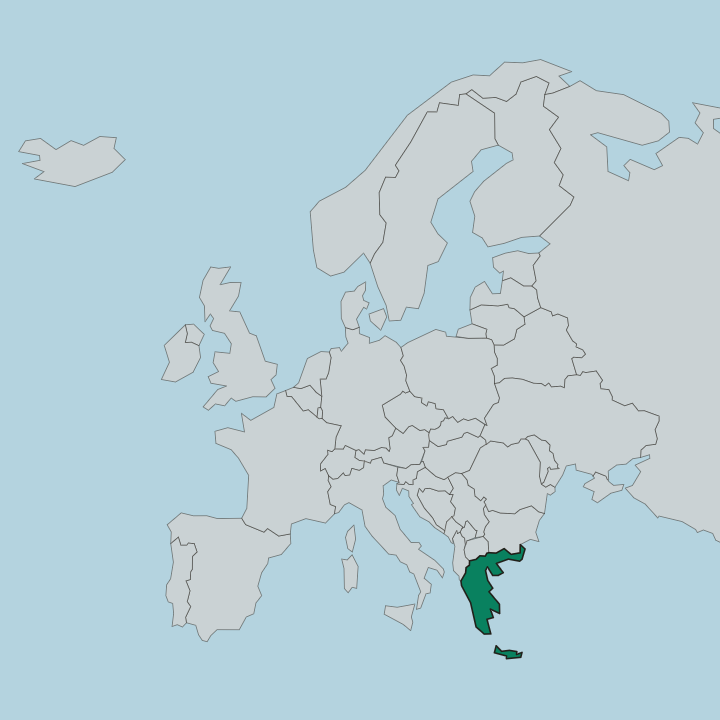
Crete lies south of the rest of Greece, a long slab of land in the open Mediterranean with the Peloponnese a night's sail to the north. It closes the southern edge of the Aegean Sea. The Sea of Crete washes its northern shore and the Libyan Sea its southern one, and the island stretches far from west to east while staying narrow between the two coasts.
The mountains explain almost everything. Three great massifs rise along the spine of the island: the Lefká Ori, the White Mountains, in the west, Psilorítis at the centre, and the Díkti range in the east. Psilorítis is the high point, its bare summit standing above the olive terraces.
Where the ranges break, water has cut deep. The Samariá Gorge runs down from the White Mountains to the Libyan shore, one of the longest ravines in Europe, and dozens of smaller gorges score the flanks around it. Fertile uplands sit among the peaks, the Lasíthi plateau chief among them, its floor once dotted with windmills.
The north coast carries most of the towns and beaches. The south stays wilder, its cliffs dropping straight to the water, and Ierápetra there is the southernmost city on the European mainland's reach.
What is Crete like?
The island keeps its own voice. Cretans speak a distinct dialect of Greek and hold to customs older than the modern state, and the mountain villages guard them most fiercely. Music is the clearest sign.
The lýra, a three-stringed fiddle bowed on the knee, leads the dance at weddings and feasts, its player often trading improvised verses called mantinádes with the crowd. Food carries the same rootedness. The Cretan table leans on olive oil and wild horta greens, on snails and barley rusks, on sheep and goat cheeses, and on the fiery grape spirit raki that is poured freely as a gesture of welcome.
Myth runs through the landscape too. According to legend Zeus was born in a cave on Psilorítis, hidden from his father Cronus, and shepherds still point out the Idaean cave on its slopes. The built past is everywhere.
The palace of Knossos and its frescoes speak for the Minoan civilization, the first in Europe, while Venetian harbours and Ottoman minarets in Chaniá and Réthymno record the centuries of foreign rule that followed. Craft survives alongside the ruins. Weavers, leather-workers, and knife-makers still keep shops in the old towns, and hospitality toward the guest, the philoxenía prized across Greece, is felt sharply here.
What is the history of Crete?
Crete carries the oldest history in Greece. The Minoan civilization, Europe's first, built the palace of Knossos and traded across the eastern Mediterranean from the third millennium BC until it collapsed in the Bronze Age. Rome, then Byzantium, held the island for centuries after.
In 1204 the Fourth Crusade handed Crete to Venice, whose harbours and fortresses still stand at Chaniá and Réthymno, and Venetian rule lasted until the Ottomans took the capital of Candia, now Heráklion, in 1669 after one of the longest sieges in history. Crete won autonomy in 1898 and joined the Greek state in 1913.
What is the climate of Crete?
Crete has a hot, dry Mediterranean climate, the warmest in Greece. Summers run long and rainless, tempered on the coasts by the meltémi wind off the Aegean Sea, while the rain falls mostly in the mild winters and the high peaks of Psilorítis and the White Mountains hold snow into spring. The south coast around Ierápetra is drier and sunnier than the north, sheltered by the mountains and warmed by the Libyan Sea.
Wildflowers cover the slopes in April. Autumn stays swimmable long after the mainland cools.
How do you get to Crete?
Visitors come by air or by sea. The two main airports sit on the north coast at Heráklion and Chaniá, both linked to Athens year-round and to much of Europe through the summer. The alternative is the overnight ferry.
Boats sail from the port of Piraeus near Athens to Heráklion and Chaniá, crossing the Sea of Crete in eight or nine hours and docking at first light. Once ashore, a hire car is the way to reach the gorges, the south coast, and the mountain villages, since distances between the towns are real.
Common questions
What is the best area to stay in Crete?
Chaniá: a gentle introduction to Crete. Réthymno: a central base between coast and mountains. Heráklion: Minoan sites and transport links. Ierápetra: the warm, dry south coast.
Good for
More regions in Greece
Updated October 2026