Greece
Epirus, Greece — Towns & Travel Guide
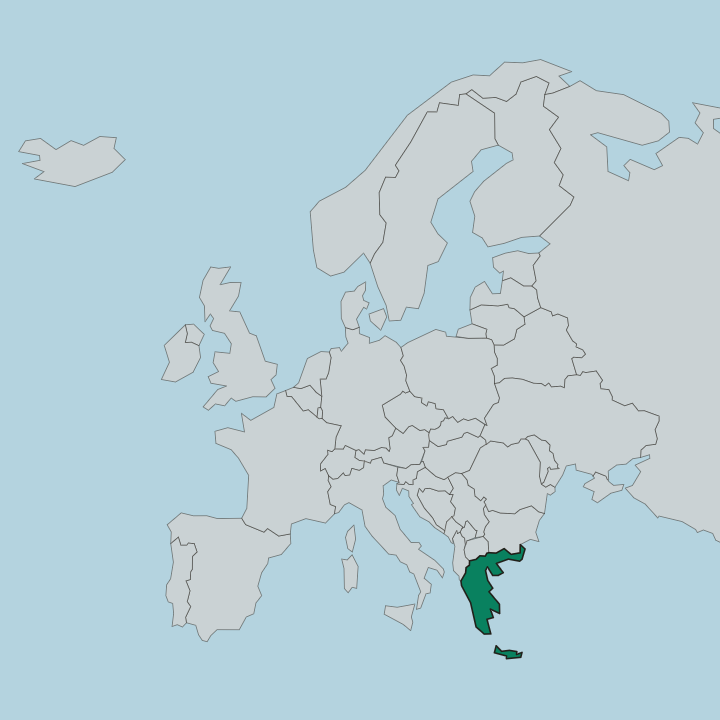
Epirus is the mountainous northwest corner of Greece, where the Pindus range drops to the Ionian Sea around the city of Ioannina.
Hotel links are affiliate links: booking through them may earn us a commission, at no extra cost to you. It never affects how places are ranked. How this works


Towns & cities in Epirus
One town here has its own guide — it links to where to stay.
 Greece
Ioánnina
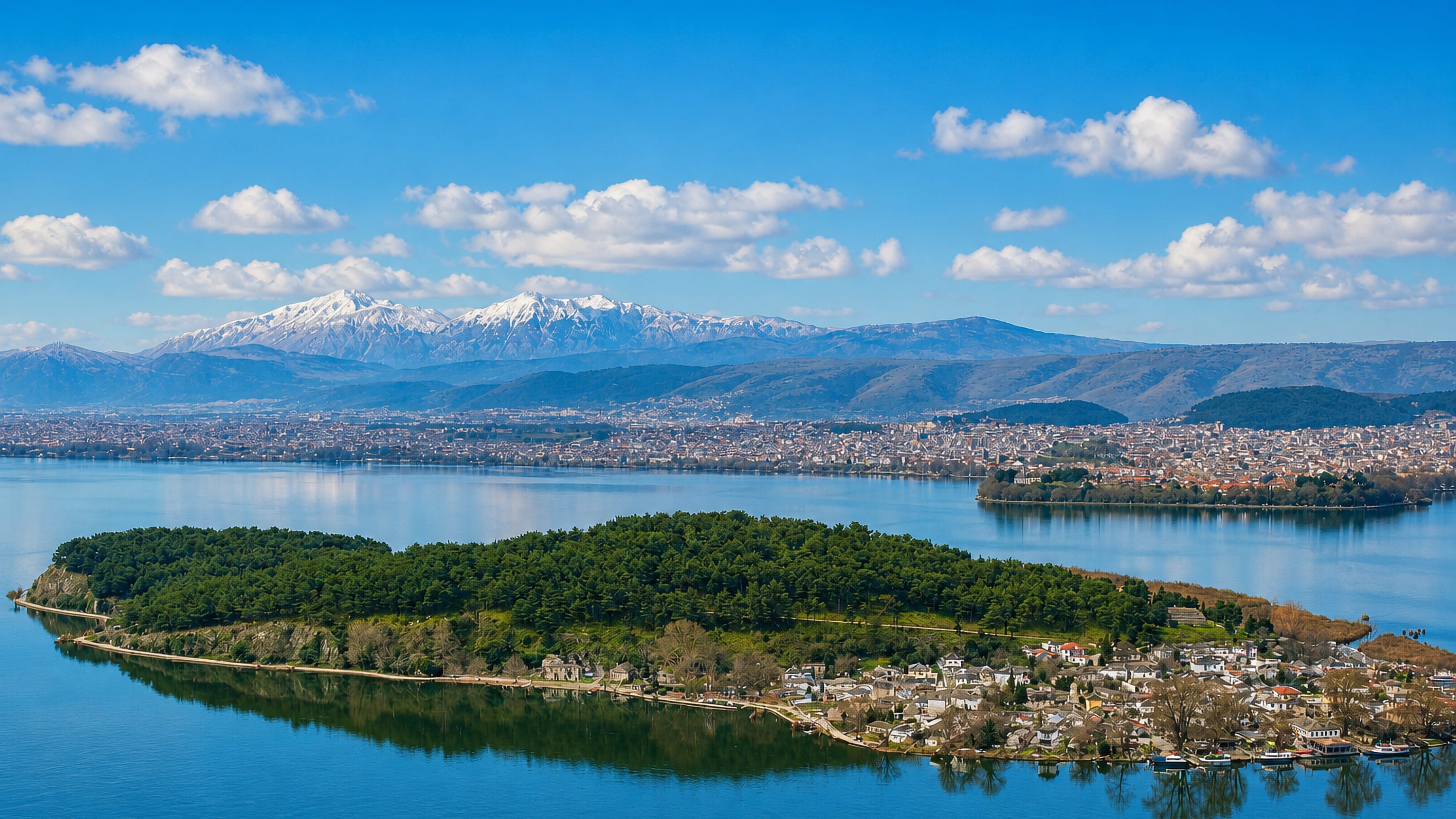
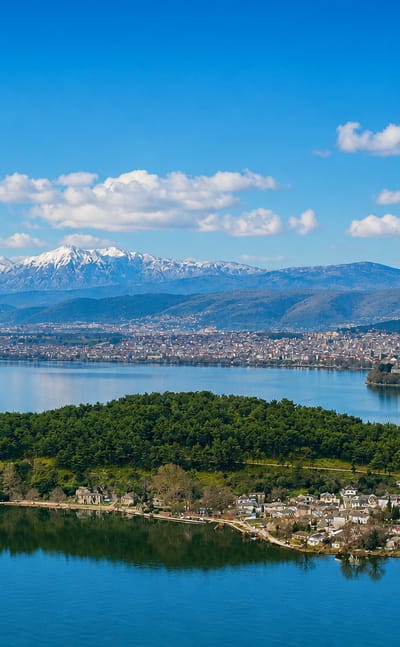
Walls ring the old town at Ioánnina, a lakeside city in northwestern Greece, capital of Epirus and marked by the minaret of the Aslan Pasha Mosque.Where to stay →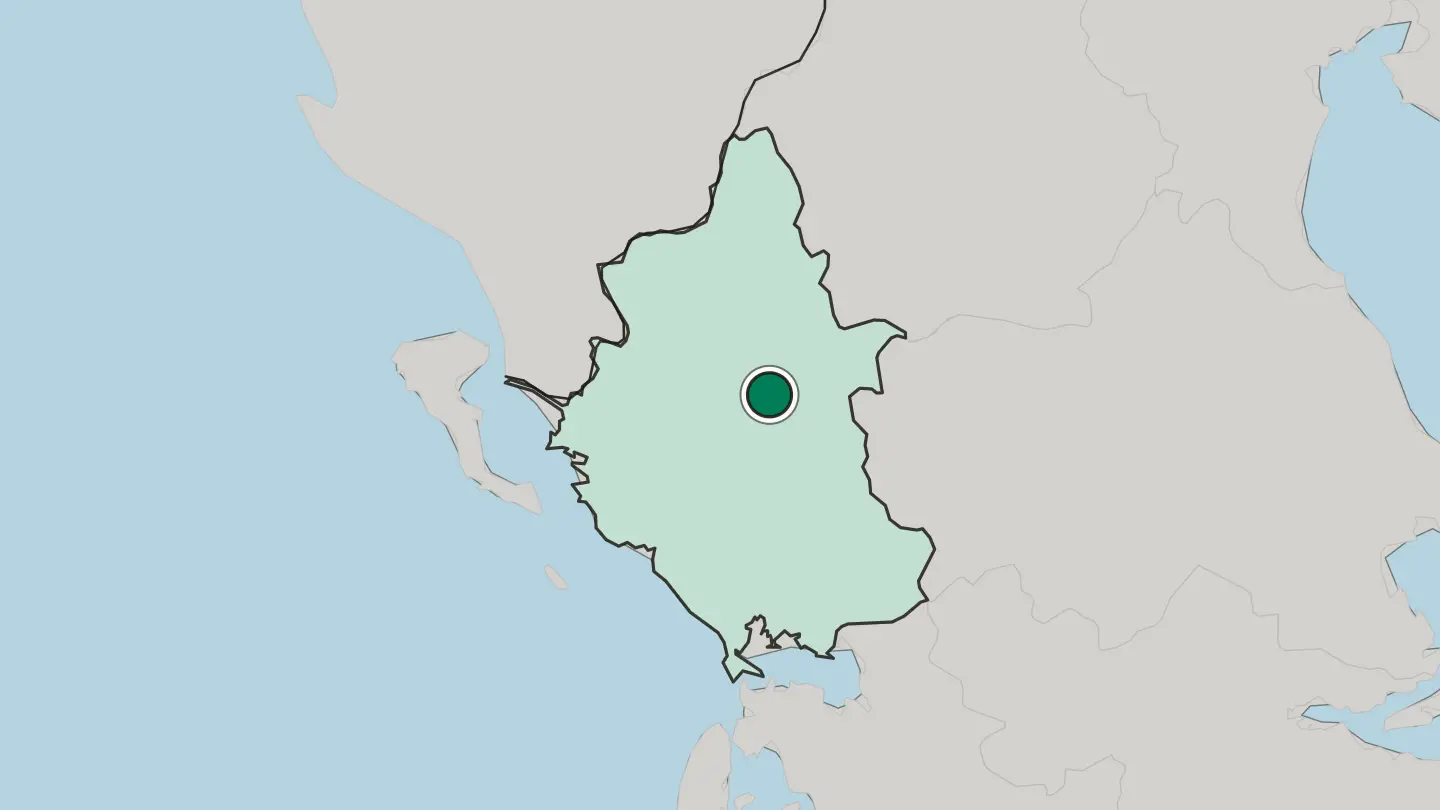
Hotel links are affiliate links: booking through them may earn us a commission, at no extra cost to you. It never affects how places are ranked. How this works
About Epirus
Epirus is the wild north of Greece.
What is Epirus known for?
Its fame rests on the Pindus mountains and the stone villages folded into them. The Zagori cluster of forty-six villages, linked by old arched bridges and cobbled mule paths, sits above the Vikos Gorge, which drops so steeply against its narrow width that record-keepers call it the deepest such canyon on earth. Ioannina anchors the region from the shore of Lake Pamvotida.
The coast is the other face, where Parga and Preveza open onto the Ionian Sea.
Where is Epirus?
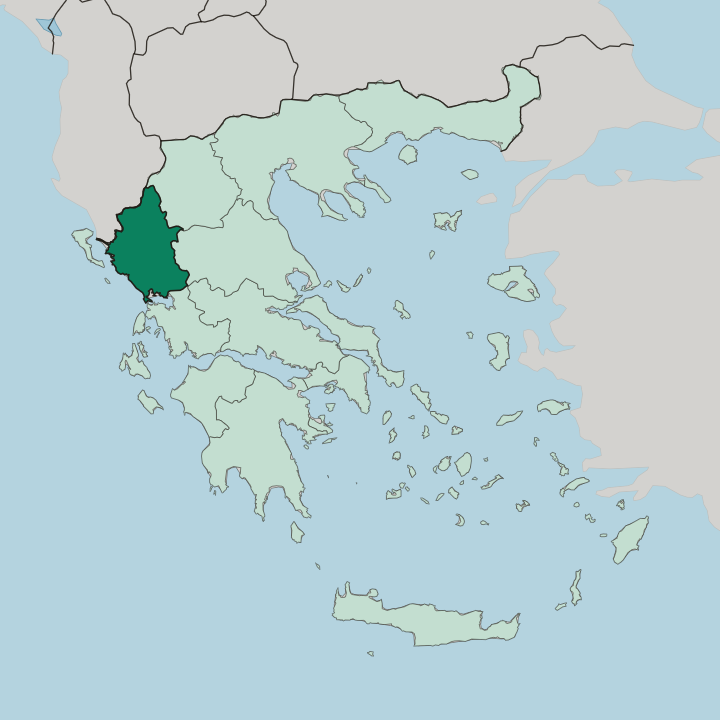
Epirus fills the northwest corner of Greece. Its whole character is upland. The Pindus range walls off the eastern side, its ridges separating Epirus from the regions of Western Macedonia and Thessaly, and Mount Smolikas rises highest of all along that spine.
To the west lies the Ionian Sea, and to the south the Ambracian Gulf almost closes into a lake behind the town of Preveza. The northern edge runs up to the border with Albania, the land continuing beyond into what was once a single Epirus split between two countries. Between the sea and the summits the land is nearly all upland.
Deep gorges cut through it. The Vikos Gorge slices the limestone of the Zagori country in the north, and rivers born in the Pindus run down toward the coast. Ioannina sits inland on the shore of Lake Pamvotida, ringed by peaks, while the mountain town of Metsovo guards the pass east toward Thessaly.
The shore itself is short and steep, dropping from the hills straight into the Ionian at Parga and Igoumenitsa. Little of Epirus is flat, and that vertical grain shapes every journey through it.
What is Epirus like?
Culture in Epirus was built out of stone and isolation. Its emblem is the village. Grey slate roofs, drystone walls and the arched bridges of Zagori grew from mountain masons who worked far from any city, and in 2023 that Zagori landscape entered the UNESCO World Heritage list.
The language is Greek, spoken across the whole of the region. Voices carry the older tradition too. The polyphonic song of the mountain villages layers a lead melody over a held drone, a sound shared across the ranges into neighbouring Albania.
The table tells the same story of hill farming and long winters. Pita is the heart of it. Cooks here fold dozens of different savoury pies, thin pastry around greens, cheese or meat, a repertoire counted in the dozens from one valley to the next.
Sheep and goat cheeses, yoghurt and wild game come off the high pastures, washed down with tsipouro, the strong clear spirit poured in the region's tavernas. Metsovo is known for its smoked cheese and its weaving. It is a cuisine of scarcity turned to craft, plain ingredients coaxed into range and variety.
What is the history of Epirus?
Epirus holds some of the oldest sacred ground in Greece. At Dodona, deep in the region, priests read the oracle from the rustling of a sacred oak, a shrine older than Delphi. The warrior king Pyrrhus led Epirus against Rome and won battles so costly they gave us the phrase Pyrrhic victory.
Rome absorbed the land, and after crusaders sacked Constantinople the breakaway Despotate of Epirus rose here as a fragment of the fallen Byzantine world. Centuries of Ottoman rule followed. From his court at Ioannina the ruler Ali Pasha governed almost as an independent prince until his death in 1822.
What is the climate of Epirus?
Epirus is the wettest corner of mainland Greece. The Pindus stands square in the path of the damp winds blowing off the Ionian Sea, and the mountains wring the rain out of them before it can reach the drier east, which is why the high villages of Zagori see far more cloud and snow than the beaches below. Winters bite hard in the uplands.
Snow closes the passes around Metsovo, while the coast at Parga stays milder through the cold months. Summers are warm and clear, drier along the shore than up in the peaks.
How do you get to Epirus?
Most travellers reach Epirus by air into Ioannina, the small inland airport that puts the mountains within easy reach. There is a second way in from the sea. Ferries from Italy dock at Igoumenitsa, the region's ferry port on the Ionian coast, and Preveza has its own airport for the southern beaches.
From either edge the roads climb fast. A modern motorway now tunnels east across the Pindus toward Thessaloniki, cutting a drive that once crawled over the passes. Inside the region the car is king, winding up to Zagori and Metsovo by mountain road.
Common questions
What is the best area to stay in Epirus?
Ioannina: a lakeside base for the whole region. Zagori: the high stone villages and gorge hikes. Parga: a beach summer on the Ionian coast. Preveza: the southern coast and the Ambracian Gulf.
Good for
More regions in Greece
Updated September 2026