Greece
Western Greece, Greece — Towns & Travel Guide
Western Greece spans the far west of the mainland and the north-west corner of the Peloponnese, meeting on the Ionian Sea.
Hotel links are affiliate links: booking through them may earn us a commission, at no extra cost to you. It never affects how places are ranked. How this works


Towns & cities in Western Greece
One town here has its own guide — it links to where to stay.
 Greece
Pátra
Patras Castle looks down over the Gulf of Patras, a port city at the foot of Mount Panachaikon in the northern Peloponnese, known for its Carnival.Where to stay →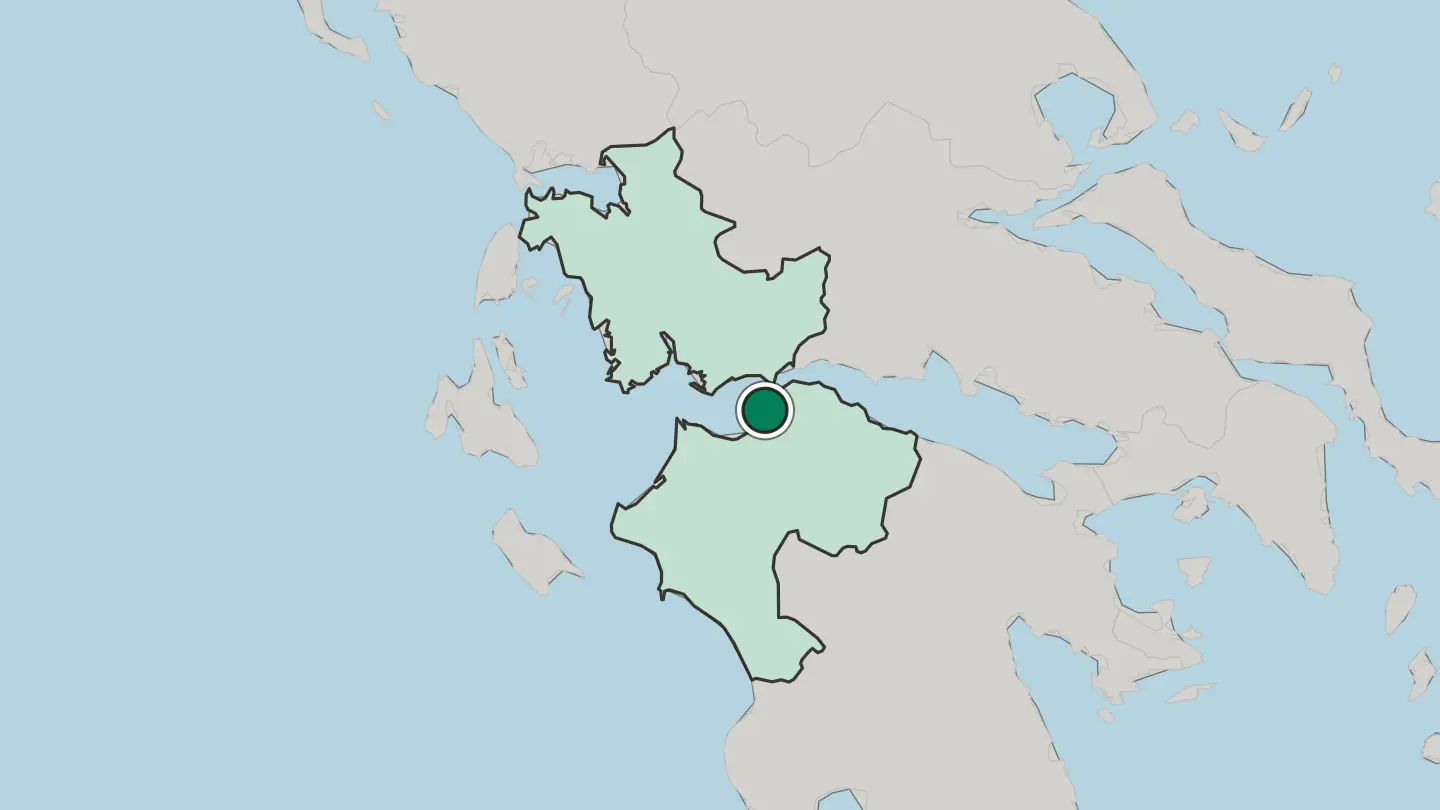
Hotel links are affiliate links: booking through them may earn us a commission, at no extra cost to you. It never affects how places are ranked. How this works
About Western Greece
What is Western Greece known for?
Olympia is the region's headline. The sanctuary in the Elis hills hosted the ancient Olympic Games from 776 BC, and its ruins draw most first-time visitors inland from the coast every summer. Patras anchors the other half, a working port on the Gulf of Patras.
It is the third-largest city in the country. Between them run the beaches of the Ionian Sea, the wetlands around Missolonghi, and the mountains that wall off the interior.
Where is Western Greece?
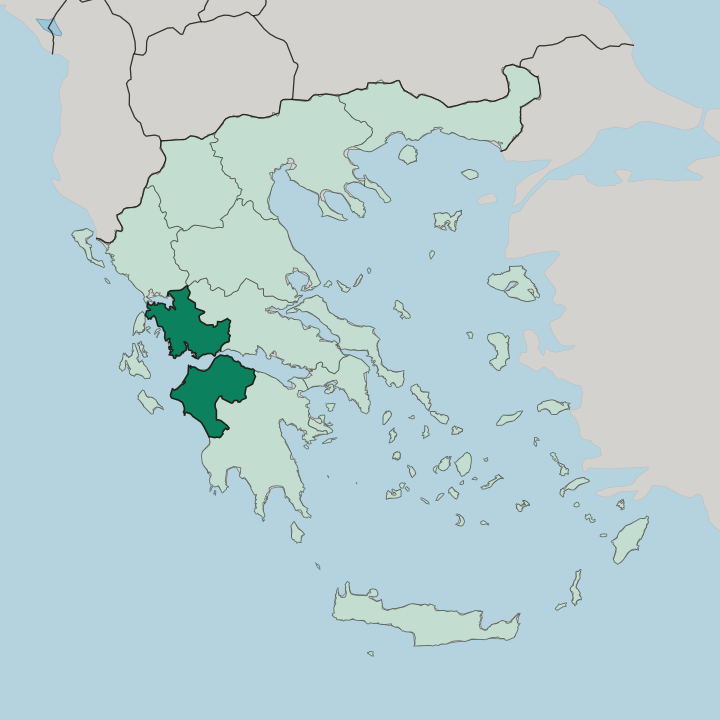
Western Greece is one of the thirteen administrative regions of the country, and it comes in two pieces. Three regional units make it up. Achaea and Elis sit on the northern Peloponnese, while Aetolia-Acarnania lies across the water on the mainland of Central Greece.
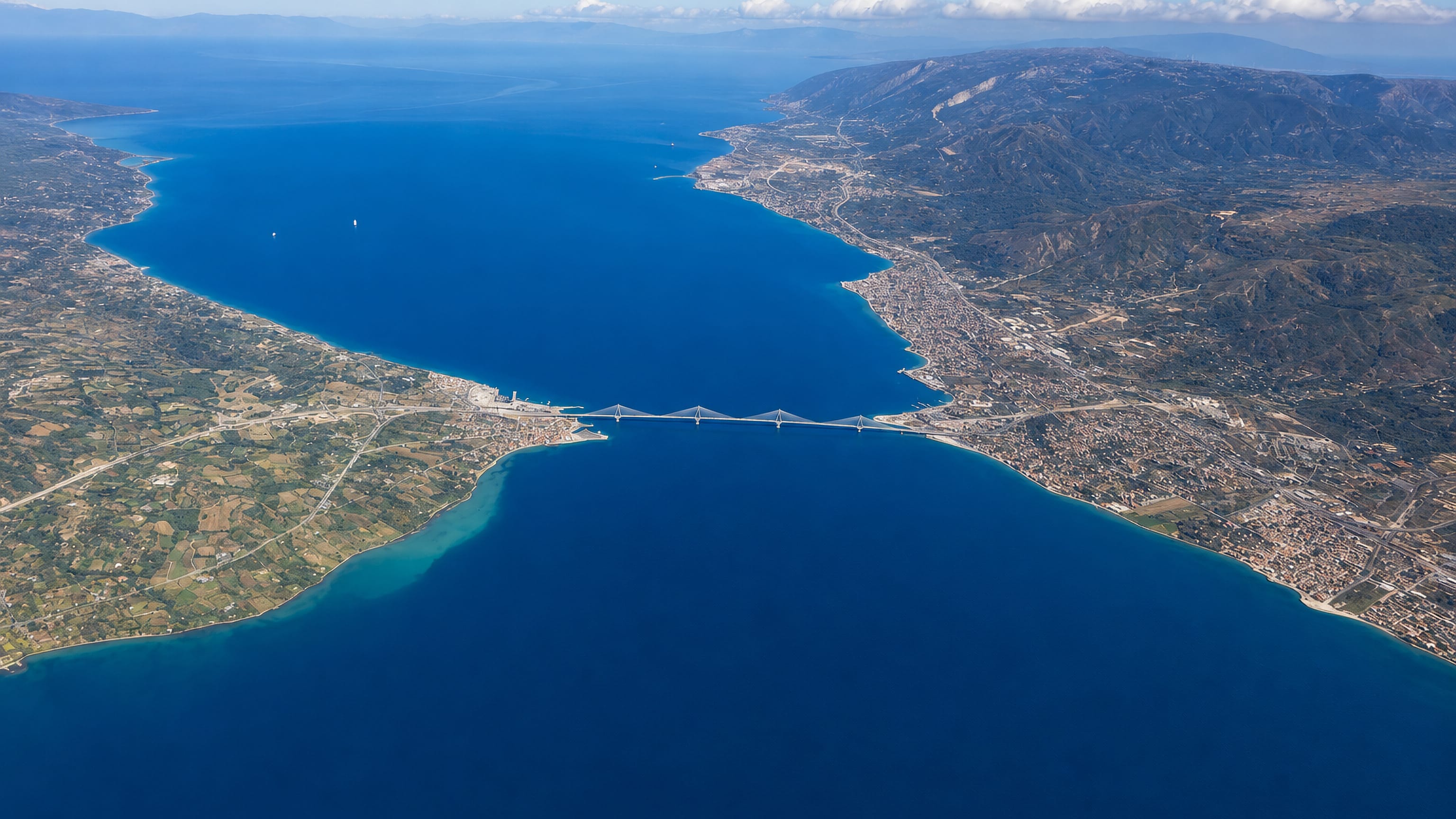
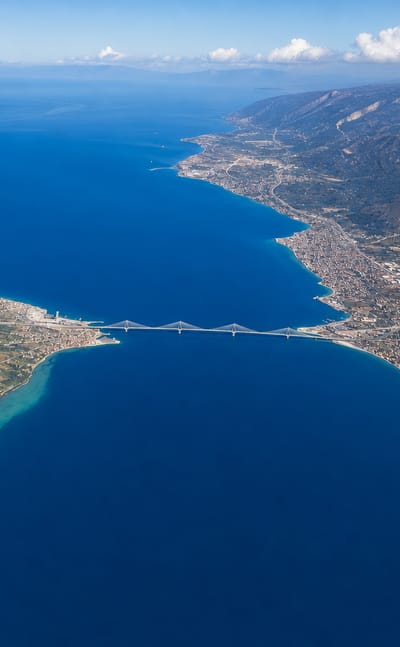
The two halves face each other across the narrow mouth of the Gulf of Corinth, and since 2004 the Rio-Antirrio bridge has stitched them together where the strait pinches to barely more than two kilometres. The whole western edge is the Ionian Sea, its coast fringed by the islands of Kefalonia and Zakynthos just offshore. Patras stands on the Gulf of Patras where the two gulfs meet, the region's capital and its port.
Inland the ground climbs hard. Mount Erymanthos and the Aroania range wall off the southern interior, rising past two thousand metres. The Achelous, the longest river wholly inside Greece, drains the mainland side down to the lagoons around Missolonghi, and the Alfeios waters the plain below Olympia.
Little of the region is flat. Nearly half of it is mountain, and the coast is never far from a ridge.
What is Western Greece like?
The region carries two very different Greek stories. One is ancient and monumental. Olympia gave the world the games, and its stadium and the temple of Zeus still pull crowds inland from the coast every summer.
The other story is the revolution. Missolonghi was the first town in the west to rise in 1821, and it held out through three sieges before its garrison broke out and died almost to a man; the poet Lord Byron came to fight for the cause and died of fever there in 1824. Both stories are national shrines, and Greeks visit them the way other countries visit their capitals.
Everyday life is quieter. Patras is the modern centre, a university city and a port, and it throws one of the largest carnivals in the country each winter. Across the Gulf of Patras, Aetolia-Acarnania is farming and fishing country, olive groves and tobacco fields running down to the Achelous.
The common language is Greek, spoken across the whole region and the rest of the country. Food leans to the water here, with fish from the lagoons and the fish roe that made Missolonghi famous. Faith runs through it too, and saint's-day feasts still mark the calendar in the mountain villages.
What is the history of Western Greece?
Long history sits on this ground. Olympia held its first games in 776 BC and ran them for over a thousand years, and just up the Gulf of Corinth the sea Battle of Lepanto broke Ottoman naval power off Nafpaktos in 1571. Later the west lit the fuse of independence, when Missolonghi rose in 1821 and its fall in 1826 stirred all of Europe.
The modern region of Western Greece drew these three histories into one administrative unit, joined mainland to Peloponnese by bridge only in 2004.
What is the climate of Western Greece?
Along the Patras coast and the Ionian shore the summers run hot and rainless. The coast around Patras and the Ionian Sea shore keeps the classic Mediterranean pattern, long rainless months from late spring through September and mild, wet winters that green the lowlands. The west catches more rain than the rest of the country, blown in off the Ionian.
Around the Achelous the plains stay lush. Higher up it is another world, and snow settles for weeks on Mount Erymanthos and the Aroania peaks.
How do you get to Western Greece?
Most arrivals come through Patras. Its port is the main Greek gateway from Italy, with ferries from Ancona, Bari, Venice and Brindisi tying up daily, and the road east reaches Athens in a few hours. Boats from Kyllini, further down the Elis coast, run out to the Ionian islands of Kefalonia and Zakynthos.
The Rio-Antirrio bridge carries the coast road across the Gulf of Corinth between the two halves of the region. A small airport sits at Araxos. Even so, most fliers still land at Athens and drive west from the capital.
Common questions
What is the best area to stay in Western Greece?
Patras: arriving by sea and using the port. Olympia: the ancient site of the Olympic Games. Nafpaktos: a harbour town on the northern shore. Missolonghi: the lagoons and the War of Independence.
Good for
More regions in Greece
Updated September 2026