Greece
Mount Athos, Greece — Towns & Travel Guide
Mount Athos is a self-governing monastic peninsula on the Aegean coast of northern Greece, closed to women for a thousand years.
Hotel links are affiliate links: booking through them may earn us a commission, at no extra cost to you. It never affects how places are ranked. How this works


Towns & cities in Mount Athos
How the towns here differ, and where visitors usually base themselves.
No hotel exists inside Mount Athos. Male pilgrims sleep in the monasteries themselves, taken in as guests of the monks under a permit, while everyone else stays across the border on the mainland side of the peninsula. Ouranoupoli is the last village before the line, the place where the boats leave and where most visitors spend the night ahead of the crossing. Thessaloniki, the city to the north-west, is where the permits are arranged and where flights arrive.
Choose Ouranoupoli to wake at the water's edge; choose Thessaloniki when you want a city around you first.
About Mount Athos
What is Mount Athos known for?
Mount Athos is Orthodoxy's holy mountain. Twenty monasteries share a single peninsula that no woman may enter, and no other place in Greece is governed quite like it. The forested slopes climb to a bare grey summit above the Aegean Sea, and the whole territory answers to the monks at Karyes rather than to an ordinary town hall.
Men come as pilgrims, on foot between the houses, carrying a permit rather than a hotel booking.
Where is Mount Athos?
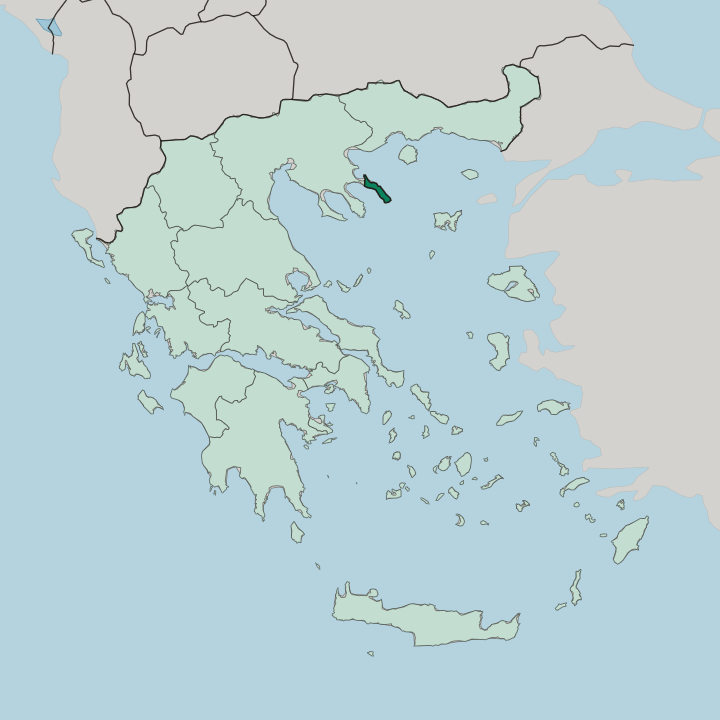
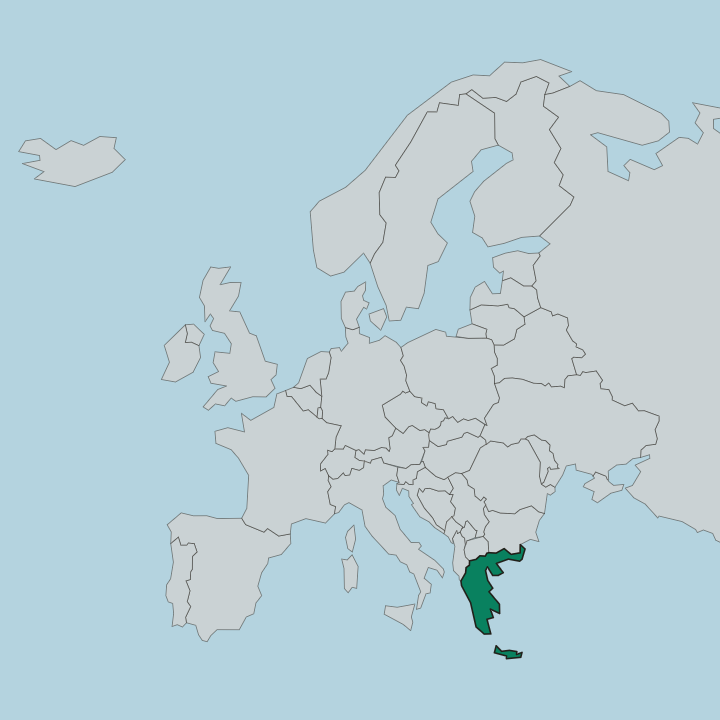
Mount Athos is the easternmost of the three fingers of land that reach south from Chalkidiki into the Aegean Sea, in northern Greece. The peninsula is long and narrow. It runs some 50 km out into the water and is nowhere more than about 12 km across, a slim wooded ridge falling steeply to the sea on both sides.
At its far tip the ground rears up into the peak that gives the whole place its name, a bare marble cone standing more than 2,000 m over the waves. The slopes below are dense forest, cut by ravines, with the monasteries perched wherever a shelf of rock or a small harbour allowed one to be built. The territory has no land approach for visitors.
A border wall seals the neck of the peninsula off from the rest of Chalkidiki, and beyond it there are no public roads in from the mainland. Karyes sits inland near the middle, the small capital where the governing council meets. Ouranoupoli lies just outside the border on the mainland side, the village where the crossing begins.
The Aegean surrounds the rest, and the far Greek city of Thessaloniki is the nearest large place, off to the north-west across Chalkidiki.
What is Mount Athos like?
Life here is monastic first. The twenty ruling monasteries keep the old Orthodox round of prayer, fasting and work, and the day is measured by the church bell rather than the clock. Clocks often still run on Byzantine time, reset at each sunset.
Greek is the common tongue and the language of the governing council at Karyes, though the houses draw monks from across the Orthodox world, and some are historically Russian, Serbian or Bulgarian in character. The oldest and first in rank is Great Lavra, founded in the tenth century at the southern tip below the peak. One rule shapes the whole culture from the outside in.
No woman may set foot on the peninsula, a prohibition the monks call the avaton, held to for many centuries and extended even to female livestock. Icons, relics and Byzantine manuscripts fill the libraries and chapels, guarded rather than displayed. Pilgrims are received as guests, fed at the common table and given a bed, in return for keeping the quiet.
It is less a place to visit than to enter.
What is the history of Mount Athos?
Organised monastic life on Mount Athos begins with Great Lavra, founded in 963 by Athanasius the Athonite under the patronage of a Byzantine emperor. Hermits had come before that. What Athanasius started was the pattern of large communal houses that spread along the slopes over the following centuries, twenty of which survive as the ruling monasteries.
The emperors granted the mountain self-rule and freedom from tax, and it kept that standing through Byzantine rule, four centuries under the Ottomans, and into the modern Greek state, which recognises it as a self-governing part of Greece to this day.
What is the climate of Mount Athos?
Two climates meet here. The shore keeps a warm Mediterranean rhythm while the heights above the monasteries follow a mountain one, and the gap between them widens the higher the ground climbs. Summers along the Aegean are hot and dry.
Winters stay mild near the water but turn cold and snowy up towards the peak, which can hold its snow well into spring. The peninsula makes its own weather, and the exposed ridge draws sharp northerly winds and sudden temperature swings even in the warm months. Rain comes mostly in the cooler half of the year.
How do you get to Mount Athos?
You reach Mount Athos only by boat. Every male visitor first needs a permit, the diamonitirion, arranged through the Pilgrims' Bureau linked to Thessaloniki and collected on the day at Ouranoupoli before the crossing begins. From Ouranoupoli the pilgrim ferry sails down the coast to the little port of Dafni, calling at monastery landings on the way.
Women may not land, though they can see the monasteries from cruise boats that keep offshore of the border. No road crosses in from the mainland.
Common questions
What is the best area to stay in Mount Athos?
Ouranoupoli: the night before crossing into Athos. Thessaloniki: arranging the permit and arriving by air.
Good for
More regions in Greece
Updated September 2026