Italy
Basilicata, Italy — Towns & Travel Guide
Basilicata is the arch of Italy's boot, a mountainous southern region known in antiquity as Lucania and home to the cave city of Matera.
Hotel links are affiliate links: booking through them may earn us a commission, at no extra cost to you. It never affects how places are ranked. How this works


Towns & cities in Basilicata
Pick a town or city — each links to where to stay.

 Italy
Italy
Matera
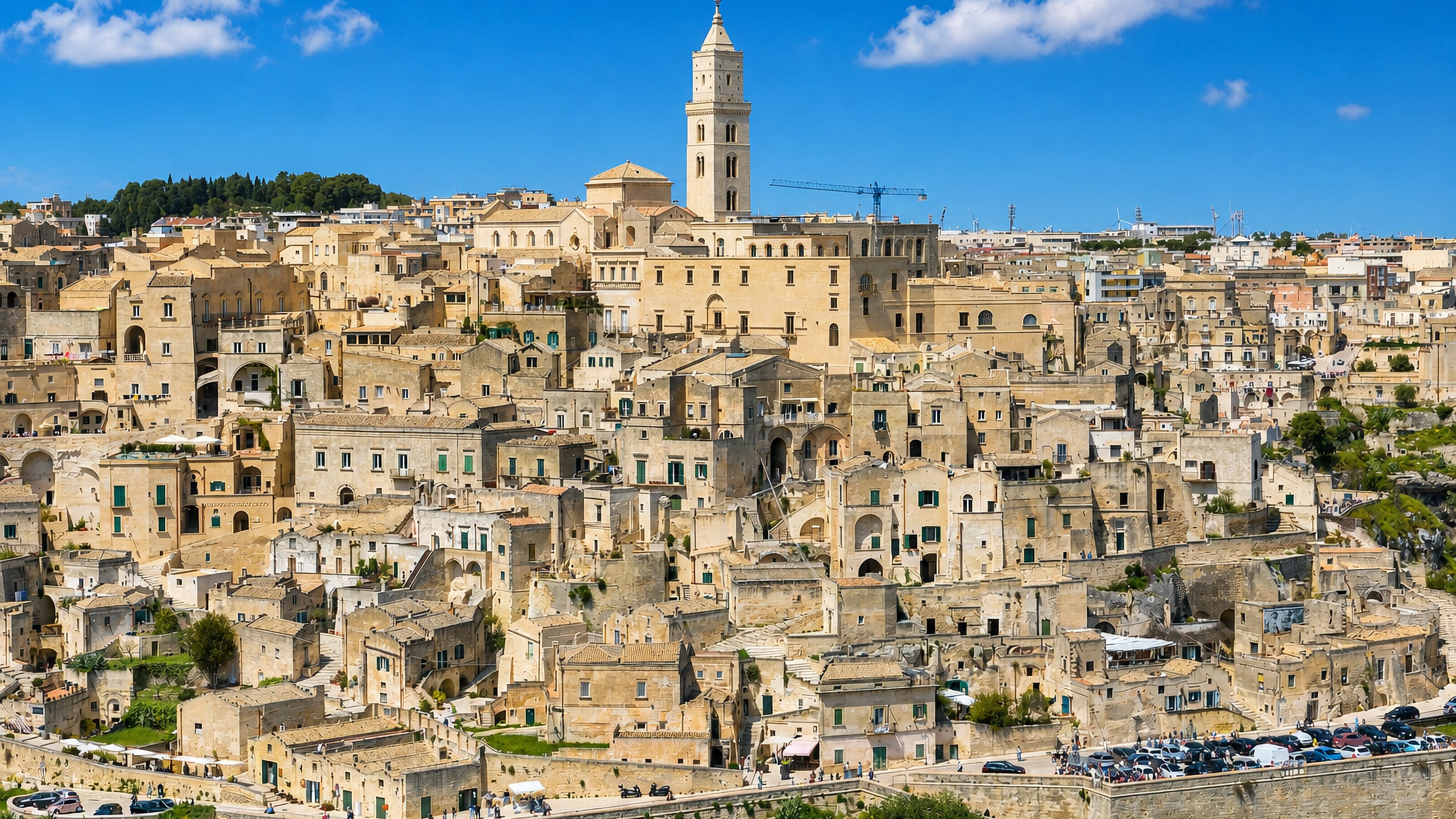
Matera is the capital of the Province of Matera in Basilicata, its oldest quarters cut into two cliffsides and known together as the Sassi.Where to stay →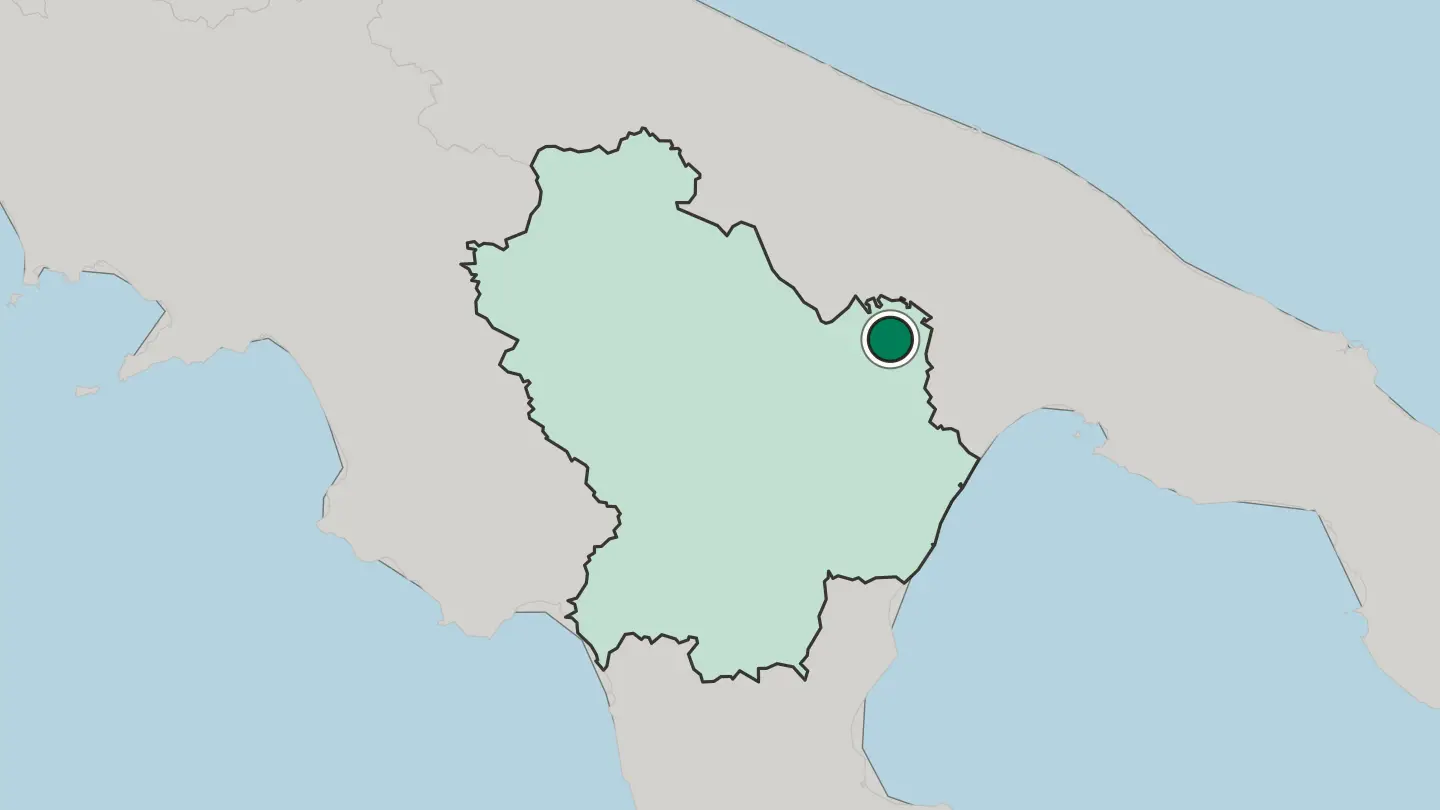
 Italy
Italy
Potenza
Potenza, capital of Basilicata, is the highest regional capital in Italy, above the valley of the Basento in the Apennine Mountains of Lucania.Where to stay →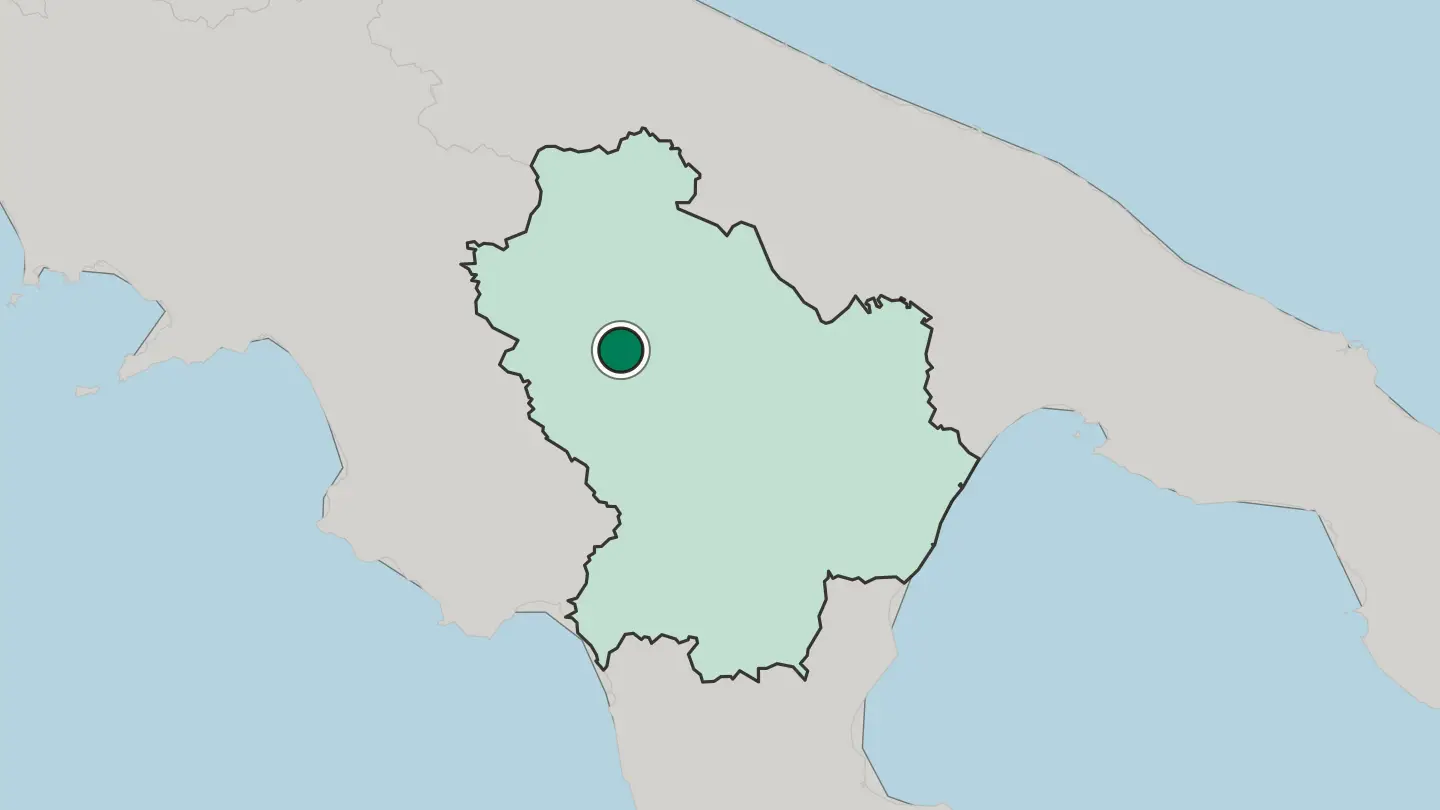
Hotel links are affiliate links: booking through them may earn us a commission, at no extra cost to you. It never affects how places are ranked. How this works
About Basilicata
Matera makes the region famous.
What is Basilicata known for?
Its Sassi are two districts of dwellings, churches and cisterns carved straight into the limestone of a ravine, occupied since the Palaeolithic and named a UNESCO World Heritage Site in 1993. The rest of Basilicata is mountains. The Lucanian Apennines fill most of the interior, rising to the Pollino massif on the border with Calabria, while the extinct volcano of Monte Vulture stands apart in the north.
Two short coasts bracket all of it, one on the Ionian Sea and one on the Tyrrhenian.
Where is Basilicata?
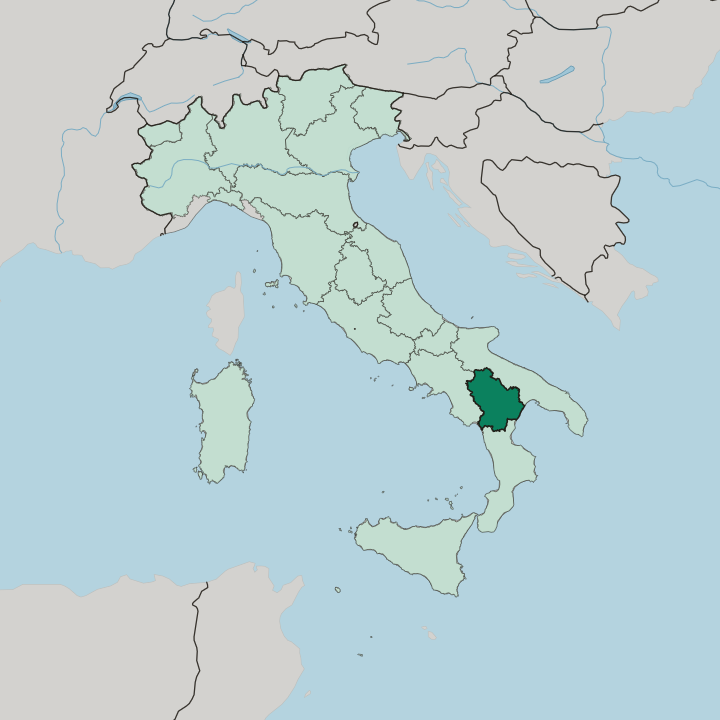
Basilicata forms the instep of the Italian boot, wedged between three other southern regions and two seas. Campania lies to the west. Apulia wraps its northern and eastern edges, and Calabria closes it off to the south, so only two short stretches of the region actually reach salt water. The longer coast runs along the Gulf of Taranto, the wide Ionian bay that separates the toe of Calabria from the heel of Apulia. The shorter one, barely thirty kilometres of it, drops to the Tyrrhenian Sea on the Gulf of Policastro around Maratea.
Everything between the two shores climbs. The Lucanian Apennines take up most of the interior, a tangle of ridges and river valleys that makes this the most mountainous region of the Italian south. The highest ground is the Pollino massif on the Calabrian border, where Serra Dolcedorme tops out above two thousand metres.
Vulture stands apart. Off to the north the old volcano rises on its own, a broken cone of vineyards and crater lakes marooned out on the plain toward the Apulian border. Rivers such as the Basento cut eastward off the mountains and drain across clay hills to the Ionian plains.
Water shaped the ravine that Matera was carved into.
What is Basilicata like?
Basilicata wears its old name, Lucania, on menus and wine labels as readily as on maps. The culture here grew out of hard hill country and a peasant past, and it shows in the cooking. Bread is serious business.
Matera's tall sourdough loaves, made from local durum wheat, carry a protected designation, and the region gives its name to lucanica, the coiled pork sausage the Romans borrowed from the Lucani. Chillies, called peperoni cruschi when dried and fried crisp, turn up in half the dishes. Cave churches frescoed by Byzantine monks pit the ravines around Matera, more than a hundred of them, painted between the medieval centuries when Greek and Latin rites overlapped here.
The deep south wrote about itself through Basilicata. Carlo Levi set his memoir Christ Stopped at Eboli in a mountain village where he was exiled under Fascism, and the book turned the region's poverty into a national conscience. That reckoning eventually emptied and then rescued the Sassi.
Long abandoned as a slum, the caves were restored, and Matera served as European Capital of Culture in 2019. Film crews followed the stone. Directors have used the Sassi as ancient Jerusalem and, in one Bond film, as a chase across the rooftops.
What is the history of Basilicata?
The Greeks came first to the coast. From the seventh century BC, Achaean settlers built Metaponto and other city-states of Magna Graecia along the Ionian shore, and Pythagoras is said to have died there after fleeing Croton. Inland lived the Lucani, the Italic people who gave the region the name Lucania it still answers to.
Rome absorbed both. After the empire fell, Byzantines, Lombards and then the Normans under the Hauteville family fought over the mountains around the year 1000, and Aragonese and Spanish rulers followed them into the south. The modern name Basilicata was made official when the region joined a unified Italy.
What is the climate of Basilicata?
Altitude splits the weather in two. The Ionian and Tyrrhenian coasts are Mediterranean, with hot dry summers around Metaponto and Maratea and mild wet winters that rarely turn cold. Climb into the Lucanian Apennines and it flips to something continental, with real snow on the Pollino heights and frosts that grip Potenza through the winter because the capital sits above eight hundred metres.
Spring and autumn are the kind seasons inland. Summer heat bakes the clay hills around Matera hard and bright.
How do you get to Basilicata?
Basilicata has no major airport of its own. Most travellers fly into Bari, in neighbouring Apulia, then drive an hour south-west to Matera, which is far easier reached by road than by rail. The western approach runs through Campania.
Naples is the gateway from that side, with trains and buses dropping down to Potenza in a little over two hours. Within the region a car does the real work, threading the mountain valleys of the Lucanian Apennines between the coasts and the cave city. Rail reaches Potenza and Metaponto, but the hills win.
Common questions
What is the best area to stay in Basilicata?
Matera: cave hotels beside the Sassi. Maratea: the Tyrrhenian cliff coast. Metaponto: Ionian beaches and Magna Graecia ruins. Potenza: a base for the mountain interior.
Good for
More regions in Italy
Updated September 2026