Italy
Calabria, Italy — Towns & Travel Guide
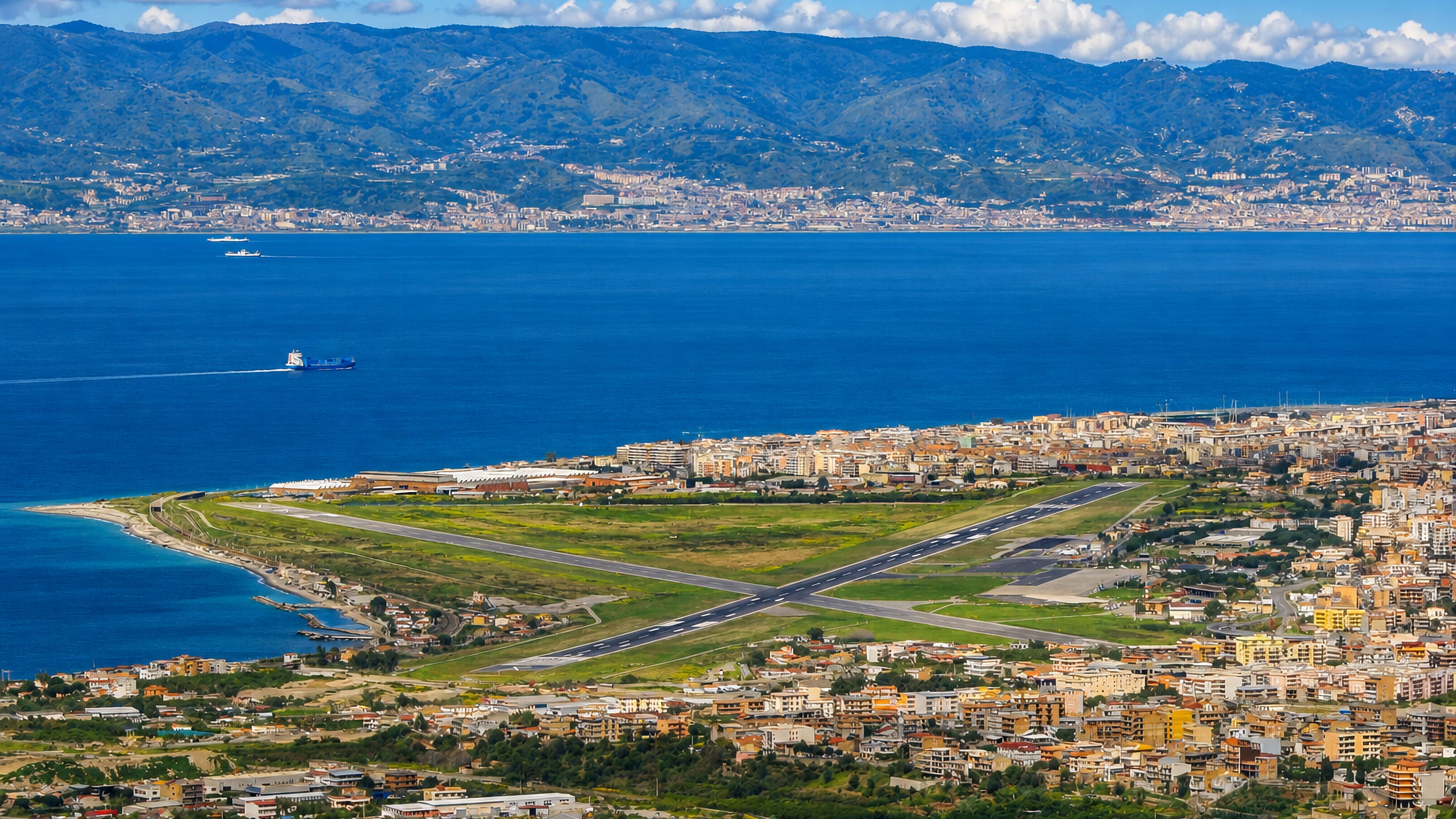
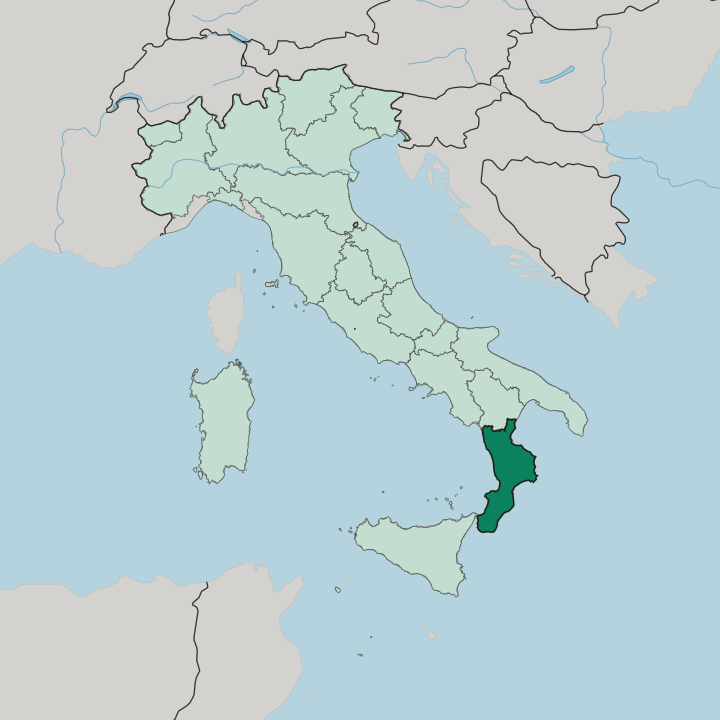
Calabria is the mountainous toe of the Italian peninsula, a long strip of coast between two seas facing Sicily.
Hotel links are affiliate links: booking through them may earn us a commission, at no extra cost to you. It never affects how places are ranked. How this works


Towns & cities in Calabria
Pick a town or city — each links to where to stay.

 Italy
Italy
Reggio Calabria
Reggio Calabria faces Sicily across the Strait, and its National Museum of Magna Græcia holds the Riace Bronzes of Magna Graecia.Where to stay →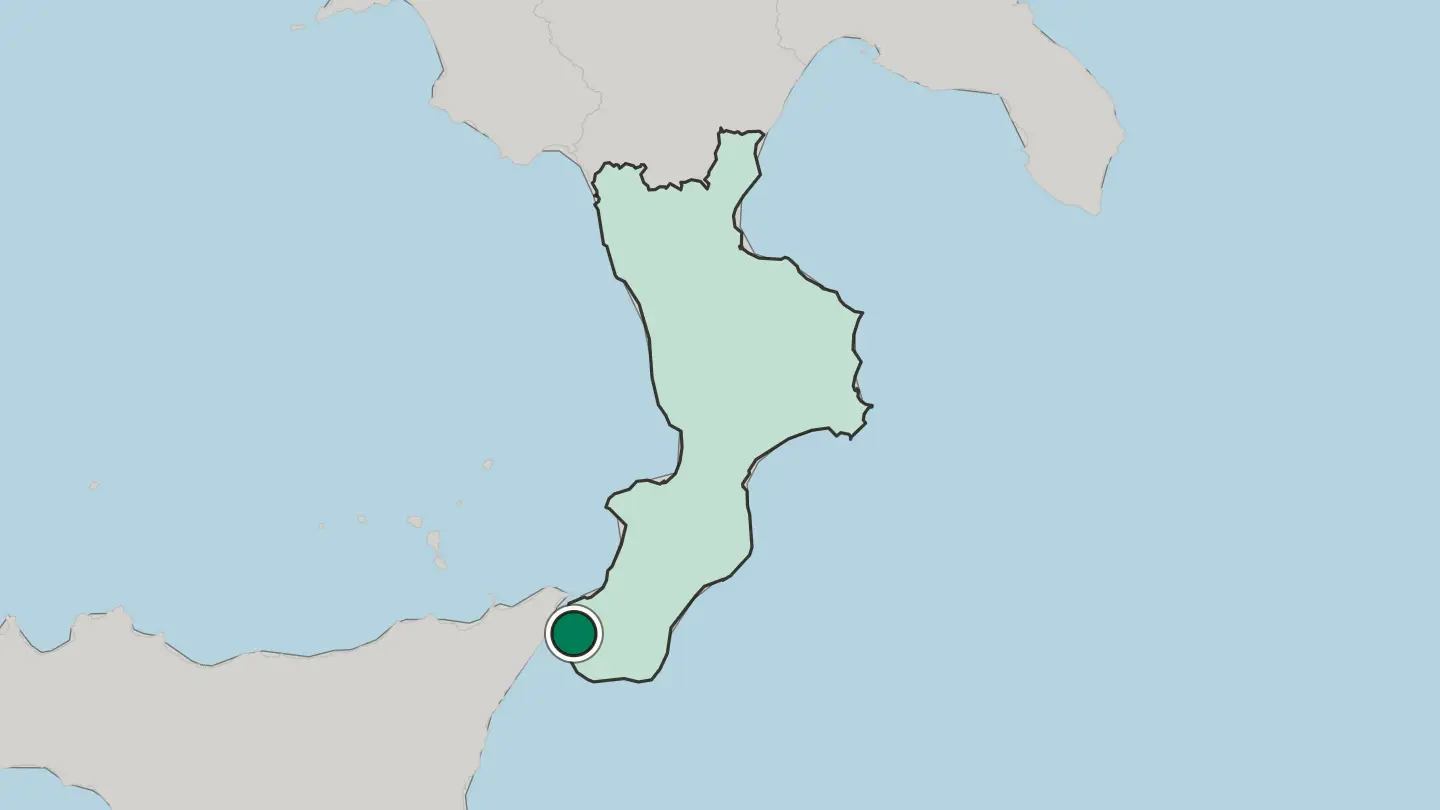
 Italy
Italy
Catanzaro
Catanzaro is the capital of Calabria, known as the City of the two Seas, with coastal districts down on the Ionian coast.Where to stay →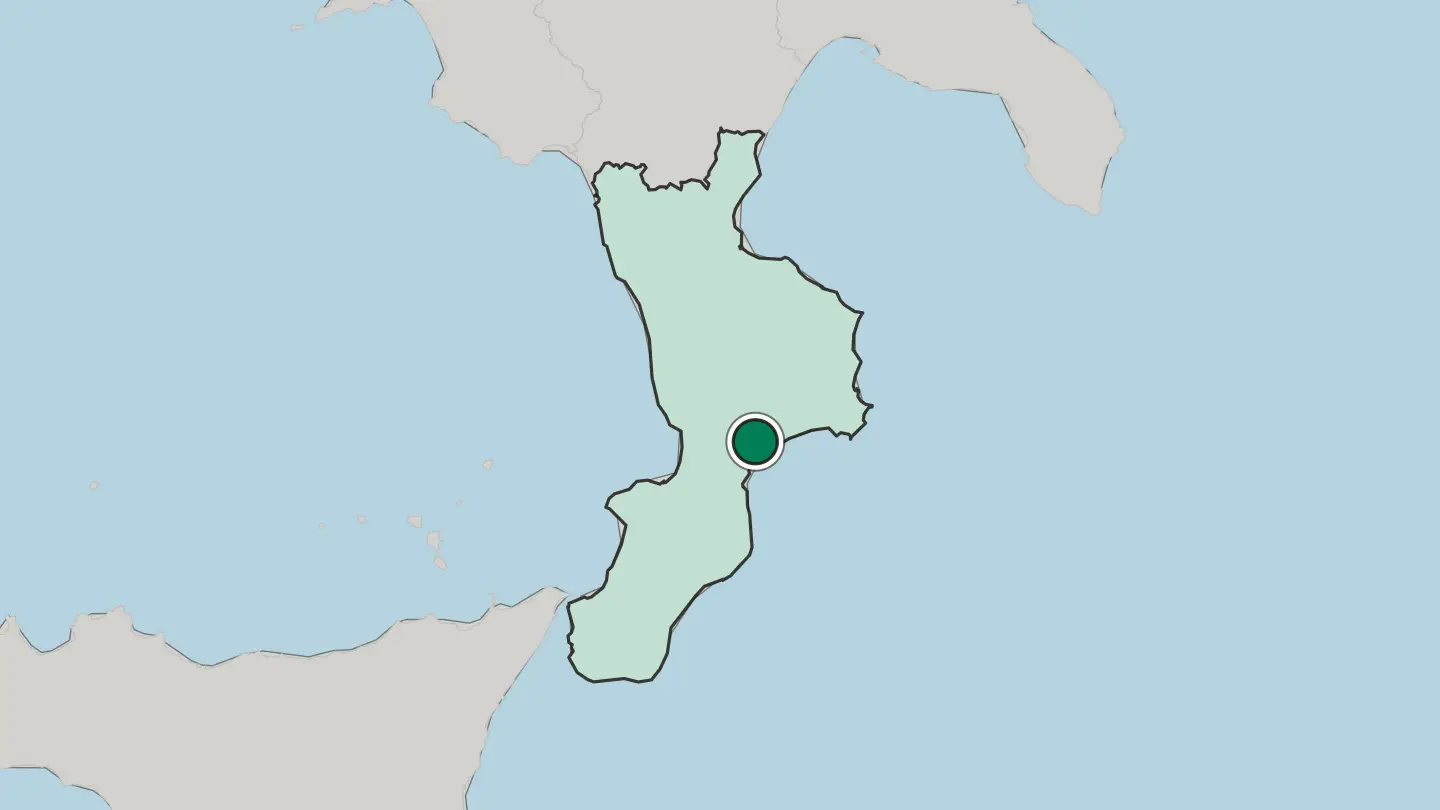
 Italy
Italy
Lamezia Terme
Lamezia Terme is a Calabrian city whose landmarks gather around Nicastro Cathedral, the Castello di Nicastro and San Pancrazio Church.Where to stay →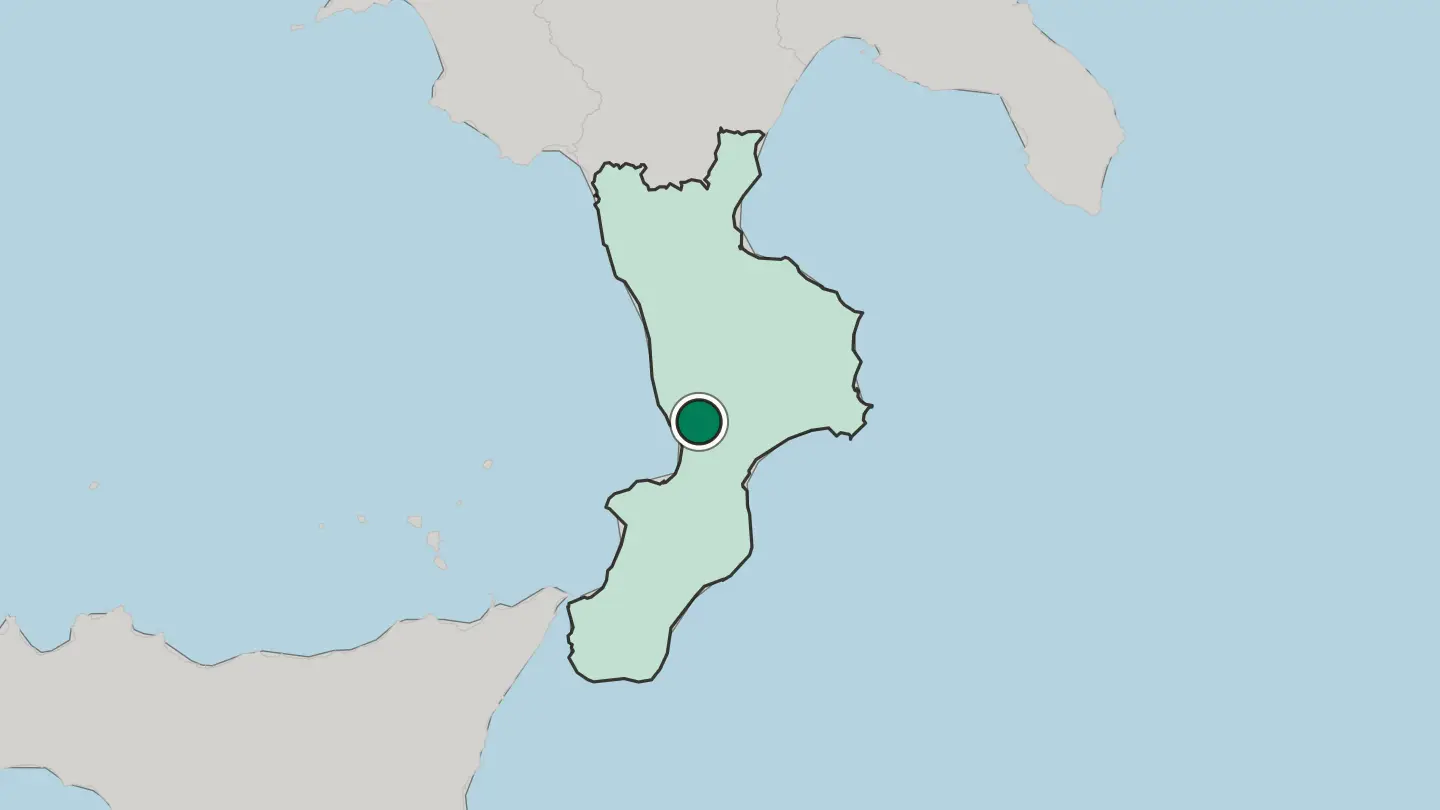
 Italy
Italy
Crotone
Crotone stands on the Ionian Sea in Calabria, a port city grown from Magna Graecia under the Castle of Charles V.Where to stay →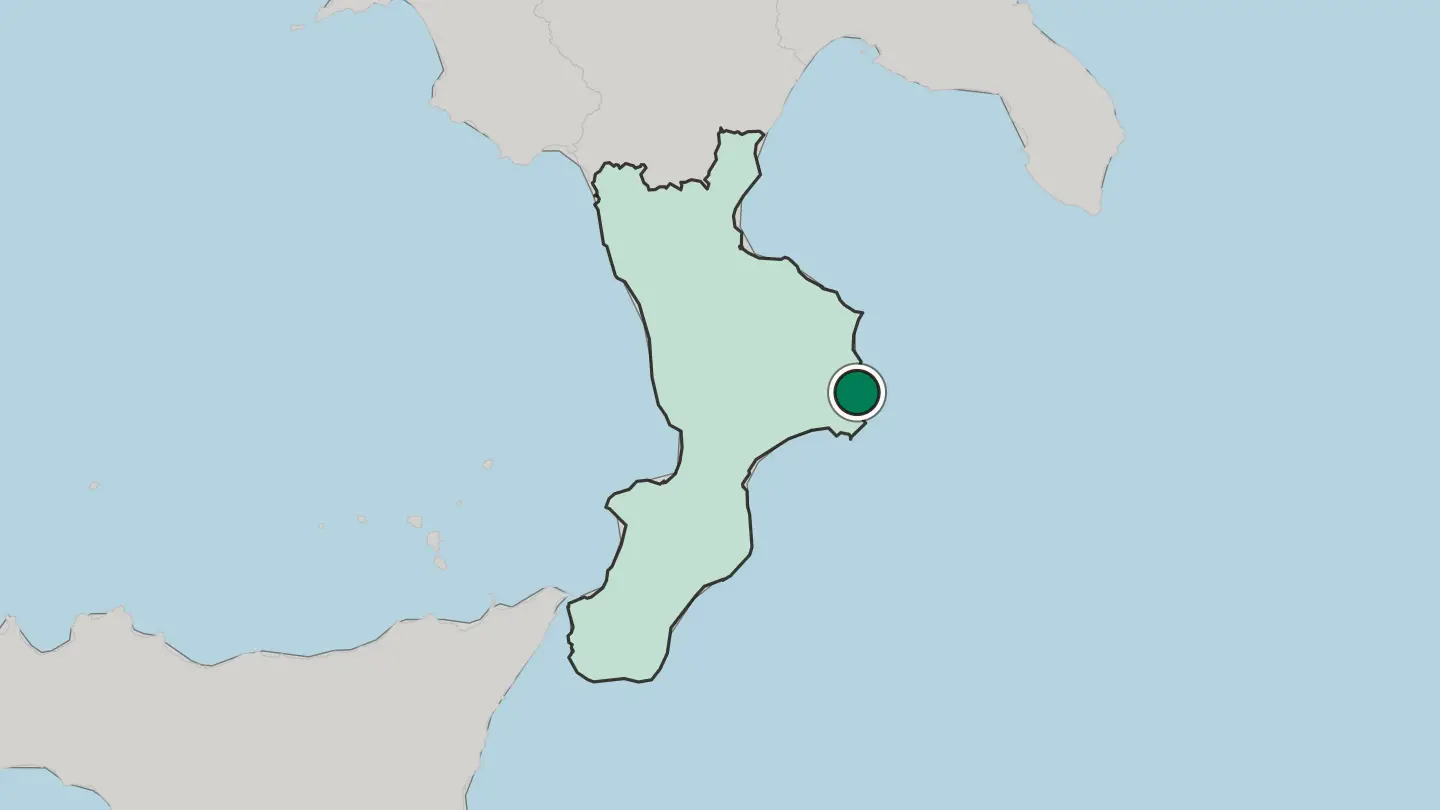
 Italy
Italy
Cosenza
The Normanno-Svevo Castle and the Museo all'aperto Bilotti mark Cosenza, capital of its province in Calabria.Where to stay →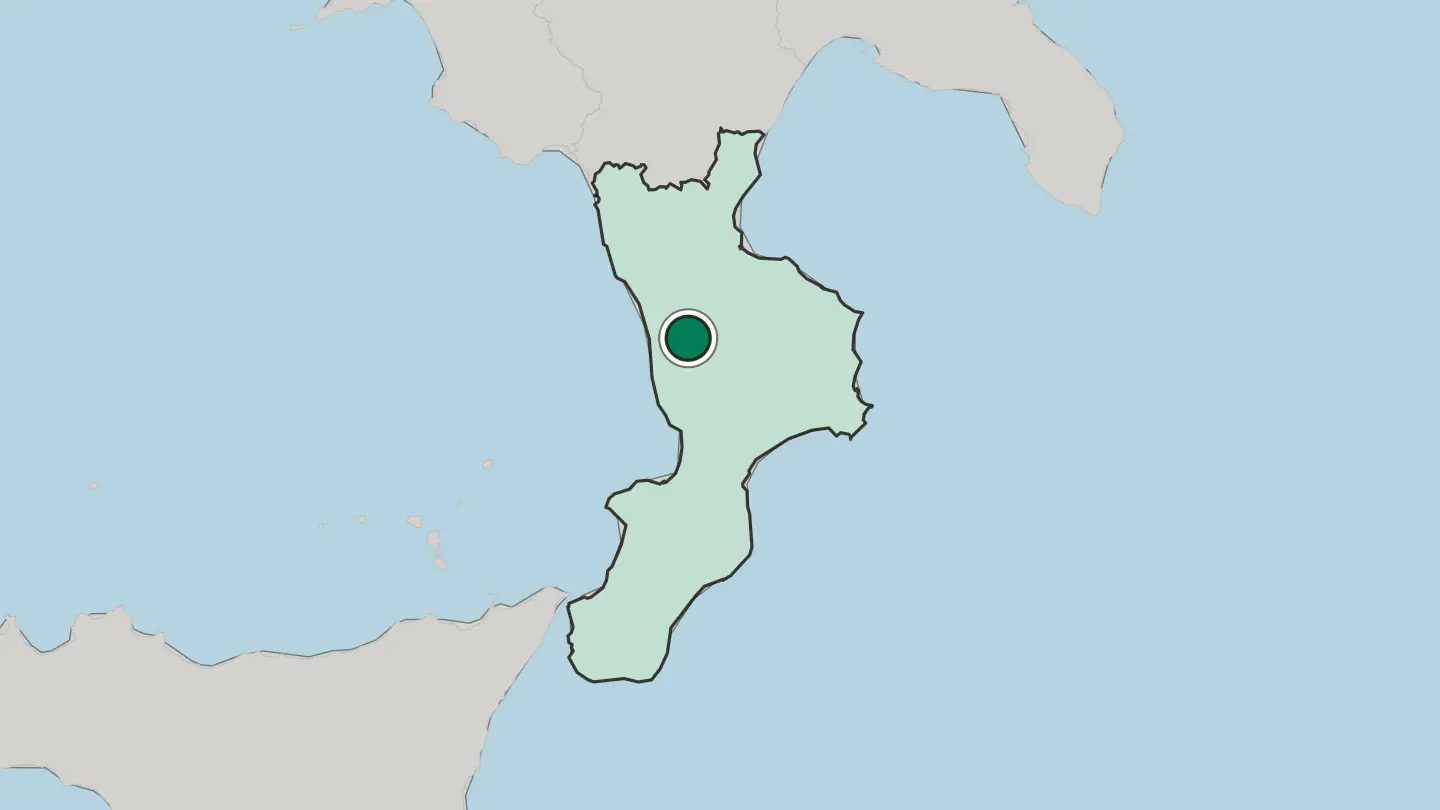
Hotel links are affiliate links: booking through them may earn us a commission, at no extra cost to you. It never affects how places are ranked. How this works
About Calabria
What is Calabria known for?
Calabria forms the toe of the Italian boot, its coasts washed by the Tyrrhenian Sea on one side and the Ionian Sea on the other. Two ancient Greek bronzes anchor its fame. The Riace bronzes, warriors cast around 460 BC and pulled from the sea off Riace in 1972, stand in the museum at Reggio Calabria.
Beaches draw most visitors, above all the cliff-backed sand at Tropea. Inland, three mountain ranges rise green and wooded above the shoreline.
Where is Calabria?
Calabria is the toe of the Italian peninsula, the southernmost stretch of the mainland. It is nearly all coast and mountain. A long narrow neck of land runs down toward Sicily, with the Tyrrhenian Sea along its western edge and the Ionian Sea along its eastern one. Basilicata lies to the north, the only land border the region has.
Everything south of that is peninsula, tapering to a point at the Strait of Messina, where barely two miles of water divide the mainland from Sicily. Mountains fill the interior almost from shore to shore. The Pollino massif walls off the north along the Basilicata border, and the Pollino National Park spread across it ranks among the largest protected areas in the country.
South of it the Sila rises as a broad wooded plateau, high enough to hold snow and old forest, long called the Great Wood of Italy. The land drops and lifts again to the Aspromonte massif in the far south, its granite slopes climbing straight up behind Reggio Calabria. Between the ranges and the two seas, the coast is a thin ribbon of beach, cliff and river mouth.
Catanzaro, the regional capital, sits on that narrow waist where the Tyrrhenian and Ionian shores come closest together.
What is Calabria like?
Calabria wears its Greek past on the surface. The coast was the heart of Magna Graecia, the belt of Greek colonies that ringed southern Italy, and Rhegion, now Reggio Calabria, was among the oldest and richest of them. That inheritance survives in more than the Riace bronzes.
Pockets of Griko, a Greek dialect, still hold on in the villages of the Aspromonte, and Albanian-speaking Arbëreshë communities, settled here for five centuries, keep their own rite and tongue in the hills to the north. The table tells the same layered story. Calabrian cooking is peasant food turned emphatic, built on chilli, pork and the sun. 'Nduja, a soft spreadable sausage fired red with hot pepper, comes from the town of Spilinga near Tropea and has carried the region's name far beyond it.
The sweet red onion of Tropea flavours everything from jam to salad. And the bergamot orange grows almost nowhere else on earth, its oil pressed from groves along the Ionian coast and sold into perfume and Earl Grey tea. Feast days, brass bands and long processions mark the calendar in towns that empty and refill as their emigrants return each summer.
What is the history of Calabria?
Greeks settled these shores first. From the 8th century BC they built colonies along the coast that grew into Magna Graecia, and Rhegion, the city that became Reggio Calabria, rose among the most powerful. Rome absorbed the region, and after it came Byzantines, Normans and Spanish, each leaving churches, castles and words behind.
Poverty and earthquakes drove waves of Calabrians overseas in the modern era, thinning the villages that their descendants still return to. The layers show in a single hill town, Greek foundation under Norman wall under Baroque church.
What is the climate of Calabria?
The coast is Mediterranean through and through, with hot dry summers and mild wet winters along both the Tyrrhenian and Ionian shores. The mountains keep their own weather. Up on the Sila and the Aspromonte the winters turn cold and snowy, cold enough that ski lifts run in the Sila while the beaches below stay warm.
Sun bakes the Ionian side hardest. Rain falls mostly from autumn into spring, leaving the summer long, bright and dry.
How do you get to Calabria?
Most visitors fly into Lamezia Terme, the region's main airport, set on the Tyrrhenian coast at the narrow waist of the peninsula. Trains run from there. The main line hugs the western shore, linking Lamezia with Tropea, Scilla and Reggio Calabria in an hour or two apiece.
From Reggio Calabria ferries cross the Strait of Messina to Sicily in twenty minutes. To reach the mountains or the Ionian side you generally need a car, because the railway thins out once it leaves the western coast.
Common questions
What is the best area to stay in Calabria?
Tropea: beaches and a first visit to Calabria. Scilla: a short quiet stay by the strait. Reggio Calabria: the Magna Graecia museum and the Sicily crossing. Cosenza and the Sila: the Sila highlands and inland Calabria.
Good for
More regions in Italy
Updated September 2026