Italy
Molise, Italy — Towns & Travel Guide
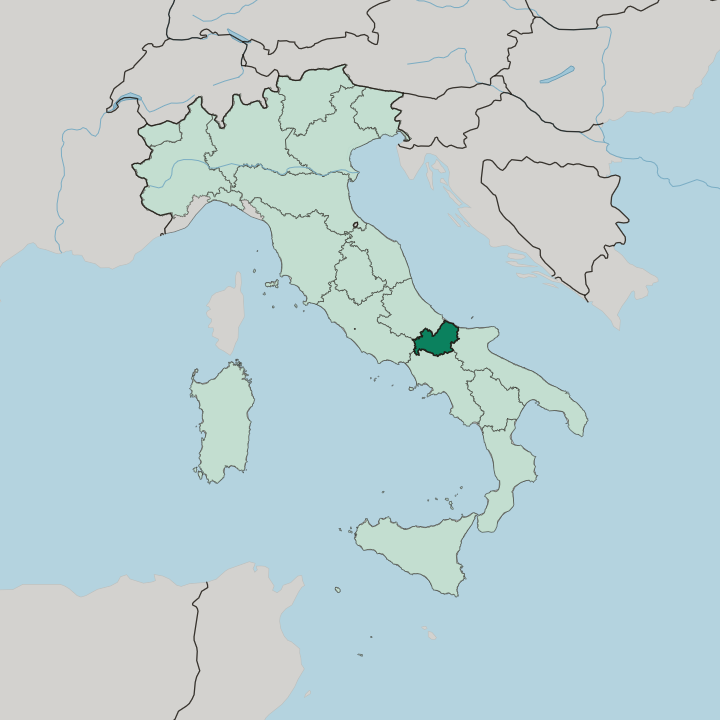
Molise is Italy's second-smallest and least-populated region, a mountainous corner of the south reaching a short Adriatic coast.
Hotel links are affiliate links: booking through them may earn us a commission, at no extra cost to you. It never affects how places are ranked. How this works


Towns & cities in Molise
One town here has its own guide — it links to where to stay.
 Italy
Italy
Campobasso
Campobasso is the capital of Molise, a city in the high basin of the Biferno, ringed by the Sannio and Matese mountains of southern Italy.Where to stay →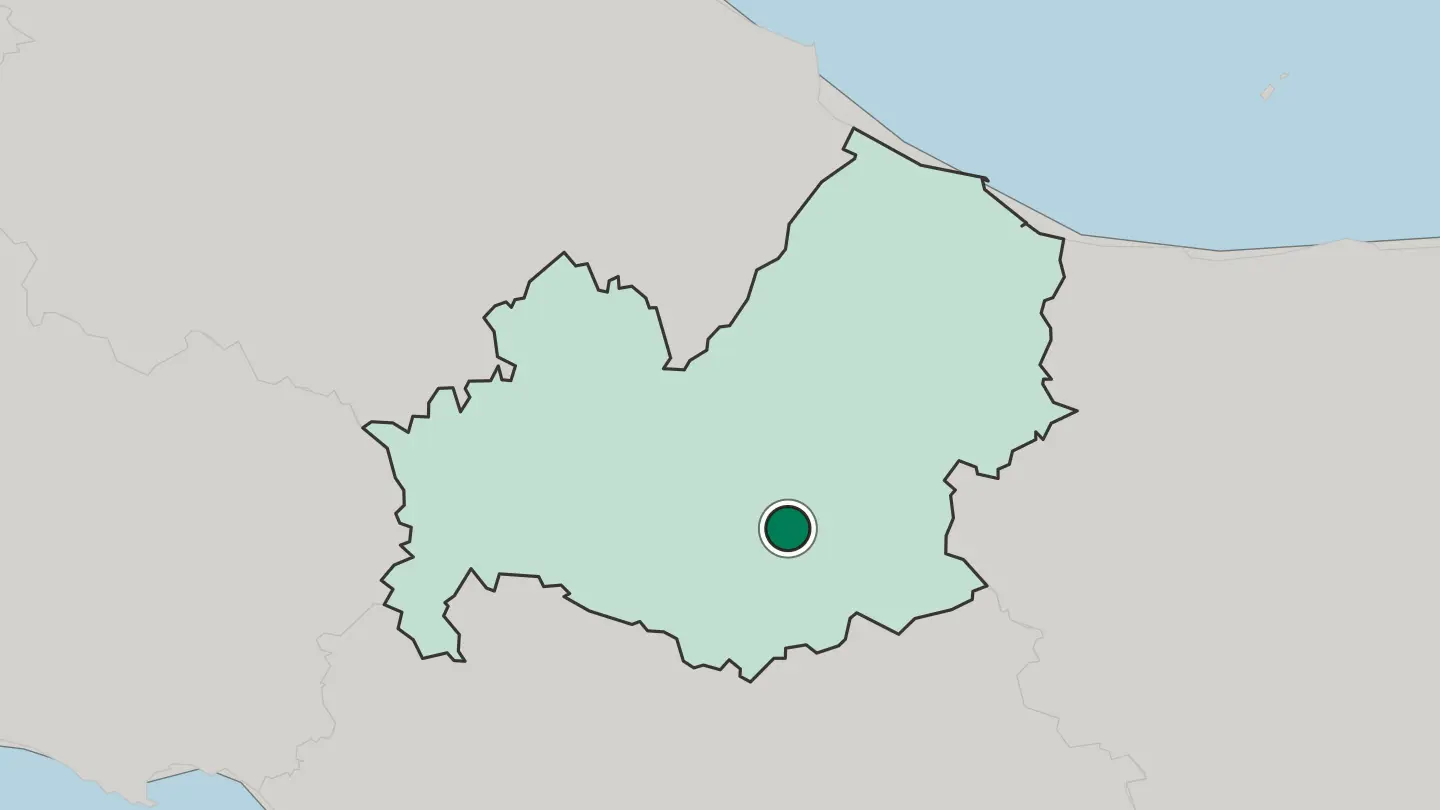
Hotel links are affiliate links: booking through them may earn us a commission, at no extra cost to you. It never affects how places are ranked. How this works
About Molise
What is Molise known for?
Molise is Italy's second-smallest region and its least-populated. Campobasso is the capital, a hill town crowned by the Castello Monforte and hemmed in by the Sannio and Matese mountains. The other provincial seat, Isernia, holds one of the oldest known human sites in Europe, unearthed in the 1970s.
Tratturi still thread the interior. Worn deep by centuries of transhumance, they once carried flocks between the mountains and the Adriatic plain. This is the quiet corner of the south.
Where is Molise?
Molise fills a wedge of southern Italy between Abruzzo and Puglia, running from the central Apennines down to a short stretch of the Adriatic coast. Mountains cover more than half of it. The Matese massif rises along the south-western edge, and its summits are the highest ground in the region.
Lower ridges and worn hills fall away toward the sea. Only one river, the Biferno, runs its entire course inside Molise, rising near Bojano and gathering streams off the Matese before it empties into the Adriatic. The Trigno traces part of the northern boundary with Abruzzo, while the Fortore marks part of the south-eastern border with Puglia.
Barely thirty-five kilometres of sandy shore front the open sea, and the port town of Termoli sits along it, looking out toward the Tremiti Islands. Little of the land is flat. That sets the region apart from its neighbours.
Where Puglia spreads out in plains and Abruzzo climbs to the Gran Sasso, Molise stays middling and folded, all valleys and ridgelines. The two provincial capitals sit up in that country. Campobasso stands high in the Biferno basin, ringed by the Sannio and Matese mountains, while Isernia holds a spur to the west toward the Mainarde.
From most of the interior you are never far from a summit, a river valley, or the trace of an old tratturo.
What is Molise like?
Molise's character was shaped by the shepherd's year. For centuries flocks moved twice over between the high Apennine pastures and the warmer lowlands, driven along grassed drove roads, the tratturi, some of them broad as a modern motorway. The Tratturo Magno alone ran from L'Aquila down to Foggia.
That rhythm still marks the food. Cavatelli, hand-rolled from flour and water, turns up on tables across the region, often under lamb slow-cooked with mountain herbs. Caciocavallo cheese hangs curing in pairs in village shops.
Hill towns keep their medieval cores and their festivals, none louder than Campobasso's Corpus Christi parade of living tableaux, the Sagra dei Misteri. Little here has been smoothed over for visitors. The scale stays human.
This is a region of small comuni, most of them under a few thousand people, scattered up valleys that empty toward the coast. The dialect shifts from town to town, and the old Samnite past sits close to the surface in place names and ruins. Isernia's paleolithic layers, among the earliest human traces in Europe, root that depth in something far older than Rome.
People still gather for the drove-road walks and the saints' days that mark the calendar. Time moves slowly, and that is rather the point.
What is the history of Molise?
Long before Rome, this was the heart of Samnium, homeland of the Samnites. Those Oscan-speaking hill tribes, the Pentri among them, fought Rome through three long Samnite Wars before they were absorbed into the Republic. The name Molise came much later, from a Norman county held by the de' Moulins family in the Middle Ages.
For most of its modern life the territory was joined to Abruzzo. It broke away in 1963. That split made Molise the newest of Italy's twenty regions.
What is the climate of Molise?
Two climates meet across Molise. The coast around Termoli stays mild and Mediterranean, with warm dry summers and gentle winters. Inland, altitude takes over.
Campobasso, high in the hills, can gather close to a metre of snow across a single winter, and the Matese slopes above it hold the cover long enough for the runs at Campitello Matese. Summers in the interior run cooler and fresher than on the shore. Spring and autumn are the kindest seasons for walking the tratturi.
How do you get to Molise?
No airport serves Molise directly. Most travellers come overland, either from the Adriatic side or up from Naples. Termoli sits on the main Adriatic railway between Ancona and Lecce, which makes it the easiest way in by train, and a branch line climbs inland from there to Campobasso.
Drivers reach Campobasso and Isernia on trunk roads that peel off the coast, roughly two hours from Naples. Fast trains do not stop here. That is part of why the region stays so little visited.
Common questions
What is the best area to stay in Molise?
Termoli: the Adriatic coast and seafood. Campobasso: touring the mountainous interior. Isernia: the Mainarde mountains and Samnite ruins. The tratturi towns: walking the old drove roads.
Good for
More regions in Italy
Updated September 2026