North Korea
North Pyongan, North Korea — Towns & Travel Guide
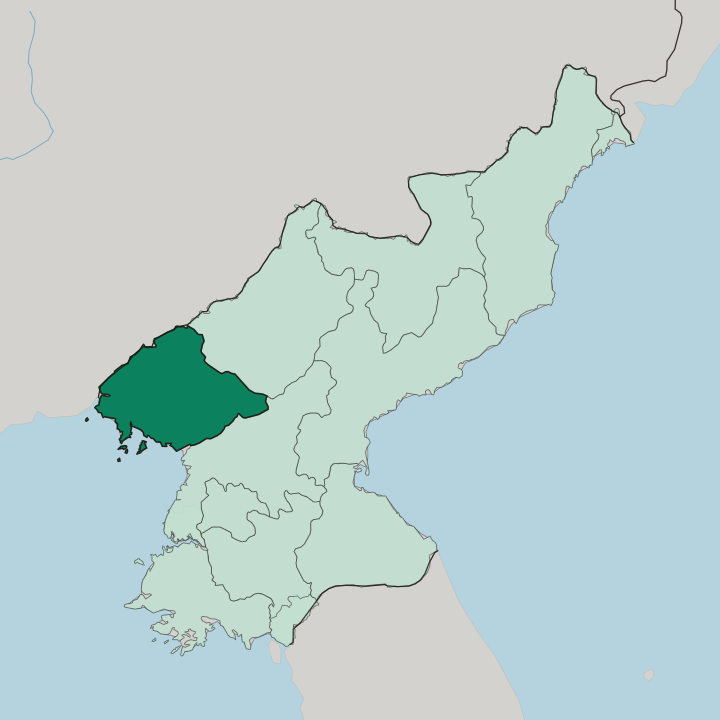
North Pyongan is North Korea's north-western province, edging the Yalu River across from China, with Sinŭiju at its border.
Find your area →


Towns & cities in North Pyongan
One town here has its own guide — it links to where to stay.

 North Korea
Sinŭiju
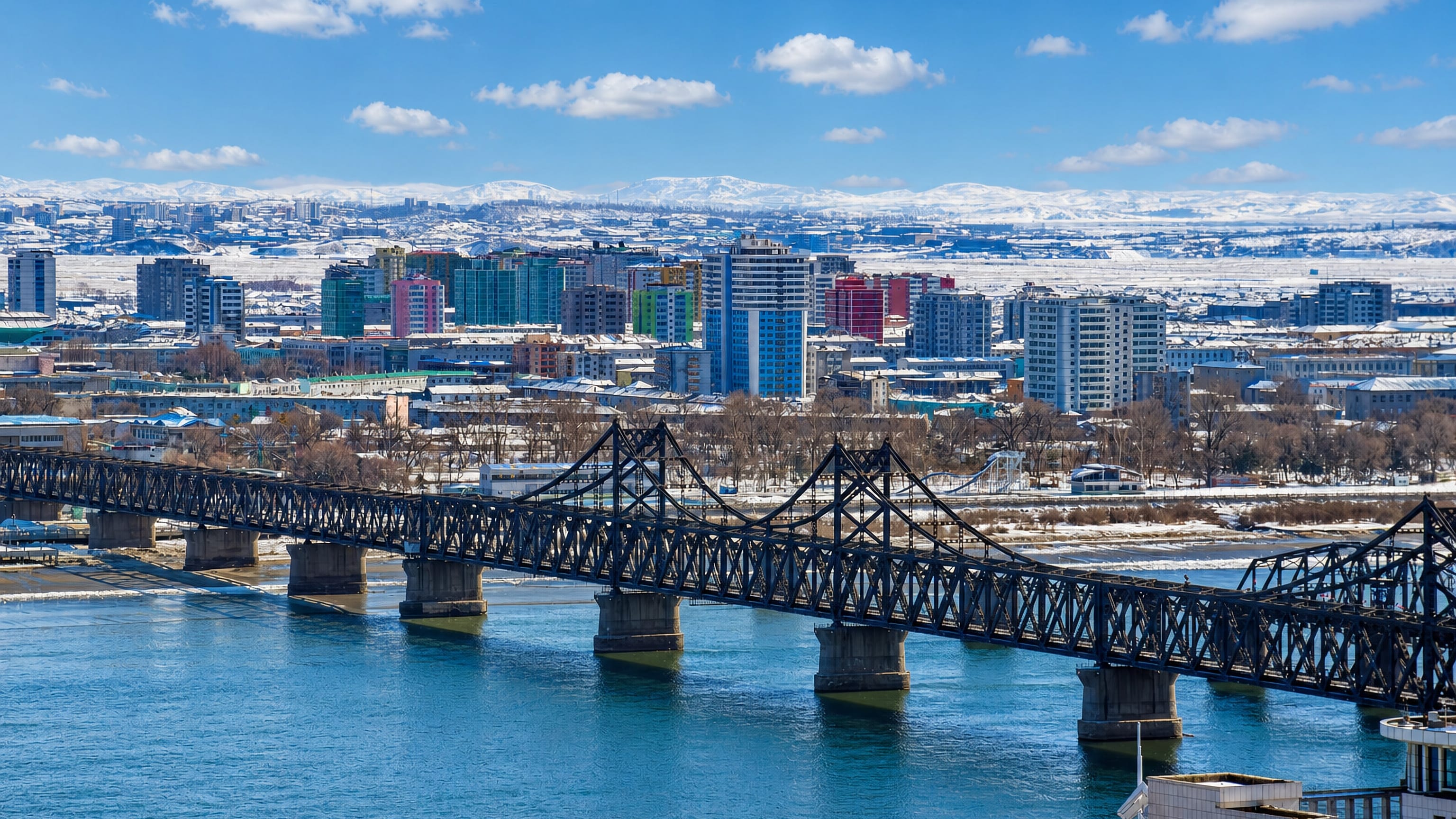
Sinŭiju faces Dandong across the Yalu River, the capital of North P'yŏngan province at North Korea's border with China.Where to stay →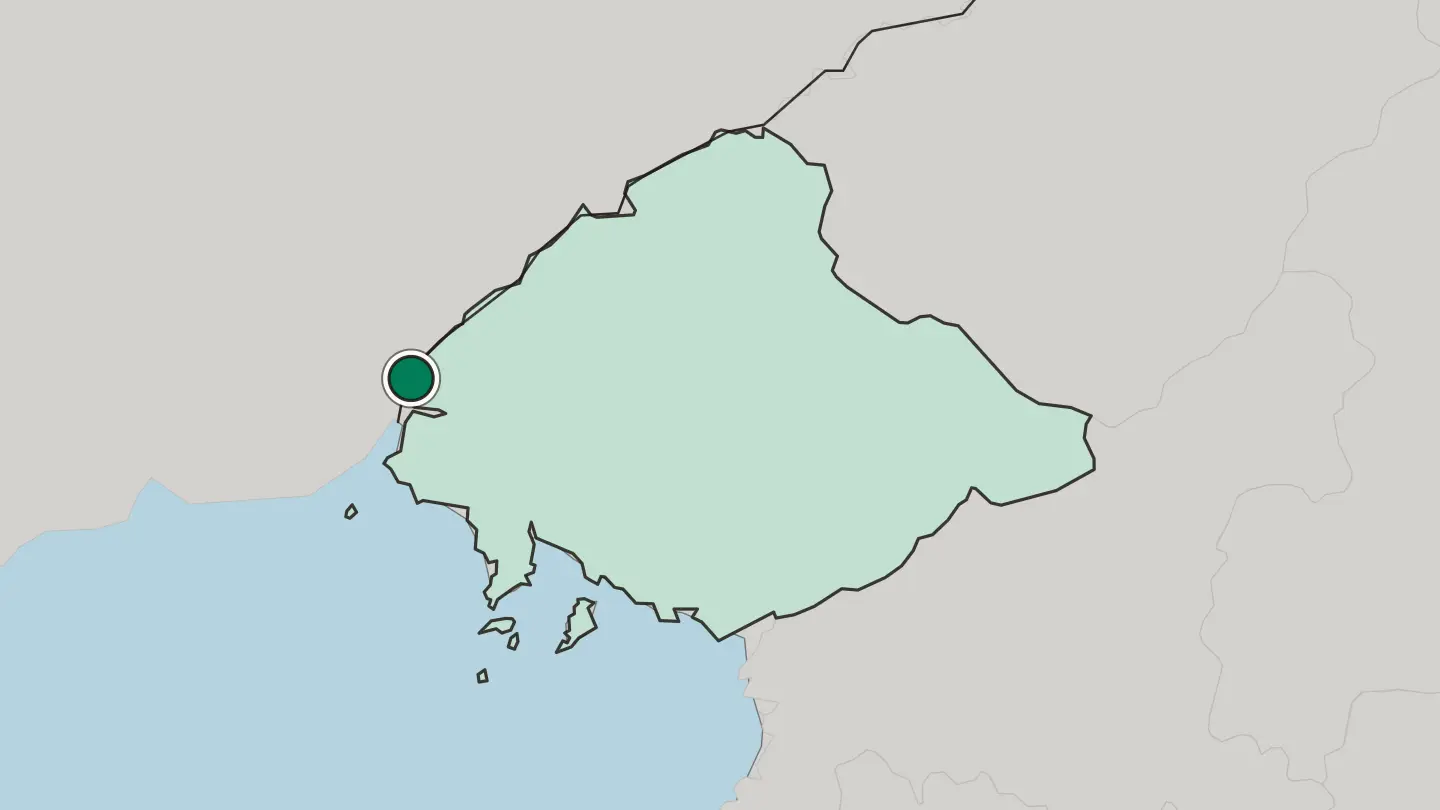
About North Pyongan
What is North Pyongan known for?
This is North Korea's front door to China. The Yalu River, called the Amnok on the Korean side, runs along the whole northern edge, and Sinŭiju sits on its bank facing the Chinese city of Dandong. Most of the country's overland trade crosses here.
Upstream stands the Sup'ung Dam, one of Asia's older hydroelectric giants and prominent enough to appear on the national emblem. Inland, Mount Myohyang rises out of the province with the Pohyonsa temple at its foot.
Where is North Pyongan?
North Pyongan fills the north-western corner of North Korea. Its whole northern boundary is the Yalu River, the water that also divides the two Koreas' neighbour from China, and the province looks out past that river toward Liaoning on the far bank. To the south-west the land runs down to the sea.
Here the coast meets Korea Bay, the sheltered northern reach of the Yellow Sea into which the province's rivers empty. The interior climbs away from the water. Ridges of the Myohyang range rise inland, their higher peaks passing well over a thousand metres, and the terrain grows steep enough to cut valleys off from one another.
The Chongch'on River drains the southern edge of the province before reaching the sea near Sinanju. Sinŭiju, the capital, sits at the north-western tip where the Yalu finally meets salt water, close to the Chinese city of Dandong. From that low river mouth the province rises steadily eastward into the mountains, so that a single province holds both a tidal border river and high forested peaks.
What is North Pyongan like?
Life in the province turns on the river and the border. Sinŭiju has grown up as a trading and rail town, its fortunes tied to the crossing into Dandong and the goods that move across the Yalu River. That commercial edge sets it apart from the farming districts behind it, where rice and fields fill the lowland toward Korea Bay.
The everyday language is Korean, as across all of North Korea. The older culture is quieter and further inland. At the foot of Mount Myohyang stands Pohyonsa, a Buddhist temple founded in 1042 under the Goryŏ dynasty and one of the few active monasteries left in the country.
It once guarded parts of the Tripitaka Koreana and remains the province's great religious monument. Pilgrimage in the old sense is gone. What survives is the temple itself, its pagodas among the pines, drawing the organised tours that reach this corner of the north-west.
What is the history of North Pyongan?
The province is young as a unit but old as a frontier. It was carved out in 1896, when the reforms of the late Korean Empire split the single P'yŏngan Province into a northern and a southern half. Sinŭiju itself was largely built under Japanese rule after 1910, raised at the Korean end of the railway bridge over the Yalu River.
Later still, in 2002, the state marked out a Special Administrative Region beside the capital to test a market economy near the Chinese border. The experiment stalled almost at once.
What is the climate of North Pyongan?
Summers here are hot, wet and stormy. From June into September a monsoon drives most of the year's rain onto the province, swelling the Chongch'on River and the lower Yalu and flooding the coastal plain along Korea Bay. Winters flip the pattern hard.
They turn cold and dry, with sharp winds off the mainland and little snow to soften them. Inland, the Myohyang heights stay cooler and cloudier than the low river mouth at Sinŭiju.
How do you get to North Pyongan?
Nearly everyone arrives by train. The P'yŏngŭi Line runs up from Pyongyang and ends at Sinŭiju, and the same track carries on across the Sino-Korean Friendship Bridge over the Yalu River into Dandong in China. That bridge is the main way in from the Chinese side.
Reaching the province at all means an organised, guided trip. Inside it, road and rail thread on from Sinŭiju toward Mount Myohyang and the interior.
Common questions
What is the best area to stay in North Pyongan?
Sinŭiju: the border and the Yalu waterfront.
Good for
More regions in North Korea
Updated September 2026