North Korea
Rason, North Korea — Towns & Travel Guide
Rason is North Korea's ice-free port city on the Sea of Japan, wedged into the corner where the country meets China and Russia.
About Rason


Towns & cities in Rason
How the towns here differ, and where visitors usually base themselves.
Beds cluster in Rajin. It is the ward that holds the port, so the town centre near the main square puts you within walking reach of the seafood market and the evening street barbecues. The Emperor Hotel and Casino sits apart from all that, out on Rajin Bay, a Hong Kong-owned resort built for Chinese gamblers crossing the border.
Older Japanese-era hotels stay closer to the square, plainer and cheaper. Out on Pipa Island a smaller guesthouse overlooks the water where boat tours go to watch seals. Choose Rajin for the market and the port if you want to be where the trade happens; choose the Emperor for the casino and the beach.
About Rason
What is Rason known for?
Rason is North Korea's experiment with the outside world. The city runs as a special economic zone, walled off from the rest of the country, where foreign traders, a Hong Kong casino, and private markets operate under the zone's own rules. Its harbour is the reason.
Rajin holds an ice-free port, and both China and Russia ship cargo through it to reach open water. Travellers cross in from the Chinese side for the beaches, the seafood markets, and a look at a place the DPRK otherwise keeps shut.
Where is Rason?
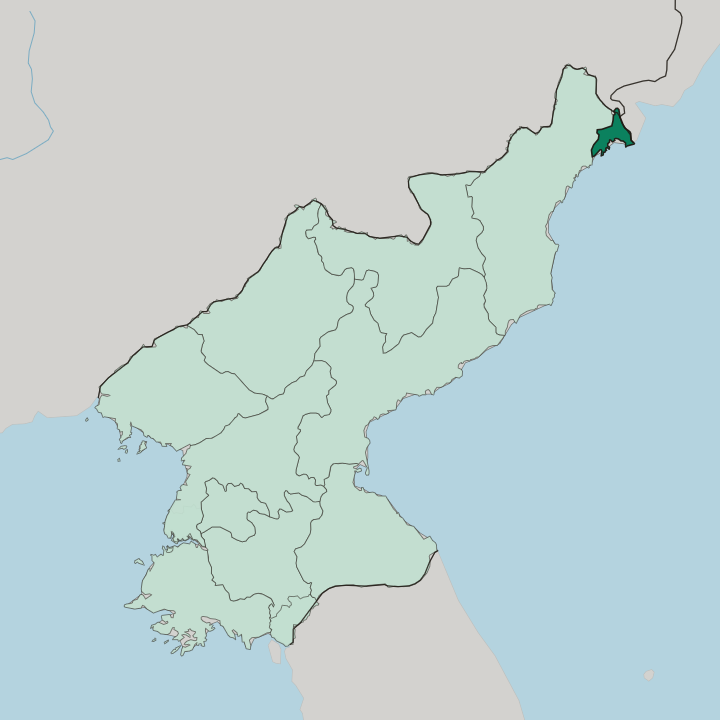
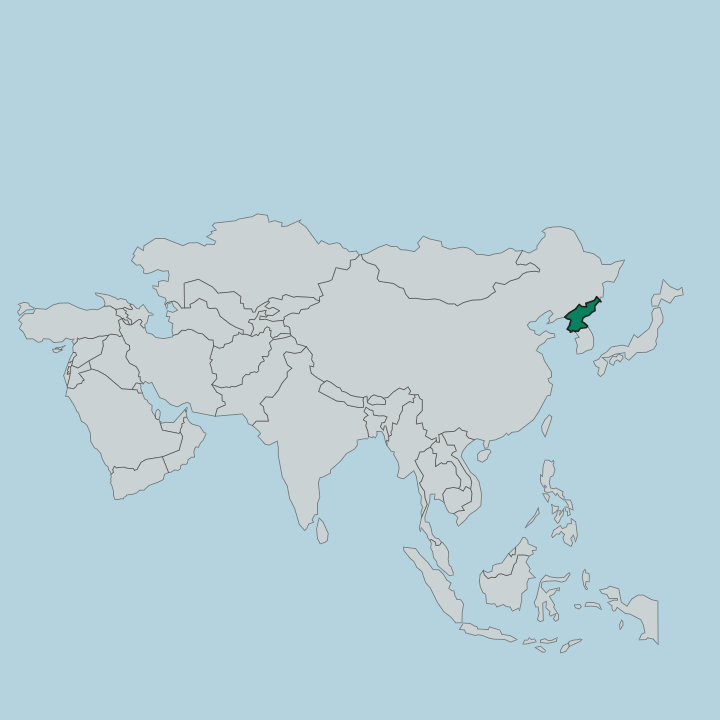
Rason occupies the far north-eastern corner of North Korea, the point where the country's coast runs out against two borders at once. Its eastern edge is the Tumen River. That river carries the frontier with China upstream and with Russia near the mouth, and it empties into the Sea of Japan just below the ward of Sonbong.
At the very corner sits a tripoint. There the borders of North Korea, China, and Russia meet within a few kilometres of one another, and the settlement of Tumangang guards the rail crossing to the Russian side. The zone spreads across two bays on the sea.
Rajin Bay and Josan Bay notch the coast, and the port of Rajin shelters inside Rajin Bay, ringed by low hills that drop straight to the water. Beyond the harbour the land is coastal plain and forested ridge, cut off from the rest of North Korea by mountains that made this pocket easy to seal as a separate zone. Sonbong lies to the north-east toward the river mouth, Rajin to the south along the bays.
The whole territory covers a compact stretch of shore, and no part of it sits far from either the sea or the frontier.
What is Rason like?
Rason feels apart from the rest of North Korea, and that is the point of it. Private markets trade openly in Rajin, stalls piled with crab, squid, and dried fish that sellers tally in Korean won and haggle over in the open. A casino draws Chinese gamblers across the border.
Banking, foreign currency, and small private enterprise run here in ways the rest of the DPRK does not permit, which is why the zone is sometimes called the other North Korea. The Korean language holds across all of it, spoken and written the same as in the rest of the country. Daily life still leans on the sea.
Fishing boats work the two bays, families barbecue seafood bought fresh at the market on the square, and the seal colonies off Pipa Island pull small boats out on calm days. Chinese and Russian traders pass through in numbers, and their presence has made Rason more mixed and more commercial than the tightly controlled towns further inside the country. It is a controlled opening rather than a free one.
The zone shows what the state will allow when it wants foreign money, and it stops firmly at the mountains that fence it off.
What is the history of Rason?
Rason grew from a port the Japanese built. Under colonial rule they developed Rajin, then called Rashin, as a rail-and-sea outlet linking Manchuria to the Sea of Japan, and the Soviet Red Army took it in 1945. For decades afterward the Soviet Union eyed the ice-free harbour as a warm-water fallback for its Pacific fleet.
The economic zone came in stages. North Korea opened the Rajin Free Economic and Trade Zone in 1991, widened it to take in Sonbong in 1993, and in 2000 shortened the joined name Rajin-Sonbong to the single word Rason.
What is the climate of Rason?
Rason has a humid continental climate, cold and dry in winter, warmer and wetter in summer. Winters bite. Cold, dry air rolls off the Asian mainland and pushes temperatures well below freezing, yet the harbour at Rajin never ices over, which is the whole reason the port exists.
Summers turn mild and green along the coast, with most of the year's rain falling in the warm months as the monsoon reaches this far north. The Sea of Japan tempers the shore just enough to keep the water open through the coldest stretch.
How do you get to Rason?
Nearly everyone arrives from China. Travellers cross by land at the Wonjong border post, driving in from Hunchun in Jilin province, and the great advantage of Rason is that no full DPRK visa is needed, only a permit for the zone itself. A rail line runs the other way, over the Tumen River from Tumangang to Khasan on the Russian side, carrying cargo more than tourists.
Inside the zone, road links Rajin and Sonbong along the bays. Getting here means crossing a frontier into a zone opened to outside trade.
Good for
More regions in North Korea
Updated October 2026