China
Guizhou, China — Towns & Travel Guide
Guizhou is a mountainous province of southwestern China, a karst plateau of limestone peaks, deep gorges, and Miao and Dong villages.
Hotel links are affiliate links: booking through them may earn us a commission, at no extra cost to you. It never affects how places are ranked. How this works


Towns & cities in Guizhou
Pick a town or city — each links to where to stay.

 China
China
Guiyang
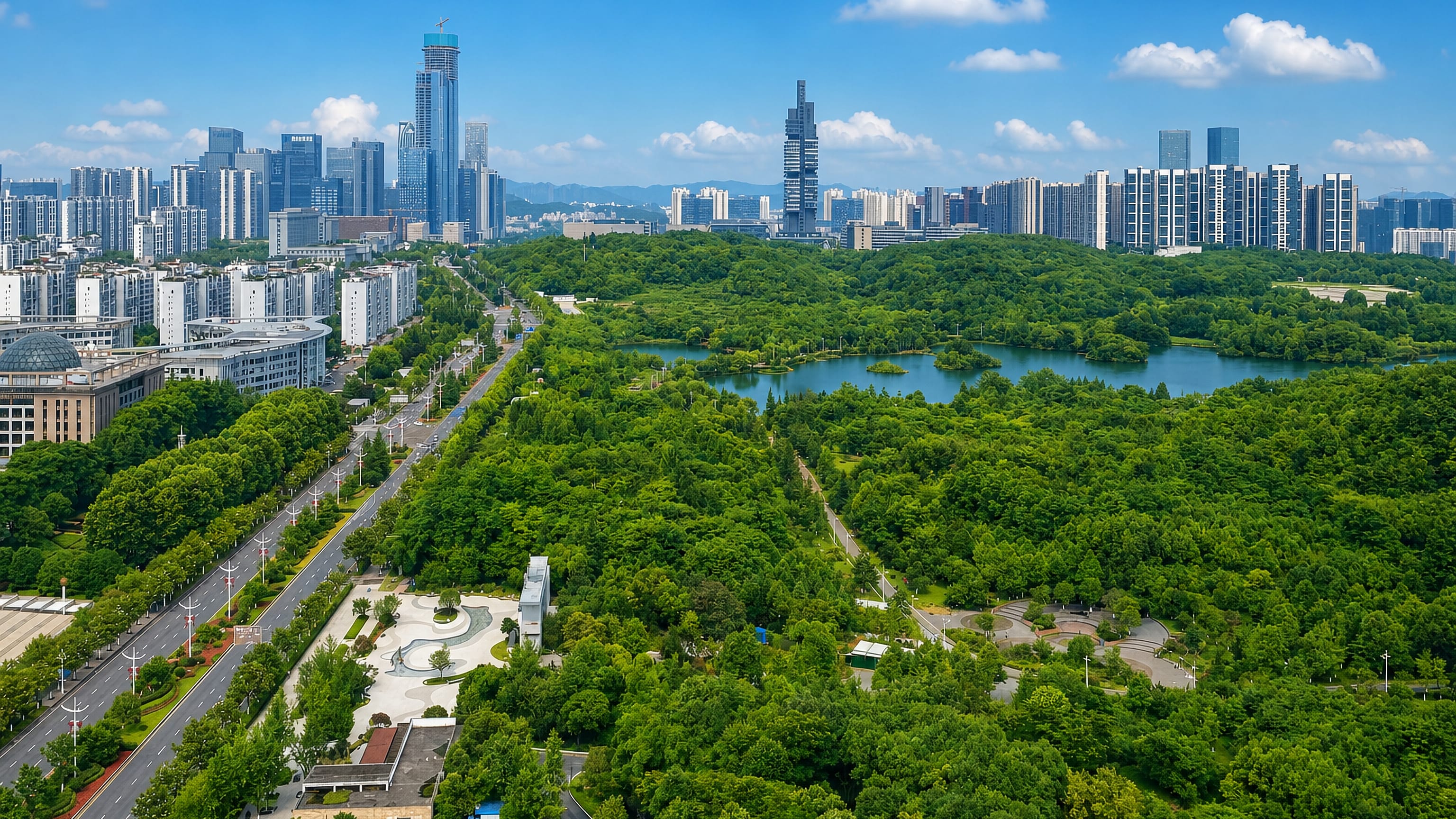
Guiyang is the capital of Guizhou in the karst mountains of southwestern China, a green city on the Nanming River.Where to stay →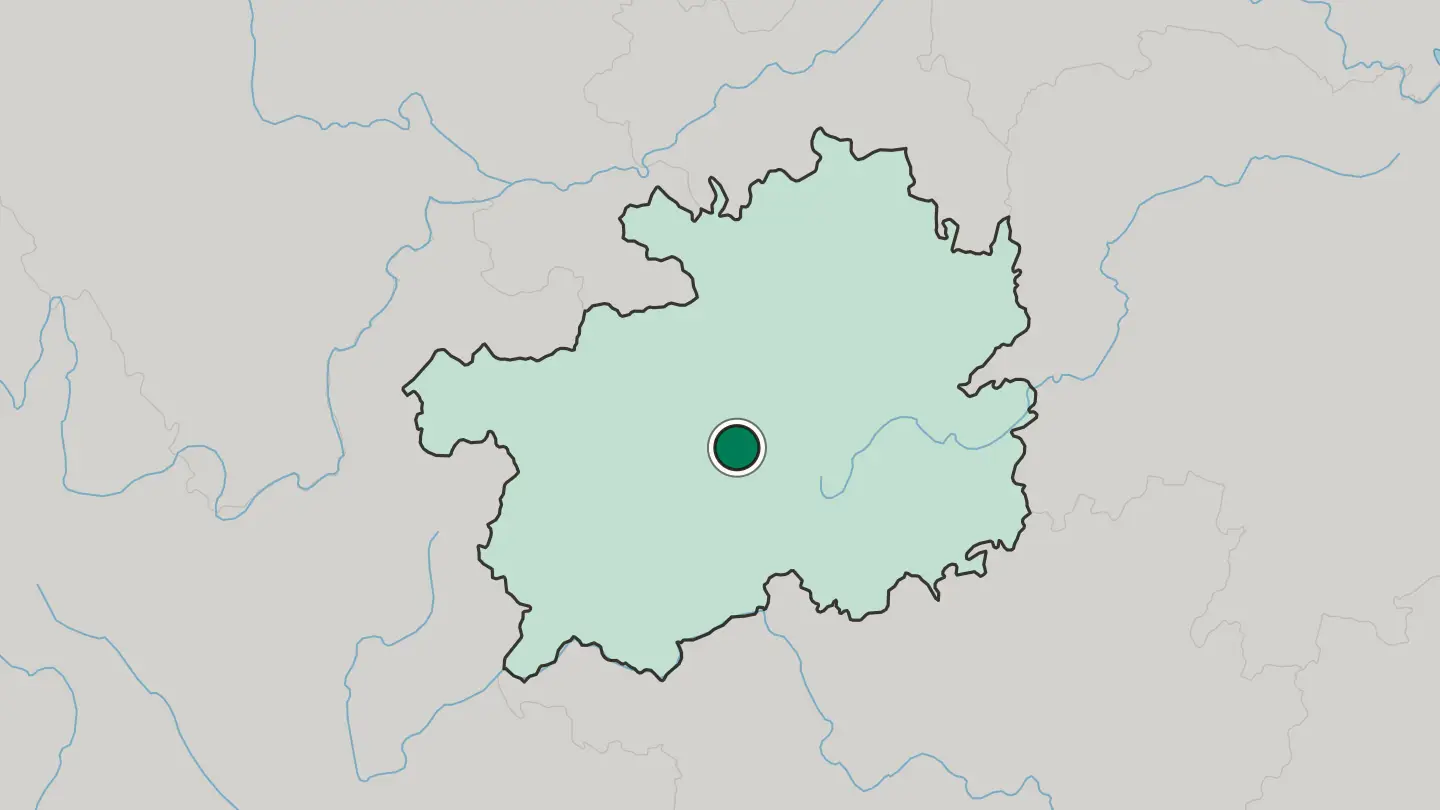
 China
China
Zunyi
Zunyi is a city in the mountains of Guizhou, China, famous for the Communist meeting that turned the Long March.Where to stay →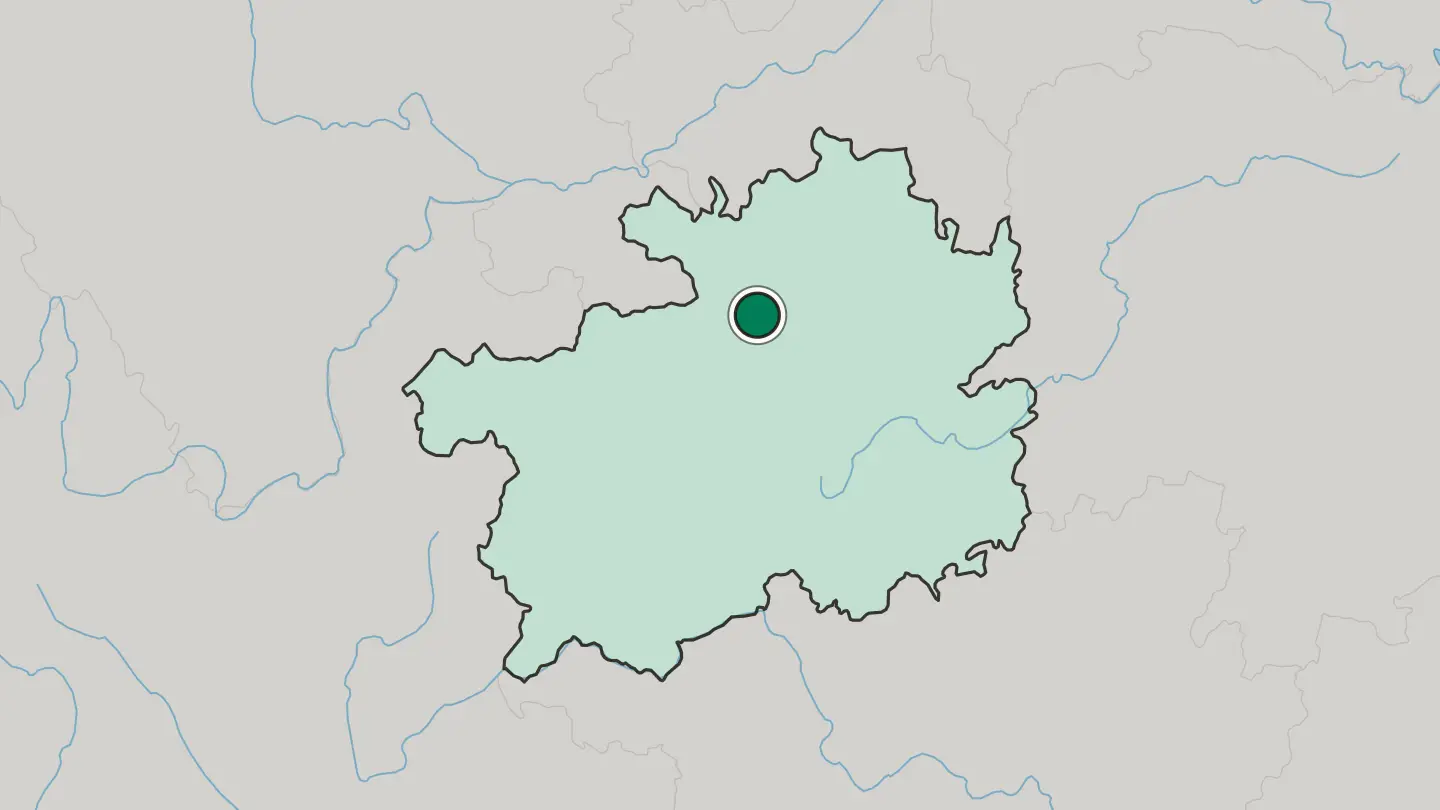
Hotel links are affiliate links: booking through them may earn us a commission, at no extra cost to you. It never affects how places are ranked. How this works
About Guizhou
Karst is the signature.
What is Guizhou known for?
Guizhou sits on the eastern half of the Yunnan-Guizhou Plateau, where limestone dissolved over ages into abrupt peaks and sinkholes, natural bridges, and caverns fed by underground rivers. The Huangguoshu Waterfall near Anshun drops in a broad curtain, the largest fall in China. Ethnic minorities make up more than a third of the province, and the Miao and Dong villages of the southeast are the other draw, famous for silver headdresses, drum towers, and unaccompanied choral singing.
Few provinces pack so much scenery and living culture into so little flat ground.
Where is Guizhou?
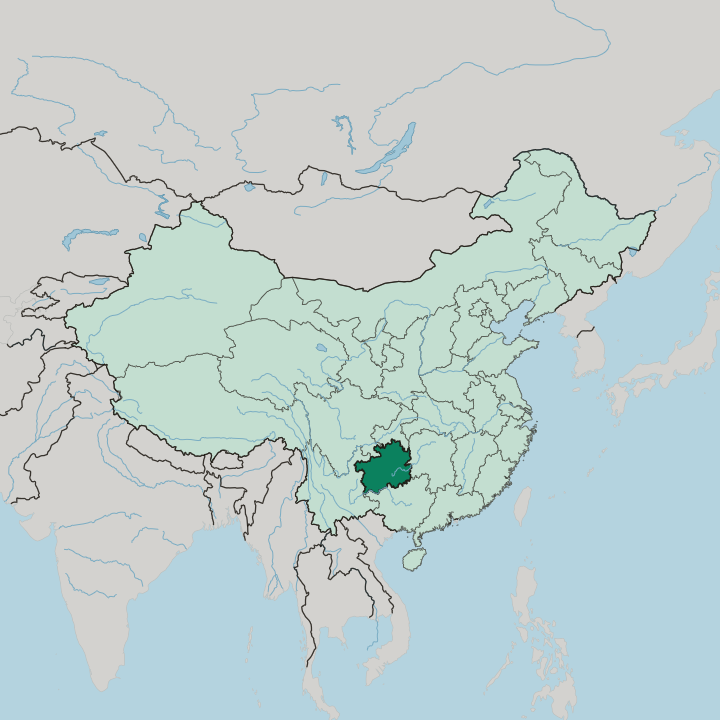
Guizhou is a landlocked province of southwestern China, wrapped on every side by neighbours and no coast of its own. Sichuan and Chongqing lie to the north, Hunan to the east, Guangxi to the south, and Yunnan to the west. Almost the whole of it rides on the eastern half of the Yunnan-Guizhou Plateau, a limestone tableland that averages roughly 1,200 metres above the sea.
The land is a byword for having no level ground. Mountains and karst cover the great majority of the province, and a Guizhou saying holds that the flat ground never runs for more than a few miles. The plateau tilts down from its centre toward the north, east, and south, so the rivers run outward in three directions rather than gathering into one basin.
The Miaoling Mountains through the middle draw the watershed. North of that divide the streams drain toward the Yangtze; south of it they fall away toward the Pearl River and Guangxi. Between the ridges, the soluble limestone has been carved into the classic karst of sinkholes and caverns, natural bridges, and abrupt peaks that gives the province its shape.
The Huangguoshu Waterfall near Anshun, in the karst country of the southwest, is the most famous single break in that terrain. Guiyang sits near the centre.
What is Guizhou like?
Guizhou wears its ethnic diversity openly. More than a third of the province belongs to minority peoples, and the Miao and Dong are the two whose culture the traveller meets first. The Miao are the larger group, concentrated in the southeastern hills around Kaili and the Qingshui river country.
Silver is their calling card. At festival time the young women appear under towering silver headdresses and rows of necklaces and bangles, and the villages fill with singing and dancing that has carried a whole oral literature down the generations. The Dong, further southeast toward Hunan and Guangxi, are builders.
Their carpenters raise multi-storey fir houses on stilts above the slopes, covered wind-and-rain bridges across the streams, and tall drum towers where the village gathers, all fitted together without nails. From those towers comes the kam grand choir, an unaccompanied polyphonic singing recognised by UNESCO, sung in many parts by voices alone. Indigo-dyed, hammer-glossed cloth is theirs too.
Around them live Bouyei, Shui, Tujia, and Yi communities, each with its own tongue distinct from Chinese. An ordinary market day can turn into a wall of song. Little of this culture is staged for show; much of it is simply how the hill villages of the southeast still live.
What is the history of Guizhou?
Guizhou became a province of its own in 1413, carved out under the Ming emperor Yongle, who set garrisons across the plateau and drew settlers in from Sichuan, Hunan, and the lands around. Long a frontier of forts and rebellions, it stayed poor and hard to govern for centuries. Its sharpest turn came at Zunyi.
There, in the winter of 1935, the Red Army halted mid-retreat on the Long March and held the Zunyi Conference, the meeting that lifted Mao Zedong to the leadership of the Communist Party.
What is the climate of Guizhou?
Guizhou has a mild, damp subtropical climate, tempered by the height of the plateau. Winters stay cool rather than cold and summers rarely turn hot, which has made Guiyang a refuge from the heat that grips the lowlands to the south. Damp weather scarcely lets up across the plateau.
Fine days rarely come. Cloud sits low over the karst for much of the year, and an old saying warns that the province never sees three fine days in a row, with most of its downpour falling between the late spring and the end of summer. That steady wet is what keeps the hills green and the waterfalls full.
How do you get to Guizhou?
Most visitors reach Guizhou through Guiyang, the capital in the centre of the province. Its Longdongbao International Airport links the city to Beijing, Shanghai, Guangzhou, and dozens of other cities across China. High-speed rail does the rest.
The line south reaches Guangzhou in under six hours, trains run northwest to Chengdu and Chongqing, and the airport's own station puts air and rail within a few minutes of each other. From Guiyang, road and rail thread on to Anshun in the west and Kaili in the southeast, the two gateways to the waterfalls and the villages.
Common questions
What is the best area to stay in Guizhou?
Guiyang: a first base with rail links onward. Anshun: the Huangguoshu Waterfall. Kaili: Miao and Dong villages. Xijiang: a night in a Miao stilt house.
Good for
More regions in China
Updated September 2026